Quick Answer: Which Audi EV SUV Should You Buy?
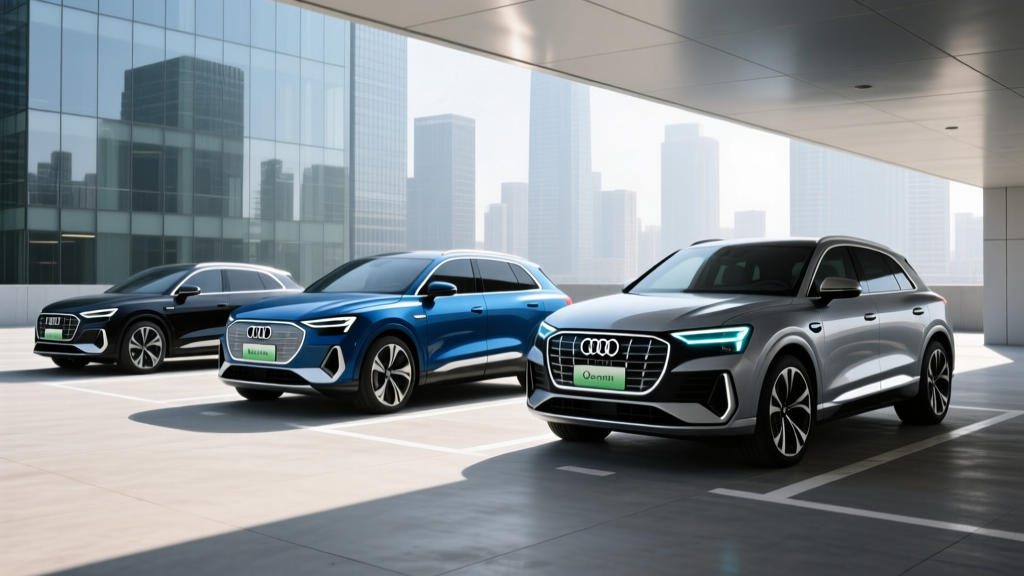
If you're shopping for an Audi EV SUV in 2026, Audi offers three fully electric options spanning compact to full-size luxury: the Q4 e-tron (starting ~$49,800, EPA 265 mi), the all-new Q6 e-tron (starting ~$63,800, EPA 321 mi), and the flagship Q8 e-tron (starting ~$74,400, EPA 303 mi). The Q4 e-tron is the value play with the highest likelihood of federal tax-credit eligibility. The Q6 e-tron delivers the best range and newest tech on the PPE platform. The Q8 e-tron offers the most space and air-suspension comfort for long-distance cruisers. Your decision hinges on budget, daily mileage needs, home-charging access, and whether you qualify for the §30D federal credit.
The 2026 Audi EV SUV Lineup at a Glance
Audi's electric SUV strategy has matured into a three-model ladder. Each sits on a different platform, targets a different buyer, and carries distinct trade-offs in range, charging speed, and price. Here's how they stack up on paper before we get into the real-world nuances.
| Spec | Q4 e-tron | Q6 e-tron | Q8 e-tron |
|---|---|---|---|
| Platform | VW MEB | Porsche/Audi PPE | VW MLB Evo (modified) |
| Base MSRP (2026) | $49,800 | $63,800 | $74,400 |
| EPA Range (best trim) | 265 mi | 321 mi | 303 mi |
| Battery (usable kWh) | 77 kWh (NMC) | 94 kWh (NMC) | 106 kWh (NMC) |
| Peak DC Fast Charge | 175 kW | 270 kW | 170 kW |
| 10–80% DC Charge Time | ~28 min | ~21 min | ~31 min |
| Level 2 (AC) Rate | 11 kW | 11 kW (optional 22 kW) | 11 kW |
| 0–60 mph | 5.8s (quattro) | 4.9s (quattro) | 5.6s (55 quattro) |
| Horsepower | 340 hp | 422 hp | 402 hp |
| MPGe (combined) | 95 MPGe | 103 MPGe | 87 MPGe |
| Cargo (behind 2nd row) | 24.8 cu ft | 30.2 cu ft | 32.0 cu ft |
| Battery Warranty | 8 yr / 100,000 mi | 8 yr / 100,000 mi | 8 yr / 100,000 mi |
Sources: fueleconomy.gov, Audi USA. Specs reflect 2026 model-year data for top-range trims where applicable.
Real-World Range: What the EPA Sticker Doesn't Tell You
EPA range estimates are a useful baseline, but every EV owner learns quickly that real-world results depend heavily on speed, temperature, and terrain. Here's what to actually expect from each Audi EV SUV once you leave the dealership.
Q4 e-tron (EPA 265 mi)
Real-world highway (70 mph, mild weather): ~220–240 mi
Cold-weather (30°F, highway): ~185–210 mi
The Q4 e-tron's smaller battery and MEB-platform efficiency mean it's the most range-sensitive of the three. In winter testing, expect a 20–30% reduction if you're running the cabin heater at highway speeds. Preconditioning while plugged in recovers some of that loss.
Q6 e-tron (EPA 321 mi)
Real-world highway (70 mph, mild weather): ~270–295 mi
Cold-weather (30°F, highway): ~225–255 mi
The PPE platform's standard heat pump and more aerodynamic profile give the Q6 e-tron an edge. Its 94 kWh usable pack provides a meaningful buffer for road trips. This is the Audi EV SUV you want if you regularly drive 200+ miles between charges.
Q8 e-tron (EPA 303 mi)
Real-world highway (70 mph, mild weather): ~255–280 mi
Cold-weather (30°F, highway): ~210–240 mi
Despite the largest battery (106 kWh usable), the Q8 e-tron's weight and frontal area work against highway efficiency. It shines more in mixed suburban driving where regenerative braking recaptures energy. The standard adaptive air suspension also reduces drag at highway speeds, partially offsetting the mass penalty.
Charging Speed and Infrastructure: Where the Q6 e-tron Pulls Ahead
Charging speed is where platform differences become tangible. The Q6 e-tron's 800-volt PPE architecture enables peak DC charging at 270 kW, meaning a 10–80% session takes roughly 21 minutes at a compatible 350 kW station. The Q4 e-tron and Q8 e-tron both use 400-volt architectures, capping at 175 kW and 170 kW respectively.
Here's the charging-curve reality that spec sheets obscure: peak kW is not sustained kW. The Q6 e-tron holds above 200 kW from roughly 10% to 40% SoC, then tapers gradually. The Q4 e-tron peaks briefly near 175 kW around 20–30% SoC and drops to ~120 kW by 60%. If you road-trip frequently, the Q6 e-tron's sustained charging performance saves 8–12 minutes per stop compared to the Q4.
| Charging Level | Q4 e-tron | Q6 e-tron | Q8 e-tron |
|---|---|---|---|
| Level 1 (120V, 1.4 kW) | ~4 mi/hr | ~5 mi/hr | ~5 mi/hr |
| Level 2 (240V, 11 kW) | ~30 mi/hr | ~34 mi/hr | ~29 mi/hr |
| DC Fast (peak) | 175 kW / ~28 min (10–80%) | 270 kW / ~21 min (10–80%) | 170 kW / ~31 min (10–80%) |
| Connector | CCS1 (NACS adapter avail.) | CCS1 (NACS adapter avail.) | CCS1 (NACS adapter avail.) |
All three models ship with CCS1 connectors, but Audi offers a NACS adapter for Tesla Supercharger access. As of 2026, Audi has not yet transitioned to a native NACS port on these models. If Supercharger access is a priority for your road-trip routes, factor the adapter cost (~$200) and confirm compatibility with your specific model year.
Cost of Ownership: Audi EV SUV vs. Gas Equivalent
The purchase price of an Audi EV SUV carries a premium over comparable gas-powered luxury SUVs, but operating costs tell a different story over a 5-year ownership cycle. Let's compare the Q6 e-tron against the Audi Q5 (gas, 2.0T quattro) as a realistic cross-shop.
| Cost Category (5 Years) | Q6 e-tron (EV) | Audi Q5 2.0T quattro (Gas) |
|---|---|---|
| Base MSRP | $63,800 | $46,300 |
| Estimated Federal Tax Credit (§30D) | $0–$7,500* | $0 |
| Fuel / Electricity (75,000 mi) | $4,200 (home L2 @ $0.14/kWh avg) | $11,250 (24 MPG combined @ $3.60/gal) |
| Maintenance | $1,800 | $4,500 |
| Insurance (avg) | $10,500 | $8,400 |
| Estimated Depreciation | $28,000 | $21,000 |
| Total 5-Year Cost (est.) | ~$52,300 – $59,800 | ~$58,450 |
*§30D credit eligibility depends on MSRP caps (SUVs: $80,000), buyer income limits ($150K single / $300K joint AGI), and battery critical-mineral sourcing requirements. The Q6 e-tron's credit eligibility varies by build date and supply-chain compliance — verify at irs.gov or through your dealer's point-of-sale system. Credit amounts shown are estimates.
The EV's fuel savings (~$7,000 over 5 years) and lower maintenance costs (~$2,700 saved) partially offset the higher purchase price and insurance premiums. If you qualify for the full $7,500 credit, the Q6 e-tron can approach cost parity with the Q5 — and you're driving a newer-platform vehicle with more torque and lower emissions.
Common Audi EV SUV Misconceptions
| Myth | Fact |
|---|---|
| "The battery will need a $20K replacement in 5 years." | Audi warranties the battery for 8 years/100,000 miles against degradation below 70% capacity. Industry data shows NMC packs losing ~10–15% over 100K miles with normal use. |
| "I can't road-trip because charging takes too long." | The Q6 e-tron charges 10–80% in ~21 minutes at a 350 kW station. Combined with 270+ real-world highway miles, that's a 20-minute break every 3.5 hours — comparable to gas stops with food/restroom breaks. |
| "All Audi EV SUVs qualify for the $7,500 tax credit." | Eligibility depends on MSRP caps, buyer income, and battery-sourcing rules that change periodically. The Q4 e-tron has historically had stronger eligibility; the Q8 e-tron often exceeds the SUV MSRP cap on higher trims. Always verify before purchase. |
| "Regenerative braking means I never need brake service." | One-pedal driving significantly reduces brake pad wear, but rotors still need inspection, and brake fluid requires periodic replacement. Budget ~$300–$500 per brake service interval vs. ~$800+ on gas equivalents. |
First-Time EV Buyer: What You Need to Know Before Signing
If this is your first EV purchase, the ownership experience differs from gas cars in ways that affect daily life. Here's a practical checklist:
- Home charging is essential for convenience. Level 2 (240V) home charging adds ~30 miles per hour of charging. A full overnight charge covers most daily driving. Installation typically costs $800–$2,500 depending on panel capacity and run distance. If your home has a 200-amp panel with spare capacity, you're likely fine. A 100-amp panel may require an upgrade ($2,000–$4,000). Get a quote from a licensed electrician before buying.
- Public charging is for road trips, not daily use. Relying solely on DC fast charging accelerates battery wear slightly and costs 2–3x more per kWh than home charging. Plan your purchase around reliable home or workplace Level 2 access.
- Cold weather reduces range 20–30%. If you live in a climate with sustained sub-40°F winters, buy more range than you think you need. The Q6 e-tron's heat pump mitigates this better than the Q4 e-tron's resistance heater.
- Insurance costs 15–25% more. EV repair costs and parts pricing drive higher premiums. Get quotes from your insurer before committing — some carriers offer EV-specific discounts.
- The §30D tax credit can transfer at point of sale. As of 2026, you can apply the credit as a down-payment reduction at the dealer rather than waiting for tax filing. Confirm eligibility with your tax professional and the dealer's finance office.
Decision Framework: Which Audi EV SUV Fits Your Life?
Choose the Q4 e-tron if:
- Your budget is under $55,000 (before incentives)
- Your daily commute is under 80 miles round-trip
- You have reliable Level 2 home charging
- You want the best chance at federal tax-credit eligibility
- You prioritize compact maneuverability for city driving
Choose the Q6 e-tron if:
- You regularly drive 150+ miles between charges or take road trips monthly
- You want the fastest charging speed (270 kW) and newest PPE platform tech
- You value the latest infotainment (dual-screen OLED, augmented-reality HUD)
- Budget allows $65,000–$75,000 after options
- You want the best real-world range in Audi's EV SUV lineup
Choose the Q8 e-tron if:
- You need maximum cargo space (32 cu ft) and rear-seat comfort
- You value air suspension and ride quality over outright range
- You tow occasionally (4,000 lb capacity vs. 2,600 lb on Q4)
- Budget allows $75,000+ and tax-credit eligibility is unlikely at your trim level
- You prioritize flagship luxury appointments and the quietest cabin
Tax Credit and Incentive Reality Check
Federal §30D clean vehicle credit rules in 2026 remain complex. Here's what applies to Audi EV SUVs specifically:
- MSRP Cap: SUVs must have an MSRP at or below $80,000. The Q4 e-tron and most Q6 e-tron trims qualify; fully loaded Q8 e-tron Prestige trims may exceed the cap.
- Buyer Income Cap: Modified AGI must not exceed $150,000 (single), $225,000 (head of household), or $300,000 (joint filing).
- Battery Sourcing: Critical minerals and battery components must meet escalating domestic/free-trade-partner thresholds. Audi's supply chain compliance varies by build month — your dealer can confirm the specific VIN's eligibility.
- Point-of-Sale Transfer: You can elect to transfer the credit to the dealer, reducing your purchase price at signing rather than claiming it on your tax return.
- State Incentives: Many states offer additional rebates ($1,000–$5,000) that stack with federal credits. Check your state energy office or fueleconomy.gov's incentive finder.
Frequently Asked Questions
Do Audi EV SUVs hold their resale value?
Luxury EVs have experienced steeper depreciation than gas equivalents in recent years, partly due to rapid tech advancement and Tesla price cuts reshaping the market. Expect 45–55% depreciation over 5 years on an Audi EV SUV, compared to ~40% for a Q5. Leasing can mitigate this risk if you're concerned about residual values.
Can I charge an Audi EV SUV at Tesla Superchargers?
Yes, with Audi's CCS-to-NACS adapter. As of 2026, Audi has not adopted a native NACS port, but the adapter grants access to Tesla's Supercharger network. Confirm adapter compatibility with your specific model year and firmware version before relying on it for road trips.
How long does the battery actually last?
Audi warranties the high-voltage battery for 8 years or 100,000 miles against capacity dropping below 70%. Real-world degradation data from similar NMC packs suggests you'll see roughly 10–15% capacity loss over 100,000 miles with normal charging habits (avoiding frequent 100% charges and excessive DC fast charging). A Q6 e-tron that starts at 321 mi EPA might deliver ~275–290 mi at 100K miles — still very usable.
Is the Q6 e-tron better than the Q8 e-tron?
On paper metrics — range (321 vs 303 mi), charging speed (270 vs 170 kW), and platform modernity — yes, the Q6 e-tron is the more advanced vehicle. But the Q8 e-tron offers more cargo space, standard air suspension, a quieter cabin, and a more established luxury feel. If you prioritize ride comfort and space over charging speed, the Q8 still has merit.
What if I can't install a home charger?
Without home or workplace Level 2 charging, EV ownership becomes significantly less convenient. You'd rely on DC fast charging 3–5 times per week, which costs more per mile, takes more time, and accelerates battery degradation modestly. If home charging isn't feasible, consider a PHEV like the Audi Q5 TFSI e (30 mi electric-only range) as a bridge solution until charging access improves.