Quick Answer: Which 2026 Audi EV Is Right for You?
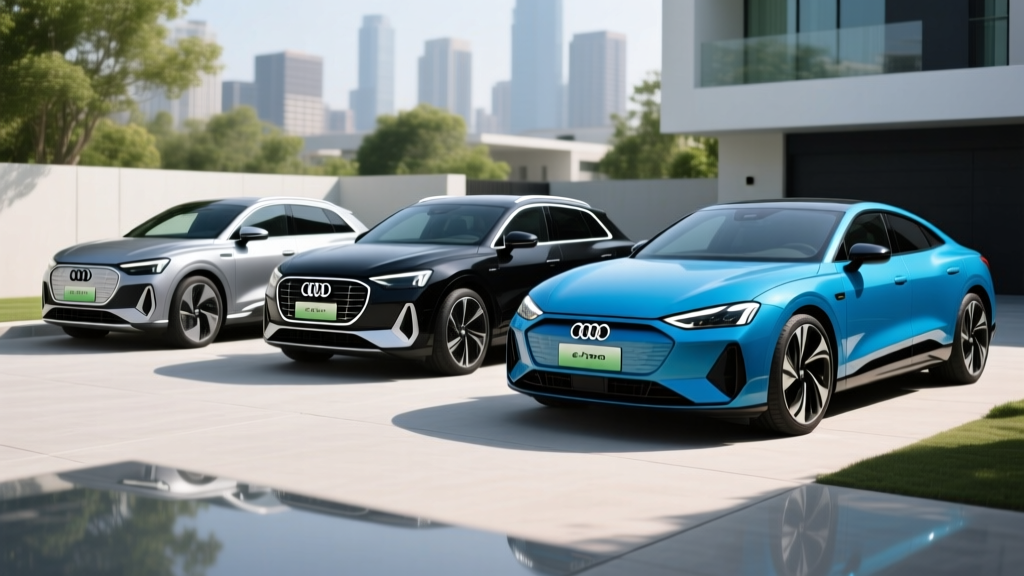
If you're searching for an Audi EV in 2026, you have three core choices: the Q4 e-tron (compact SUV, ~265 mi EPA, from ~$49,800), the all-new Q6 e-tron (midsize SUV, ~321 mi EPA, from ~$63,800), and the e-tron GT (performance sedan, ~270 mi EPA, from ~$108,000). All three use the VW Group's electrified platforms, but only the Q6 e-tron rides on the newer PPE architecture with 800-volt charging. For most buyers, the Q6 e-tron offers the best balance of range, charging speed, and space — but if budget is the priority, the Q4 e-tron remains Audi's most accessible EV.
The 2026 Audi EV Lineup at a Glance
Audi's electric strategy in 2026 centers on three production models available in the US market. Each targets a different buyer: the practical commuter, the family road-tripper, and the performance enthusiast. Here's how they stack up on paper.
| Spec | Q4 e-tron | Q6 e-tron | e-tron GT |
|---|---|---|---|
| Platform | MEB | PPE (800V) | J1 (800V) |
| Body Style | Compact SUV | Midsize SUV | Performance Sedan |
| Battery (usable) | 77 kWh (NMC) | 94 kWh (NMC) | 84 kWh (NMC) |
| EPA Range (est.) | ~265 mi | ~321 mi | ~270 mi |
| Peak DC Charge | 175 kW | 270 kW | 270 kW |
| 10–80% DCFC Time | ~28 min | ~21 min | ~23 min |
| Level 2 Rate | 11 kW | 11 kW (22 kW optional) | 11 kW |
| 0–60 mph | 5.8s (quattro) | 4.9s (quattro) | 3.1s (quattro) |
| Horsepower | 295 hp | 422 hp | 590 hp |
| Base MSRP | $49,800 | $63,800 | $108,000 |
| Battery Warranty | 8 yr / 100,000 mi | 8 yr / 100,000 mi | 8 yr / 100,000 mi |
Real-World Range vs. EPA Sticker
EPA estimates assume a mix of city and highway driving at moderate temperatures. In practice:
- Highway-only at 75 mph: Expect ~10–15% less than EPA. The Q6 e-tron drops to roughly 275–290 mi.
- Cold weather (below 32°F): Range loss of 15–30% is typical for NMC batteries without aggressive preconditioning. The Q4 e-tron could fall to ~190–220 mi in sub-freezing conditions.
- Heat pump: The Q6 e-tron and e-tron GT include a standard heat pump for more efficient cabin heating, reducing cold-weather range loss compared to resistive heating systems.
All three models support battery preconditioning when you navigate to a DC fast charger, which is critical for achieving advertised charge speeds in cold weather.
Charging Speed & Infrastructure: What You'll Actually Experience
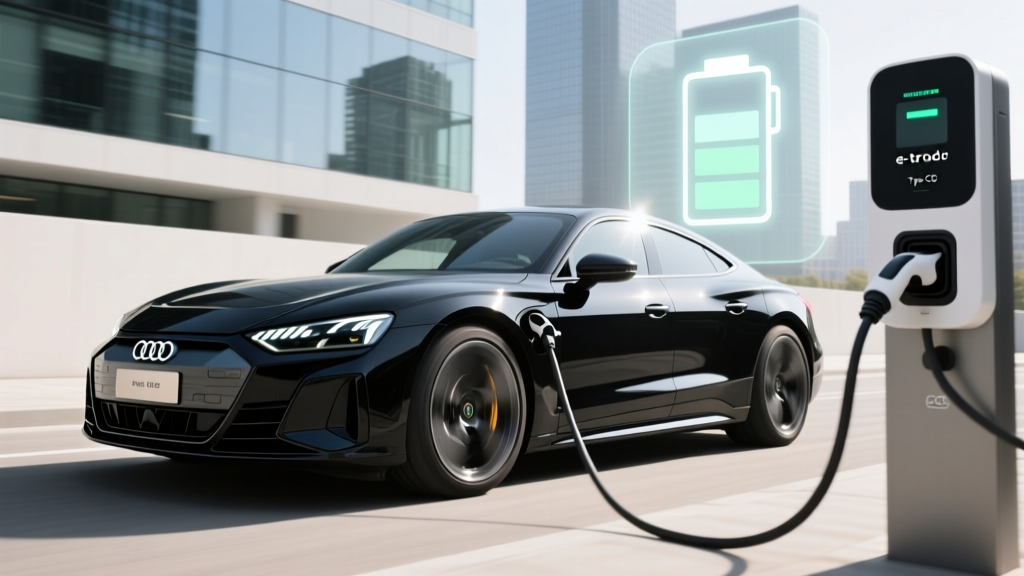
Charging speed is where the PPE and J1 platforms separate from the older MEB architecture. The Q4 e-tron's 400-volt MEB platform caps at 175 kW on DC fast chargers — adequate for daily use but noticeably slower on road trips than the 800-volt Q6 e-tron and e-tron GT.
| Level | Power | Q4 e-tron (mi/hr added) | Q6 e-tron (mi/hr added) | e-tron GT (mi/hr added) |
|---|---|---|---|---|
| Level 1 (120V) | ~1.4 kW | ~4 mi/hr | ~4 mi/hr | ~4 mi/hr |
| Level 2 (240V, 48A) | 11 kW | ~32 mi/hr | ~38 mi/hr | ~35 mi/hr |
| DC Fast (peak) | 175–270 kW | ~600 mi/hr (peak) | ~900 mi/hr (peak) | ~850 mi/hr (peak) |
Charging curve reality: Peak kW is a headline number, not a sustained rate. The Q6 e-tron peaks at 270 kW around 10–25% SoC, then tapers progressively. From 50–80%, expect roughly 120–150 kW sustained. This is why 10–80% time (~21 min) is a more useful metric than peak kW alone.
Connector note: All 2026 Audi EVs sold in the US come equipped with the NACS (Tesla-style) charge port, following Audi's adoption of the North American Charging Standard. This grants access to Tesla Superchargers via native compatibility, in addition to Electrify America and other networks.
EV vs. Gas: The Audi Ownership Cost Comparison
How does owning an Audi EV compare to a similarly priced gasoline Audi? Let's run the numbers for a Q6 e-tron versus a Q5 45 TFSI (gasoline) over 5 years and 75,000 miles.
| Cost Category | Q6 e-tron (EV) | Q5 45 TFSI (Gas) |
|---|---|---|
| Purchase Price (base) | $63,800 | $47,200 |
| Federal Tax Credit (§30D) | Up to $7,500* | $0 |
| Fuel/Energy (75k mi) | $4,500 (home L2 @ $0.14/kWh) | $9,375 (25 MPG @ $3.75/gal) |
| Maintenance (5 yr) | ~$1,800 | ~$4,200 |
| Insurance (avg 5 yr) | ~$12,500 | ~$10,200 |
| Total (before incentives) | $82,600 | $70,975 |
| Total (after $7,500 credit) | $75,100 | $70,975 |
*§30D credit eligibility depends on MSRP caps (SUVs: ≤$80,000), buyer income limits (AGI ≤$300k joint / $150k single), and battery critical-mineral sourcing requirements per current IRS rules. Consult a tax professional before assuming eligibility.
Key takeaway: The Q6 e-tron closes the cost gap substantially when you factor in fuel and maintenance savings, but the higher purchase price and insurance premiums mean it doesn't automatically beat a gas Q5 on pure economics over 5 years. The breakeven point typically arrives around year 6–7, or sooner if you have access to cheap home solar charging or utility off-peak rates.
Federal Tax Credit & Incentive Reality for Audi EVs
Not every Audi EV qualifies for the full §30D federal tax credit. Here's the eligibility checklist as of 2026:
- MSRP cap: SUVs (Q4 e-tron, Q6 e-tron) must be ≤$80,000; sedans (e-tron GT) must be ≤$55,000. The e-tron GT exceeds the sedan cap and does NOT qualify.
- Buyer income cap: Modified AGI ≤$300,000 (joint), ≤$225,000 (head of household), ≤$150,000 (single).
- Battery sourcing: Increasingly strict critical-mineral and battery-component requirements must be met. Audi has worked to localize supply chains, but eligibility can shift — verify the specific VIN on fueleconomy.gov before purchasing.
- Point-of-sale transfer: You can transfer the credit to the dealer at purchase for an immediate price reduction, rather than waiting to claim it on your tax return.
- Assembly: Vehicle must undergo final assembly in North America. The Q4 e-tron (Chattanooga, TN) qualifies; verify Q6 e-tron assembly location.
Practical note: The Q4 e-tron and Q6 e-tron in qualifying trims may be eligible for up to $7,500, but the exact amount depends on the specific battery's mineral sourcing percentage, which can change mid-model-year. Always confirm with the dealer and cross-reference the IRS qualified vehicle list.
Real-World Ownership: What First-Time Audi EV Buyers Must Know
Home Charging Is Non-Negotiable for Convenience
If you cannot install a Level 2 home charger, EV ownership becomes significantly less convenient. A 240V / 48A Level 2 circuit adds ~32–38 miles of range per hour — enough to fully replenish any Audi EV overnight. Expect to pay $800–$2,500 for a quality Level 2 unit (such as the ChargePoint Home Flex or Wallbox Pulsar Plus) plus $500–$2,000 for electrician installation, depending on panel capacity and conduit runs. If your home has a 100-amp panel, a $1,500–$3,000 panel upgrade to 200A may be necessary.
Public Charging Reliability
Audi's partnership with Electrify America provides complimentary charging (typically 250–500 kWh) on new EV purchases. The NACS port adoption also opens the Tesla Supercharger network — generally the most reliable public network in the US. However, if you live in a multi-unit dwelling without charging access or frequently drive in rural areas, public charging dependency is a real constraint. Plan your routes using the AFDC station locator before committing.
Cold Weather & Preconditioning
Audi's EVs include battery preconditioning, which warms the battery to optimal temperature before a DC fast charge. Always navigate to your charger using the built-in navigation to trigger this — arriving at a fast charger with a cold battery can double your charge time. In winter, expect 15–30% range reduction depending on temperature and driving style.
Insurance Costs Are Higher
EV insurance premiums run 15–25% higher than comparable gas vehicles due to repair costs, battery replacement risk, and specialized labor. Get quotes before purchasing — the $4,800 annual average for the Q6 e-tron can vary significantly by state, driving record, and insurer.
Common Audi EV Misconceptions — Fact vs. Myth
| Myth | Fact |
|---|---|
| "Audi EVs can't road trip — charging is too slow." | The Q6 e-tron charges 10–80% in ~21 minutes at a 350 kW-capable station. With preconditioning and route planning, 300-mile segments with 25-minute breaks are realistic. |
| "The battery will need replacing in 5 years." | Audi warranties the battery for 8 years / 100,000 miles with a 70% capacity retention threshold. Industry data from Geotab's fleet study shows average annual degradation of ~1.8% for liquid-cooled NMC packs, suggesting ~85–90% SoH at 100k miles. |
| "Every Audi EV gets the $7,500 tax credit." | Only vehicles meeting MSRP caps, income limits, assembly, and sourcing rules qualify. The e-tron GT (sedan, $108k MSRP) exceeds the $55,000 sedan cap and does not qualify. |
| "Level 2 charging is just a trickle — I need DC fast charging at home." | Level 2 at 11 kW adds ~35 miles per hour. Most drivers need only 30–50 miles overnight. DC fast chargers are for road trips, not daily use — frequent DCFC can slightly accelerate battery degradation. |
| "Audi's driver-assist is self-driving." | Audi Adaptive Cruise Assist is a Level 2 SAE system. You must keep hands on the wheel and remain fully engaged. It is not autonomous driving. |
SAE Automation Level: Level 2
Audi's Adaptive Cruise Assist with lane centering is classified as SAE Level 2 — partial driving automation. The vehicle controls steering and acceleration under specific conditions, but the driver must continuously supervise and be ready to take over immediately. This is the same automation level as Tesla Autopilot, Ford BlueCruise, and GM Super Cruise.
Decision Framework: Which Audi EV Should You Buy?
If-Then Guide to Choosing Your Audi EV
- Choose the Q4 e-tron if: You want the lowest entry price (~$49,800), primarily commute under 50 miles daily, have home Level 2 charging, and don't need frequent 300+ mile road trips. Best for: urban/suburban couples and first-time EV buyers.
- Choose the Q6 e-tron if: You need family SUV space (28.2 cu ft cargo), want the longest range (~321 mi EPA), value the fastest charging (270 kW PPE platform), and plan regular road trips. Best for: families and drivers who want one vehicle for daily use and highway travel.
- Choose the e-tron GT if: Performance is the priority (590 hp, 3.1s 0–60), you're cross-shopping the Porsche Taycan or Tesla Model S Plaid, and budget is not a primary constraint. Note: no §30D credit eligibility due to MSRP cap. Best for: driving enthusiasts who want a luxury electric grand tourer.
- Consider a PHEV instead if: You lack home charging access, regularly drive in areas with sparse public charging, or have a one-car household that must handle both short commutes and 500-mile road trips without planning. The Audi Q5 PHEV (if available in your market) offers ~23 mi electric-only range plus gas flexibility.
Frequently Asked Questions
Does the Audi Q4 e-tron qualify for the federal tax credit?
The Q4 e-tron (SUV, MSRP ≤$80,000) can qualify for up to $7,500 under §30D, provided the buyer meets income limits and the specific vehicle's battery meets critical-mineral and component sourcing thresholds. Verify eligibility on fueleconomy.gov using the exact VIN before purchase.
How long does it take to charge an Audi Q6 e-tron at home?
With a Level 2 charger at 11 kW, a full charge from 10% to 100% takes approximately 8.5–9 hours for the 94 kWh battery. Most owners charge overnight and wake up to a full battery every morning. On a standard 120V outlet (Level 1), expect ~4 miles per hour of charging — adequate only for very low daily mileage or emergency trickle charging.
What is the real-world highway range of the Audi Q6 e-tron?
The EPA rates the Q6 e-tron at approximately 321 miles. In real-world highway driving at 70–75 mph in moderate temperatures, expect roughly 275–295 miles. In cold weather (below 32°F), highway range can drop to 220–250 miles. Using the heat pump and seat heaters instead of cabin air heating helps preserve range.
Is the Audi e-tron GT worth it over a Tesla Model S?
The e-tron GT offers superior build quality, a more refined interior, and 800V charging architecture. The Model S Plaid is faster (1.99s 0–60) and has a longer EPA range (~402 mi). The e-tron GT prioritizes grand-touring comfort and Audi's design language; the Model S prioritizes performance and tech. Neither qualifies for the §30D credit at current MSRPs.
Will Audi's NACS port work at all Tesla Superchargers?
Yes. 2026 Audi EVs with the native NACS port can use Tesla Supercharger V3 (250 kW) and V4 stalls without an adapter. Access is managed through the Audi app or Tesla's app integration. Non-NACS Electrify America and other CCS stations remain accessible via adapter if needed.
What happens if my Audi EV battery degrades significantly?
Audi's battery warranty covers capacity below 70% of original within 8 years or 100,000 miles. If your battery falls below this threshold, Audi will repair or replace modules to restore capacity above 70%. Out-of-warranty battery replacement costs for the ~94 kWh Q6 e-tron pack are estimated at $15,000–$22,000 based on current industry pricing, though costs are expected to decline as battery manufacturing scales.