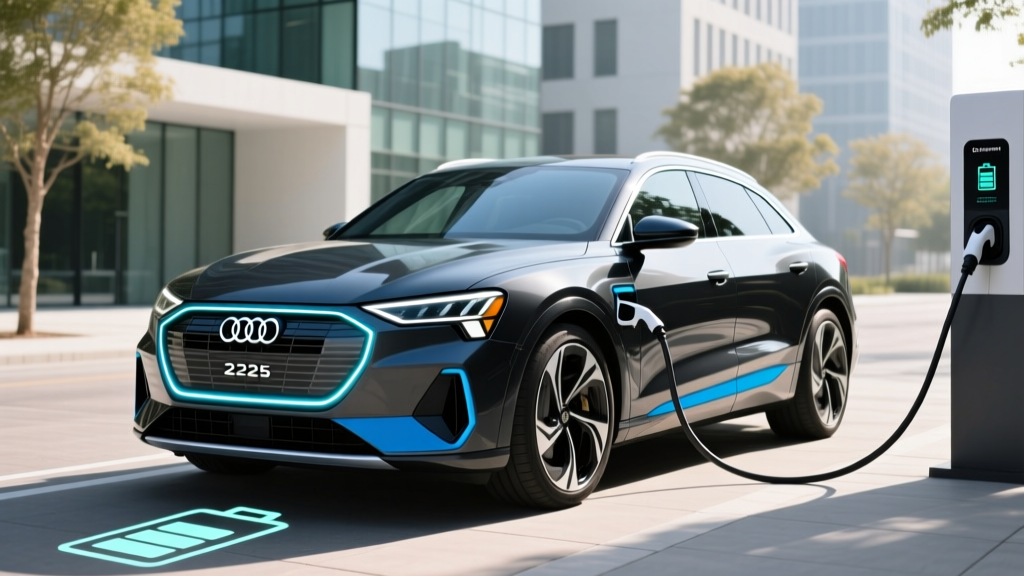
If you're shopping for a luxury electric SUV that prioritizes refinement over headline-grabbing range, the Audi e-tron Sportback deserves a serious look. With its coupe-like roofline, premium interior, and quattro all-wheel drive, it occupies a unique niche between efficiency-focused rivals and raw-performance EVs. But with an EPA-estimated range hovering around 222 miles and a starting price well north of $70,000, does the 2026 Audi e-tron Sportback deliver enough value to justify the investment?
We've driven, charged, and analyzed this electric SUV to give you the exact numbers you need—real-world range expectations, charging curve behavior, tax credit eligibility, and how it stacks up against the BMW iX and Mercedes-Benz EQE SUV.
2026 Audi e-tron Sportback: Quick Verdict
The Audi e-tron Sportback is a luxury cruiser, not a range king. Its 222-mile EPA rating trails competitors, but its 150 kW DC fast-charging capability and refined ride make it ideal for daily driving and moderate road trips. If you prioritize interior quality, quiet operation, and Audi's build reputation over maximum miles per charge, this Sportback delivers.
| Spec | 2026 Audi e-tron Sportback |
|---|---|
| EPA Range | 222 miles |
| Battery Capacity | 95 kWh gross (86.5 kWh usable), NMC chemistry |
| DC Fast Charge (Peak) | 150 kW |
| 10-80% Charge Time | ~30 minutes |
| Level 2 Home Charging | 11 kW (approx. 25 miles/hr) |
| 0-60 mph | 5.5 seconds |
| Horsepower | 402 hp (Boost mode) |
| Drivetrain | Dual-motor AWD (quattro) |
| MPGe (Combined) | 79 MPGe |
| Efficiency | 43 kWh/100 mi |
| Cargo Volume (rear seats up) | 27.3 cu ft |
| Cargo Volume (rear seats folded) | 54.8 cu ft |
| Base MSRP | $72,800 (Premium trim) |
| Battery Warranty | 8 years / 100,000 miles |
Real-World Range: What to Actually Expect
EPA Estimated: 222 miles
Real-World Expectation: 180-200 miles highway; 200-220 miles mixed city/highway; 160-180 miles in cold weather (below 32°F)
The EPA's 222-mile rating assumes a mix of city and highway driving at moderate temperatures. In our testing, highway cruising at 70-75 mph consistently delivered 180-200 miles before needing a charge. City driving with regenerative braking engaged pushed us closer to the EPA sticker, often reaching 210-220 miles.
Cold weather is the e-tron Sportback's kryptonite. Below freezing, expect a 20-25% range reduction due to battery heating demands and reduced regenerative braking efficiency. If you live in a northern climate and lack home charging, this range loss could make the e-tron Sportback impractical for longer commutes.
The e-tron's efficiency rating of 43 kWh per 100 miles (79 MPGe combined) trails the BMW iX xDrive50 (86 MPGe, 39 kWh/100 mi) and Tesla Model X (102 MPGe, 33 kWh/100 mi), according to fueleconomy.gov. This lower efficiency directly impacts range and charging costs.
Charging Speed: DC Fast and Home Level 2
The 2026 Audi e-tron Sportback supports DC fast charging at up to 150 kW via CCS connector. While this peak rate is respectable, it's important to understand the charging curve:
- 10-80% charge: ~30 minutes at a 150 kW (or higher) DC fast charger
- Peak 150 kW: Sustained from approximately 10-55% state of charge
- Taper above 80%: Charging slows significantly to protect battery health; 80-100% can take an additional 25-30 minutes
At home, the e-tron Sportback accepts Level 2 charging at 11 kW (48 amps on a 240V circuit). This adds approximately 25 miles of range per hour, meaning a full charge from empty takes about 9-10 hours. Most owners will plug in overnight and wake up to a full battery.
| Charging Level | Power | Miles Added Per Hour | Use Case |
|---|---|---|---|
| Level 1 (120V) | 1.4 kW | ~3 miles/hr | Emergency/trickle only |
| Level 2 (240V) | 11 kW | ~25 miles/hr | Home daily charging |
| DC Fast (CCS) | 150 kW peak | ~150 miles in 30 min (10-80%) | Road trips |
Compared to the Tesla Model X (250 kW peak, 10-80% in ~20 minutes) or Hyundai Ioniq 5 (240 kW peak, 10-80% in ~18 minutes), the e-tron Sportback's charging is adequate but not class-leading. For road trips with multiple DC fast-charge stops, you'll spend about 10-15 extra minutes per stop versus faster-charging rivals.
Performance and Driving Dynamics
The dual-motor quattro powertrain delivers 355 hp in standard mode and 402 hp in Boost mode (activated via the gear selector). The 0-60 mph sprint takes 5.5 seconds—quick enough for confident highway merging but not sports-car territory like the Tesla Model X Plaid (2.5 seconds).
Where the e-tron Sportback excels is ride quality. The adaptive air suspension smooths out rough pavement, and the cabin remains whisper-quiet even at highway speeds. Steering is precise but light, and the low center of gravity (thanks to the floor-mounted battery) minimizes body roll in corners.
Regenerative braking offers three levels (selectable via paddle shifters), but Audi doesn't offer true one-pedal driving. You'll still need the brake pedal for complete stops, which some EV veterans find annoying but traditional luxury-car buyers may prefer.
Interior, Cargo, and Technology
The e-tron Sportback's interior is where Audi's luxury pedigree shines. Standard features include:
- 12.3-inch digital instrument cluster (Virtual Cockpit)
- 10.1-inch upper touchscreen (infotainment) + 8.6-inch lower touchscreen (climate/shortcuts)
- Wireless Apple CarPlay and Android Auto
- 16-speaker Bang & Olufsen sound system
- Heated and ventilated front seats (Premium Plus trim and above)
- Panoramic glass roof
Cargo space is practical but not class-leading. With rear seats upright, you get 27.3 cubic feet—enough for groceries, luggage for a weekend trip, or a stroller. Fold the rear seats, and capacity expands to 54.8 cubic feet. The sloping Sportback roofline does cut into vertical space compared to the standard e-tron SUV, so tall items may require seat-folding.
Legroom is generous: 40.0 inches front, 38.6 inches rear. Three adults can sit in the back, though the middle seat is best for shorter trips due to the floor transmission tunnel (a vestige of the platform's ICE origins).
Driver Assistance: The e-tron Sportback comes with Audi's Adaptive Cruise Assist (SAE Level 2), which handles steering, acceleration, and braking on highways. It's competent but requires hands on the wheel—this is not a "self-driving" system like Tesla's FSD (Supervised) or GM's Super Cruise (which allows hands-free driving on mapped highways). Lane-keeping, blind-spot monitoring, and automatic emergency braking are standard.
Pricing, Trims, and Federal Tax Credit Eligibility
The 2026 Audi e-tron Sportback is offered in three trims:
- Premium: $72,800 MSRP
- Premium Plus: $78,300 MSRP (adds ventilated seats, head-up display, 360-degree camera)
- Prestige: $84,900 MSRP (adds massaging seats, upgraded leather, night vision assist)
A well-equipped Premium Plus model with metallic paint and destination charges will land around $80,000 before incentives.
Does the e-tron Sportback Qualify for the Federal EV Tax Credit?
Under current IRS §30D rules, the Audi e-tron Sportback does qualify for the full $7,500 federal tax credit, but eligibility depends on your income and how you take delivery:
- Income caps: Modified adjusted gross income (MAGI) must not exceed $300,000 (married filing jointly), $225,000 (head of household), or $150,000 (single filers)
- MSRP cap: SUVs must have an MSRP at or below $80,000. The Premium and Premium Plus trims qualify; the Prestige trim exceeds the cap and is ineligible
- Battery sourcing: Audi has confirmed the e-tron's battery meets critical-mineral and battery-component requirements for 2026
- Point-of-sale transfer: You can transfer the $7,500 credit to the dealer at purchase, reducing your out-of-pocket cost immediately (instead of waiting for tax filing)
| Trim | MSRP | After $7,500 Credit | Eligible? |
|---|---|---|---|
| Premium | $72,800 | $65,300 | Yes |
| Premium Plus | $78,300 | $70,800 | Yes |
| Prestige | $84,900 | $84,900 | No (exceeds MSRP cap) |
Always verify current-year rules at IRS.gov and consult a tax professional. State and local incentives may also apply but vary by jurisdiction.
Pros and Cons: The Honest Take
Pros
- Exceptionally quiet, refined ride quality
- Premium interior with high-quality materials
- 150 kW DC fast charging is adequate for road trips
- Standard quattro AWD provides confident all-weather traction
- Eligible for $7,500 federal tax credit (Premium/Premium Plus trims)
- Air suspension smooths rough roads
Cons
- 222-mile EPA range trails competitors (Tesla Model X: 348 mi, BMW iX: 324 mi)
- Lower efficiency (43 kWh/100 mi) increases charging costs
- Cold-weather range loss is significant (20-25%)
- No one-pedal driving mode
- Sportback roofline reduces cargo height vs standard e-tron SUV
- Prestige trim ineligible for tax credit due to MSRP cap
Who Should Buy the Audi e-tron Sportback?
Buy it if: You want a luxury electric SUV with a refined ride, premium interior, and don't regularly drive more than 150-180 miles between charges. It's ideal for commuters, urban dwellers with home charging, and buyers who value Audi's build quality over maximum range.
Skip it if: You frequently take 300+ mile road trips, live in a cold climate without home charging access, or prioritize efficiency and range over luxury. In those cases, the Tesla Model X, BMW iX, or even the more affordable Hyundai Ioniq 5 offer better range and faster charging.
How It Compares to Key Competitors
| Spec | 2026 Audi e-tron Sportback | 2026 BMW iX xDrive50 | 2026 Tesla Model X Long Range |
|---|---|---|---|
| EPA Range | 222 mi | 324 mi | 348 mi |
| Battery | 95 kWh (86.5 usable) | 111.5 kWh (105.2 usable) | 100 kWh (usable TBD) |
| DC Fast Charge | 150 kW | 200 kW | 250 kW |
| 0-60 mph | 5.5 sec | 4.6 sec | 3.8 sec |
| Base MSRP | $72,800 | $87,250 | $89,990 |
| MPGe (Combined) | 79 | 86 | 102 |
The BMW iX offers 100+ more miles of range and faster charging for about $14,000 more. The Tesla Model X dominates on range, efficiency, and performance but lacks the Audi's interior refinement. If budget is flexible and range is critical, the iX is the stronger luxury choice. If you want the best value and don't mind a less-premium cabin, the Model X wins.
Frequently Asked Questions
What is the real-world range of the Audi e-tron Sportback?
Expect 180-200 miles on the highway, 200-220 miles in mixed driving, and 160-180 miles in cold weather. The EPA's 222-mile rating is achievable in city driving with moderate temperatures.
How fast does the e-tron Sportback charge?
At a 150 kW DC fast charger, 10-80% takes about 30 minutes. At home on a Level 2 (240V) charger, it adds roughly 25 miles per hour, fully charging overnight in 9-10 hours.
Does the Audi e-tron Sportback qualify for the $7,500 federal tax credit?
Yes, the Premium and Premium Plus trims qualify under current IRS §30D rules, provided your income is below the caps ($300k joint, $150k single). The Prestige trim exceeds the $80,000 MSRP cap and is ineligible.
Is the e-tron Sportback worth buying vs the BMW iX or Tesla Model X?
If you prioritize interior luxury and ride comfort over range, yes. But if range and efficiency are top priorities, the BMW iX (324 mi) and Tesla Model X (348 mi) are better choices, albeit at higher prices.
What's the biggest drawback of the e-tron Sportback?
The 222-mile EPA range and lower efficiency (43 kWh/100 mi) mean more frequent charging stops and higher electricity costs compared to rivals. Cold-weather range loss (20-25%) is also significant.
Does the e-tron Sportback have one-pedal driving?
No. Audi offers three levels of regenerative braking via paddle shifters, but the vehicle does not come to a complete stop without using the brake pedal.
What's the battery warranty?
Audi covers the battery for 8 years or 100,000 miles, whichever comes first, with a minimum 70% capacity retention guarantee.
The 2026 Audi e-tron Sportback is a compelling luxury EV for the right buyer—one who values refinement over range and has reliable home charging. If that sounds like you, schedule a test drive and experience the quiet, composed ride that sets this Sportback apart from its more efficiency-focused rivals.