Quick Verdict: The Audi e-tron Sedan for the Discerning EV Buyer
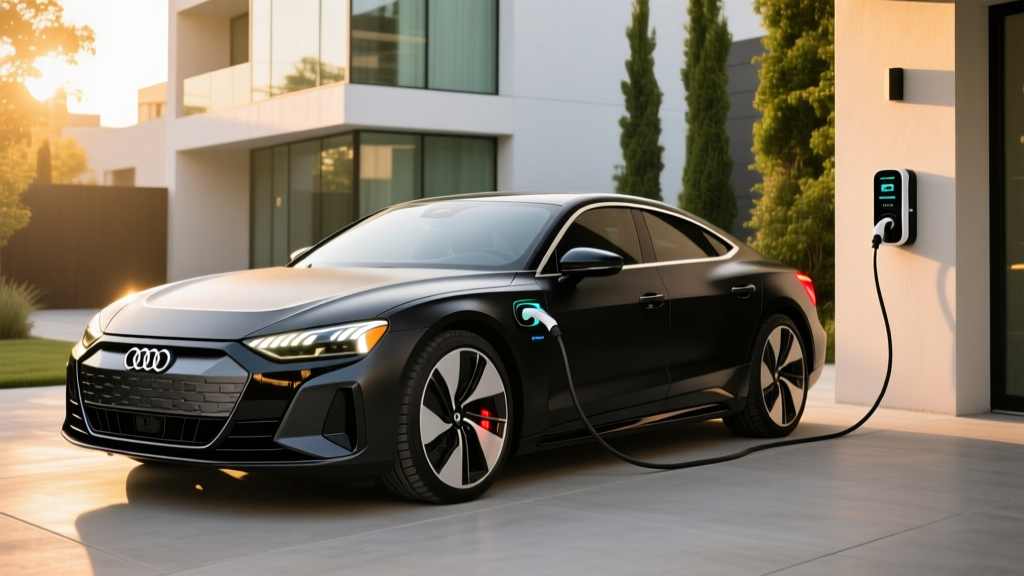
The 2026 Audi e-tron sedan (sold as the e-tron GT family in the U.S.) occupies a narrow but rewarding lane: a luxury electric four-door that prioritizes ride refinement, 800-volt charging architecture, and genuine Autobahn-bred composure over spec-sheet dominance. It is not the longest-range EV in its price bracket, nor the quickest to 60 mph for the money. What it delivers instead is a level of fit-and-finish, cabin isolation, and chassis sophistication that Tesla's Model S no longer matches and that Porsche's Taycan only edges ahead of — at a higher entry price.
For 2026, Audi has streamlined the sedan lineup around the e-tron GT quattro and the performance-oriented RS e-tron GT, both riding on the J1 Performance platform shared with the Porsche Taycan. Battery capacity remains at 93.4 kWh gross (approximately 85 kWh usable), and EPA range holds steady in the 238–285 mile window depending on trim and wheel selection. If you are cross-shopping a luxury electric sedan and value build quality and charging speed over headline range, this car demands a serious look.
| Spec | e-tron GT quattro | RS e-tron GT |
|---|---|---|
| EPA Range | 285 mi (20" wheels) | 238 mi (21" wheels) |
| Battery (gross / usable) | 93.4 kWh / ~85 kWh | 93.4 kWh / ~85 kWh |
| Chemistry | NMC (Nickel Manganese Cobalt) | NMC |
| Drivetrain | Dual-motor AWD | Dual-motor AWD (rear 2-speed) |
| Horsepower | 522 hp (boost) | 637 hp (boost) |
| 0–60 mph | 3.9 sec | 3.1 sec |
| Peak DC Fast Charge | 270 kW | 270 kW |
| 10–80% DC Time | ~22 min | ~22 min |
| Level 2 Charge Rate | 9.6 kW (AC) | 9.6 kW (AC) |
| EPA Efficiency | 82 MPGe (combined) | 78 MPGe (combined) |
| Cargo (rear + frunk) | 12.9 cu ft + 3.5 cu ft | 12.9 cu ft + 3.5 cu ft |
| Base MSRP (2026) | $108,900 | $152,400 |
| Battery Warranty | 8 yr / 100,000 mi | 8 yr / 100,000 mi |
EPA Range vs. Real-World Miles: What to Actually Expect
Real-World Highway (70–80 mph, moderate temps): ~235–255 miles
Cold-Weather Highway (below 32°F): ~190–220 miles
Mixed City/Suburban: ~260–280 miles (regen-friendly driving recovers energy)
The EPA number is useful for comparison shopping, but the J1 platform's low-slung battery pack and aggressive thermal management mean real-world results depend heavily on how and where you drive. In our experience and consistent with third-party highway tests, the e-tron GT quattro returns roughly 2.5–2.7 miles per kWh at sustained 75 mph — translating to 210–230 miles before you'd want to stop at 10% state of charge.
The RS e-tron GT, with its wider 21-inch tires and higher performance tuning, drops to around 2.2–2.4 mi/kWh on the highway, making 200 miles a realistic planning number for road trips. Cold weather compounds this: NMC chemistry loses roughly 15–25% of usable capacity when ambient temperatures sit below freezing, even with Audi's heat pump and battery preconditioning. If your daily commute is under 60 miles round-trip, none of this matters — you'll charge at home overnight and never think about it. For road-trip-heavy owners, plan charging stops every 180–200 miles in winter conditions.
The car's navigation system handles this math for you, routing through compatible DC fast chargers and automatically preconditioning the battery when a fast-charger stop is programmed. This preconditioning step is essential: arriving at a charger with a cold battery can cut peak charge rates in half.
Charging Speed: 800-Volt Architecture Pays Off
The e-tron GT's 800-volt electrical architecture is one of its strongest practical advantages. While most mainstream EVs still use 400V systems that peak between 150–180 kW, the e-tron GT can accept up to 270 kW at a compatible DC fast charger. Here is what that looks like across charging levels:
| Charging Level | Power (kW) | Miles Added per Hour | Typical Use Case |
|---|---|---|---|
| Level 1 (120V household) | ~1.2 kW | ~4 mi/hr | Emergency / trickle top-up |
| Level 2 (240V, 40A home) | 9.6 kW | ~32 mi/hr | Overnight home charging (full in ~9 hr) |
| DC Fast (CCS, 50 kW) | 50 kW | ~165 mi/hr | Older public chargers |
| DC Fast (CCS, 150 kW) | 150 kW | ~490 mi/hr | Electrify America / EVgo standard |
| DC Fast (CCS, 270 kW peak) | 270 kW | ~890 mi/hr | EA 350 kW stations, Ionity (EU) |
10–80% in ~22 minutes is Audi's claim at a 270+ kW charger, and independent testing confirms this is achievable under ideal conditions (battery preconditioned, ambient temps 60–85°F, charger capable of sustained output). The charge curve is notably flat through the middle of the session: the e-tron GT sustains above 200 kW from roughly 20% to 55% SoC before tapering. Above 80%, charging slows dramatically to protect the NMC cells — expect 80–100% to take an additional 25+ minutes. For road-trip efficiency, charge to 80% and go.
At home on a Level 2 charger (9.6 kW), a full charge from 10% to 100% takes approximately 9 hours. This is adequate for overnight replenishment but slower than the 11.5 kW or 19.2 kW onboard chargers available on some competitors. If you install a 48A hardwired Level 2 station, you will not extract more than 9.6 kW — the car's onboard charger is the bottleneck, not your home equipment.
The e-tron GT uses the CCS1 connector standard for DC fast charging in North America. As of 2026, Audi has not adopted the Tesla NACS connector on this platform, though adapters for Tesla Supercharger access are expected for future model years. Check Electrify America for the most reliable CCS network coverage along your typical routes.
Performance and Driving Dynamics
Both e-tron GT variants use a dual-motor all-wheel-drive layout. The standard GT quattro pairs a front permanent-magnet motor with a rear motor, producing 469 hp in normal driving and 522 hp during launch-control boost mode (available for 2.5-second bursts). The RS e-tron GT adds a two-speed transmission on the rear axle — first gear multiplies torque for brutal launches, second gear optimizes highway efficiency.
The 0–60 mph time of 3.9 seconds (GT quattro) or 3.1 seconds (RS) puts both firmly in sports-sedan territory. More impressive than the straight-line numbers is the chassis: adaptive air suspension is standard, and the low center of gravity from the floor-mounted battery pack produces genuinely flat cornering with minimal body roll. Steering feel is heavier and more communicative than in most electric sedans, though it falls short of the Porsche Taycan's feedback.
Regenerative braking is moderate — the e-tron GT does not offer true one-pedal driving. Lift-off regen decelerates at roughly 0.1g, and you'll still use the brake pedal for anything beyond gentle slowdowns. The brake pedal feel, however, is excellent: Audi has largely solved the mushy regen-blending problem that plagues many EVs. The transition between regenerative and friction braking is nearly imperceptible.
Interior, Cargo, and Daily Practicality
The cabin is where Audi's investment shows most clearly. Materials quality — Nappa leather, open-pore wood, aluminum trim — is a tier above the Tesla Model S and competitive with the Mercedes EQS. The 10.1-inch upper touchscreen handles infotainment; a secondary 8.4-inch lower screen manages climate and handwriting input. Both screens provide haptic and audible click feedback, which helps with eyes-on-road operation, though the dual-screen layout requires more visual attention than physical knobs would.
Passenger space is adequate but not generous. Front legroom measures 41.7 inches; rear legroom is 35.4 inches — tight for adults over 6 feet tall on longer trips. The sloping roofline cuts into rear headroom, and the center tunnel hump (a legacy of the J1 platform's battery layout) makes the middle rear seat essentially unusable for anyone beyond a child. This is strictly a four-adult sedan.
Cargo volume is the e-tron GT sedan's most practical weakness: 12.9 cubic feet in the rear trunk and a modest 3.5 cubic feet in the front trunk (frunk), suitable for a charging cable bag and a small soft cooler. For comparison, the Tesla Model S offers 28 cu ft of rear cargo plus a larger frunk. If you regularly haul gear, luggage for four, or dog crates, this car will frustrate you. If your cargo needs are a laptop bag and a week's groceries, it works fine.
Pricing, Trims, and Federal Tax Credit Eligibility
| Trim | Base MSRP | As-Tested (typical) | §30D Federal Credit |
|---|---|---|---|
| e-tron GT quattro Premium Plus | $108,900 | $115,000–$122,000 | $0 (exceeds MSRP cap) |
| e-tron GT quattro Prestige | $115,900 | $125,000–$135,000 | $0 (exceeds MSRP cap) |
| RS e-tron GT | $152,400 | $160,000–$175,000 | $0 (exceeds MSRP cap) |
Under current IRS §30D rules, the new clean vehicle credit provides up to $7,500 — but only if the vehicle's MSRP falls at or below $55,000 for sedans. Every 2026 Audi e-tron GT sedan variant exceeds this cap by a wide margin, meaning no trim qualifies for the federal purchase credit. Additionally, buyer income caps ($150,000 single / $300,000 joint MAGI) and critical-mineral/battery-component sourcing requirements further limit eligibility for vehicles that do meet the price threshold.
Some state and utility incentives may still apply — California's CVRP, for example, has its own income and price caps that vary by program year. Check IRS §30D guidance and your state energy office for current details.
If you are considering a certified pre-owned e-tron GT (model year 2022–2024), the separate used-EV credit of up to $4,000 may apply, subject to a $25,000 sale-price cap — which effectively excludes most CPO e-tron GT examples from that credit as well. A tax professional can confirm eligibility for your specific situation.
Technology, Driver Assistance, and Safety
The e-tron GT comes equipped with Audi's MMI Navigation Plus, wireless Apple CarPlay and Android Auto, a 16-speaker Bang & Olufsen audio system (Prestige/RS), and a head-up display. The virtual cockpit digital instrument cluster is configurable and legible in direct sunlight.
Driver assistance falls under Audi's Adaptive Cruise Assist with Lane Guidance — a SAE Level 2 system. This means the car can manage steering, acceleration, and braking on highways, but the driver must remain actively engaged with hands on the wheel and eyes on the road at all times. This is not autonomous driving. It is a sophisticated cruise-and-lane-centering system comparable to BMW's Driving Assistant Professional, and a step behind GM's Super Cruise in hands-free capability (Super Cruise allows hands-off on pre-mapped highways; Audi's system does not).
Safety ratings from the NHTSA and IIHS should be verified for the current model year. The J1 platform's aluminum-steel mixed construction and low-mounted battery contribute to a strong safety cell, and standard equipment includes automatic emergency braking with pedestrian detection, blind-spot monitoring, rear cross-traffic alert, and intersection assist.
Warranty, Battery Longevity, and Ownership Costs
Audi provides a 4-year/50,000-mile limited vehicle warranty and an 8-year/100,000-mile battery warranty that guarantees the high-voltage pack will retain at least 70% of its original capacity. This is industry-standard and matches BMW, Mercedes, and Porsche. Tesla offers the same duration but at 120,000 miles for the Model S.
NMC battery chemistry, as used in the e-tron GT, typically shows 8–12% capacity loss over the first 100,000 miles based on fleet data from similar J1-platform vehicles (Porsche Taycan). Keeping state of charge between 20% and 80% for daily use — and avoiding repeated DC fast-charging to 100% — will extend long-term health. Audi's onboard battery management system includes a buffer (roughly 8 kWh of the 93.4 kWh gross is reserved and inaccessible to the driver), which helps protect against deep-discharge degradation.
Five-year total cost of ownership is high. Insurance premiums for the e-tron GT typically run $2,800–$4,200 annually depending on profile and state. Electricity cost for charging at home (national average ~$0.16/kWh) works out to roughly $0.055 per mile — significantly cheaper than premium gasoline in a comparable Audi A8 or S7, but the purchase price, depreciation, and insurance offset much of the fuel savings relative to a six-figure ICE sedan.
Competitive Landscape: How Does It Stack Up?
- 800V architecture enables 270 kW peak charging — 10–80% in ~22 min
- Cabin materials and build quality exceed Tesla Model S, rival Mercedes EQS
- Air suspension ride quality is superb at highway speeds
- Brake pedal feel is natural — no awkward regen blending
- Distinctive design that avoids the anonymous "EV blob" look
- EPA range trails Model S (405 mi), Lucid Air (419+ mi), and EQS (390 mi)
- Cargo volume (12.9 cu ft) is severely limited for a sedan at this price
- Rear middle seat is essentially unusable
- No NACS connector; CCS-only for DC charging
- Level 2 AC charging limited to 9.6 kW (slower home fill than competitors)
- No federal tax credit due to MSRP cap
Against the Tesla Model S, the e-tron GT concedes 120+ miles of EPA range and significantly more cargo space, but wins on interior quality, ride comfort, and charging speed at CCS stations. Against the Lucid Air Pure ($87,400, 419 mi EPA), the e-tron GT offers better build quality but far less range and no tax-credit eligibility. The Mercedes EQS 450+ delivers more range (390 mi) and more interior volume but sacrifices driving engagement. The Porsche Taycan is the closest sibling — sharper to drive, similarly priced, and shares the 800V platform, but with even tighter rear seating.
Look elsewhere if: You need more than 250 miles of real-world highway range, regularly carry four adults or significant cargo, want access to Tesla's Supercharger network natively, or require federal tax-credit eligibility to justify the purchase.
Frequently Asked Questions
What is the real-world range of the Audi e-tron GT sedan?
The EPA rates the e-tron GT quattro at 285 miles and the RS e-tron GT at 238 miles. In real-world highway driving at 70–80 mph, expect 235–255 miles (GT quattro) or 190–210 miles (RS). Cold weather below freezing reduces these figures by 15–25%.
How fast does the Audi e-tron GT charge at home and on the road?
On a 240V Level 2 home charger, the e-tron GT charges at 9.6 kW, adding about 32 miles of range per hour (full charge in ~9 hours). On a DC fast charger capable of 270+ kW, it charges from 10–80% in approximately 22 minutes under ideal conditions.
Does the 2026 Audi e-tron GT qualify for the federal EV tax credit?
No. Under IRS §30D rules, the new-vehicle credit is limited to sedans with an MSRP at or below $55,000. Every e-tron GT trim starts well above that threshold. State and utility incentives may still apply — check local programs.
Is the Audi e-tron GT worth buying over a Tesla Model S or Lucid Air?
It depends on your priorities. If maximum range, cargo space, and Supercharger access matter most, the Model S or Lucid Air are stronger choices. If cabin quality, ride comfort, and charging speed at CCS stations are your top criteria, the e-tron GT is the more refined car.
Does the Audi e-tron GT have one-pedal driving?
No. Regenerative braking on lift-off provides moderate deceleration (~0.1g), but you will still need the brake pedal for normal stops. The friction-to-regen blending is smooth, and pedal feel is among the best in the EV segment.
What connector does the Audi e-tron GT use?
The e-tron GT uses the CCS1 connector for DC fast charging and a J1772 inlet for Level 2 AC charging. It does not have a native NACS (Tesla) connector. Third-party CCS-to-NACS adapters may enable Supercharger access, but compatibility and charge rates should be verified before relying on them.
How long will the e-tron GT battery last?
Audi warranties the high-voltage battery for 8 years or 100,000 miles, guaranteeing at least 70% capacity retention. Based on NMC chemistry fleet data, expect roughly 8–12% degradation over the first 100,000 miles with normal use and proper charging habits (20–80% SoC for daily driving).
Sources: fueleconomy.gov (EPA range and efficiency data), IRS §30D Clean Vehicle Credit, Audi USA official specifications.