Quick Verdict: Is the Audi e-tron GT Worth Leasing in 2026?
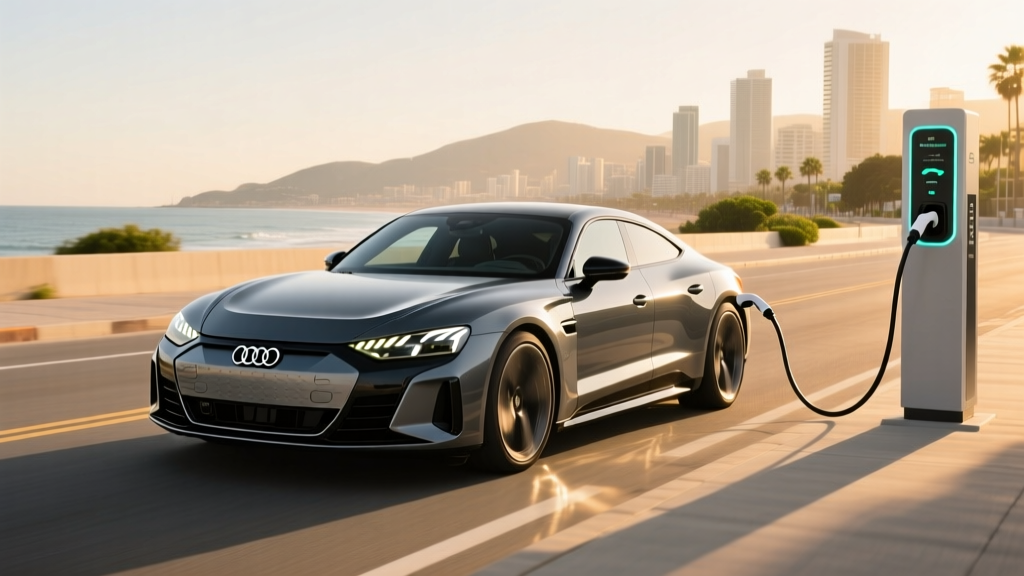
The Audi e-tron GT remains one of the most compelling luxury electric grand tourers on the market — a low-slung, 800-volt performance sedan that pairs Porsche Taycan underpinnings with Audi refinement. For 2026, the e-tron GT lineup (now including the refreshed S e-tron GT and RS e-tron GT performance trims) delivers EPA-estimated range up to 270 miles, blistering acceleration, and one of the fastest DC charging architectures in the luxury segment. But with lease pricing starting near $700/month before incentives, is it the right electrified vehicle for your garage?
This review breaks down every number that matters — from real-world highway range and cold-weather losses to the 270 kW peak charge rate and IRS §30D tax credit implications — so you can decide whether an Audi e-tron GT lease makes financial and practical sense.
2026 Audi e-tron GT: Core Specifications
| Specification | S e-tron GT quattro | RS e-tron GT performance |
|---|---|---|
| Base MSRP | $107,900 | $152,400 |
| EPA Est. Range | 270 miles | 252 miles |
| Battery (usable) | 97.0 kWh (NMC) | 97.0 kWh (NMC) |
| Drivetrain | Dual-motor AWD | Dual-motor AWD |
| Horsepower (boost) | 590 hp | 912 hp |
| 0–60 mph | 3.7 seconds | 2.5 seconds |
| Max DC Charge Rate | 270 kW | 270 kW |
| 10–80% DCFC Time | ~21 minutes | ~21 minutes |
| Level 2 Charge Rate | 11 kW (~33 mi/hr) | 11 kW (~33 mi/hr) |
| EPA Efficiency | 82 MPGe | 76 MPGe |
| Battery Warranty | 8 yr / 100,000 mi | 8 yr / 100,000 mi |
Sources: fueleconomy.gov, Audi USA official specifications.
Real-World Range: What to Actually Expect
EPA Sticker: 270 miles (S e-tron GT) / 252 miles (RS e-tron GT performance)
Real-World Highway (70 mph, 72°F): ~230–245 miles
Real-World Cold Weather (32°F, highway): ~190–215 miles
City / Mixed Commuting: ~255–270 miles (regen-friendly driving)
The e-tron GT's 97.0 kWh usable battery pack uses NMC (nickel-manganese-cobalt) chemistry, chosen for its high energy density — critical in a performance sedan where packaging space is limited. The 800-volt electrical architecture is a key advantage: it enables both the sustained high-power charging and efficient motor operation that help the e-tron GT achieve competitive efficiency for its weight class.
In real-world testing, the e-tron GT holds up well on moderate-temperature highway runs, typically delivering 85–90% of its EPA estimate at sustained 70 mph speeds. Cold weather is the equalizer — expect a 20–25% range reduction in sub-freezing temperatures, even with the standard heat pump preconditioning the battery and cabin. Audi's thermal management system is among the best in the segment, but physics dictates that lithium-ion cells lose efficiency and increase internal resistance in the cold.
For the typical e-tron GT lessee — someone with a home Level 2 charger and a commute under 60 miles round-trip — range is a non-issue. Where it matters is road trips exceeding 200 miles, where you'll need at least one DC fast-charge stop.
Charging Performance: 270 kW Peaks and Sustained Curves
| Charging Level | Power (kW) | Miles Added Per Hour | Typical Use Case |
|---|---|---|---|
| Level 1 (120V) | ~1.4 kW | ~4 mi/hr | Emergency / trickle |
| Level 2 (240V, 48A) | 11 kW | ~33 mi/hr | Home overnight charging |
| DC Fast Charge (peak) | 270 kW | ~600+ mi/hr (peak) | Road-trip stops |
The e-tron GT's 800-volt architecture allows it to accept up to 270 kW at compatible DC fast chargers — putting it in the upper tier of luxury EVs for charging speed. The 10–80% charge time of approximately 21 minutes is achievable at 350 kW-rated Electrify America or IONITY stations, though sustained rates depend heavily on battery temperature and state of charge.
Here's the charging-curve reality that spec sheets don't show: the e-tron GT holds near its peak 270 kW rate from roughly 10% to about 35% SoC, then tapers progressively. From 50–80%, you'll see rates closer to 120–150 kW. This is why manufacturers quote 10–80% times rather than 0–100% — the final 20% can take as long as the first 70% due to cell-protection tapering.
For home charging, the onboard 11 kW AC charger replenishes the full battery in roughly 9.5 hours. If your home electrical panel supports a 60-amp dedicated circuit (costing roughly $800–$2,500 for installation depending on panel proximity and local permitting), you'll wake up every morning with a full battery — the single biggest quality-of-life advantage of EV ownership.
The e-tron GT ships with a CCS1 connector in North America. Audi has committed to NACS (Tesla-style) adapter availability, granting access to Tesla Supercharger stations. Confirm adapter compatibility with your dealer at lease signing, as availability varies by model year and region.
Performance and Driving Dynamics
Both e-tron GT trims use a dual-motor all-wheel-drive layout with a two-speed rear transmission — a rarity in the EV segment that gives the car a genuinely explosive launch character while preserving highway efficiency. The S e-tron GT quattro delivers 590 hp in boost mode (launch control engaged) and sprints to 60 mph in 3.7 seconds. The RS e-tron GT performance is in hypercar territory: 912 hp and a 2.5-second 0–60 time.
What separates the e-tron GT from its platform-mate, the Porsche Taycan, is tuning philosophy. The Audi prioritizes ride comfort and grand-touring composure. Standard adaptive air suspension absorbs road imperfections with a suppleness the Taycan can't quite match, while still offering enough body control for spirited canyon driving. Regenerative braking is progressive rather than aggressive — Audi offers selectable regen levels rather than full one-pedal driving, which some EV veterans find underwhelming but most luxury sedan buyers prefer for its natural, ICE-like feel.
The e-tron GT's SAE Level 2 driver-assistance suite (Adaptive Cruise Assist with lane guidance) is competent for highway use but requires continuous driver engagement. It is not a hands-off or "self-driving" system. Audi's implementation is conservative compared to Tesla Autopilot or GM Super Cruise in terms of hands-free capability — the e-tron GT requires hands on the wheel at all times.
Pricing, Lease Costs, and Federal Tax Credit Eligibility
| Cost Factor | S e-tron GT quattro | RS e-tron GT performance |
|---|---|---|
| Base MSRP | $107,900 | $152,400 |
| As-Tested (typical options) | ~$118,000 | ~$162,000 |
| Estimated Monthly Lease (36 mo, $5K down) | ~$1,100–$1,350 | ~$1,800–$2,200 |
| Federal §30D Credit Eligible? | No (MSRP cap exceeded) | No (MSRP cap exceeded) |
| Lease Tax Advantage (varies by state) | Tax on monthly payment only* | Tax on monthly payment only* |
*In most states, leasing means you pay sales tax only on the monthly payment rather than the full vehicle price — a significant savings on a $100K+ car. Consult your tax professional for state-specific rules.
Does the e-tron GT Qualify for the Federal EV Tax Credit?
Under current IRS §30D rules, the federal clean vehicle credit has an MSRP cap: $55,000 for sedans. Both e-tron GT trims exceed this threshold significantly, meaning neither qualifies for the up-to-$7,500 federal tax credit when purchased outright.
However, there's a critical lease loophole: under IRS Notice 2024-09 (the commercial clean vehicle credit transfer provision), leased EVs are classified as commercial vehicles under §45W, and the $7,500 credit goes to the lessor (the leasing company). Many manufacturers pass this savings through as a "lease cash" incentive, effectively reducing your monthly payment. Check with your Audi dealer whether Audi Financial Services is passing through the commercial credit on e-tron GT leases — this could save you roughly $200/month over a 36-month term.
- §30D Purchase Credit: Not eligible — sedan MSRP cap is $55,000; e-tron GT starts at $107,900
- §45W Lease Credit: Potentially available to lessor — confirm pass-through with dealer
- Income caps (purchase only): $150K single / $225K head of household / $300K joint AGI
- Battery sourcing requirements: N/A for this vehicle under purchase rules
Interior, Cargo, and Daily Practicality
The e-tron GT cabin is a study in premium materials — standard Valcona leather, available Nappa leather with diamond stitching, real carbon-fiber or open-pore wood trim, and a 10.1-inch MMI touchscreen with haptic feedback. The virtual cockpit (12.3-inch digital instrument cluster) is among the best in the industry for clarity and configurability.
Practicality is where the grand-tourer body style shows its trade-offs:
- Rear cargo (trunk): 9.2 cu ft — adequate for two carry-on bags or a week's groceries, but tight for a family road trip
- Front trunk (frunk): 3.0 cu ft — fits a charging cable bag and a small duffel
- Total cargo: 12.2 cu ft — significantly less than an Audi Q8 e-tron SUV (28.5 cu ft behind rear seats)
- Rear legroom: 32.1 inches — tight for adults over 6 feet; best suited for children or shorter passengers on longer drives
- Front headroom: 37.8 inches — generous for a low-slung sedan
The e-tron GT is a driver's car first, a practical daily second. If you regularly carry rear-seat passengers or need cargo versatility, the Audi Q8 e-tron or BMW iX will serve you better.
Pros, Cons, and Key Competitors
Pros
- Class-leading 270 kW DC fast charging via 800V architecture
- Ride quality and cabin refinement exceed Porsche Taycan
- Stunning design with genuine road presence
- Strong real-world range retention in moderate climates
- Lease tax advantage (sales tax on monthly payment only in most states)
- Standard heat pump for cold-weather efficiency
Cons
- Rear seat and cargo space are limited for the price point
- No federal §30D purchase credit due to MSRP cap
- Infotainment touchscreen can be slow to respond compared to rivals
- Regen braking is mild — no true one-pedal driving mode
- Starting price above $107K even for the base S trim
- CCS connector requires adapter for Tesla Supercharger access
How It Compares
vs. Porsche Taycan: The Taycan is sharper to drive and offers a slightly larger frunk, but the e-tron GT rides better and costs roughly $10K–$15K less at equivalent trim levels. Both share the 800V J1 platform and similar charging speeds.
vs. Tesla Model S: The Model S offers more range (EPA 402 mi for Long Range) and more cargo space (hatchback design), but the e-tron GT's build quality, cabin materials, and ride comfort are in a different league. Tesla's Supercharger network advantage is narrowing with NACS adapter access.
vs. BMW i7 eDrive50: The i7 is a full-size luxury sedan with vastly more rear-seat room and cargo space (EPA 318 mi range), but it's a different vehicle philosophy — comfort limousine vs. performance grand tourer.
Who Should Lease the Audi e-tron GT?
Lease the e-tron GT if:
- You want a luxury performance EV with the best ride quality in its class
- You have home Level 2 charging and a commute under 100 miles round-trip
- You value design, build quality, and cabin refinement over maximum cargo space
- You want to take advantage of state-level lease sales tax savings on a $100K+ vehicle
- You occasionally road-trip and can plan 20-minute DC fast-charge stops
Look elsewhere if:
- You need regular rear-seat adult passenger space or significant cargo room
- You want maximum EPA range and don't want to plan charging stops
- You need the $7,500 federal purchase credit to justify the cost
- You prefer aggressive one-pedal regenerative braking
Frequently Asked Questions
What is the real-world range of the 2026 Audi e-tron GT?
The EPA rates the S e-tron GT at 270 miles and the RS e-tron GT performance at 252 miles. In real-world highway driving at 70 mph in moderate temperatures, expect 230–245 miles. In cold weather (below freezing), plan for 190–215 miles. City driving with regenerative braking can approach or match the EPA estimate.
How fast does the e-tron GT charge at home and on the road?
At home on a 240V Level 2 charger, the e-tron GT charges at 11 kW, adding roughly 33 miles of range per hour — a full charge from empty takes about 9.5 hours. On DC fast chargers, it peaks at 270 kW and charges from 10–80% in approximately 21 minutes, though sustained rates taper significantly above 50% SoC.
How much does an Audi e-tron GT lease cost per month?
Lease pricing varies by dealer, region, money factor, and incentives. Expect roughly $1,100–$1,350/month for the S e-tron GT quattro and $1,800–$2,200/month for the RS e-tron GT performance on a 36-month lease with $5,000 due at signing. If Audi Financial Services passes through the §45W commercial credit, subtract approximately $200/month.
Does the Audi e-tron GT qualify for any federal tax credits?
Not for outright purchase — the §30D credit has a $55,000 MSRP cap for sedans, and the e-tron GT starts at $107,900. However, when leased, the vehicle may qualify under §45W as a commercial clean vehicle, and the lessor can pass the $7,500 credit to you as a lease incentive. Confirm with your Audi dealer.
Is the Audi e-tron GT better than the Porsche Taycan?
They share the same J1 platform and battery architecture. The Taycan is more engaging to drive with sharper steering and a sportier character. The e-tron GT offers superior ride comfort, a quieter cabin, and typically costs $10K–$15K less at comparable trim levels. Choose based on whether you prioritize sportiness (Taycan) or grand-touring comfort (e-tron GT).
What is the battery warranty on the e-tron GT?
Audi covers the high-voltage battery for 8 years or 100,000 miles, whichever comes first, against defects and excessive capacity loss (typically defined as falling below 70% of original capacity). The powertrain (motors, power electronics) carries the same 8-year/100,000-mile warranty. The bumper-to-bumper warranty is 4 years/50,000 miles.