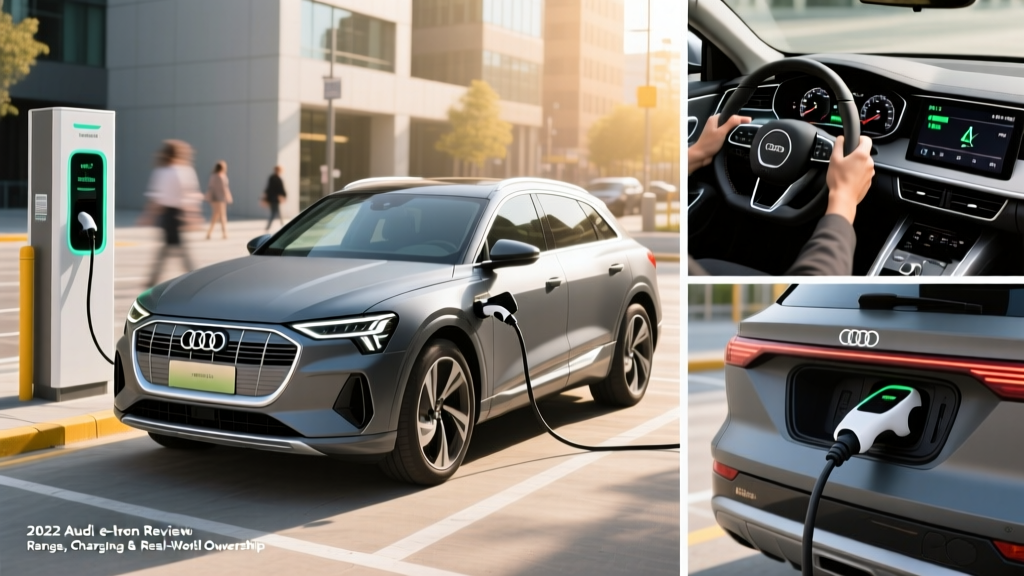
Quick Verdict: The 2022 Audi e-tron in 2026
The 2022 Audi e-tron occupies a specific niche in the used EV market: it's a luxury electric SUV that prioritizes refinement, build quality, and ride comfort over maximum range or aggressive pricing. With an EPA-estimated 222 miles of range and a usable battery of 86.5 kWh, it trails competitors like the Tesla Model X and BMW iX on paper. But numbers alone don't capture what it's like to live with this vehicle. The e-tron delivers a cabin experience that rivals anything Audi has produced, paired with DC fast-charging that remains competitive even by 2026 standards.
If you're shopping the used EV market for a premium family hauler and can accept the range compromise, the 2022 e-tron is worth serious consideration — especially at its current depreciated prices. If you need 300+ miles between charges or want the latest one-pedal driving experience, look elsewhere.
| Spec | 2022 Audi e-tron (Premium Plus) |
|---|---|
| EPA Range | 222 miles |
| Battery (usable) | 86.5 kWh (NMC) |
| Peak DC Fast Charge | 150 kW |
| 10–80% Charge Time | ~30 minutes |
| Level 2 Charge Rate | 11 kW (~20 mi/hr) |
| 0–60 mph | 5.5 seconds |
| Horsepower | 355 hp (402 hp boost mode) |
| Drivetrain | Dual-motor AWD (quattro) |
| Efficiency | 78 MPGe / 43 kWh/100mi |
| Cargo (rear seats up) | 28.5 cu ft |
| Cargo (rear seats folded) | 57.0 cu ft |
| Battery Warranty | 8 years / 100,000 miles |
| Original Base MSRP | $65,900 |
Range and Efficiency: What to Expect in the Real World
The EPA rates the 2022 Audi e-tron at 222 miles of combined range. That figure applies to the standard e-tron SUV (the Sportback variant with its sleeker roofline nets slightly more at 225 miles). For context, that puts the e-tron roughly 100 miles behind a Tesla Model X Long Range and about 80 miles short of the BMW iX xDrive50.
Real-World Range Expectations:
- Mixed driving (city/suburban): 210–225 miles — the e-tron's regenerative braking system is modest, so you won't see massive city-range gains like some competitors.
- Highway (70 mph sustained): 180–200 miles — aerodynamic drag and the e-tron's 5,600+ lb curb weight take a toll at speed.
- Cold weather (below 32°F): 150–175 miles — NMC chemistry loses efficiency in the cold, and cabin heating draws significant energy despite the standard heat pump.
Source: EPA Fuel Economy
The efficiency rating of 78 MPGe combined (43 kWh per 100 miles) is middling for the class. The e-tron's weight and conservative regenerative braking strategy — Audi deliberately chose a coasting-focused approach over aggressive one-pedal driving — contribute to this. If efficiency is your top priority, the Tesla Model X or Rivian R1S deliver more miles per kilowatt-hour.
Charging: Still Competitive at 150 kW
The 2022 e-tron uses a CCS1 connector and supports DC fast charging at up to 150 kW. In real-world testing, the e-tron's charge curve is one of its strongest assets: it sustains close to peak power well past 60% state of charge before tapering, meaning the advertised 10–80% time of approximately 30 minutes is achievable at a properly functioning 150+ kW charger.
| Charge Level | Power | Speed | Notes |
|---|---|---|---|
| Level 1 (120V) | ~1.4 kW | ~3 mi/hr | Emergency/trickle only — not practical for daily use |
| Level 2 (240V) | 11 kW | ~20 mi/hr | Full charge in ~9 hours; ideal for overnight home charging |
| DC Fast Charge | 150 kW peak | 10–80% in ~30 min | Excellent charge curve sustainability; tapers above 85% |
At home on a Level 2 charger (48-amp circuit recommended), the e-tron's 11 kW onboard charger adds roughly 20 miles of range per hour, fully replenishing the battery in about 9 hours. This is standard for the luxury EV segment — no 19.2 kW option was offered on the 2022 model, unlike some competitors.
One note for used buyers: the e-tron came with a complimentary Electrify America charging plan (typically 1,000 kWh over the first four years). If you're buying a 2022 model in 2026, that plan has likely expired, so factor public charging costs into your ownership budget.
Performance and Driving Dynamics
The 2022 e-tron's dual-motor quattro all-wheel-drive system produces 355 horsepower in standard driving, with a boost mode that temporarily unlocks 402 hp for up to 60 seconds under hard acceleration. The 0–60 mph time of 5.5 seconds is respectable but not thrilling — the Tesla Model X Plaid operates in a different universe, and even the Ford Mustang Mach-E GT is quicker.
Where the e-tron excels is refinement. The cabin is remarkably quiet at highway speeds, the air suspension soaks up imperfections, and the steering is weighted appropriately for a luxury cruiser. This is not a sport-focused EV; it's a grand tourer that happens to be electric. If you want engaging dynamics, the BMW iX or Porsche Taycan (a sedan, but worth cross-shopping) deliver more driver involvement.
Towing capacity is rated at 4,000 lbs when properly equipped — adequate for a small trailer or a couple of dirt bikes, but well below the Rivian R1S or Tesla Model X.
Interior, Tech, and Daily Livability
The 2022 e-tron's interior is where Audi's investment shows most clearly. The dual-touchscreen MMI infotainment system (10.1-inch upper, 8.6-inch lower) is responsive, and the Virtual Cockit digital instrument cluster remains one of the best in the business. Materials quality is excellent — real wood, aluminum, and available Valcona leather throughout.
Space and practicality:
- Rear legroom: 39.1 inches (comfortable for adults on longer trips)
- Cargo behind rear seats: 28.5 cu ft (competitive with midsize luxury SUVs)
- Cargo with rear seats folded: 57.0 cu ft
- No front trunk (frunk) — the space is occupied by electronics and HVAC components
On the tech front, the e-tron includes Audi's Adaptive Cruise Assist with lane guidance as part of the available Driver Assistance package. This is a Level 2 driver-assistance system — it handles steering, acceleration, and braking on highways, but requires continuous driver supervision. It is not autonomous driving.
Notable drawbacks: The e-tron's regenerative braking is mild by modern EV standards. Audi offers steering-wheel paddles to adjust regen intensity, but even at maximum, it won't deliver true one-pedal driving. Some owners find the dual-screen climate controls distracting while driving. And the absence of a frunk is a missed opportunity for additional storage.
Pricing, Tax Credits, and Ownership Costs
The 2022 Audi e-tron launched with a base MSRP of $65,900 for the Premium Plus trim, with the Prestige trim adding roughly $5,000 for features like the Matrix-design LED headlights and head-up display. The Sportback variant started at $69,900. By 2026, used 2022 e-trons typically trade between $32,000 and $42,000 depending on mileage, condition, and trim — a significant depreciation hit that benefits second owners.
| Trim | Original MSRP (2022) | Estimated Used Price (2026) | Federal Tax Credit (Used EV) |
|---|---|---|---|
| e-tron Premium Plus | $65,900 | $34,000–$38,000 | Up to $4,000 (§25E) |
| e-tron Prestige | $71,000 | $37,000–$42,000 | Up to $4,000 (§25E) |
| e-tron Sportback Premium Plus | $69,900 | $36,000–$40,000 | Up to $4,000 (§25E) |
Federal tax credit eligibility: The 2022 e-tron does not qualify for the new-vehicle §30D credit (it's no longer sold new). However, it may qualify for the §25E used EV credit, which provides up to $4,000 (30% of the sale price, capped at $4,000) for vehicles priced at $25,000 or less. Given that many 2022 e-trons now sell above $25,000, check the specific vehicle's sale price. Income caps apply: $150,000 for joint filers, $112,500 for heads of household, $75,000 for single filers. Always verify current eligibility on IRS.gov and consult a tax professional.
Warranty and Long-Term Battery Health
Audi covers the 2022 e-tron's battery and electric powertrain for 8 years or 100,000 miles, whichever comes first. The battery warranty guarantees that the pack will retain at least 70% of its original capacity during that period. The general vehicle warranty was 4 years/50,000 miles — most 2022 models have now exited that coverage window, so factor potential maintenance costs into your budget.
The e-tron uses NMC (nickel manganese cobalt) battery chemistry, which offers higher energy density than LFP but is more susceptible to degradation from frequent DC fast charging and extreme temperatures. Best practices for long-term health: charge to 80% for daily use, avoid leaving the vehicle at very low or very high state of charge for extended periods, and use DC fast charging judiciously.
For a 2022 model in 2026, the battery should still be well within warranty coverage. Request a pre-purchase battery health report (state of health / SoH) from the seller or an Audi dealer before buying.
Who Should Buy the 2022 Audi e-tron?
Pros:
- Exceptional cabin refinement and build quality
- Competitive DC fast-charging curve (sustained power delivery)
- Comfortable air suspension and quiet ride
- Significant depreciation = value for used buyers
- Strong safety ratings (IIHS Top Safety Pick+)
Cons:
- EPA range of 222 miles trails key competitors
- Mild regenerative braking — no true one-pedal driving
- No frunk for additional storage
- Dual-screen climate controls can be distracting
- Higher energy consumption (43 kWh/100mi) than rivals
Best suited for: Daily commuters with home charging who prioritize luxury and comfort over maximum range. The e-tron works well for suburban families who take occasional road trips (the 150 kW charging makes longer drives manageable with planning) but don't regularly drive 250+ miles in a single day. It's also a strong choice for buyers who want Audi's design language and build quality without paying new-car prices.
Look elsewhere if: You need 300+ miles of range, want the latest one-pedal driving experience, prioritize maximum cargo space, or frequently tow heavy loads.
Frequently Asked Questions
What is the real-world range of the 2022 Audi e-tron?
The EPA rates it at 222 miles combined. In real-world driving, expect 210–225 miles in mixed city/suburban use, 180–200 miles on the highway at 70 mph, and 150–175 miles in cold weather below freezing. Range varies significantly with driving style, terrain, and climate control usage.
How fast does the 2022 e-tron charge?
On a DC fast charger, it peaks at 150 kW and can charge from 10–80% in approximately 30 minutes at a capable station. At home on Level 2 (240V), the 11 kW onboard charger adds about 20 miles of range per hour, fully charging the battery in roughly 9 hours.
Does the 2022 Audi e-tron qualify for a federal tax credit?
Not the new-vehicle §30D credit, since it's no longer sold new. However, it may qualify for the §25E used EV credit (up to $4,000) if the sale price is $25,000 or less and your income falls below the caps ($150,000 joint / $75,000 single). Verify eligibility on IRS.gov and consult a tax professional.
Is the 2022 e-tron worth buying vs. competitors?
It depends on your priorities. If you value cabin quality, ride comfort, and brand prestige, the e-tron is excellent at its current used prices. If range and efficiency are paramount, the Tesla Model X, BMW iX, or Rivian R1S offer more miles per charge. The e-tron trades cutting-edge EV specs for traditional luxury refinement.
What are the biggest maintenance concerns?
The battery is covered for 8 years/100,000 miles and NMC packs in Audi's thermal management system have shown good longevity. Common wear items include tires (the heavy EV wears tires faster than gas cars), brake fluid (regenerative braking means the friction brakes are used less, but fluid still needs periodic replacement), and cabin air filters. The 4-year/50,000-mile bumper-to-bumper warranty has expired on most 2022 models.
Does the e-tron have a frunk?
No. The space under the hood is occupied by power electronics and HVAC components. All cargo must go in the rear hatch area (28.5 cu ft with seats up, 57.0 cu ft folded).