Quick Answer: Which Audi Electric Vehicle Fits You?
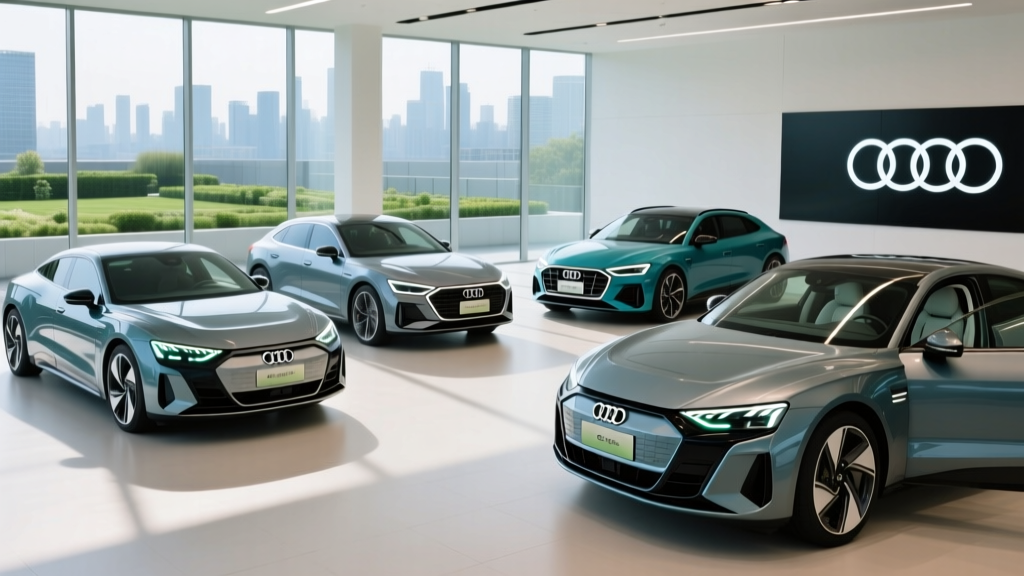
If you're researching an Audi electric vehicle in 2026, the lineup centers on the Q4 e-tron (compact SUV, ~265 mi EPA, from ~$51,300), the Q6 e-tron (midsize SUV, ~321 mi EPA, from ~$65,095), and the e-tron GT / RS e-tron GT (performance sedan, ~238–270 mi EPA, from ~$108,000). The Q4 e-tron is the volume seller and most accessible; the Q6 e-tron offers the best range and tech on Audi's new PPE platform; the e-tron GT targets Porsche Taycan buyers who want four doors. All three use NMC battery chemistry and support DC fast charging above 175 kW (Q6 e-tron peaks at 270 kW). None currently qualify for the full $7,500 federal §30D tax credit due to battery-sourcing rules — always verify current IRS eligibility before purchase.
The 2026 Audi EV Lineup at a Glance
Audi's electric portfolio has matured significantly since the original e-tron SUV launched. For 2026, the brand offers three distinct EV families built on two platforms. Here's how they stack up on paper and in practice.
| Spec | Q4 e-tron (Premium) | Q6 e-tron (Premium) | e-tron GT quattro |
|---|---|---|---|
| EPA Range | ~265 mi | ~321 mi | ~270 mi |
| Battery (usable) | 77 kWh NMC | 94.9 kWh NMC | 83.7 kWh NMC |
| Peak DC Charge Rate | 175 kW | 270 kW | 270 kW |
| 10–80% DC Time | ~28 min | ~21 min | ~22 min |
| Level 2 (AC) Rate | 11.5 kW | 11.5 kW | 11.5 kW |
| Horsepower | 282 hp (RWD) / 340 hp (quattro) | 362 hp (RWD) / 456 hp (quattro) | 590 hp |
| 0–60 mph | 6.6s (RWD) / 5.0s (quattro) | 5.5s (RWD) / 4.7s (quattro) | 3.9s |
| MPGe (combined) | ~95 MPGe | ~100 MPGe | ~85 MPGe |
| Base MSRP | $51,300 | $65,095 | $108,000 |
| Battery Warranty | 8 yr / 100,000 mi | 8 yr / 100,000 mi | 8 yr / 100,000 mi |
Real-World Range Reality Check
EPA estimates assume a mix of city and moderate-speed driving. In our experience and consistent with third-party testing, expect 10–15% less range on sustained highway trips at 70+ mph. Cold weather (below 30°F) can reduce range by 20–30% due to cabin heating demands and battery resistance, even with Audi's standard heat pump. The Q6 e-tron's 321-mile EPA rating translates to roughly 270–280 real highway miles in mild weather and closer to 220–240 miles in freezing temperatures. Plan charging stops accordingly.
Charging Speed: What the Numbers Actually Mean
Audi advertises peak DC fast-charging rates, but kW (power) is not the same as kWh (energy). Think of kW as how fast water flows through a hose, and kWh as the size of the tank. A 270 kW peak rate doesn't mean you'll sustain 270 kW for the entire session — the charge curve tapers significantly above 60% state of charge to protect the battery.
| Charging Level | Power (kW) | Miles Added per Hour | Typical Use Case |
|---|---|---|---|
| Level 1 (120V outlet) | ~1.4 kW | ~3–5 mi/hr | Emergency / overnight trickle |
| Level 2 (240V home) | 11.5 kW | ~30–38 mi/hr | Daily home charging |
| DC Fast (Q4 e-tron) | Up to 175 kW | ~170+ mi in 28 min (10–80%) | Road trips |
| DC Fast (Q6 e-tron / GT) | Up to 270 kW | ~210+ mi in 21 min (10–80%) | Road trips |
The Q6 e-tron's 800-volt architecture (shared with the Porsche Macan EV) allows that 270 kW peak, but you'll only see it at chargers rated 350 kW or higher — such as Electrify America's newest stations. On a 150 kW charger, expect roughly 130–150 kW sustained through the bulk of the session. Audi's official specs confirm preconditioning is available: the car warms or cools the battery en route to a charger to maximize charge speed upon arrival. Always use navigation to a charger to trigger this.
Audi EV vs. Gas and Hybrid: The Cost Comparison
The most common question from Audi shoppers: does going electric actually save money? Let's compare the Q6 e-tron against its closest internal-combustion sibling, the Audi Q5 (gas), and the Q5 TFSI e (plug-in hybrid).
| Factor | Q6 e-tron (EV) | Q5 TFSI e (PHEV) | Q5 45 TFSI (Gas) |
|---|---|---|---|
| Base MSRP | $65,095 | $58,200 | $47,300 |
| EPA Combined | 100 MPGe | 59 MPGe / 27 mpg gas | 25 mpg combined |
| Annual Fuel/Energy (15k mi) | ~$600–$900 | ~$1,100–$1,500 | ~$1,800–$2,200 |
| Annual Maintenance Est. | ~$300–$500 | ~$600–$900 | ~$700–$1,100 |
| Insurance (avg. annual) | ~$2,200–$2,800 | ~$1,900–$2,400 | ~$1,700–$2,200 |
| 5-Year Energy + Maint. | ~$4,500–$7,000 | ~$8,500–$12,000 | ~$12,500–$16,500 |
| Oil Changes Needed | None | Yes (2–3/yr) | Yes (2–3/yr) |
Over five years and 75,000 miles, the Q6 e-tron saves roughly $5,000–$9,000 in energy and maintenance compared to the gas Q5, based on national average electricity and fuel prices from fueleconomy.gov. However, the Q6's higher purchase price ($17,795 more than the base gas Q5) means break-even takes roughly 4–6 years depending on your local utility rates and driving habits. The PHEV Q5 sits in between — lower upfront cost than the EV, but you still pay for gasoline on longer trips and maintain an engine.
Important caveat: these savings assume mostly home Level 2 charging at residential electricity rates (~$0.14–$0.18/kWh national average). If you rely primarily on public DC fast charging (~$0.35–$0.55/kWh at networks like Electrify America), your annual energy cost climbs to $1,200–$1,600 — narrowing the gap significantly.
Tax Credits and Incentives: What You Actually Qualify For
Federal EV tax credit rules under IRS §30D have tightened considerably. For 2026, the $7,500 credit requires the vehicle to meet battery-component and critical-minerals sourcing thresholds, MSRP caps ($80,000 for SUVs, $55,000 for sedans), and buyer income limits ($300,000 joint / $150,000 single modified AGI).
- Q4 e-tron: MSRP starts at $51,300 (under the $80,000 SUV cap), but battery sourcing requirements may reduce or eliminate the credit. Check the latest IRS qualified vehicle list before purchasing.
- Q6 e-tron: MSRP starts at $65,095 (under the cap), but critical-minerals sourcing remains uncertain for full credit eligibility.
- e-tron GT: Starting at $108,000, it exceeds the $55,000 sedan MSRP cap — not eligible for the federal credit.
- Point-of-sale transfer: If eligible, you can transfer the credit to the dealer at purchase for an immediate price reduction rather than waiting to claim it on your tax return.
Many states offer additional rebates (California's CVRP, Colorado's state credit, etc.), but these vary by jurisdiction and income. Consult your tax professional and your state's energy office for current amounts.
Home Charging Setup: What Audi Owners Need to Know
Audi's 11.5 kW onboard charger means a proper Level 2 home setup is essential for practical daily ownership. Here's what to budget:
| Item | Estimated Cost |
|---|---|
| Level 2 EVSE (48A charger, e.g., ChargePoint Home Flex, Emporia) | $400–$700 |
| Electrician: 240V/60A circuit install (standard panel) | $800–$2,000 |
| Permit and inspection | $100–$300 |
| Panel upgrade (if 100A service needs 200A) | $2,000–$4,500 |
| Total (no panel upgrade) | $1,300–$3,000 |
| Total (with panel upgrade) | $3,300–$7,500 |
The Q4 e-tron and Q6 e-tron both accept 11.5 kW on Level 2, meaning a full charge from empty takes roughly 8–10 hours. Most owners plug in overnight and wake to a full battery. If you live in an apartment or lack dedicated parking, public charging infrastructure in your area becomes a deal-or-no-deal factor — check PlugShare or your utility's charger map before committing.
Common Misconceptions About Audi EVs
| Myth | Fact |
|---|---|
| "Audi EVs have terrible range." | The Q6 e-tron delivers 321 mi EPA — competitive with the BMW iX and Mercedes EQE SUV. The Q4 e-tron's 265 mi is adequate for most daily driving but trails the Hyundai Ioniq 5 (310 mi). |
| "The battery will need replacing in 5 years." | Audi warranties the battery for 8 years/100,000 miles against degradation below 70% capacity. Industry data shows NMC batteries typically retain 85–90% capacity at 100,000 miles with normal use. |
| "I can't take an Audi EV on road trips." | The Q6 e-tron charges 10–80% in ~21 minutes at a 350 kW station. A 500-mile trip requires one or two stops of 20–25 minutes each — manageable with route planning. |
| "All Audi EVs qualify for the $7,500 tax credit." | Battery sourcing rules under §30D disqualify many imported EVs from the full credit. Always check the IRS qualified vehicle list for the current model year. |
| "Audi's driver assist is self-driving." | Audi's adaptive cruise and lane-keeping systems are SAE Level 2 — the driver must remain attentive and hands-on or eyes-on at all times. This is not autonomous driving. |
SAE Automation Level Reminder
Audi's driver-assistance features (adaptive cruise assist, active lane guidance) are SAE Level 2. The car can manage steering, acceleration, and braking under certain conditions, but you are the driver. You must monitor the road and be ready to intervene instantly. No Audi currently sold offers Level 3 or higher autonomy in the U.S. market.
Decision Framework: Which Audi EV Is Right for You?
Choose Based on Your Situation
Choose the Q4 e-tron if: You want the most affordable entry into the Audi EV lineup, primarily drive under 200 miles daily, have home charging, and value compact-SUV practicality. Best for urban and suburban commuters.
Choose the Q6 e-tron if: You need 300+ miles of real-world range for road trips, want the latest 800V charging architecture, need midsize-SUV cargo space (roughly 60 cu ft with seats folded), and can absorb a $65,000+ starting price.
Choose the e-tron GT if: Performance is the priority (590 hp, 3.9s 0–60), you want a luxury sport sedan, budget is flexible above $100,000, and you accept a lower 270-mile range as the trade-off for speed and design.
Choose a PHEV (Q5 TFSI e) instead if: You lack reliable home charging, frequently drive in areas with sparse DC fast-charging infrastructure, or regularly take trips exceeding 400 miles and don't want to plan charging stops. The PHEV gives you ~23 miles of electric-only range for daily commuting with a gas engine for everything else.
Wait or look elsewhere if: You need a three-row electric SUV (Audi doesn't offer one yet — the Q8 e-tron was discontinued), your budget is under $45,000 (consider the Hyundai Ioniq 5 or Chevrolet Equinox EV), or you want LFP battery chemistry for maximum cycle life (Audi uses NMC across the lineup).
Frequently Asked Questions
Does Audi use NACS or CCS for charging?
For 2026, Audi has adopted the North American Charging Standard (NACS) port on new models, aligning with the broader industry shift. The Q6 e-tron ships with a NACS port, granting access to Tesla Supercharger stations (V3/V4) with an adapter or natively, depending on model year and production date. Older CCS-equipped Audis can use a CCS-to-NACS adapter for Supercharger access. Verify the connector on your specific vehicle before purchase.
How much does it cost to charge an Audi EV at home?
With a national average residential electricity rate of ~$0.16/kWh, fully charging the Q6 e-tron's 94.9 kWh battery costs roughly $15.20. For the Q4 e-tron (77 kWh), it's about $12.30. If you drive 15,000 miles per year at 3 mi/kWh efficiency, expect annual home charging costs of $800–$1,000 — roughly half what you'd spend on gasoline in a comparable Q5.
What happens to the battery in extreme cold?
NMC batteries lose efficiency in freezing temperatures. Expect 20–30% range reduction below 30°F due to increased cabin heating loads and slower electrochemistry. Audi's heat pump (standard on most trims) recovers waste heat from the drivetrain to warm the cabin more efficiently than resistive heating, partially mitigating this loss. Preconditioning the car while plugged in before departure helps preserve range.
Is the Audi Q8 e-tron still available?
No. Audi discontinued the Q8 e-tron (formerly just "e-tron") after the 2024 model year. The Q6 e-tron effectively replaces it in the lineup with better range, faster charging, and the newer PPE platform.
How does Audi's warranty compare to competitors?
Audi provides an 8-year/100,000-mile battery warranty with a 70% capacity retention threshold, matching BMW and Mercedes-Benz. Hyundai/Kia offers 10 years/100,000 miles, and Tesla offers 8 years/120,000 miles (Model Y). Audi's bumper-to-bumper warranty is 4 years/50,000 miles — typical for the luxury segment.