Quick Answer: Is an Audi Electric Sports Car Right for You?
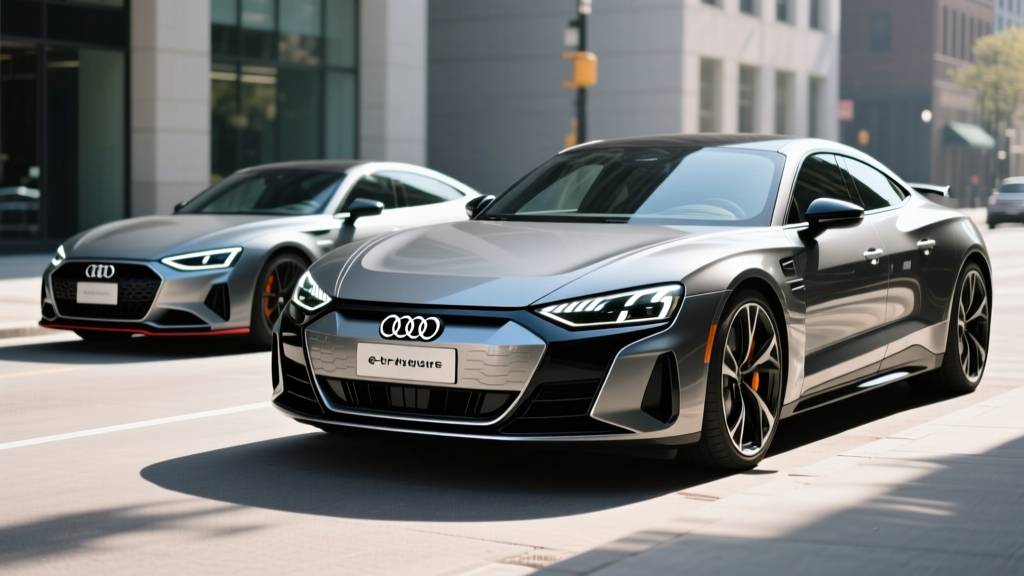
The Audi electric sports car lineup centers on the e-tron GT and high-output RS e-tron GT, both riding the Porsche Taycan-derived J1 800-volt platform. For 2026, the refreshed e-tron GT family offers up to an EPA-estimated 270 miles of range (e-tron GT quattro), peak DC fast charging at 320 kW (10–80% in approximately 18 minutes under ideal conditions), and 0–60 mph times as low as 2.5 seconds for the RS variant. Prices start near $84,000 for the e-tron GT quattro and climb past $165,000 for the RS e-tron GT performance. These are premium grand tourers that trade some rear-seat and cargo practicality for striking design, rapid charging, and supercar-rivaling acceleration. They do not qualify for the §30D federal new-EV tax credit due to MSRP and sourcing rules, so plan your budget accordingly.
The 2026 Audi Electric Sports Car Lineup at a Glance
Audi's performance EV ambitions live or die by the e-tron GT family. Unlike the Q8 e-tron SUV or the Q6 e-tron crossover, the GT is a low-slung, four-door grand tourer co-developed with Porsche on the J1 platform. For 2026, Audi offers three core trims in the US market:
- e-tron GT quattro — the entry point, dual-motor AWD, 590 hp (launch control)
- RS e-tron GT — higher output at 646 hp, sport-tuned suspension, aggressive styling
- RS e-tron GT performance — the range-topper, up to 912 hp in launch mode, 2.5-second 0–60
All three share an updated 105 kWh gross battery pack (approximately 97 kWh usable), upgraded from the original 93.4 kWh unit. This larger NMC (nickel manganese cobalt) pack is the key to improved range and sustained charging speeds across the lineup.
| Spec | e-tron GT quattro | RS e-tron GT | RS e-tron GT performance |
|---|---|---|---|
| Base MSRP | ~$84,000 | ~$120,000 | ~$165,000 |
| Drivetrain | Dual-motor AWD | Dual-motor AWD | Dual-motor AWD |
| Horsepower (Launch Control) | 590 hp | 646 hp | 912 hp |
| 0–60 mph | 3.9 sec | 3.4 sec | 2.5 sec |
| Battery (gross / usable) | 105 kWh / ~97 kWh | 105 kWh / ~97 kWh | 105 kWh / ~97 kWh |
| EPA Range (est.) | 270 mi | 255 mi | 238 mi |
| Max DC Charge Rate | 320 kW | 320 kW | 320 kW |
| 10–80% DC Time (ideal) | ~18 min | ~18 min | ~18 min |
| Level 2 AC Charge | 11 kW (9.6 kW US) | 11 kW (9.6 kW US) | 11 kW (9.6 kW US) |
| Connector | NACS (2026+) | NACS (2026+) | NACS (2026+) |
| Battery/Powertrain Warranty | 8 yr / 100,000 mi | 8 yr / 100,000 mi | 8 yr / 100,000 mi |
Range and Efficiency: Real-World Expectations vs. EPA Stickers
Audi publishes EPA estimates, but real-world range in a performance EV like this depends heavily on how and where you drive. The J1 platform's 800-volt architecture is efficient at high speed, but aggressive acceleration, cold weather, and highway cruising at 75+ mph all cut into your usable miles.
EPA vs. Real-World Range — e-tron GT quattro:
- EPA sticker: 270 miles
- Mixed real-world driving (55–70 mph, moderate climate): ~235–255 miles
- Sustained highway at 75+ mph: ~210–230 miles
- Cold weather (below 30°F) with cabin heat: ~185–215 miles
The RS performance variant, with its stickier tires and higher power output, can dip below 200 miles on a spirited highway drive. Plan conservatively for road trips.
The e-tron GT includes a standard heat pump, which reduces cold-weather range loss compared to resistive heating. Preconditioning the battery while plugged in — using the myAudi app or scheduled departure timers — is essential for preserving range in winter and for achieving peak DC charging speeds. According to fueleconomy.gov, the e-tron GT's efficiency lands in the range of approximately 82–85 MPGe combined depending on trim, which translates to roughly 38–41 kWh/100 miles.
Charging Speed and Infrastructure: The 800-Volt Advantage
The J1 platform's 800-volt architecture is the e-tron GT's party trick. Where most 400-volt EVs peak at 150–250 kW, the refreshed e-tron GT can accept up to 320 kW at a compatible DC fast charger. That's among the fastest-charging production EVs available.
| Charging Level | Power (kW) | Miles Added per Hour | Use Case |
|---|---|---|---|
| Level 1 (120V outlet) | ~1.4 kW | ~3–4 mi/hr | Emergency / trickle |
| Level 2 (240V, 40A circuit) | ~9.6 kW | ~25–28 mi/hr | Daily home charging |
| DC Fast Charge (350 kW station) | Up to 320 kW peak | ~180 mi in 10 min | Road trips |
Charging curve reality: The 320 kW peak is not sustained across the full session. You'll see peak speeds between roughly 10% and 40% state of charge, after which the rate tapers. A 10–80% session takes approximately 18 minutes at a 350 kW Electrify America or Tesla Supercharger (with NACS adapter) station under ideal thermal conditions. From 80–100%, expect another 15–20 minutes — the curve flattens significantly to protect battery longevity.
For 2026, Audi has transitioned to the NACS (North American Charging Standard) connector on new e-tron GT models, granting access to Tesla Supercharger V4 stalls alongside Electrify America and other CCS-to-NACS networks. If you're buying a 2024–2025 model with a CCS port, Audi provides a NACS adapter, but native NACS is the standard going forward.
Audi Electric Sports Car vs. Gas Rivals: Cost and Performance Data
The e-tron GT's natural competitors include the Porsche Panamera, BMW M8 Gran Coupe, and Mercedes-AMG GT 4-Door. Here's how the numbers stack up against a typical gas performance sedan:
| Metric | Audi RS e-tron GT (2026) | Gas Rival (BMW M8 Gran Coupe) |
|---|---|---|
| Base Price | ~$120,000 | ~$140,000 |
| 0–60 mph | 3.4 sec | 3.0 sec (Competition) |
| Annual Fuel/Energy Cost | ~$900–$1,200 (electricity) | ~$3,200–$3,800 (premium gas) |
| Annual Maintenance | ~$300–$500 | ~$1,200–$2,000 |
| 5-Year Fuel/Energy Total | ~$5,000–$6,000 | ~$16,000–$19,000 |
| CO₂ Tailpipe Emissions | 0 g/mi | ~400 g/mi |
| Federal Tax Credit (§30D) | Not eligible (MSRP cap) | N/A |
The e-tron GT doesn't win every drag race against six-figure gas exotics, but its instant torque delivery, near-silent operation, and dramatically lower running costs shift the value equation. Over five years and 75,000 miles, the energy and maintenance savings can total $12,000–$15,000 compared to a comparable gas performance sedan, partially offsetting the premium purchase price.
Real Costs of Ownership: Purchase, Charging, Insurance, and Maintenance
Buying an Audi electric sports car is not just about MSRP. Here's a realistic breakdown of what ownership actually costs.
| Category | Estimated Cost | Notes |
|---|---|---|
| Purchase Price (MSRP) | $84,000 | Before options, destination, dealer fees |
| Federal Tax Credit (§30D) | $0 | Exceeds $55,000 sedan MSRP cap per IRS rules |
| Home Level 2 Charger Install | $1,200–$2,500 | Equipment + electrician; may need panel upgrade |
| Electricity (5 yr / 75K mi) | $4,500–$6,000 | Based on $0.14–$0.18/kWh avg; varies by state |
| Maintenance (5 yr) | $1,500–$2,500 | Tire rotation, cabin filter, brake fluid; no oil changes |
| Tire Replacement (1 set) | $1,800–$2,800 | EV-specific tires wear faster under high torque |
| Insurance (5 yr avg) | $14,000–$20,000 | Premium EV performance segment; get quotes early |
| Estimated Depreciation (5 yr) | $35,000–$45,000 | Luxury EVs depreciate steeply; lease may be smarter |
Key ownership insight: Luxury EVs in the $80K+ range tend to depreciate faster than mainstream EVs and gas cars. The e-tron GT is no exception. If you plan to own for 3 years or fewer, leasing is often the financially sound choice — it protects you from residual-value risk and, in some cases, the leasing company can pass through the commercial clean vehicle credit (§45W) as a lease incentive, even when the purchase credit is unavailable.
Common Misconceptions About the Audi e-tron GT
| Myth | Fact |
|---|---|
| "It qualifies for the $7,500 federal tax credit." | It does not. The §30D credit caps sedan MSRP at $55,000. The e-tron GT starts at $84K+ and also faces battery-sourcing restrictions. Per IRS §30D guidelines, no e-tron GT trim currently qualifies. |
| "I'll get 270 miles no matter how I drive." | The 270-mile EPA figure assumes mixed driving. Sustained highway speeds, cold weather, and aggressive acceleration can reduce range by 15–30%. |
| "DC charging at 320 kW means 10 minutes for a full charge." | Peak 320 kW only applies in a narrow SoC window (roughly 10–40%). A full 10–80% session takes ~18 minutes; 80–100% takes considerably longer due to taper. |
| "EVs need less maintenance, so tires last longer too." | The opposite for tires. The e-tron GT's instant torque and ~5,100 lb curb weight accelerate tire wear. Budget for replacement at 20,000–30,000 miles under spirited driving. |
| "I can charge at any public station without an adapter." | 2026 models use NACS natively. Older CCS-port models (2022–2025) need an adapter for Tesla Superchargers. Always verify connector compatibility before a road trip. |
First-Time EV Buyer Checklist: What to Know Before You Buy
If the e-tron GT is your first electric vehicle, here are the practical realities that spec sheets don't emphasize:
Home Charging Access Is Non-Negotiable
Public-only charging in a $120K+ car gets expensive fast — DC fast charging costs roughly $0.35–$0.50/kWh at Electrify America or EVgo, compared to $0.12–$0.18/kWh at home. Without a Level 2 home charger, you'll spend more time and money fueling than you expect. Budget $1,200–$2,500 for a quality Level 2 station (e.g., ChargePoint Home Flex or Tesla Wall Connector) plus installation by a licensed electrician. If your home has a 100-amp electrical panel, a panel upgrade to 200 amps can add $1,500–$3,500 to the total.
Preconditioning Is Your Secret Weapon
The e-tron GT's battery performs best between 68°F and 104°F. In cold weather, preconditioning the battery while it's still plugged in (via the myAudi app or a scheduled departure time) warms the cells using grid power rather than battery power. This preserves range and unlocks peak DC charging speeds when you arrive at a fast charger.
Insurance Quotes Before You Sign
Premium-performance EVs carry higher insurance costs due to repair complexity, battery replacement expense, and specialized labor. Get quotes from at least three insurers before purchase. Expect annual premiums of $2,800–$4,000 depending on your driving record, location, and coverage level.
Battery Degradation and Warranty
Audi covers the e-tron GT's high-voltage battery for 8 years or 100,000 miles, guaranteeing at least 70% capacity retention. Real-world data from the J1 platform (shared with the Taycan) suggests degradation is modest — most owners report 90–95% state of health after 60,000 miles. The 800-volt system's thermal management is robust, but avoid habitual DC fast charging to 100% — charging to 80–85% for daily use extends long-term battery health.
Decision Framework: Should You Buy the Audi e-tron GT?
Buy the Audi e-tron GT if:
- You want a head-turning four-door grand tourer with sub-4-second (or sub-3-second) acceleration
- You have reliable home Level 2 charging access
- You drive fewer than 250 miles per day and road-trip 4–6 times per year (manageable with DC fast charging)
- You value the lowest running costs in the luxury performance segment
- You're prepared for steep depreciation and plan to lease or own 5+ years
Look elsewhere if:
- You need maximum cargo space or regular rear-seat adult passengers (the Taycan and e-tron GT have cramped rear headroom)
- You live in a charging desert with no reliable DC fast chargers within 50 miles
- You need a federal tax credit to make the math work — this car doesn't qualify
- You want an SUV or crossover — consider the Audi Q8 e-tron, Q6 e-tron, or the RS Q6 e-tron instead
- You tow frequently — the e-tron GT is not rated for towing
Consider a competitor if:
- Porsche Taycan: Slightly better driving dynamics and range (up to 318 mi EPA for the Taycan 4S with Performance Battery Plus), but similarly priced
- Tesla Model S Plaid: Faster (1.99 sec 0–60), longer range (402 mi EPA), lower price (~$89,990), but less premium interior fit and finish
- Lucid Air Sapphire: 1,234 hp, 427 mi EPA, $249,000 — in a different price stratosphere
Frequently Asked Questions
Does the Audi e-tron GT qualify for any federal or state EV tax credits?
The e-tron GT does not qualify for the §30D new clean vehicle credit because it exceeds the $55,000 MSRP cap for sedans. Battery component and critical mineral sourcing requirements further limit eligibility. Some states offer separate rebates or HOV-lane access — check your state's energy office or fueleconomy.gov for current programs. Lease deals may pass through a commercial credit as a capitalized-cost reduction, effectively lowering monthly payments.
How long does the e-tron GT battery last, and what does replacement cost?
The battery is warrantied for 8 years / 100,000 miles at 70% capacity retention. J1-platform data from Taycan and earlier e-tron GT models shows typical degradation of 5–10% over the first 60,000–80,000 miles. Out-of-warranty replacement for a ~97 kWh usable pack would likely cost $20,000–$30,000 including labor, based on current luxury EV battery pricing, though costs are expected to decline as the supply chain matures.
Can I daily-drive the e-tron GT in winter?
Yes, with preparation. The standard heat pump, AWD, and preconditioning features make it a capable winter vehicle. Expect 15–25% range loss in sustained sub-30°F temperatures. Winter tires (the e-tron GT typically ships on 20- or 21-inch summer or all-season rubber) are strongly recommended for snow and ice. Regenerative braking is slightly reduced when the battery is cold, so allow extra following distance until the pack warms up.
What's the difference between the e-tron GT and the Porsche Taycan?
Both share the J1 800-volt platform, similar battery packs, and comparable charging speeds. The Taycan generally offers slightly more range (up to 318 mi EPA in optimal trims), a wider range of body styles (sedan, Cross Turismo, Sport Turismo), and marginally sharper handling. The e-tron GT counters with more distinctive exterior design, a slightly more luxurious cabin, and a standard panoramic glass roof. Choose based on brand preference, styling, and dealer experience — mechanically, they're close siblings.
Is the e-tron GT considered self-driving?
No. The e-tron GT comes equipped with Audi's adaptive cruise assist and lane-keeping features, which classify as SAE Level 2 driver-assistance. You must remain attentive, keep your hands on or near the wheel, and be ready to take over at any time. This is not autonomous driving. No production Audi sold today offers Level 3 or higher automation in the US market.