The Short Answer: There Is No Production Electric R8
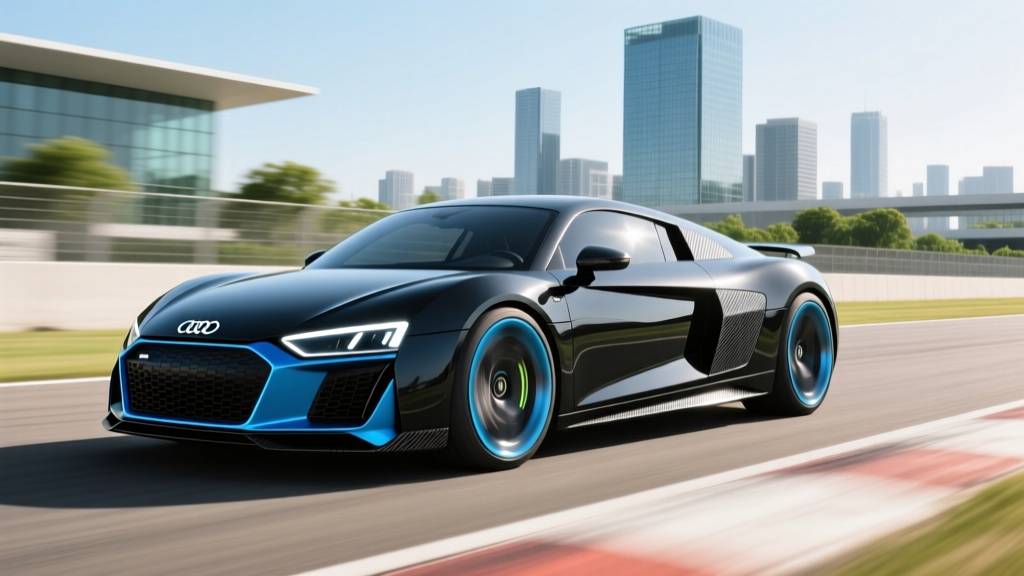
If you've been searching for an electric R8, here's the direct truth: as of 2026, Audi has not produced a battery-electric successor to the R8 supercar. The R8 nameplate was discontinued after the 2023 model year, ending with a V10 final edition. The closest thing Audi offers to an "electric R8" is the Audi RS e-tron GT — a high-performance four-door grand tourer sharing its J1 platform with the Porsche Taycan. It delivers supercar-rivaling acceleration but a fundamentally different body style, price point, and ownership experience. If you want an electric Audi with exotic-car performance, the RS e-tron GT is what's actually available to buy today.
Why the Electric R8 Search Keeps Coming Up
The Audi R8 held iconic status from 2006 through 2023 as a mid-engine, V10-powered supercar that undercut Ferrari and Lamborghini on price while delivering comparable thrills. When Audi announced the R8's discontinuation, speculation about an electric successor intensified — fueled by concept renderings, automotive press rumors, and Audi's broader electrification push under the e-tron banner.
The confusion is understandable. Audi has electrified nearly every segment: the Q4 e-tron, Q8 e-tron, e-tron GT family, and upcoming models on the PPE platform. But the low-volume, mid-engine supercar segment presents unique engineering challenges for battery-electric conversion — primarily weight distribution, battery packaging in a compact chassis, and the enthusiast expectation of lightweight agility that current battery technology struggles to deliver.
Rather than force an electric R8 that would weigh over 5,000 pounds and compromise the nameplate's identity, Audi funneled its performance-EV ambitions into the e-tron GT lineup. That's the car we need to evaluate if you're shopping for electric Audi performance.
The Actual Alternative: 2026 Audi RS e-tron GT
The RS e-tron GT is the closest proxy to an electric R8 in Audi's current showroom. Here are the exact figures that matter:
| Specification | 2026 Audi RS e-tron GT | 2023 Audi R8 V10 (Final) |
|---|---|---|
| Powertrain | Dual-motor AWD, 93.4 kWh battery (NMC) | 5.2L V10, RWD/AWD |
| Horsepower | 637 hp (Launch Control) | 602 hp |
| 0–60 mph | 3.1 seconds | 3.0 seconds (Performance quattro) |
| EPA Range | 232 miles | N/A (EPA est. ~14 mpg combined) |
| Peak DC Fast Charge | 270 kW (10–80% in ~22 min) | N/A |
| Curb Weight | ~5,139 lbs | ~3,726 lbs |
| Base MSRP | $164,900 | $208,100 (discontinued) |
| Federal Tax Credit (§30D) | Not eligible (MSRP cap exceeded) | N/A |
| Body Style | 4-door sedan | 2-door coupe/spyder |
Real-World Range Expectations
The RS e-tron GT's EPA rating of 232 miles reflects moderate driving. In real-world conditions, expect the following:
- Highway cruising (75 mph): ~190–205 miles
- Cold weather (below 32°F): ~165–185 miles (battery chemistry and cabin heating draw)
- Aggressive driving / track use: ~120–150 miles (637 hp consumes energy rapidly)
- Combined daily driving: ~210–225 miles with moderate regen use
The 93.4 kWh gross battery (~83.7 kWh usable) uses NMC (nickel manganese cobalt) chemistry, prioritizing energy density and discharge rate over the cycle-life longevity of LFP cells. For a performance car with relatively low annual mileage, this trade-off is appropriate.
Cost Comparison: RS e-tron GT vs. Gas Supercar Ownership
The financial case for an electric performance car isn't about saving money — it's about redirecting where you spend it. Here's a five-year ownership projection comparing the RS e-tron GT to a typical gas-powered supercar in the $170K–$210K range (such as a used R8 V10 or comparable Porsche 911 Turbo):
| Cost Category (5 Years) | RS e-tron GT | Gas Supercar (V10/Turbo) |
|---|---|---|
| Purchase Price | $164,900 | $195,000 (avg.) |
| Fuel / Electricity | $3,200 (home charging, $0.14/kWh avg.) | $14,800 (premium fuel, 14 mpg, 10K mi/yr) |
| Maintenance | $2,800 (tires, cabin filter, fluid checks) | $11,500 (oil, brakes, belts, major services) |
| Insurance (avg.) | $18,500 ($3,700/yr) | $22,000 ($4,400/yr) |
| Depreciation (est.) | ~$68,000 | ~$72,000 |
| 5-Year Total Cost | ~$257,400 | ~$315,300 |
The RS e-tron GT saves roughly $58,000 over five years, driven primarily by fuel and maintenance savings. Electric motors require no oil changes, no spark plugs, no exhaust system repairs, and regenerative braking dramatically extends brake pad life. However, tire costs are comparable — heavy EVs with instant torque wear tires aggressively.
According to fueleconomy.gov, the RS e-tron GT achieves 79 MPGe combined, translating to approximately $0.054 per mile on electricity versus $0.29 per mile on premium gasoline for a comparable gas supercar.
Real-World Ownership Considerations
Before committing to a high-performance EV, these practical factors will determine whether the RS e-tron GT (or any electric performance car) fits your life:
Home Charging Is Non-Negotiable
The RS e-tron GT supports Level 2 AC charging at 9.6 kW (48A), adding roughly 28–30 miles of range per hour. A full charge from 10% to 100% takes approximately 9.5 hours on Level 2. Without a home Level 2 charger, owning a 232-mile-range EV becomes impractical — public DC fast charging is for road trips, not daily use. Budget $800–$2,500 for a professional Level 2 home charger installation (equipment + licensed electrician + permit), potentially more if your electrical panel needs a 200A upgrade.
The Charging Curve Reality
Audi advertises a peak 270 kW DC fast charge rate. That peak only holds briefly at a low state of charge under ideal thermal conditions. The actual charge curve looks like this:
- 10–30% SoC: ~250–270 kW (peak)
- 30–60% SoC: ~175–220 kW (sustained plateau)
- 60–80% SoC: ~100–150 kW (taper begins)
- 80–100% SoC: ~50–75 kW (significant taper to protect cells)
A 10–80% session takes approximately 22 minutes at a 350 kW-capable Electrify America or compatible station. The vehicle's thermal preconditioning system (activated via navigation to a charger) is essential for achieving these speeds — arriving cold can add 8–12 minutes to your charge time.
Climate and Driving Patterns
If you live in a region with sustained sub-freezing winters, expect 20–30% range reduction. The NMC battery performs adequately in cold but not as robustly as LFP chemistry in extreme temperatures. For a weekend/enthusiast car driven primarily in fair weather, this is a minor concern. For a daily driver in Minnesota or Maine, plan routes accordingly.
Common Misconceptions About Electric Supercars
| Myth | Fact |
|---|---|
| "An electric R8 would be lighter than the gas version." | Current battery energy density makes this impossible. The RS e-tron GT weighs 5,139 lbs — over 1,400 lbs more than the final R8 V10. Battery mass fundamentally changes handling dynamics. |
| "Electric performance cars are maintenance-free." | Tires, suspension bushings, brake fluid, cabin filters, coolant loops, and 12V auxiliary batteries all require service. Savings are real but not zero. |
| "You can track-day an EV all afternoon." | Sustained high-speed driving generates enormous battery heat. Most EVs, including the RS e-tron GT, will thermally limit power output after 2–3 hot laps to protect the battery. Track-day EVs remain impractical for most enthusiasts. |
| "The RS e-tron GT qualifies for the $7,500 federal tax credit." | It does not. The IRS §30D credit caps sedan eligibility at $55,000 MSRP. At $164,900, the RS e-tron GT is far above that threshold. |
| "DC fast charging is as convenient as a gas station." | A 22-minute charge stop (10–80%) is the best-case scenario. Factor in station availability, broken chargers, queuing, and preconditioning. For road trips, plan 30–40 minute stops every 170–190 miles. |
Decision Framework: Should You Buy the RS e-tron GT or Wait?
Buy the RS e-tron GT Now If:
- You want a 637-hp, 3.1-second electric grand tourer available today
- You have reliable home Level 2 charging access
- Your budget accommodates $165K+ without needing a tax credit
- You prioritize instant torque and daily usability over mid-engine exotic aesthetics
- You drive primarily in moderate climates or accept cold-weather range loss
Wait or Look Elsewhere If:
- You specifically want a two-door, mid-engine supercar silhouette — no electric equivalent exists from Audi today
- You need 300+ miles of real-world range (consider the standard e-tron GT or a Lucid Air)
- You plan frequent track days and need sustained high-power output without thermal limiting
- You lack home charging and your area has sparse DC fast-charging infrastructure
- You want to see what Audi's next-generation PPE-based performance models deliver (announced, not yet detailed for production)
Frequently Asked Questions
Will Audi ever build an electric R8?
Audi has not confirmed an electric R8 successor as of early 2026. The brand's performance-EV strategy currently centers on the e-tron GT family and RS-badged electric SUVs. Industry analysts suggest a compact, lightweight electric sports car remains technically challenging with current battery energy density (~250–300 Wh/kg at the cell level). Solid-state batteries, expected in limited production vehicles by 2028–2030, could change this equation — but nothing is announced.
How does the RS e-tron GT compare to the Porsche Taycan Turbo?
Both share the J1 platform, 93.4 kWh battery, and 800V architecture. The Taycan Turbo S produces 750 hp (overboost) with a 2.6-second 0–60, but starts at $197,500. The RS e-tron GT at 637 hp and $164,900 offers slightly less peak performance at a $32,600 lower entry point. Real-world range is comparable (~210–230 miles EPA depending on trim and wheels). The Taycan's two-speed rear transmission gives it a slight edge in sustained high-speed efficiency.
What does it cost to charge the RS e-tron GT at home?
Charging the full 83.7 kWh usable battery at the national average residential rate of $0.14/kWh costs approximately $11.72 for a full charge — translating to roughly $0.05 per mile. Compare that to $0.29 per mile for a 14-mpg gas supercar on $4.10/gallon premium fuel. Over 10,000 miles per year, that's $505 in electricity versus $2,929 in gasoline — a $2,424 annual savings on energy alone.
What is the battery warranty on the RS e-tron GT?
Audi covers the high-voltage battery for 8 years or 100,000 miles (whichever comes first) against defects and capacity loss below 70% of original capacity, per Audi's official warranty terms. NMC chemistry in a performance application with frequent high-discharge events may degrade faster than in a commuter EV — but for a car driven 5,000–8,000 miles per year, reaching the 100,000-mile threshold takes well over a decade.
Is the RS e-tron GT self-driving?
No. The RS e-tron GT comes equipped with Audi's adaptive cruise assist and lane-keeping systems, which are SAE Level 2 driver-assistance features. The driver must remain fully engaged, hands on or near the wheel, and eyes on the road at all times. This is not autonomous driving — it is a convenience and safety aid. No consumer vehicle currently sold in the U.S. offers Level 3 or higher self-driving capability in all conditions.