Quick Verdict: Luxury Shape, Measured Range
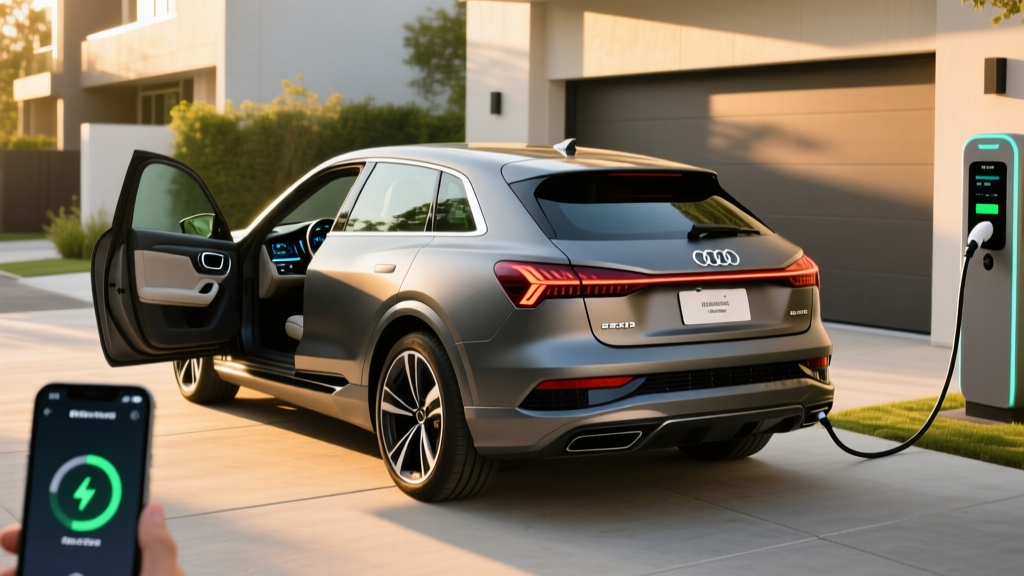
The Audi e-tron Sportback occupies a specific niche: buyers who want premium German build quality, a quiet cabin, and a sloping coupe-SUV silhouette — and who don't need class-leading range. Now sold under Audi's revised naming convention (the Q8 e-tron Sportback in many markets carries the same DNA), the e-tron Sportback remains relevant on the used and certified-pre-owned market and continues in select trims for 2026. Its 93.4 kWh gross battery (89 kWh usable, NMC chemistry) delivers an EPA-estimated 218 to 236 miles depending on trim and wheel size. DC fast charging peaks at 150 kW with one of the most sustained charge curves in the segment. But at a base MSRP north of $74,000, buyers must weigh whether the refinement justifies the efficiency penalty versus rivals like the BMW iX, Mercedes EQE SUV, or Tesla Model X.
EPA sticker: 218 mi (Prestige, 21" wheels) / 236 mi (Premium, 20" wheels)
Real-world highway (70-80 mph, mild weather): ~185-205 mi
Real-world cold weather (below 32°F, mixed driving): ~155-175 mi
Why the gap? The e-tron Sportback's 5,200+ lb curb weight and conservative thermal management strategy prioritize battery longevity and cabin comfort over max-range optimization. Highway driving at sustained speeds hits efficiency harder here than in lighter rivals. In our experience, the heat pump (standard on recent model years) mitigates cold-weather loss better than many competitors, but the physics of moving two-and-a-half tons can't be fully overcome.
Range, Battery & Efficiency
The e-tron Sportback uses a 93.4 kWh gross / 89 kWh usable lithium-ion battery pack with NMC (nickel-manganese-cobalt) chemistry. Audi deliberately maintains a larger top and bottom buffer than most competitors — roughly 4.4 kWh reserved — to reduce long-term degradation. This conservative approach means you sacrifice some headline range, but owners typically see excellent State of Health (SoH) retention over time.
| Spec | Value |
|---|---|
| EPA Range | 218-236 mi (trim/wheel dependent) |
| Battery (Gross / Usable) | 93.4 kWh / 89 kWh (NMC) |
| Efficiency (EPA) | 77-80 MPGe combined (~42-44 kWh/100mi) |
| Max DC Fast Charge | 150 kW (CCS1) |
| 10-80% DC Charge Time | ~28-30 minutes |
| Level 2 Home Charge Rate | 11.5 kW (~25 mi/hr) |
| 0-60 mph | 5.5 sec (Boost mode: 4.5 sec) |
| Horsepower | 355 hp (Boost: 402 hp) |
| Drivetrain | Dual-motor AWD (quattro) |
| Cargo Volume | 27.3 cu ft (rear seats up) / 54.8 cu ft (folded) |
| Base MSRP (2026) | ~$74,400 (Premium trim) |
| Battery Warranty | 8 yr / 100,000 mi (70% capacity retention) |
Efficiency lands at 77-80 MPGe combined (roughly 42-44 kWh/100 miles), which trails rivals like the BMW iX xDrive50 (~86 MPGe) and Tesla Model X (~100 MPGe). For context, that translates to approximately $0.12-$0.14 per mile at the national average residential electricity rate of $0.16/kWh — still significantly cheaper than a comparable gas-powered Audi Q8 at $0.22-$0.25/mile, but noticeably thirstier than more aerodynamic EVs.
Charging Speed: DC Fast & Home Level 2
Where the e-tron Sportback genuinely excels is charging behavior, not peak numbers. While 150 kW peak DC fast charging sounds modest versus Hyundai's 240 kW or Tesla's 250 kW, Audi sustains that rate far longer. The charge curve holds near 150 kW from roughly 10% to 70% SoC before tapering — meaning real-world charging sessions are faster than the peak number suggests.
| Level | Power | Speed | Notes |
|---|---|---|---|
| Level 1 (120V) | ~1.4 kW | ~3 mi/hr | Emergency only; full charge in ~63 hours |
| Level 2 (240V, home) | 11.5 kW | ~25 mi/hr | Full charge in ~8 hours; requires 50-amp circuit |
| DC Fast (CCS1) | 150 kW peak | 10-80% in ~28-30 min | Sustained rate excellent; taper above 80% |
Preconditioning matters here. Use the e-tron's navigation system to route to a DC fast charger, and the battery management system will warm or cool the pack to optimal temperature before you arrive. Skip this step (e.g., just pulling into a charger without nav routing) and you may see peak rates of only 80-100 kW in cold weather — a common owner complaint from those unfamiliar with the preconditioning workflow.
At home on a Level 2 charger, the onboard 11.5 kW charger replenishes the full pack in approximately 8 hours. That's competitive for this battery size and means a typical overnight session (say, 10 PM to 6 AM) adds roughly 200 miles — enough to refill the usable capacity entirely.
Connector note: The e-tron Sportback uses the CCS1 (Combined Charging System) connector. Audi has committed to NACS adoption for future models, but current e-tron Sportback owners will need a CCS-to-NACS adapter for Tesla Supercharger access. Audi has indicated adapter availability through dealerships, though supply has been inconsistent.
Performance & Driving Dynamics
The dual-motor quattro all-wheel-drive system produces 355 horsepower in standard driving, with a Boost mode unlocking 402 hp for 8-second bursts. The 0-60 mph sprint takes 5.5 seconds (4.5 seconds in Boost mode) — quick enough for confident highway merging but not in the same league as the Tesla Model X Plaid or even the BMW iX M60.
What the e-tron Sportback trades in raw acceleration, it makes up in refinement. The adaptive air suspension delivers a genuinely plush ride, cabin noise isolation is among the best in any EV at this price point, and the steering weight feels natural rather than artificially heavy. Regenerative braking offers adjustable levels via paddle shifters, though Audi does not offer true one-pedal driving to a full stop — a frustration for EV veterans accustomed to Nissan Leaf or Chevrolet Bolt behavior.
Towing capacity is rated at 4,000 lbs when properly equipped, adequate for a small boat or utility trailer but below the Model X (5,000 lbs) and Rivian R1S (7,700 lbs).
Interior, Cargo & Technology
The Sportback's coupe-like roofline costs you cargo space compared to the standard e-tron SUV: 27.3 cubic feet behind the rear seats and 54.8 cu ft with them folded. That's roughly 5 cu ft less than the upright e-tron and significantly less than the BMW iX (35.5 / 77.9 cu ft). If you regularly haul bulky items, the Sportback's style tax is real.
Passenger space remains generous: 40.0 inches of front legroom and 39.1 inches rear, making the back seat genuinely comfortable for adults on longer trips — a frequent complaint in some sloped-roof competitors.
The dual-touchscreen MMI infotainment system (10.1" upper, 8.6" lower) looks sleek but draws mixed reactions. The lower screen handles climate and handwriting input, and its haptic feedback is responsive, but it collects fingerprints relentlessly and lacks the physical knobs many luxury buyers still prefer. Wireless Apple CarPlay and Android Auto are standard. The available Virtual Cockpit Plus (12.3" driver display) remains one of the best instrument clusters in any vehicle, EV or otherwise.
Driver assistance includes Audi's Adaptive Cruise Assist with Lane Guidance — a competent SAE Level 2 system that handles steering, acceleration, and braking on highways. It requires hands-on-wheel supervision at all times (this is not a hands-free system like GM's Super Cruise or Ford's BlueCruise). Automatic emergency braking, blind-spot monitoring, and rear cross-traffic alert are standard across all trims.
Pricing, Trims & Federal Tax Credit Eligibility
| Trim | Base MSRP | Est. After §30D Credit* |
|---|---|---|
| Premium | $74,400 | $66,900 (if eligible) |
| Premium Plus | $79,900 | $72,400 (if eligible) |
| Prestige | $85,200 | $77,700 (if eligible) |
*Federal tax credit reality check: The §30D Clean Vehicle Credit offers up to $7,500, but eligibility for the e-tron Sportback is not guaranteed. Under current IRS rules, you must meet all of the following:
- MSRP cap: SUVs must be under $80,000 MSRP. The Premium and Premium Plus trims qualify; the Prestige trim at $85,200 does not.
- Income cap: Modified AGI must be ≤$150,000 (single), ≤$225,000 (head of household), or ≤$300,000 (joint). Exceed these and you get $0.
- Battery sourcing: Critical minerals and battery components must meet escalating domestic/free-trade sourcing thresholds. Audi's supply chain has historically relied on non-qualifying sources for some components, and the credit amount may be reduced or eliminated depending on the model year's compliance.
Since 2024, the credit can be transferred at the point of sale as an instant rebate, reducing your purchase price directly. However, confirm current eligibility on the IRS's qualified vehicle list before signing — check the IRS qualified vehicles page for the most current determination.
Used e-tron Sportback buyers: The separate §25E used-EV credit offers up to $4,000 (30% of sale price) on vehicles priced under $25,000 with income caps of $75k/$112.5k/$150k. A 2021-2022 e-tron Sportback may now qualify — making a certified-pre-owned example potentially excellent value.
Ownership Costs & Warranty
Audi covers the e-tron Sportback's battery and electric powertrain for 8 years or 100,000 miles, with a capacity retention threshold of 70% — meaning Audi will repair or replace modules if your usable capacity drops below 70% of new within that window. The limited vehicle warranty is 4 years / 50,000 miles, standard for German luxury brands.
Insurance costs run higher than some competitors. Expect annual premiums of $2,200-$3,200 depending on your profile — roughly 15-25% more than a gas Audi Q5 and comparable to the BMW iX. Get quotes before purchasing; the sportback body style and repair costs for aluminum body panels contribute to elevated rates.
Maintenance is minimal compared to ICE vehicles — no oil changes, no spark plugs, no transmission fluid — but Audi's scheduled service visits (cabin filters, brake fluid checks, tire rotations) still run $200-$400 per visit at dealership rates. Brake pad life is typically extended to 80,000+ miles thanks to regenerative braking handling most deceleration.
Pros, Cons & Who Should Buy
✅ Pros
- Excellent sustained DC fast-charge curve (not just peak kW)
- Class-leading cabin quietness and ride refinement
- Standard quattro AWD with competent all-weather capability
- Conservative battery buffer = strong long-term SoH retention
- High-quality interior materials and build
- Virtual Cockpit Plus is outstanding
❌ Cons
- EPA range (218-236 mi) trails rivals significantly
- Heavy at 5,200+ lbs — efficiency suffers on highway
- Sportback roofline sacrifices ~5 cu ft of cargo vs standard e-tron
- No true one-pedal driving to a stop
- CCS1 connector; NACS adapter situation still evolving
- Prestige trim exceeds $80k MSRP cap for tax credit
- Driver-assist is competent but not hands-free
The Audi e-tron Sportback is the right call for luxury buyers who prioritize cabin refinement, ride quality, and brand prestige over maximum range. It's well-suited for: daily commuters with reliable home charging and round trips under 150 miles; all-weather drivers in northern states who value quattro AWD and a heat pump; and design-conscious buyers who prefer the Sportback silhouette. It's less ideal for frequent road-trippers (range requires more charging stops than rivals), large families needing maximum cargo space, or anyone chasing the lowest cost-per-mile.
How It Stacks Up Against Key Competitors
| Metric | Audi e-tron Sportback | BMW iX xDrive50 | Tesla Model X LR |
|---|---|---|---|
| EPA Range | 218-236 mi | 324 mi | 335 mi |
| Battery (usable) | 89 kWh NMC | 105.2 kWh NMC | ~100 kWh |
| DC Fast Charge | 150 kW | 195 kW | 250 kW |
| 0-60 mph | 5.5s (4.5s boost) | 4.4s | 3.8s |
| Cargo (rear up/down) | 27.3 / 54.8 cu ft | 35.5 / 77.9 cu ft | ~40 / 85 cu ft |
| Base MSRP | ~$74,400 | ~$87,250 | ~$79,990 |
| Cabin Quietness | ★★★★★ | ★★★★☆ | ★★★☆☆ |
Choose the e-tron Sportback if you value ride comfort, cabin isolation, and Audi's design language — and your daily driving stays within ~150 miles with home charging. Choose the BMW iX if you need more range (324 mi), more cargo space, and are willing to pay a higher entry price. Choose the Model X if range, performance, and Supercharger network access are your top priorities and you can accept Tesla's panel-gap variability and minimal luxury finishing.
Frequently Asked Questions
What is the real-world range of the Audi e-tron Sportback?
Expect 185-205 miles in mild-weather highway driving and 155-175 miles in cold weather (below 32°F). The EPA rates it at 218-236 miles depending on trim and wheel size, but real-world highway efficiency at 70-80 mph and cold-weather battery performance reduce that figure. City driving with regenerative braking can match or slightly exceed EPA estimates.
How fast does the e-tron Sportback charge at home and on the road?
On DC fast charging, it peaks at 150 kW and charges from 10-80% in approximately 28-30 minutes. The charge curve is notably flat, sustaining high rates longer than many competitors. At home on Level 2 (240V, 48-amp circuit), the 11.5 kW onboard charger adds roughly 25 miles per hour, fully replenishing the battery in about 8 hours.
Does the Audi e-tron Sportback qualify for the $7,500 federal EV tax credit?
It depends on the trim, your income, and current battery-sourcing rules. The Premium ($74,400) and Premium Plus ($79,900) trims fall under the $80,000 SUV MSRP cap. The Prestige trim ($85,200) does not. You must also meet income limits ($150k single / $300k joint) and the vehicle's battery components and critical minerals must meet domestic sourcing thresholds. Check the IRS qualified vehicle list before purchasing — eligibility changes as supply chains shift.
Is the e-tron Sportback worth buying versus the BMW iX or Tesla Model X?
It depends on your priorities. If cabin quietness, ride quality, and traditional luxury finishing matter most, the e-tron Sportback delivers. If range, cargo space, and performance are your top criteria, the BMW iX (324 mi EPA, more space) or Tesla Model X (335 mi, Supercharger network) are objectively stronger choices. The e-tron Sportback trades measurable specs for subjective refinement — a calculation only you can make.
What are the biggest pros and cons?
Pros: Sustained DC charging curve, class-leading cabin quietness, standard quattro AWD, conservative battery management for longevity, premium build quality. Cons: Below-average EPA range (218-236 mi), heavy weight hurts efficiency, Sportback roofline reduces cargo, no one-pedal driving to a stop, CCS1 connector (NACS adapter needed for Superchargers), Prestige trim ineligible for federal tax credit.
How long will the e-tron Sportback battery last?
Audi warranties the battery for 8 years / 100,000 miles with a 70% capacity retention threshold. Real-world data from early 2019-2020 e-tron owners (higher-mileage examples now exceeding 100,000 miles) shows degradation of approximately 8-12% — meaning most packs retain 88-92% of original capacity. Audi's conservative buffer strategy appears to be paying off for long-term health. Full battery replacement, if ever needed out of warranty, is estimated at $15,000-$22,000 based on current parts pricing.
Sources: EPA range and efficiency data from fueleconomy.gov; tax credit eligibility rules from IRS.gov §30D guidance; manufacturer specifications from Audi USA. All pricing and specs reflect 2026 model year data available at time of publication. Verify current tax credit eligibility before purchase.