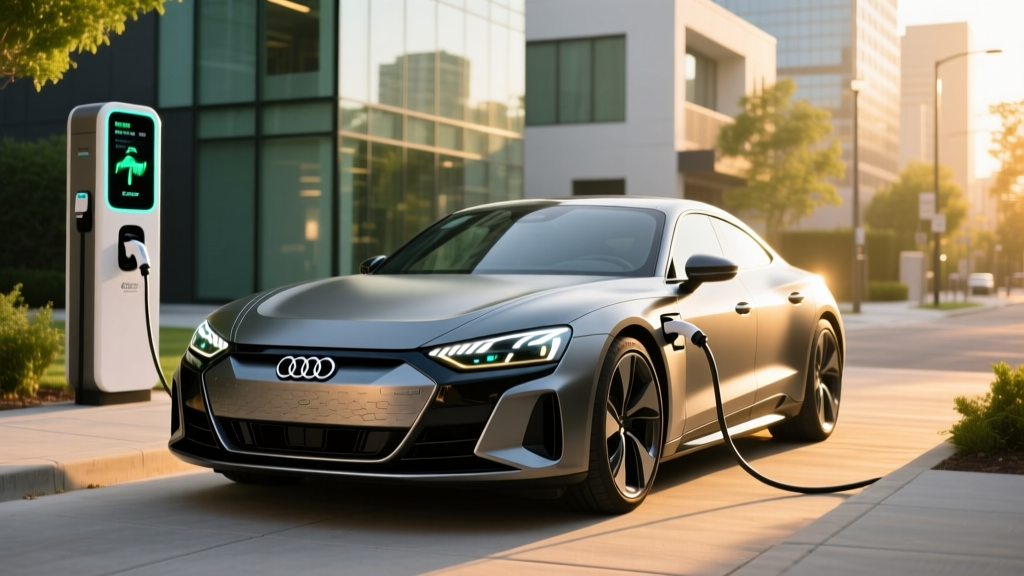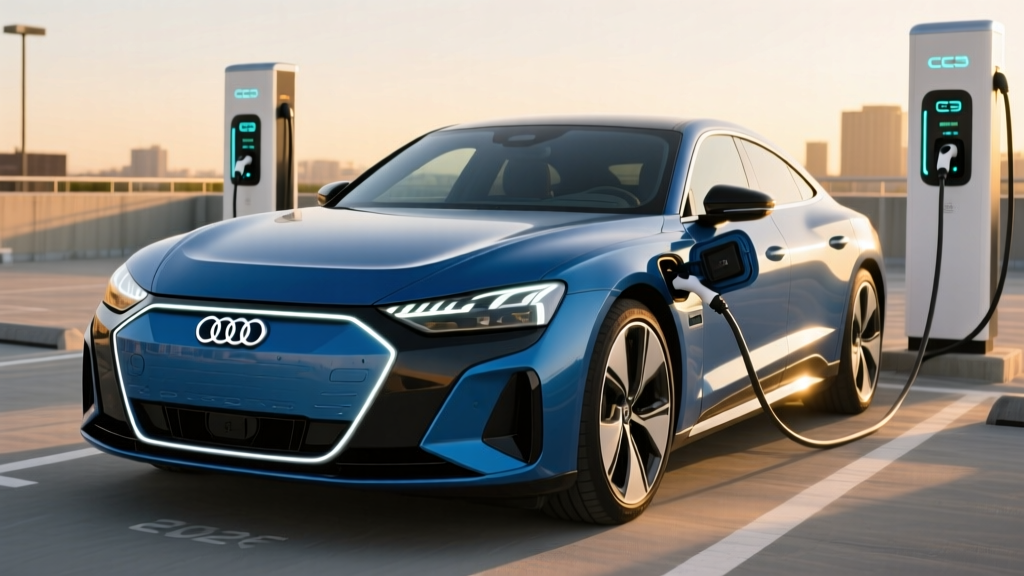
The Audi e-tron sedan — officially rebranded as the Audi e-tron GT lineup for the 2025–2026 model years — is Audi's flagship electric four-door. Built on the same J1 performance platform as the Porsche Taycan, it targets buyers who want executive-sedan luxury with genuine sports-car acceleration. But luxury badges and blistering 0-60 times don't pay the charging bill. This review breaks down the exact range, charging speeds, battery chemistry, and ownership economics you need before signing a lease or purchase agreement.
Quick Verdict: Who Should Buy the Audi e-tron Sedan?
The e-tron GT family suits performance-oriented executives and luxury EV upgraders who prioritize driving dynamics, build quality, and 800-volt fast-charging architecture over maximum cargo space or class-leading range. If you commute 40–60 miles daily, take occasional 300-mile road trips, and want a sedan that can charge from 10–80% in roughly 23 minutes on a 350 kW DC fast charger, this is a strong contender. If you need 350+ miles of EPA range or a large trunk for family gear, look at the Tesla Model S, Lucid Air, or BMW i7 instead.
Range, Battery, and Efficiency
The 2026 Audi e-tron GT lineup uses a 93.4 kWh gross lithium-ion battery pack (approximately 84 kWh usable) with NMC (nickel manganese cobalt) pouch-cell chemistry supplied by LG Energy Solution. NMC delivers higher energy density than LFP, which is critical in a low-slung performance sedan where packaging space is at a premium.
EPA estimated range: 238 miles (e-tron GT Premium Plus) / 232 miles (Prestige) / 270–300 miles (S e-tron GT with efficiency-focused tuning) depending on trim and wheel size.
Expect in the real world: ~200–220 miles on sustained highway driving at 70–75 mph. In cold weather (below 32°F), plan for 170–190 miles due to battery heating demands and cabin HVAC load. City driving with regenerative braking can push closer to the EPA sticker, around 230–245 miles in mild conditions.
Efficiency lands at approximately 82–85 MPGe combined (roughly 39–41 kWh/100 mi) for the standard e-tron GT, according to fueleconomy.gov. The S e-tron GT, with its more aggressive power delivery and wider tires, drops to around 78–80 MPGe. These figures trail the Tesla Model S Long Range (120 MPGe) and Lucid Air Pure (132 MPGe) significantly — a trade-off for the J1 platform's heavier curb weight (~5,100 lbs) and performance-oriented motor tuning.
| Spec | e-tron GT Premium Plus | S e-tron GT | RS e-tron GT |
|---|---|---|---|
| EPA Range | 238 mi | ~270 mi | ~260 mi |
| Battery (usable / gross) | 84 kWh / 93.4 kWh | 84 kWh / 93.4 kWh | 84 kWh / 93.4 kWh |
| Chemistry | NMC | NMC | NMC |
| Horsepower | 469 hp (boost: 522 hp) | 590 hp (boost: 646 hp) | 637 hp (boost: 680 hp) |
| 0–60 mph | 3.9 sec | 3.4 sec | 3.1 sec |
| Drivetrain | Dual-motor AWD | Dual-motor AWD | Dual-motor AWD |
| Max DC Fast Charge | 270 kW | 270 kW | 270 kW |
| 10–80% DC Time | ~23 min | ~23 min | ~23 min |
| Base MSRP | $89,800 | $104,900 | $138,500 |
Charging Speed: DC Fast, Level 2, and the 800-Volt Advantage
The e-tron GT's 800-volt electrical architecture is its charging ace. While most mainstream EVs run 400V systems (limiting peak DC charge rates to 150–180 kW), the e-tron GT can accept up to 270 kW at a compatible 350 kW DC fast charger like Electrify America or Ionity. In practice, the charge curve peaks around 250–270 kW between 10–40% state of charge, then tapers progressively. Expect a 10–80% charge in approximately 23 minutes under ideal thermal conditions.
Preconditioning matters here. The e-tron GT's navigation system will preheat or cool the battery when a DC fast charger is set as your destination. Skip this step — or arrive at a charger with a cold-soaked battery — and your peak rate may drop to 150–180 kW, extending the 10–80% session to 30+ minutes.
| Charging Level | Power (kW) | Rate (miles of range per hour) | Typical Use Case |
|---|---|---|---|
| Level 1 (120V, 12A) | ~1.4 kW | ~3–4 mi/hr | Emergency / trickle top-off |
| Level 2 (240V, 48A) | 11 kW | ~28–30 mi/hr | Home overnight / workplace |
| Level 2 (240V, 32A) | 7.7 kW | ~20–22 mi/hr | Standard home wallbox |
| DC Fast (350 kW station) | Peak 270 kW | ~650+ mi/hr (peak) | Road-trip stops |
| DC Fast (150 kW station) | ~130–150 kW | ~350 mi/hr (peak) | Common public chargers |
For home Level 2 charging, a full 0–100% session on an 11 kW (48A) circuit takes roughly 8.5 hours — feasible for overnight charging if you arrive home at 20–30% SoC. Most owners will need a NEMA 14-50 outlet or a hardwired Level 2 wallbox (ChargePoint Home Flex, Enel X JuiceBox, or Audi-branded unit). Budget $800–$2,200 for a professional Level 2 home installation depending on panel proximity and local permitting, or consult a licensed electrician for an exact quote.
The e-tron GT uses a CCS1 (Combined Charging System) connector for DC fast charging and a J1772 inlet for Level 2 AC. With Audi's announced transition to NACS for future models, current e-tron GT owners can use Tesla Superchargers via a CCS-to-NACS adapter where networks support it.
Performance and Driving Dynamics
All three trims — Premium Plus, S, and RS — use a dual-motor all-wheel-drive layout with a rear-mounted 2-speed transmission (a rarity in EVs) that optimizes both launch acceleration and highway efficiency. The result is genuinely sports-car territory:
- e-tron GT Premium Plus: 469 hp (522 hp on launch control boost), 0–60 in 3.9 seconds
- S e-tron GT: 590 hp (646 hp boost), 0–60 in 3.4 seconds
- RS e-tron GT: 637 hp (680 hp boost), 0–60 in 3.1 seconds
Adaptive air suspension is standard across the lineup, providing a compliant ride in Comfort mode and genuine cornering composure in Dynamic. The low center of gravity (battery pack mounted under the floor) and near-50/50 weight distribution make this one of the best-handling electric sedans on the market, rivaling the Porsche Taycan and edging out the heavier BMW i7 and Mercedes EQS in agility.
Pricing, Tax Credits, and Ownership Cost
Base MSRPs for the 2026 model year start at $89,800 for the Premium Plus, rising to $104,900 for the S and $138,500 for the RS e-tron GT. Destination charges add approximately $1,195. A well-equipped Prestige-trim e-tron GT with the Year Package and carbon-fiber accents can approach $98,000–$102,000 before incentives.
Federal tax credit eligibility (§30D) is complex for the e-tron GT. As of 2026, the IRS requires that eligible vehicles meet MSRP caps ($55,000 for sedans), buyer adjusted gross income limits ($150,000 single / $300,000 joint), and battery critical-mineral and component sourcing thresholds that phase in annually. At MSRPs well above $55,000, the e-tron GT does not qualify for the $7,500 new-vehicle federal tax credit. Buyers should verify current-year rules at irs.gov and consult a tax professional for personal eligibility.
Some states and utility companies offer additional rebates or reduced electricity rates for EV owners — check afdc.energy.gov for local incentives, which vary by jurisdiction.
- 800V architecture enables 270 kW peak DC charging — 10–80% in ~23 min
- Exceptional build quality, cabin materials, and sound insulation
- 0–60 in 3.1–3.9 seconds depending on trim — genuine supercar territory
- Adaptive air suspension standard across all trims
- Strong resale value within the luxury EV segment
- EPA range of 232–270 mi trails Model S (402 mi) and Lucid Air (419 mi)
- Does not qualify for $7,500 federal tax credit (MSRP exceeds sedan cap)
- Rear-seat headroom is tight for passengers over 6'0" due to roofline
- Cargo space limited to 9.2 cu ft trunk + 3.2 cu ft frunk
- Infotainment touch-response system has a learning curve vs. physical buttons
Interior, Cargo, and Technology
The e-tron GT cabin seats five (though the rear middle seat is best reserved for short trips). Front legroom is generous at 41.3 inches, but rear legroom measures 33.3 inches — adequate for average-height adults but tight for taller passengers. The sloping roofline cuts rear headroom to 37.0 inches, which is noticeably less than a BMW i7 or Mercedes EQS.
Cargo volume is the sedan's weakest practical metric: 9.2 cubic feet in the trunk and 3.2 cubic feet in the front trunk (frunk), for a combined 12.4 cu ft. That's enough for two carry-on suitcases and a laptop bag, but a weekend trip for four will require packing discipline. The Tesla Model S offers 28 cu ft behind the rear seats, and the Lucid Air provides 32 cu ft — both significantly more practical for families.
Technology highlights include Audi's MMI touch response system with a 10.1-inch upper touchscreen and 8.6-inch lower climate/control screen, a 12.3-inch Virtual Cockit digital instrument cluster, wireless Apple CarPlay/Android Auto, and available Bang & Olufsen 3D audio (710 watts, 16 speakers). The head-up display with augmented-reality navigation overlays is a standout feature on Prestige trims.
Driver assistance falls under SAE Level 2 — Audi's Adaptive Cruise Assist with lane guidance requires the driver to maintain hands on the wheel and full attention at all times. It is not a self-driving system. Standard features include forward collision warning, automatic emergency braking, lane departure warning, and rear cross-traffic alert. The available Park Assist Plus with remote parking is useful in tight urban garages.
Warranty and Battery Longevity
Audi provides a competitive luxury-EV warranty package:
- New-vehicle limited warranty: 4 years / 50,000 miles
- Battery pack warranty: 8 years / 100,000 miles (covers capacity loss below 70% of original)
- Powertrain warranty: 8 years / 100,000 miles
- Corrosion perforation: 12 years, unlimited miles
The 70% capacity retention threshold is standard for the luxury segment (Porsche, BMW, and Mercedes use the same benchmark). Based on NMC degradation data from similar J1-platform vehicles, owners can expect roughly 8–12% total capacity loss over the first 100,000 miles with normal use — meaning a 238-mile EPA range would realistically settle around 210–220 miles after five years of typical driving. Avoiding frequent DC fast-charging to 100% and keeping daily charge limits around 80% will help preserve long-term battery health.
How It Compares: e-tron GT vs. Key Rivals
| Attribute | Audi e-tron GT | Tesla Model S LR | Lucid Air Pure | Porsche Taycan 4S |
|---|---|---|---|---|
| EPA Range | 238 mi | 402 mi | 419 mi | 246 mi |
| 0–60 mph | 3.9 sec | 3.1 sec | 3.4 sec | 3.8 sec |
| Max DC Charge | 270 kW | 250 kW | 220 kW | 270 kW |
| 10–80% Time | ~23 min | ~30 min | ~28 min | ~23 min |
| Base MSRP | $89,800 | $74,990 | $69,900 | $91,900 |
| Cargo (total) | 12.4 cu ft | 28 cu ft | 32 cu ft | 14.3 cu ft |
| Federal Credit | No (MSRP cap) | Partial* | Partial* | No (MSRP cap) |
*Federal credit eligibility depends on current-year battery sourcing rules, buyer income, and MSRP caps. Always verify at irs.gov.
The e-tron GT's closest rival is the Porsche Taycan — they share the J1 platform, battery architecture, and 270 kW charging capability. The Taycan edges ahead on driving precision and brand cachet among enthusiasts, while the e-tron GT counters with slightly more interior refinement and a marginally lower starting price. Against the Tesla Model S and Lucid Air, the Audi sacrifices 150+ miles of range and significant cargo space but delivers superior build quality, cabin quietness, and a more traditional luxury dealership experience.
Frequently Asked Questions
What is the real-world range of the Audi e-tron GT sedan?
The EPA rates the e-tron GT Premium Plus at 238 miles. In real-world highway driving at 70–75 mph, expect 200–220 miles. In cold weather (below freezing), plan for 170–190 miles. City driving with regenerative braking can approach the EPA figure, around 230–245 miles in mild temperatures.
How fast does the Audi e-tron GT charge at home and on the road?
At a 350 kW DC fast charger, the e-tron GT peaks at 270 kW and charges from 10–80% in approximately 23 minutes with battery preconditioning. On a home Level 2 charger at 11 kW (48 amps, 240V), you'll add about 28–30 miles of range per hour, with a full 0–100% charge taking roughly 8.5 hours.
Does the Audi e-tron GT qualify for the federal EV tax credit?
No. The §30D federal tax credit for new EVs caps eligible sedans at an MSRP of $55,000. Since the e-tron GT starts at $89,800, it exceeds this cap and does not qualify for the $7,500 credit regardless of buyer income. Some state or utility incentives may still apply — check local programs.
Is the Audi e-tron GT worth buying over the Tesla Model S or Porsche Taycan?
Choose the e-tron GT if you prioritize build quality, cabin luxury, and 800V fast-charging infrastructure in a sedan with genuine sports-car performance. Choose the Model S if range (402 mi EPA) and cargo space are your top priorities. Choose the Taycan if driving precision and track capability matter most — but expect similar range and pricing to the Audi.
What is the battery warranty on the e-tron GT?
Audi covers the high-voltage battery pack for 8 years or 100,000 miles, whichever comes first. The warranty guarantees at least 70% of original capacity retention. If degradation exceeds 30% within that period, Audi will repair or replace the battery at no cost.
How much cargo space does the e-tron GT have?
The e-tron GT offers 9.2 cubic feet in the rear trunk and 3.2 cubic feet in the frunk, totaling 12.4 cu ft. This is sufficient for two carry-on bags and soft luggage but significantly less than the Model S (28 cu ft) or Lucid Air (32 cu ft).