Quick Verdict: Is the Audi e-tron Reliable?
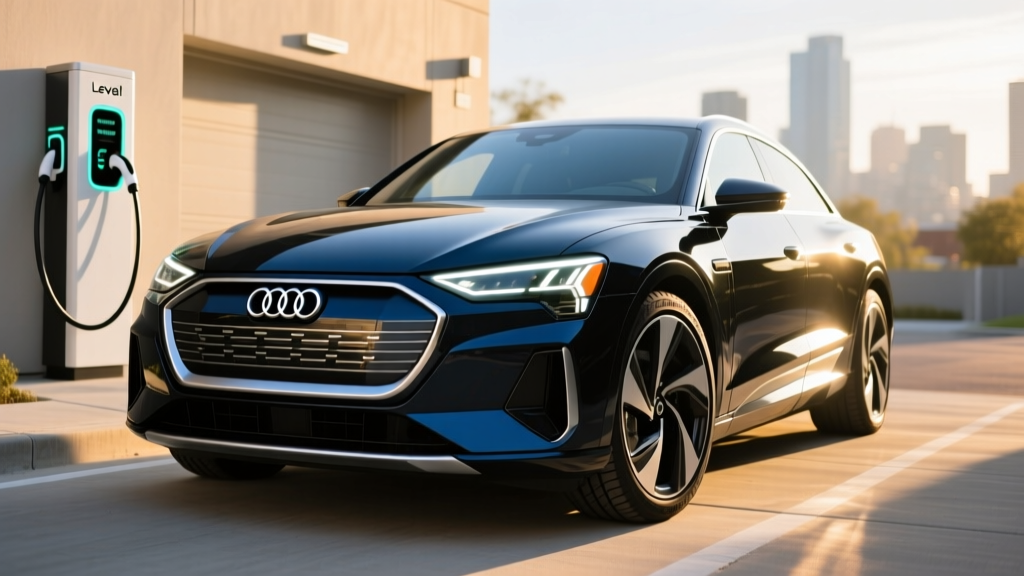
The Audi e-tron (now rebranded as the Q8 e-tron for the 2024-2026 model years) has evolved into one of the more dependable luxury electric SUVs on the market. Early 2019-2021 models suffered from software glitches and charging inconsistencies, but Audi's continuous over-the-air updates and hardware revisions have substantially improved the platform's maturity. For buyers prioritizing build quality, ride refinement, and a proven 95 kWh battery pack over cutting-edge range, the e-tron delivers a compelling, if conservative, ownership experience.
| Spec | 2026 Audi Q8 e-tron Premium Plus |
|---|---|
| EPA Range | 285 miles |
| Battery Capacity | 114 kWh gross / 106 kWh usable (NMC) |
| DC Fast Charge (peak) | 170 kW |
| 10-80% DC Time | ~31 minutes |
| Level 2 Home Charge | 11.5 kW (~25 miles/hour) |
| 0-60 mph | 5.6 seconds |
| Horsepower | 402 hp (boost mode) |
| Drivetrain | Dual-motor AWD (quattro) |
| MPGe (combined) | 81 MPGe |
| Base MSRP | $75,600 |
| Battery Warranty | 8 years / 100,000 miles |
Real-World Range and Efficiency
The EPA rates the 2026 Q8 e-tron at 285 miles on a full charge, but real-world results vary significantly based on driving conditions. In mixed suburban driving at moderate temperatures (65-75°F), owners consistently report 260-275 miles. Highway cruising at 70-75 mph reduces range to approximately 230-245 miles due to the vehicle's 5,800-pound curb weight and less aerodynamic profile compared to rivals like the Tesla Model X or BMW iX.
EPA Estimate: 285 miles
Real-World Highway (70 mph): ~235 miles
Real-World City/Suburban: ~270 miles
Cold Weather (20°F, highway): ~190-210 miles
Cold-weather impact: Expect 25-35% range reduction in freezing temperatures due to battery heating demands and cabin climate load. The e-tron's heat pump (standard on 2023+ models) mitigates some loss but doesn't eliminate it.
Efficiency lands at 81 MPGe combined, or roughly 42 kWh per 100 miles. This is below average for the luxury EV SUV segment—the Model X achieves 102 MPGe—but reflects Audi's prioritization of ride comfort and noise isolation over weight reduction. For context, charging 100 miles of range costs approximately $5.50-$7.00 at home (assuming $0.13-$0.17/kWh) and $12-$18 at public DC fast chargers.
Charging Performance: DC Fast and Home Level 2
The Q8 e-tron's 170 kW peak DC fast-charging capability is respectable but not class-leading. The battery management system maintains a relatively flat charge curve from 10-80%, averaging around 130-140 kW sustained. This translates to a 10-80% session in approximately 31 minutes at a compatible 170+ kW station (Electrify America, EVgo, or Tesla Supercharger with NACS adapter).
| Charging Method | Power | Time (10-80%) | Miles Added per Hour |
|---|---|---|---|
| Level 1 (120V outlet) | 1.4 kW | ~72 hours | 3-4 miles |
| Level 2 (240V, 48A) | 11.5 kW | ~9.5 hours | ~25 miles |
| DC Fast (170 kW peak) | 170 kW | ~31 minutes | ~180 miles in 30 min |
For home charging, the onboard 11.5 kW charger adds about 25 miles per hour on a 48-amp Level 2 circuit. A full overnight charge (8-10 hours) is easily achievable with a standard NEMA 14-50 outlet or hardwired wallbox. Installation costs typically range from $800-$2,500 depending on panel capacity and wiring distance—budget for a potential $1,500-$3,000 electrical panel upgrade if your home has a 100-amp service.
Charging curve reality check: The e-tron's charge rate tapers significantly above 80% SoC, dropping to under 50 kW. For road trips, plan 10-80% stops rather than topping off to 100% unless you have time to spare. The vehicle's navigation system will precondition the battery when a DC fast charger is set as your destination, optimizing charge speed in cold weather.
Performance and Driving Dynamics
The dual-motor quattro powertrain produces 355 hp in standard mode, rising to 402 hp in boost mode (activated via kick-down or launch control). The 0-60 mph sprint takes 5.6 seconds—quick but not sports-car territory. Where the e-tron excels is in refinement: adaptive air suspension, acoustic glass, and meticulous sound deadening create a cabin quieter than the Tesla Model X or Rivian R1S at highway speeds.
Towing capacity is rated at 4,000 pounds with the factory tow package, adequate for small boats or light trailers but below the Rivian R1S (7,700 lbs) or Model X (5,000 lbs). Regenerative braking offers three levels (mild, moderate, strong) selectable via steering wheel paddles, but true one-pedal driving is not as aggressive as competitors—the e-tron won't come to a complete stop without brake pedal input.
Interior Space, Tech, and Daily Usability
The Q8 e-tron's cabin accommodates five passengers with 39.1 inches of front legroom and 37.3 inches in the rear. Cargo volume measures 28.5 cubic feet behind the second row, expanding to 57.2 cubic feet with seats folded. The front trunk (frunk) adds minimal storage—just enough for charging cables—due to the HVAC and electronics packaging.
Technology highlights include Audi's MMI touch response dual-screen infotainment (10.1-inch upper, 8.6-inch lower), wireless Apple CarPlay/Android Auto, and a 12.3-inch Virtual Cock Plus digital instrument cluster. The available Head-Up Display projects navigation and speed onto the windshield with excellent clarity.
Driver assistance features (standard Adaptive Cruise Assist with lane centering, intersection assist, and traffic sign recognition) perform competently but fall short of Tesla's Autopilot or GM's Super Cruise in hands-free capability. Audi's system requires hands-on-wheel contact every 15-20 seconds, and lane centering can be hesitant on faded markings. This is SAE Level 2 automation—the driver must remain fully engaged.
Pricing, Trims, and Federal Tax Credit Eligibility
The 2026 Q8 e-tron lineup starts at $75,600 for the Premium Plus trim, rising to $81,200 for Prestige and $96,100 for the performance-oriented SQ8 e-tron. Destination fees add $1,195. A well-equipped Prestige model with the Luxury Package, Towing Package, and 22-inch wheels approaches $92,000 before incentives.
| Trim | Base MSRP | Federal Tax Credit | Effective Price (if eligible) |
|---|---|---|---|
| Premium Plus | $75,600 | Up to $7,500 | ~$68,100 |
| Prestige | $81,200 | Up to $7,500 | ~$73,700 |
| SQ8 e-tron | $96,100 | Up to $7,500 | ~$88,600 |
Federal tax credit eligibility (IRS §30D): The Q8 e-tron qualifies for up to $7,500 in federal tax credits, but eligibility depends on multiple factors:
- MSRP cap: SUVs must have a base MSRP under $80,000 (Premium Plus and Prestige qualify; SQ8 e-tron does not)
- Income limits: Modified AGI must not exceed $300,000 (joint), $225,000 (head of household), or $150,000 (single)
- Battery sourcing: Critical minerals and battery components must meet North American sourcing thresholds (Audi's supply chain currently qualifies, but verify at purchase)
- Point-of-sale transfer: As of 2024, you can transfer the credit to the dealer for an immediate price reduction rather than waiting for tax filing
Consult IRS.gov or a tax professional to confirm your eligibility before purchase. State incentives (California, Colorado, New York, etc.) may stack on top.
Reliability Track Record and Warranty Coverage
Audi's e-tron platform has demonstrated solid reliability since the 2022 model year refresh. Early 2019-2021 models experienced software-related issues including infotainment freezes, charging handshake failures, and 12V battery drain. Most have been resolved through OTA updates and service campaigns. The high-voltage battery pack has shown minimal degradation in owner surveys—typically 3-5% capacity loss over 100,000 miles, well within the 8-year/100,000-mile warranty threshold (70% capacity retention guaranteed).
Third-party reliability data from Consumer Reports and J.D. Power places the Q8 e-tron in the "average to above-average" range for luxury EVs, with fewer reported issues than the Jaguar I-PACE but slightly more than the Tesla Model Y. Common service items include brake fluid flushes (every 2 years), cabin air filter replacement, and tire rotation—no oil changes or transmission fluid, of course.
Audi's new-vehicle warranty covers 4 years/50,000 miles bumper-to-bumper, with the battery and electric drive components protected for 8 years/100,000 miles. Roadside assistance is included for 4 years/unlimited miles. For peace of mind, consider Audi's prepaid maintenance plans, which lock in service costs and include wear items like brake pads and wiper blades.
Pros and Cons
Pros
- Exceptional cabin quietness and ride comfort
- Proven battery chemistry with low degradation
- Strong build quality and premium materials
- Competitive DC fast-charging curve (flat 10-80%)
- Comprehensive 8-year battery warranty
- Eligible for full $7,500 federal tax credit (Premium Plus/Prestige)
Cons
- Below-average EPA range (285 mi) for the price point
- Heavy curb weight (5,800 lbs) impacts efficiency
- Driver assist requires frequent hands-on-wheel contact
- Modest frunk space
- Towing capacity (4,000 lbs) trails competitors
- Higher insurance premiums than Model Y or iX
Who Should Buy the Audi e-tron?
Best for: Luxury-focused commuters and families who prioritize ride quality, cabin isolation, and brand prestige over maximum range. Ideal if you have home Level 2 charging, drive under 200 miles daily, and value Audi's dealer network and service infrastructure.
Consider alternatives if: You need 350+ miles of range (Tesla Model X, Lucid Gravity), frequently tow heavy trailers (Rivian R1S), or want hands-free highway driving (GM Super Cruise-equipped Cadillac Lyriq). The e-tron is a refined cruiser, not a range champion or tech disruptor.
Frequently Asked Questions
What is the real-world range of the Audi e-tron?
In mixed driving at moderate temperatures, expect 260-275 miles. Highway cruising at 70-75 mph yields 230-245 miles, and cold weather (20°F) can drop range to 190-210 miles. The EPA's 285-mile estimate is achievable in ideal city conditions but optimistic for most real-world use.
How fast does the e-tron charge at home and on the road?
On a 48-amp Level 2 home charger, the e-tron adds ~25 miles per hour, fully charging overnight in 9-10 hours. At a 170 kW DC fast charger, 10-80% takes approximately 31 minutes. Plan for longer stops if you need to charge above 80%.
Does the Audi e-tron qualify for the $7,500 federal tax credit?
Yes, the Premium Plus and Prestige trims qualify (MSRP under $80,000), provided your income is below IRS thresholds and the battery meets sourcing requirements. The SQ8 e-tron exceeds the MSRP cap and does not qualify. Verify current rules at IRS.gov.
Is the Audi e-tron reliable long-term?
Post-2022 models have shown solid reliability with minimal battery degradation (3-5% over 100,000 miles). Early software issues have been largely resolved. The 8-year/100,000-mile battery warranty provides strong protection against premature failure.
How does the e-tron compare to the Tesla Model X?
The Model X offers longer range (348 miles EPA), faster acceleration (3.8s 0-60), and more advanced Autopilot features, but the e-tron wins on cabin quietness, build quality, and ride comfort. The Model X also has a higher starting price ($89,990) and doesn't qualify for the federal tax credit due to MSRP caps.
What are the biggest e-tron maintenance costs?
Beyond tires (which wear faster due to weight and torque), expect brake fluid flushes ($150-$200 every 2 years), cabin air filters ($80-$120), and wiper blades. Brake pads last 80,000+ miles thanks to regenerative braking. Annual maintenance costs average $500-$800, significantly less than a comparable gas-powered Audi Q7.