Quick Verdict: The Audi e-tron Premium Plus in 2026
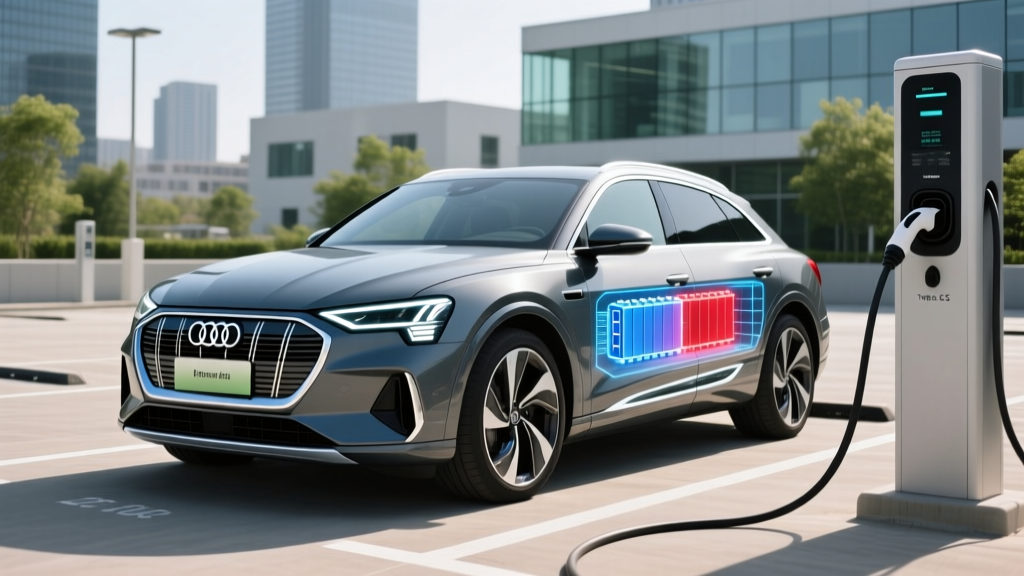
The 2026 Audi e-tron (sold globally as the Q8 e-tron) occupies a specific niche: luxury SUV buyers who want an electric daily driver that looks, drives, and feels like a conventional Audi rather than a rolling tech pod. The Premium Plus trim — stepping above the base Premium — adds ventilated seats, the Virtual Cockpit Plus digital cluster, a 360-degree camera system, and adaptive cruise with lane guidance as standard, making it the volume sweet spot in the lineup.
With an EPA-estimated 240 miles of range on its 114 kWh gross (106 kWh usable) NMC battery pack, the e-tron Premium Plus doesn't lead the luxury midsize EV class on distance. The BMW iX xDrive50 stretches past 300 miles, and the Mercedes EQE SUV hits 279. Where the Audi wins is charging speed — a sustained 170 kW DC fast-charge peak that delivers a 10-80% session in roughly 24 minutes — and ride refinement. If your commute is under 80 miles round-trip and you have access to reliable DC fast charging for road trips, the e-tron Premium Plus is a compelling luxury EV. If you regularly drive 250+ miles between charges, competitors offer more buffer.
| Spec | Value |
|---|---|
| EPA Range | 240 miles |
| Battery (gross / usable) | 114 kWh / 106 kWh (NMC) |
| Drivetrain | Dual-motor AWD (quattro) |
| Horsepower (Boost mode) | 402 hp |
| 0-60 mph | 5.5 seconds |
| Max DC Fast Charge | 170 kW (CCS1) |
| 10-80% DC Charge Time | ~24 minutes |
| Level 2 Home Charge Rate | 11.5 kW (~20 mi/hr) |
| EPA Efficiency | 81 MPGe combined / 42 kWh/100mi |
| Cargo (rear seats up / folded) | 28.5 / 56.4 cu ft |
| Base MSRP (Premium Plus) | $74,200 |
| Battery Warranty | 8 years / 100,000 miles (70% capacity) |
Range and Efficiency: EPA Numbers vs. Real-World Driving
The EPA rates the 2026 Audi e-tron Premium Plus at 240 miles on a full charge. That figure assumes a mix of 55% city and 45% highway driving at moderate temperatures. In practice, your results will vary based on speed, climate, and terrain.
- City / suburban mix (55-65 mph, mild weather): 245-260 miles — regenerative braking recaptures energy in stop-and-go traffic, often exceeding the EPA sticker.
- Highway cruising (75 mph, 70°F): 200-220 miles — the e-tron's 5,776-lb curb weight and 0.29 Cd drag coefficient consume energy at sustained speed.
- Cold weather (30°F, highway, cabin heat on): 160-185 miles — NMC chemistry loses roughly 25-30% usable capacity in freezing temps, even with the e-tron's heat pump and battery preconditioning.
- Mountain / high elevation passes: 180-200 miles on climbs; regenerative braking on descents partially recovers the deficit.
The e-tron's efficiency of 81 MPGe combined (42 kWh per 100 miles) trails the BMW iX xDrive50 (86 MPGe) and the Mercedes EQE 350+ (84 MPGe). The gap comes down to weight — the e-tron's steel-intensive MLB Evo platform gives it a premium, planted ride but adds roughly 400 lbs compared to the iX's carbon-core architecture. For owners charging at home overnight, the efficiency penalty means roughly $1-2 more per full charge versus the iX — negligible in daily use, but noticeable on long road trips where you're paying $0.35-$0.50/kWh at public DC stations.
Charging: DC Fast, Level 2, and Home Setup
Charging is where the e-tron Premium Plus earns back credibility. Its 114 kWh pack supports a 170 kW peak DC fast-charge rate, and — critically — the e-tron sustains a high charge rate deeper into the session than most competitors. While some EVs peak briefly at 200+ kW and taper sharply past 50% SoC, the e-tron holds above 130 kW until roughly 75% SoC before tapering. This means your real-world 10-80% session takes about 24 minutes at a properly functioning 175+ kW station.
| Charge Level | Power | Time / Rate | Notes |
|---|---|---|---|
| Level 1 (120V household) | 1.2-1.4 kW | ~3-4 mi/hr | Emergency only; full charge in 70+ hours |
| Level 2 (240V, 48A home charger) | 11.5 kW | ~20 mi/hr; full in ~10 hrs | Requires NEMA 14-50 or hardwired install |
| DC Fast Charge (CCS1) | Up to 170 kW | 10-80% in ~24 min | Precondition battery via nav for max speed |
On Level 2 home charging at 11.5 kW, the e-tron adds roughly 20 miles of range per hour of charging. A full overnight session (10 hours) replenishes the entire 106 kWh usable pack. For home installation, budget $1,200-$2,500 for a quality 48A Level 2 charger (ChargePoint Home Flex, Wallbox Pulsar Max, or the Audi-branded unit) plus electrician labor. If your panel needs a 200A service upgrade, add $1,500-$3,000.
The e-tron uses the CCS1 connector for DC fast charging and J1772 for Level 2. Audi has confirmed NACS adapter compatibility for 2026 models, enabling access to Tesla Supercharger V3/V4 stalls (up to 150 kW via adapter). For maximum charge speed, stick with Electrify America or EVgo 350 kW stations where the e-tron can pull its full 170 kW peak.
Preconditioning matters. Navigate to a DC fast charger using the e-tron's built-in routing, and the thermal management system will warm the battery to the optimal 25-35°C window before you arrive. Without preconditioning — especially in cold weather — peak charge rates can drop to 80-100 kW, adding 10-15 minutes to your session.
Performance and Driving Dynamics
The Premium Plus uses a dual-motor quattro all-wheel-drive system producing 402 hp and 490 lb-ft of torque in Boost mode (activated via a kickdown switch or launch control). Without boost, output drops to 355 hp — still more than adequate for highway merging. The 0-60 mph sprint takes 5.5 seconds, which trails the Tesla Model X Plaid (2.5s) and BMW iX M60 (3.6s) but matches the Mercedes EQE 350 4MATIC.
Where the e-tron differentiates is ride quality. The standard adaptive air suspension absorbs highway expansion joints and potholes with a composure that makes the iX feel slightly firm by comparison. Steering is light but precise, and the cabin isolation at 80 mph is genuinely luxury-grade — tire and wind noise are well-suppressed. The trade-off is that the e-tron doesn't feel sporty in corners; this is a grand-touring SUV, not a track tool.
Regenerative braking offers three modes: coast (no regen), moderate (light deceleration), and strong (approaching one-pedal driving in city traffic). Unlike some competitors, the e-tron does not default to maximum regen — you select your preference via steering wheel paddles or the MMI touchscreen. Most owners settle on moderate regen for mixed driving.
Interior, Cargo, and Technology
The Premium Plus trim upgrades the cabin with Valcona leather, heated and ventilated front seats, a heated steering wheel, and Audi's Virtual Cockpit Plus (a 12.3-inch configurable digital instrument cluster). The dual-touchscreen MMI system (10.1-inch upper, 8.6-inch lower for climate) looks clean but demands attention for simple tasks like adjusting fan speed — physical knobs would be preferable while driving.
Cargo space: 28.5 cubic feet behind the second row (enough for 4-5 carry-on suitcases) and 56.4 cubic feet with the 40/20/40 split rear seats folded. The e-tron has no frunk — the MLB Evo platform's front subframe houses the HVAC and power electronics. Competitors like the BMW iX (35.5 cu ft rear) and Tesla Model X (behind the third row) offer more practical cargo volume.
Passenger space: Front legroom is generous at 40.2 inches, and the rear offers 37.6 inches — comfortable for two adults on long trips but tight for three across. The transmission tunnel hump (a legacy of the MLB platform) intrudes on the center rear footwell.
Driver assistance: The Premium Plus includes Audi adaptive cruise with lane guidance (a Level 2 SAE system — you must keep hands on the wheel and eyes on the road), intersection assist, and a 360-degree camera. The optional Executive package ($4,500) adds a head-up display and traffic-light recognition. The system is competent but unremarkable compared to GM's Super Cruise or Ford's BlueCruise, both of which allow hands-free driving on mapped highways.
Pricing, Tax Credits, and Ownership Costs
The 2026 Audi e-tron Premium Plus starts at $74,200 (including $1,195 destination). A well-equipped example with the Executive package, towing package, and metallic paint lands near $82,000-$85,000.
| Trim | Base MSRP | §30D Credit Eligibility | Effective Price (after credit) |
|---|---|---|---|
| Premium | $70,800 | Varies by sourcing rules | ~$63,300 (if full $7,500) |
| Premium Plus | $74,200 | Varies by sourcing rules | ~$66,700 (if full $7,500) |
| Prestige | $81,900 | Varies by sourcing rules | ~$74,400 (if full $7,500) |
Federal tax credit caveat: Under IRS §30D rules, the e-tron qualifies for up to $7,500 if (1) the buyer's modified adjusted gross income is under $150,000 single / $300,000 joint, (2) the vehicle MSRP is under $80,000 for SUVs, and (3) battery critical minerals and components meet North American sourcing thresholds. Audi's battery sourcing has shifted across model years — the 2026 e-tron's eligibility for the full $7,500 depends on the specific VIN's battery pack origin. Always verify eligibility on the IRS Clean Vehicle Provisions page and with your tax professional before purchase. Point-of-sale transfer of the credit to the dealer is available, reducing your out-of-pocket at delivery.
Five-year ownership cost: Audi's battery and powertrain warranty covers 8 years or 100,000 miles against capacity loss below 70%. Scheduled maintenance is minimal (cabin air filter, brake fluid, tire rotation) at roughly $150-$200/year. Insurance averages $2,400-$3,200/year depending on your state and driving record — higher than the BMW iX but in line with luxury EV norms. Depreciation is the e-tron's weak point: expect 45-50% value loss over 5 years, compared to 35-40% for the iX.
How It Compares: e-tron Premium Plus vs. Key Rivals
| Spec | Audi e-tron Premium Plus | BMW iX xDrive50 | Mercedes EQE 350 4MATIC | Tesla Model X Long Range |
|---|---|---|---|---|
| EPA Range | 240 mi | 324 mi | 279 mi | 335 mi |
| Battery (usable) | 106 kWh | 105.2 kWh | 90.6 kWh | 100 kWh |
| DC Fast Charge | 170 kW | 195 kW | 170 kW | 250 kW |
| 10-80% Time | ~24 min | ~28 min | ~32 min | ~20 min |
| 0-60 mph | 5.5s | 4.4s | 5.8s | 3.8s |
| Base MSRP | $74,200 | $87,250 | $77,900 | $79,990 |
| Cargo (rear up) | 28.5 cu ft | 35.5 cu ft | 28.0 cu ft | 43.0 cu ft (behind 2nd row) |
The e-tron's range deficit is real, but its charge speed and ride quality keep it competitive. The iX is the clear class leader on range and cargo but costs $13,000 more at the equivalent trim. The EQE SUV is closer in price and offers hands-free highway driving with Drive Pilot (Level 2, limited to mapped interstates). The Model X wins on performance and Supercharger network access but sacrifices interior build quality and ride comfort. For buyers who value cabin isolation, build quality, and fast DC charging over maximum range, the e-tron holds its ground.
Pros, Cons, and Who Should Buy
- Sustained 170 kW DC charging — 10-80% in ~24 minutes is competitive with the best in class
- Air suspension ride quality is genuinely luxury-grade; cabin isolation is excellent
- Premium Plus trim is well-equipped without requiring excessive options packages
- Audi build quality and dealer network are strong for service and warranty work
- NACS adapter compatibility opens Tesla Supercharger access (up to 150 kW)
- 240-mile EPA range is the lowest in the luxury midsize EV SUV class
- Heavy at 5,776 lbs — efficiency suffers on highway and in cold weather
- Dual-touchscreen MMI is distracting to use while driving
- No frunk — cargo volume trails the iX and Model X
- Depreciation is steeper than German rivals; 5-year resale value is weak
- Driver-assist system is competent but lacks hands-free capability of Super Cruise or BlueCruise
Who this EV suits best: The e-tron Premium Plus is ideal for luxury buyers with a sub-80-mile daily commute, access to home Level 2 charging, and a preference for traditional luxury feel over EV-specific tech. It's a strong choice for two-adult households who take 2-3 road trips per year (where 24-minute DC sessions are manageable) and prioritize ride comfort and cabin quietness over maximum range. It's a weaker fit for families needing third-row seating, buyers in extreme cold climates where range drops to 160-180 miles, or anyone whose daily driving exceeds 150 miles without mid-day charging access.
Frequently Asked Questions
What is the real-world range of the 2026 Audi e-tron Premium Plus?
The EPA rates it at 240 miles, but expect 200-220 miles at highway speeds (75 mph) in mild weather, and 160-185 miles in freezing temperatures with cabin heat. City driving with regenerative braking can push past 250 miles.
How fast does the e-tron charge at home and on the road?
At home on a 48A Level 2 charger (11.5 kW), it adds ~20 miles per hour — a full charge takes about 10 hours overnight. On DC fast chargers, it peaks at 170 kW and reaches 10-80% in roughly 24 minutes when the battery is preconditioned.
Does the 2026 Audi e-tron qualify for the $7,500 federal EV tax credit?
Eligibility depends on your income (under $150k single / $300k joint), the vehicle's MSRP (under $80k for SUVs — the Premium and Premium Plus trims qualify, the Prestige may not), and battery critical-mineral and component sourcing rules under IRS §30D. Verify your specific VIN's eligibility on the IRS Clean Vehicle Provisions page and with a tax professional before purchase.
Is the e-tron Premium Plus worth buying over the BMW iX or Tesla Model X?
If range is your top priority, no — the iX (324 mi) and Model X (335 mi) both go significantly farther per charge. If you prioritize ride quality, cabin quietness, and build refinement over maximum distance, and your daily driving stays under 100 miles, the e-tron's lower MSRP and strong DC charging make it a compelling alternative.
What is the battery warranty on the Audi e-tron?
Audi covers the high-voltage battery and electric powertrain for 8 years or 100,000 miles (whichever comes first) against capacity loss below 70% of original. This is in line with BMW, Mercedes, and Tesla's battery warranties. Third-party data from fueleconomy.gov and owner surveys suggest NMC packs in the e-tron degrade 8-12% over the first 100,000 miles under normal use.
Can the e-tron tow?
Yes. With the optional towing package ($650), the e-tron is rated for 4,000 lbs — enough for a small boat trailer, a pair of jet skis, or a lightweight camper. Towing reduces range by roughly 30-40%, so plan for 140-160 miles between charges when pulling a load.