Quick Verdict: The Audi e-tron GT in 2026
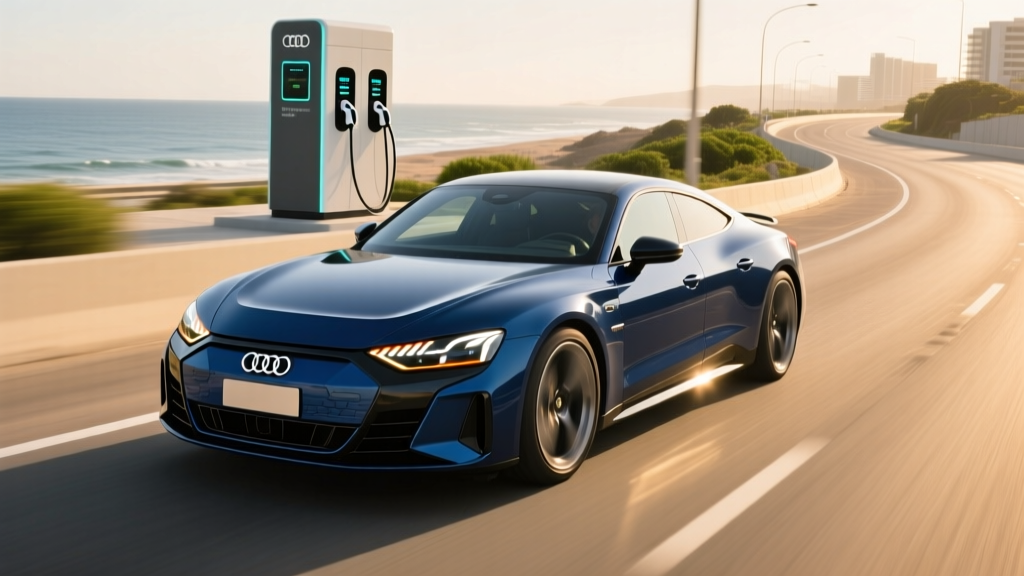
The 2026 Audi e-tron GT is a luxury electric grand tourer that pairs Porsche Taycan underpinnings with Audi's design language and all-day comfort. If you've been searching for the Audi e-tron GT top speed and performance envelope, the answer depends on which variant you choose: the standard GT x quattro hits 152 mph, while the RS e-tron GT performance crests at 155 mph. But straight-line velocity is only part of this car's story. With a revised 93.4 kWh (net) battery pack, 800-volt architecture enabling 270 kW DC fast charging, and a cabin that prioritizes long-haul comfort over track-day minimalism, the e-tron GT is built for drivers who want serious speed without sacrificing daily usability.
For 2026, Audi has updated the e-tron GT lineup with improved thermal management, slightly faster charging curves, and a new RS e-tron GT performance trim that replaces the previous RS model. Pricing starts at $106,395 for the GT Premium Plus and climbs past $165,000 for a fully optioned RS performance model. The trade-off for this blend of speed and luxury? Real-world range that falls short of the EPA sticker, and a federal tax credit that most buyers won't qualify for due to MSRP caps.
Range and Efficiency: EPA vs. the Real World
The 2026 Audi e-tron GT lineup carries a 93.4 kWh usable battery (105.0 kWh gross) using NMC (nickel manganese cobalt) pouch cells supplied by LG Energy Solution. This is a performance-oriented pack — not the LFP chemistry you'd find in a base Tesla Model 3 — prioritizing discharge rate and energy density over maximum cycle life.
GT x quattro (Premium Plus): EPA-estimated 270 miles. Real-world highway (75 mph, 70°F): ~230–245 miles. Cold weather (30°F, mixed driving): ~195–215 miles.
RS e-tron GT performance: EPA-estimated 256 miles. Real-world highway: ~215–230 miles. Cold weather: ~180–200 miles.
The e-tron GT's 800V powertrain is tuned for sustained performance, which trades some efficiency for thermal headroom. Expect to stop more often on road trips than in a Lucid Air or Tesla Model S.
Efficiency ratings from fueleconomy.gov place the GT x quattro at approximately 85 MPGe combined (39 kWh/100 mi), while the RS performance variant drops to roughly 79 MPGe combined (43 kWh/100 mi). These numbers reflect the car's 5,100+ lb curb weight and wide, sticky tires — the physics of moving a heavy luxury sedan at speed.
| Trim | Battery (kWh net) | EPA Range | MPGe (Combined) | kWh/100 mi |
|---|---|---|---|---|
| GT Premium Plus | 93.4 | 270 mi | 85 | 39 |
| GT Prestige | 93.4 | 266 mi | 84 | 40 |
| RS e-tron GT performance | 93.4 | 256 mi | 79 | 43 |
Charging Speed: 800V Architecture in Practice
The e-tron GT's 800-volt electrical architecture remains one of its strongest technical advantages. This high-voltage platform allows thinner, lighter cabling and significantly faster DC charging than 400V competitors like the BMW i7 or Mercedes EQS.
| Charging Level | Max Power | Speed / Time | Notes |
|---|---|---|---|
| Level 1 (120V) | 1.3 kW | ~3 mi/hr | Emergency use only; full charge in 70+ hours |
| Level 2 (240V, 48A) | 11.5 kW | ~29 mi/hr; full charge in ~9.5 hr | Standard home charging; requires 60A circuit |
| DC Fast Charge | 270 kW peak | 10–80% in ~22 min | Sustained ~175 kW to 50% SoC; tapers sharply above 80% |
The critical detail for road-trip planning: the e-tron GT holds its peak 270 kW rate only briefly (typically between 10–25% SoC) before stepping down through a multi-stage charge curve. From 25–50%, expect roughly 175–200 kW. From 50–80%, the rate drops to 90–120 kW. The 10–80% time of approximately 22 minutes assumes a charger capable of delivering 270 kW — such as Electrify America's latest 350 kW stalls — and proper battery preconditioning.
Preconditioning is essential here. When you navigate to a DC fast charger using the car's built-in navigation, the thermal management system begins heating or cooling the battery to its optimal charging temperature (roughly 86–95°F). Skip preconditioning — for example, by driving to a charger without entering it as a nav destination — and your peak charge rate may drop to 150 kW or less, adding 5–8 minutes to your stop.
For home charging, the 11.5 kW onboard AC charger is competitive with the segment. A full overnight charge is realistic on a properly installed Level 2 home station. Note that the e-tron GT uses the CCS1 connector for DC fast charging, though Audi has confirmed NACS adoption for future model years. As of 2026, you'll need a CCS-equipped public charger or a Tesla Supercharger with a CCS adapter (available through Audi dealers).
Performance: Top Speed, 0–60, and Drivetrain
The Audi e-tron GT top speed varies by configuration. Here's the complete performance breakdown across the 2026 lineup:
| Spec | GT x quattro | RS e-tron GT performance |
|---|---|---|
| Drivetrain | Dual-motor AWD | Dual-motor AWD (rear-biased torque vectoring) |
| Horsepower | 522 hp (boost mode) | 912 hp (launch control) |
| Torque | 472 lb-ft | 664 lb-ft |
| 0–60 mph | 3.9 seconds | 2.5 seconds |
| Top Speed | 152 mph | 155 mph |
| Transmission | 2-speed rear / 1-speed front | 2-speed rear / 1-speed front |
The two-speed rear transmission is a key technical differentiator shared with the Porsche Taycan. First gear provides explosive off-the-line acceleration, while second gear optimizes high-speed efficiency and top-speed runs. Most EVs use a single-speed reduction gear, which is simpler but forces a compromise between low-end punch and high-speed performance.
The RS e-tron GT performance's 2.5-second 0–60 time places it in hypercar territory — quicker than a Lamborghini Huracán STO to 60 mph. But the e-tron GT's personality is GT, not track weapon. The air suspension soaks up highway imperfections, cabin noise levels are exceptionally low, and the steering is tuned for stability over feedback. Drive it hard on a canyon road and you'll feel its 5,100-lb mass; drive it across a continent and you'll arrive fresher than in almost any performance sedan on the market.
Interior, Cargo, and Technology
The e-tron GT shares its J1 platform with the Taycan but diverges sharply in interior philosophy. Where the Porsche feels cockpit-tight and sport-focused, the Audi prioritizes spaciousness and material luxury.
Passenger space: Front headroom is 37.8 inches and rear headroom is 36.6 inches — adequate for adults under 6 feet, though the sloping roofline compromises taller rear passengers. Rear legroom measures 33.3 inches, which is tight for a car in this price class. A Tesla Model S offers 41.7 inches of rear legroom by comparison.
Cargo volume: The trunk provides 9.2 cubic feet behind the rear seats (22.1 cu ft with seats folded). The front trunk (frunk) adds 3.5 cubic feet — enough for a charging cable bag and a small duffel. Total usable cargo space is a clear weakness versus the Model S (28 cu ft trunk) or even the Taycan Sport Turismo (which offers a hatchback design).
Infotainment: A 10.1-inch upper touchscreen handles navigation, media, and vehicle settings, while an 8.6-inch lower screen manages climate controls and handwriting input. The system runs Audi's latest MIB 3+ software, which is responsive but not as customizable or over-the-air-capable as Tesla's or Rivian's interfaces. Wireless Apple CarPlay and Android Auto are standard. A 12.3-inch Virtual Cockit Plus digital instrument cluster is configurable with navigation, efficiency, and performance displays.
Driver assistance: The e-tron GT comes equipped with Audi's Adaptive Cruise Assist with Lane Guidance — a SAE Level 2 system that handles steering, acceleration, and braking on highways. It is not self-driving. The driver must keep hands on the wheel and eyes on the road at all times. Available features include Park Assist Plus with remote parking (the car can park itself while you stand outside), a 360-degree camera system, and intersection assist. Notably absent: any hands-free highway driving capability comparable to GM's Super Cruise or Ford's BlueCruise.
Pricing, Trims, and Tax Credit Eligibility
The 2026 Audi e-tron GT is a six-figure vehicle, and pricing reflects its positioning as a luxury performance EV.
| Trim | Base MSRP | As-Tested (Typical Options) | §30D Tax Credit |
|---|---|---|---|
| GT Premium Plus | $106,395 | $112,000–$118,000 | Not eligible (MSRP cap exceeded) |
| GT Prestige | $113,895 | $120,000–$128,000 | Not eligible (MSRP cap exceeded) |
| RS e-tron GT performance | $149,995 | $155,000–$167,000 | Not eligible (MSRP cap exceeded) |
Federal tax credit reality check: Under current IRS §30D rules, the new clean vehicle credit is capped at vehicles with an MSRP of $55,000 for sedans (or $80,000 for SUVs, vans, and trucks). Every e-tron GT trim exceeds the $55,000 sedan cap by a wide margin, meaning no 2026 Audi e-tron GT qualifies for the federal $7,500 tax credit. Additionally, buyer income limits ($150,000 single / $300,000 joint MAGI) and critical-mineral battery-sourcing requirements further restrict eligibility for luxury EVs in this class.
Some states offer their own EV incentives that may apply regardless of MSRP — check your state's energy or DMV website for current programs. But at the federal level, this is a full-price purchase.
Warranty and Long-Term Ownership
Audi backs the 2026 e-tron GT with the following coverage:
- New vehicle limited warranty: 4 years / 50,000 miles
- Battery warranty: 8 years / 100,000 miles (capacity retention guaranteed above 70% of original)
- Powertrain warranty: 8 years / 100,000 miles (motors, power electronics)
- Corrosion perforation: 12 years, unlimited miles
- Roadside assistance: 4 years / unlimited miles
The 70% battery capacity retention threshold is standard for the German luxury brands but less generous than Hyundai/Kia's approach (which guarantees 70% on a 10-year/100,000-mile window). NMC chemistry in the e-tron GT typically shows 5–8% degradation over the first 50,000 miles based on fleet data from J1-platform vehicles, then stabilizes. Owners who avoid frequent DC fast charging and don't regularly charge to 100% SoC tend to see slower degradation curves.
Insurance costs: Expect annual premiums of $3,200–$4,800 depending on your profile and state. The e-tron GT's repair costs (aluminum body panels, specialized high-voltage components) push insurance rates above comparable gas-powered Audi models.
Pros, Cons, and Who Should Buy
- Exceptional ride quality via adaptive air suspension
- 270 kW DC fast charging among the quickest in class
- RS performance variant's 2.5-sec 0–60 is supercar territory
- 800V architecture future-proofs charging infrastructure access
- Quiet, refined cabin with premium materials throughout
- Standard AWD with torque vectoring for all-weather confidence
- Real-world range 15–20% below EPA in highway/cold driving
- Cargo space (12.7 cu ft total) is impractical for families
- Rear legroom tight for a $100K+ sedan
- No federal tax credit eligibility (MSRP cap)
- No hands-free driving system (Level 2 only)
- CCS connector requires adapter for Tesla Superchargers
- Infotainment lags Tesla/Rivian in responsiveness and OTA updates
How It Compares: e-tron GT vs. Key Rivals
The e-tron GT's closest competitors are the Porsche Taycan (its platform sibling), the Tesla Model S, and the Lucid Air. Each makes different trade-offs:
- vs. Porsche Taycan: The Taycan offers sharper handling, a more driver-focused cockpit, and similar charging speeds — but less rear-seat space and a stiffer ride. The e-tron GT is the comfort-oriented alternative on the same bones.
- vs. Tesla Model S: The Model S Plaid is quicker (1.99 sec 0–60), offers more range (EPA 402 mi), and has vastly more cargo room. But its interior quality, panel gaps, and ride refinement don't match Audi's standard. The Supercharger network remains a Tesla advantage, though CCS adapters partially bridge the gap.
- vs. Lucid Air: The Air Grand Touring delivers EPA 516 miles of range — nearly double the e-tron GT — in a similarly luxurious package. But the Lucid's dealer/service network is far smaller, and its driving dynamics feel less planted at high speed.
Frequently Asked Questions
What is the real-world range of the 2026 Audi e-tron GT?
Expect 230–245 highway miles in mild weather for the GT x quattro, and 215–230 for the RS performance variant. In cold weather (below freezing), subtract another 15–20%, bringing the GT x quattro to roughly 195–215 miles. City driving with regenerative braking can exceed EPA estimates, reaching 275–290 miles in stop-and-go traffic at moderate temperatures.
How fast does the e-tron GT charge at home and on the road?
At home on a 240V Level 2 charger (48A/11.5 kW), the e-tron GT adds roughly 29 miles of range per hour, with a full 0–100% charge taking about 9.5 hours. On a 350 kW-capable DC fast charger, it peaks at 270 kW and charges from 10–80% in approximately 22 minutes with proper battery preconditioning.
Does the 2026 Audi e-tron GT qualify for the federal EV tax credit?
No. Under current IRS §30D rules, the new-vehicle clean energy credit caps eligible sedans at an MSRP of $55,000. Every e-tron GT trim starts well above that threshold ($106,395+). Buyer income limits and battery-sourcing requirements provide additional barriers. Check irs.gov for the latest rules, and consult a tax professional for your specific situation.
Is the Audi e-tron GT worth buying over a Tesla Model S or Porsche Taycan?
Choose the e-tron GT if you prioritize ride comfort, cabin quietness, and Audi's design language over maximum range or hands-free driving tech. Choose the Model S if range, cargo space, and Supercharger access are top priorities. Choose the Taycan if driving dynamics and track capability matter more than rear-seat comfort. None of these are wrong choices — they serve different luxury-EV buyer profiles.
What is the Audi e-tron GT's top speed?
The 2026 GT x quattro has a top speed of 152 mph, while the RS e-tron GT performance is electronically limited to 155 mph. Both figures are governed — the powertrain is capable of more, but Audi limits top speed to preserve tire life and thermal management headroom during sustained high-speed driving.
Can I charge the e-tron GT at Tesla Superchargers?
As of 2026, the e-tron GT uses a CCS1 connector. Tesla has begun opening Superchargers to non-Tesla EVs via the Tesla app, but you'll need a CCS-to-NACS adapter (available through Audi dealerships) or must use a Supercharger stall equipped with a built-in CCS cable. Coverage and availability vary by region — plan accordingly for road trips.