Audi e-tron GT Quattro: Real-World Range & Charging Review
A comprehensive look at how the Audi e-tron GT Quattro performs when the spec sheet meets the open road.
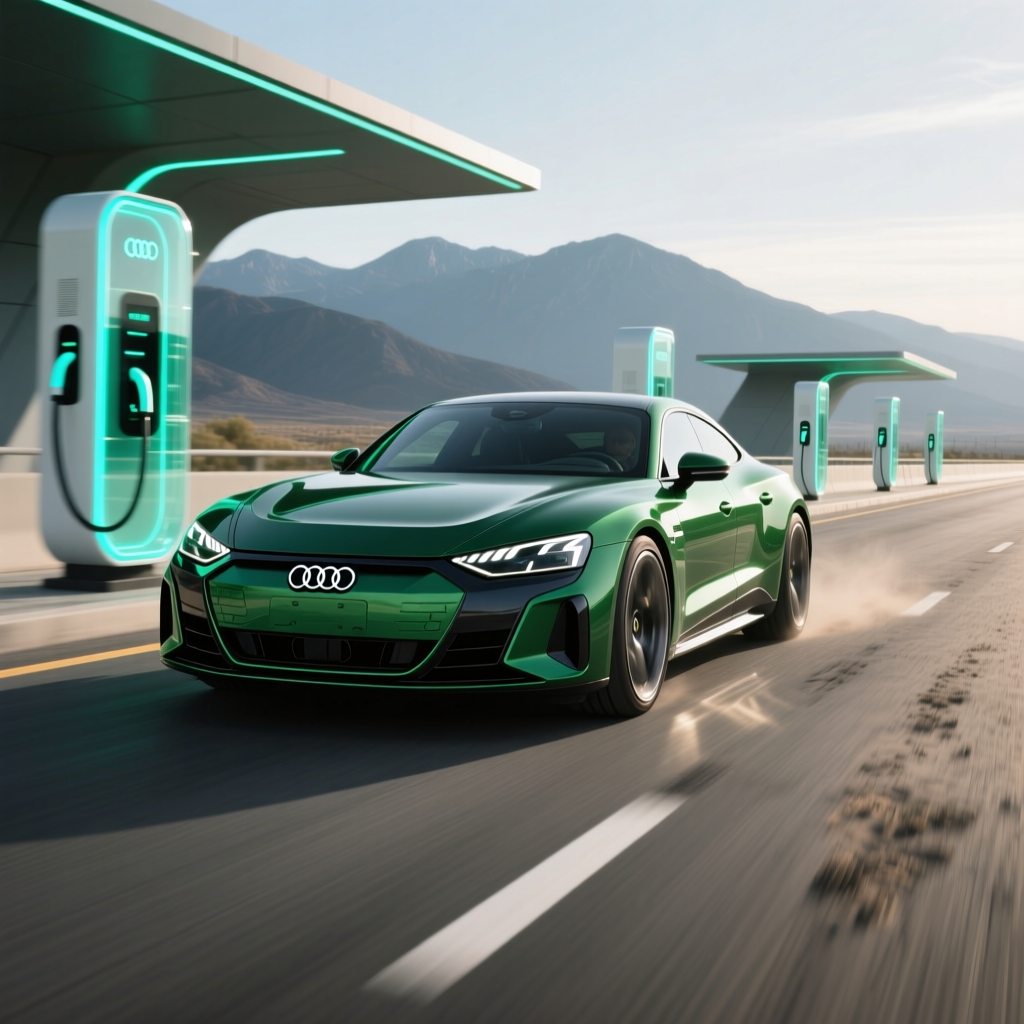
The Audi e-tron GT Quattro occupies a fascinating space in the electric vehicle landscape. Built on the same J1 platform as the Porsche Taycan, it promises blistering performance wrapped in a grand touring package that prioritizes comfort and long-distance capability. But manufacturer claims and EPA ratings only tell part of the story. In this review, we dig into the real-world range, charging behavior, and everyday usability of the Audi e-tron GT Quattro to determine whether this luxury electric grand tourer lives up to its promises when you take it beyond the brochure.
If you are exploring the broader luxury EV market, be sure to check out our best luxury electric vehicles roundup and our EV comparison guides for more head-to-head analysis.
Vehicle Overview: The Audi e-tron GT Quattro at a Glance
The Audi e-tron GT Quattro is a four-door electric grand tourer that blends Audi's signature design language with serious electric performance hardware. Underneath its sculpted body lies the Volkswagen Group's J1 performance platform — the same architecture underpinning the Porsche Taycan. This means an 800-volt electrical architecture, a two-speed transmission on the rear axle, and a low-slung battery pack that contributes to an exceptionally low center of gravity.
The dual-motor all-wheel-drive setup produces a combined output of up to 469 horsepower (522 hp with launch control engaged) and 464 lb-ft of torque. Audi equips the e-tron GT Quattro with a gross battery capacity of approximately 93.4 kWh, with a usable capacity of around 85 kWh. The vehicle features adaptive air suspension, rear-axle steering (optional), and a suite of driver-assistance technologies that make it equally at home on the autobahn or navigating city streets.
Positioned against competitors like the Tesla Model S, the Porsche Taycan 4S, and the BMW i5 M60, the e-tron GT Quattro aims to deliver a distinctly Audi flavor of electric motoring — understated luxury, exceptional build quality, and effortless long-distance cruising.
Real-World Range Testing: What the EPA Does Not Tell You
The EPA rates the Audi e-tron GT Quattro at approximately 238 miles of combined range. On paper, that figure might seem modest compared to rivals like the Tesla Model S or the Lucid Air. However, as with many vehicles built on the J1 platform, the EPA testing cycle tends to underestimate the e-tron GT's real-world capabilities — particularly during highway cruising.
Highway Range Results
Independent testing by outlets such as Edmunds and various European automotive journalists has consistently shown that the e-tron GT Quattro can exceed its EPA estimate under favorable conditions. In steady-state highway driving at speeds between 65 and 70 mph, with moderate temperatures and minimal climate control load, real-world range figures of 250 to 280 miles have been recorded. The vehicle's exceptional aerodynamic efficiency (a drag coefficient of just 0.24) plays a significant role here, as does the two-speed rear transmission that allows the motor to operate in a more efficient gear at sustained highway speeds.
City and Mixed Driving
In stop-and-go urban environments, regenerative braking helps recapture energy, though the e-tron GT's regen capabilities are somewhat less aggressive than one-pedal-driving competitors. In mixed driving scenarios — a blend of city, suburban, and highway roads — expect real-world range to settle between 230 and 260 miles depending on driving style, ambient temperature, and terrain.
Cold Weather Impact
As with all electric vehicles, cold weather takes a toll on the e-tron GT's range. In temperatures below freezing, range reductions of 20 to 30 percent are typical, bringing effective range down to approximately 170 to 200 miles. The vehicle's heat pump (standard in many markets) helps mitigate cabin heating demands, but battery chemistry limitations remain a factor. Preconditioning the battery while plugged in is essential for maximizing cold-weather range and charging performance.
For a deeper look at how EVs perform in winter conditions, see our guide to the best EVs for cold weather driving.
Charging Speed & Infrastructure: The 800-Volt Advantage
One of the most compelling arguments for the Audi e-tron GT Quattro is its 800-volt electrical architecture. While many competing EVs still rely on 400-volt systems, the higher voltage platform enables significantly faster DC fast-charging speeds and more efficient power delivery to the motors.
DC Fast Charging Performance
Audi claims a peak DC fast-charging rate of up to 270 kW for the e-tron GT Quattro. In real-world testing at compatible high-power chargers (such as Electrify America's 350 kW stations), the vehicle has demonstrated the ability to sustain charging rates above 200 kW for meaningful portions of the charging session. A 10 to 80 percent charge can be completed in approximately 22 to 25 minutes under ideal conditions — a figure that puts the e-tron GT among the fastest-charging EVs currently available.
The charging curve is notably flat compared to many competitors. Rather than spiking to a peak and then tapering dramatically, the e-tron GT maintains strong charging speeds through a wide state-of-charge window. This means you spend less time waiting at the charger and more time on the road — a critical advantage for long-distance touring.
AC Charging and Home Charging
For Level 2 AC charging, the e-tron GT Quattro supports up to 11 kW (some markets offer an optional 22 kW onboard charger). On a standard 11 kW home wallbox, a full charge from empty takes approximately 9 to 10 hours — easily achievable with overnight charging. The optional 22 kW charger cuts this time roughly in half, though it requires compatible three-phase AC infrastructure that is less common in residential settings, particularly in North America.
Charging Network Compatibility
The e-tron GT uses the CCS (Combined Charging System) connector standard, giving it access to a wide and growing network of public fast chargers. Audi has partnered with Electrify America in the United States to provide complimentary charging credits for new owners, further reducing the cost of public charging during the initial ownership period. For a comprehensive look at public charging options, see our EV charging networks comparison guide.
Interior, Technology & Daily Usability
Step inside the Audi e-tron GT Quattro and you are greeted by an interior that blends premium materials with a driver-focused layout. Unlike some EV competitors that pursue ultra-minimalist designs, Audi has retained physical controls for climate functions and steering wheel operations — a choice that many drivers appreciate for everyday usability.
Dual-Screen Infotainment
The dashboard features Audi's dual-screen MMI touch response system: a 10.1-inch upper display for infotainment and navigation, and an 8.6-inch lower display for climate controls and handwriting input. The system is responsive, visually crisp, and integrates wireless Apple CarPlay and Android Auto. The Virtual Cockpit Plus digital instrument cluster (12.3 inches) provides configurable driving information, including a dedicated EV display with range, energy flow, and charging status.
Seating and Comfort
The front seats are generously bolstered and available with ventilation, heating, and massage functions. Rear seat space is adequate for adults on shorter journeys, though the sloping roofline does compromise headroom for taller passengers. The panoramic glass roof (standard on many trims) creates an airy cabin atmosphere, though it does reduce headroom slightly compared to the optional carbon fiber roof panel.
Cargo Capacity
Practicality is where grand tourers traditionally compromise, and the e-tron GT is no exception. The rear trunk offers approximately 12.9 cubic feet of cargo space, supplemented by a modest front trunk (frunk) of about 3.0 cubic feet — enough for a charging cable and a small bag. While not class-leading, the space is usable and well-shaped for luggage on weekend trips.
For buyers prioritizing cargo versatility, our best electric SUVs list highlights vehicles with significantly more cargo room.
Driving Dynamics: Grand Touring Excellence
The Audi e-tron GT Quattro was engineered to cover vast distances at high speeds while keeping its occupants cosseted in comfort. It succeeds brilliantly in this mission, delivering a driving experience that feels distinctly different from its platform sibling, the Porsche Taycan.
Ride Quality and Suspension
The standard three-chamber adaptive air suspension provides a remarkable breadth of capability. In Comfort mode, the e-tron GT glides over road imperfections with a serenity that belies its 5,100-pound curb weight. Switch to Dynamic mode and the suspension firms up noticeably, body roll is well-contained, and the car feels planted and confident through sweeping curves. The low center of gravity — a natural benefit of the floor-mounted battery pack — contributes to handling composure that rivals many internal-combustion grand tourers.
Acceleration and Performance
With launch control engaged, the e-tron GT Quattro dispatches the 0 to 60 mph sprint in approximately 3.9 seconds. The two-speed rear transmission provides an initial gear for explosive off-the-line acceleration, then shifts to a taller gear for efficient high-speed cruising. The transition is seamless and largely imperceptible. Top speed is electronically limited to 152 mph.
Steering and Braking
The steering is precise and well-weighted, though it communicates slightly less feedback than the Porsche Taycan's setup — a deliberate choice that aligns with the Audi's more comfort-oriented character. The regenerative braking system blends smoothly with the mechanical brakes, avoiding the inconsistent pedal feel that plagues some EVs. Drivers can adjust regen intensity through steering wheel paddles, though the system does not offer true one-pedal driving in the manner of a Nissan Leaf or Chevrolet Bolt.
For a detailed comparison of driving dynamics across the luxury EV segment, see our Porsche Taycan vs. Audi e-tron GT comparison.
Ownership Costs & Value Proposition
The Audi e-tron GT Quattro carries a premium price tag that reflects its positioning as a luxury performance vehicle. Understanding the total cost of ownership, however, requires looking beyond the sticker price.
Purchase Price and Incentives
The e-tron GT Quattro typically starts in the mid-six-figure range, with options and higher trim levels (such as the RS e-tron GT) pushing the price considerably higher. Depending on your jurisdiction, federal, state, or local EV incentives may offset a portion of the purchase price. It is worth researching current incentive programs in your area, as these change periodically.
Running Costs
Electricity costs for the e-tron GT Quattro are significantly lower than fuel costs for a comparable internal-combustion vehicle. Based on average electricity rates and the vehicle's efficiency of approximately 2.0 to 2.5 miles per kWh, home charging costs equate to roughly one-third to one-quarter of what a similarly powerful gasoline car would consume in fuel. Public DC fast charging is more expensive but still generally competitive with premium gasoline.
Maintenance and Depreciation
EVs generally require less routine maintenance than combustion vehicles — no oil changes, fewer brake replacements (thanks to regenerative braking), and simpler drivetrains with fewer moving parts. Audi's warranty coverage includes a battery warranty of 8 years or 100,000 miles (whichever comes first), providing peace of mind for long-term ownership. Depreciation remains a consideration, as luxury EVs have historically experienced steeper depreciation curves than some gasoline counterparts, though this trend is gradually improving as EV adoption accelerates.
For more on maximizing EV value, read our guide on understanding the total cost of EV ownership.
Pros & Cons: The Honest Assessment
Pros
- Exceptional DC fast-charging speeds thanks to the 800-volt architecture — among the fastest in the segment
- Real-world range often exceeds EPA estimates, particularly during highway cruising
- Superb ride quality with adaptive air suspension that balances comfort and sportiness
- Premium interior with high-quality materials, physical controls, and excellent build quality
- Strong straight-line performance with launch control delivering sub-4-second 0-60 mph times
- Quiet, refined cabin at highway speeds — ideal for long-distance touring
- Striking exterior design that stands out without being ostentatious
Cons
- Modest EPA range rating compared to efficiency-focused competitors like Tesla and Lucid
- Limited cargo space — the trunk and frunk combined offer less room than many sedans
- Rear headroom is tight for taller passengers due to the sloping roofline
- No true one-pedal driving — regenerative braking is less aggressive than some rivals
- Infotainment system relies heavily on touchscreens, which can be distracting while driving
- Premium pricing places it out of reach for many buyers
- Charging port location on the driver's side front fender can be inconvenient at some stations
Key Specifications Comparison Table
| Specification | Audi e-tron GT Quattro | Porsche Taycan 4S | Tesla Model S Long Range | BMW i5 M60 |
|---|---|---|---|---|
| Powertrain | Dual Motor AWD | Dual Motor AWD | Dual Motor AWD | Dual Motor AWD |
| Horsepower (Launch Control) | 522 hp | 562 hp | 670 hp | 593 hp |
| 0–60 mph | 3.9 seconds | 3.8 seconds | 3.1 seconds | 3.7 seconds |
| EPA Range (approx.) | 238 miles | 227 miles | 402 miles | 270 miles |
| Battery Usable Capacity | ~85 kWh | ~83.7 kWh | ~95 kWh | ~84.3 kWh |
| Max DC Charge Rate | 270 kW | 270 kW | 250 kW | 205 kW |
| Electrical Architecture | 800V | 800V | 400V | 400V |
| 10–80% DC Charge Time | ~23 minutes | ~23 minutes | ~30 minutes | ~31 minutes |
| Cargo Volume (Trunk + Frunk) | ~15.9 cu ft | ~16.3 cu ft | ~28.0 cu ft | ~17.4 cu ft |
| Curb Weight (approx.) | 5,139 lbs | 5,060 lbs | 4,561 lbs | 5,060 lbs |
Note: Specifications are approximate and may vary by model year, market, and optional equipment. Always verify with the manufacturer for the most current data.
Frequently Asked Questions
What is the real-world range of the Audi e-tron GT Quattro?
While the EPA rates the e-tron GT Quattro at approximately 238 miles, real-world testing consistently shows higher figures during highway driving. In favorable conditions (moderate temperatures, steady highway speeds of 65–70 mph), range of 250 to 280 miles is achievable. In mixed driving, expect between 230 and 260 miles. Cold weather can reduce range by 20 to 30 percent.
How fast does the Audi e-tron GT Quattro charge?
Thanks to its 800-volt architecture, the e-tron GT Quattro supports DC fast charging at up to 270 kW. Under ideal conditions at a compatible high-power charger, a 10 to 80 percent charge takes approximately 22 to 25 minutes. The charging curve is impressively flat, meaning the vehicle sustains high charging speeds through a wide portion of the session rather than tapering quickly.
Does the Audi e-tron GT Quattro support one-pedal driving?
Not in the traditional sense. The e-tron GT offers adjustable regenerative braking via steering wheel paddles, with multiple levels of intensity. However, even at the highest setting, the vehicle does not come to a complete stop using regen alone. This is a deliberate engineering choice that prioritizes smooth, natural deceleration — but it may disappoint drivers accustomed to full one-pedal driving in vehicles like the Nissan Leaf or Tesla Model 3.
Is the Audi e-tron GT Quattro good for long road trips?
Absolutely — this is precisely what the e-tron GT was designed for. The combination of comfortable adaptive air suspension, a quiet cabin, supportive seats, and rapid 800V charging makes it one of the best EVs for long-distance travel. With 22–25 minute charging stops every 200 to 250 miles, road trips are entirely practical. The main limitation is cargo space, which may require packing light for extended journeys.
How does the Audi e-tron GT Quattro compare to the Porsche Taycan?
Both vehicles share the J1 platform and 800-volt architecture, but they have distinctly different personalities. The Porsche Taycan prioritizes driver engagement, sharper handling, and a sportier character. The Audi e-tron GT Quattro emphasizes comfort, refinement, and grand touring capability. The Audi's interior features more traditional luxury materials and physical controls, while the Taycan leans into a more modern, touchscreen-heavy approach. Range and charging performance are very similar between the two. For a detailed breakdown, read our full Taycan vs. e-tron GT comparison.
Final Verdict
The Audi e-tron GT Quattro is a compelling electric grand tourer that excels in the areas that matter most for long-distance driving: rapid charging, comfortable ride quality, and a refined cabin environment. Its real-world range frequently exceeds the EPA estimate, and its 800-volt charging capability remains a genuine competitive advantage that makes road trips practical and stress-free.
It is not the most efficient EV in its class, nor does it offer the longest range or the most cargo space. But for buyers who value build quality, design, charging speed, and that elusive sense of occasion that comes from driving a beautifully crafted machine, the e-tron GT Quattro delivers in spades. It proves that electric vehicles can be desirable not just for their environmental credentials, but for the sheer quality of the driving experience they provide.
Ready to explore more? Browse our complete EV reviews archive and find the perfect electric vehicle for your lifestyle.