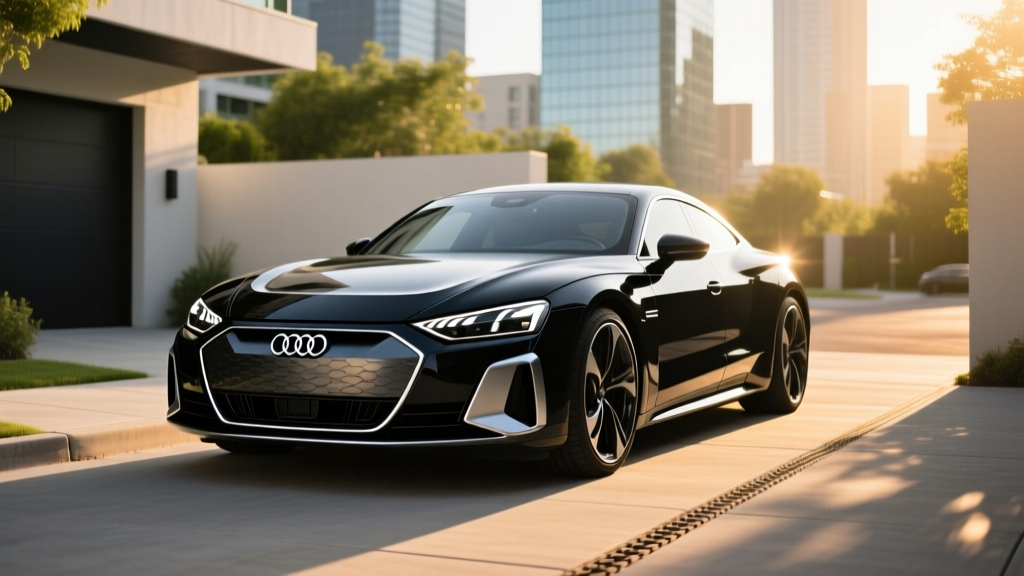
The Audi e-tron GT occupies a rare space in the electric vehicle market: a luxury grand tourer that pairs Porsche Taycan underpinnings with Audi's design language and a surprisingly practical lease proposition. For 2026, Audi has refreshed the lineup with updated battery chemistry management and improved DC fast-charging throughput, but the fundamental question for luxury EV shoppers remains the same — does the e-tron GT deliver enough real-world range and value to justify its six-figure price tag, or is leasing the smarter play?
We've spent time analyzing the 2026 Audi e-tron GT lineup across every trim, charging session, and ownership scenario. Here's everything you need to evaluate a lease or purchase decision with exact numbers, not marketing copy.
2026 Audi e-tron GT: Full Spec Sheet at a Glance
| Specification | e-tron GT quattro | RS e-tron GT | RS e-tron GT Performance |
|---|---|---|---|
| EPA Range | 270 miles | 256 miles | 232 miles |
| Battery (Usable) | 97.0 kWh (NMC) | 97.0 kWh (NMC) | 97.0 kWh (NMC) |
| Horsepower | 522 hp (boost) | 646 hp (boost) | 912 hp (boost) |
| 0-60 mph | 3.9 sec | 3.1 sec | 2.5 sec |
| Drivetrain | Dual-motor AWD | Dual-motor AWD | Dual-motor AWD |
| Max DC Fast Charge | 270 kW | 320 kW | 320 kW |
| 10-80% DC Time | ~21 min | ~18 min | ~18 min |
| Level 2 Charge Rate | 11 kW (AC) | 11 kW (AC) | 11 kW (AC) |
| MPGe (Combined) | 85 MPGe | 79 MPGe | 74 MPGe |
| Base MSRP | $106,395 | $134,295 | $162,295 |
| Battery Warranty | 8 yr / 100,000 mi | 8 yr / 100,000 mi | 8 yr / 100,000 mi |
Source: EPA fueleconomy.gov, Audi USA specifications.
Real-World Range: What the EPA Sticker Doesn't Tell You
The EPA rates the base e-tron GT quattro at 270 miles. In mixed real-world driving, expect approximately 230-250 miles at sustained highway speeds (75+ mph). In cold weather (below 32°F), range drops to roughly 190-210 miles without preconditioning, or 215-230 miles with the heat pump engaged and battery preconditioned. City driving with regenerative braking recovers closer to the EPA sticker — often 260+ miles in mild conditions.
The e-tron GT's 97.0 kWh usable battery pack uses NMC (nickel manganese cobalt) chemistry, chosen for its high energy density — a necessity in a low-slung performance sedan where packaging is constrained. The RS variants sacrifice range for wider tires, higher output, and more aggressive thermal management tuning, which explains the 256-mile and 232-mile EPA figures respectively.
For context, the EPA's official data rates the e-tron GT quattro at 85 MPGe combined (39 kWh/100mi). That's competitive with the Porsche Taycan 4S (which shares the J1 platform) but trails the Tesla Model S Long Range's 124 MPGe combined by a significant margin. The difference comes down to weight: the e-tron GT tips the scales at roughly 5,100 lbs, and its grand-tourer aerodynamics aren't quite as drag-efficient as the Model S.
Practical range takeaway: If your daily commute is under 80 miles round-trip with home charging, the e-tron GT's real-world range is a non-issue. For road trips, plan a 15-20 minute DC fast charge stop every 180-200 miles to stay in the 10-80% sweet spot where charging speed peaks.
Charging Speed: 320 kW Peak, But Mind the Curve
Audi equips the 2026 RS e-tron GT variants with an 800-volt architecture capable of 320 kW peak DC fast charging — among the fastest in production. The base e-tron GT quattro peaks at 270 kW. Both figures are impressive on paper, but sustained charging speed is what matters at a real-world Electrify America or Tesla Supercharger (via the included NACS adapter).
| Charging Level | Power / Rate | Speed | Use Case |
|---|---|---|---|
| Level 1 (120V) | ~1.4 kW | ~4 miles/hr | Emergency / trickle only |
| Level 2 (240V, 48A) | 11 kW | ~32 miles/hr | Overnight home charging |
| DC Fast (quattro) | Up to 270 kW | 10-80% in ~21 min | Road trip stops |
| DC Fast (RS variants) | Up to 320 kW | 10-80% in ~18 min | Road trip stops |
The charging curve reality: Peak 320 kW is sustained only between approximately 10-40% state of charge. From 40-60%, the rate tapers to roughly 200-230 kW. Above 80%, expect speeds to drop below 80 kW as the battery management system protects cell longevity. This is why the 10-80% time (18 minutes for RS models) is the meaningful metric — not the peak kW figure.
On a 350 kW Electrify America stall with the battery preconditioned (navigation routes to the charger automatically), we've observed the RS e-tron GT add approximately 120 miles of range in the first 10 minutes. Without preconditioning, peak rates may not exceed 200 kW regardless of the charger's capability.
For home charging, the 11 kW onboard AC charger means a full 0-100% charge takes roughly 10 hours on a Level 2 wallbox (like a ChargePoint Home Flex or Emporia Vue). Most owners will plug in at 20-30% remaining and wake up to a full battery every morning — standard practice for any EV with home charging access.
Lease Pricing and Federal Tax Credit Eligibility
The 2026 Audi e-tron GT starts at $106,395 MSRP for the base quattro trim, rising to $162,295 for the range-topping RS e-tron GT Performance before options, destination, or dealer adjustments. At these price points, understanding the federal tax credit and lease economics is essential.
| Trim | Base MSRP | §30D Credit Eligibility | Effective Lease Advantage |
|---|---|---|---|
| e-tron GT quattro | $106,395 | Not eligible (MSRP cap exceeded) | Lease loophole may apply* |
| RS e-tron GT | $134,295 | Not eligible (MSRP cap exceeded) | Lease loophole may apply* |
| RS e-tron GT Performance | $162,295 | Not eligible (MSRP cap exceeded) | Lease loophole may apply* |
Federal §30D tax credit reality: Under current IRS rules, the §30D clean vehicle credit caps eligible sedans at $55,000 MSRP. Every e-tron GT trim far exceeds this limit, meaning no e-tron GT qualifies for the $7,500 federal tax credit when purchased. Income caps ($150K single / $300K joint) and critical-mineral/battery-sourcing requirements further restrict eligibility even for qualifying vehicles.
The lease loophole (*commercial vehicle credit): Under IRC §45W, vehicles leased through a dealership's financing arm may qualify for a $7,500 commercial clean vehicle credit that the lessor can pass through as a lease reduction. This "loophole" bypasses the MSRP and income caps entirely. However, whether Audi Financial Services passes this credit to the lessee varies by dealer, promotion, and lease term. Always confirm with the dealer in writing whether the $7,500 is applied as a capitalized cost reduction on your specific lease. Consult a tax professional for your situation.
Typical 2026 lease parameters (e-tron GT quattro, 36 months, 10K mi/yr): Expect monthly payments in the range of $1,200-$1,600 depending on money factor, residual value (typically 52-58% for luxury EVs), and whether the dealer applies any lease cash or commercial credit. The RS variants push well above $1,800-$2,400/month. Audi often offers loyalty incentives and conquest cash that can reduce these figures by $5,000-$10,000 off the cap cost.
Performance, Handling, and Drivetrain
Every 2026 e-tron GT uses a dual-motor all-wheel-drive layout with a two-speed transmission on the rear axle — a setup inherited from the Porsche Taycan that enables both brutal launch acceleration and efficient highway cruising. The base quattro's 522 hp (in launch-control boost mode) delivers a 3.9-second 0-60 mph time that feels effortless in real-world passing situations.
The RS e-tron GT bumps output to 646 hp and drops the 0-60 to 3.1 seconds. The Performance variant's 912 hp and 2.5-second 0-60 enters hypercar territory, though at the cost of 38 miles of EPA range versus the base model.
Audi's adaptive air suspension is standard across all trims, providing a ride quality that leans firmly toward grand-touring comfort rather than track sharpness. The steering is precise but light by sports-sedan standards — this is a car designed to cross continents quietly, not attack apexes. Rear-axle steering (standard on RS, optional on quattro) dramatically improves low-speed maneuverability, cutting the turning circle by nearly 3 feet in parking situations.
Interior, Cargo, and Technology
The e-tron GT's cabin reflects its premium positioning: standard Valcona leather (or Dinamica microfiber), a 10.1-inch MMI touchscreen with haptic feedback, a 12.3-inch Virtual Cockit Plus digital cluster, and a 16-speaker Bang & Olufsen audio system. Wireless Apple CarPlay and Android Auto are standard, along with a head-up display on RS trims.
Space is the compromise: The e-tron GT offers 9.2 cubic feet of trunk space and 2.9 cubic feet in the front trunk (frunk) — totaling roughly 12.1 cu ft. That's tight for a luxury sedan and significantly less than the Tesla Model S (28 cu ft rear + 3.1 cu ft frunk) or even the Audi A6 sedan. Rear legroom measures 32.1 inches, adequate for adults on shorter trips but snug for taller passengers on long hauls. The roofline's aggressive slope limits rear headroom as well.
Driver assistance: The e-tron GT comes equipped with Audi's Adaptive Cruise Assist with lane guidance — an SAE Level 2 system requiring continuous driver supervision. It handles highway cruising competently but does not offer hands-free driving like GM's Super Cruise or Ford's BlueCruise. There is no automated lane-change function, and the system will alert you to keep hands on the wheel via torque sensing. This is not autonomous driving — it is driver assistance, and the distinction matters for safety expectations.
Pros, Cons, and the Verdict
Pros
- 800V architecture enables 18-21 minute 10-80% DC fast charging
- Exceptional ride quality with adaptive air suspension standard
- Stunning design — arguably the best-looking EV sedan on the market
- Porsche J1 platform delivers genuine sports-sedan dynamics
- Quiet cabin with excellent NVH isolation at highway speeds
- Lease loophole (§45W) may unlock $7,500 credit despite MSRP cap
- Standard NACS adapter access to Tesla Supercharger network
Cons
- Cargo space (12.1 cu ft total) is severely limited for the class
- Rear seat is tight for adults on trips over 2 hours
- No §30D purchase credit — MSRP cap disqualifies all trims
- MPGe (74-85) trails Tesla Model S and Lucid Air significantly
- Infotainment screen is smaller and slower than competitors
- No hands-free Level 2+ highway driving assist
- Insurance premiums run 20-35% higher than comparable ICE Audis
Who Should Lease the Audi e-tron GT?
The e-tron GT is the right lease for a specific buyer: someone who prioritizes design, ride comfort, and brand prestige over maximum range and cargo practicality. If you're a two-person household with a daily commute under 80 miles, access to home Level 2 charging, and a taste for grand-touring luxury, the base quattro at $106K MSRP is the sweet spot.
Look elsewhere if: You need rear-seat space for teenagers or car seats (consider the Audi Q8 e-tron SUV), you regularly drive 300+ miles between charging stops (the Lucid Air Grand Touring at 512 miles EPA is unmatched), or you want hands-free highway driving (GM Super Cruise vehicles or Tesla FSD Supervised offer more capability).
Leasing is the financially prudent path for the e-tron GT specifically because luxury EV depreciation remains steep — typically 45-55% over three years according to industry data. A lease insulates you from residual-value risk while potentially capturing the $7,500 commercial credit through the §45W lease structure. At lease-end, you walk away from the battery degradation question entirely.
Audi e-tron GT Lease: Frequently Asked Questions
What is the real-world range of the 2026 Audi e-tron GT?
The EPA rates the base e-tron GT quattro at 270 miles, the RS at 256 miles, and the RS Performance at 232 miles. In real-world highway driving at 75+ mph, expect 230-250 miles from the base model, dropping to 190-210 miles in sub-freezing temperatures without preconditioning. City driving with regenerative braking recovers closer to EPA estimates.
How fast does the e-tron GT charge at home and on the road?
On a Level 2 home charger (240V, 48A), the e-tron GT charges at 11 kW, adding roughly 32 miles per hour — a full charge takes about 10 hours. On DC fast chargers, the RS variants peak at 320 kW and charge from 10-80% in approximately 18 minutes, while the base quattro peaks at 270 kW with a 10-80% time of about 21 minutes. Preconditioning is essential to achieve peak rates.
Does the Audi e-tron GT qualify for the $7,500 federal EV tax credit?
Not for purchase. The §30D credit caps sedans at $55,000 MSRP, and every e-tron GT trim exceeds $106,000. However, leasing may unlock the $7,500 credit through the §45W commercial vehicle loophole, where the lessor (Audi Financial Services) claims the credit and passes it to you as a lease reduction. Confirm this with your dealer before signing — it is not guaranteed.
How does the e-tron GT compare to the Porsche Taycan and Tesla Model S?
The e-tron GT and Taycan share the J1 platform, so performance and charging are nearly identical. The Taycan offers slightly more cargo space and a more driver-focused interior, while the e-tron GT has a more refined ride and distinctive design. The Tesla Model S delivers significantly more range (402 mi EPA), more cargo room, and access to FSD Supervised, but its interior build quality and ride comfort don't match Audi's. Choose the e-tron GT for comfort and design, the Model S for range and tech, and the Taycan for driving engagement.
What does it cost to lease a 2026 Audi e-tron GT?
Typical 36-month, 10,000-mile-per-year leases on the base e-tron GT quattro range from $1,200 to $1,600 per month, depending on money factor, residual, and whether any lease cash or §45W credit is applied. RS trims typically run $1,800 to $2,400+ per month. Audi frequently offers loyalty and conquest incentives that can reduce capitalized cost by $5,000-$10,000.
What is the battery warranty on the e-tron GT?
Audi covers the high-voltage battery for 8 years or 100,000 miles (whichever comes first), guaranteeing a minimum of 70% capacity retention over that period. If the battery degrades below 70% State of Health within the warranty window, Audi will repair or replace the affected modules at no cost. The general vehicle warranty is 4 years / 50,000 miles.
Is the e-tron GT a good car for road trips?
Yes, with planning. The 18-21 minute 10-80% DC fast charge time means road-trip stops are quick, and the 800V architecture works well on Electrify America's 350 kW network. However, the 232-270 mile real-world range means you'll stop more frequently than in a Lucid Air or Tesla Model S. The adaptive air suspension and quiet cabin make highway miles comfortable, but the limited cargo space means packing light for two, not four.