The 2026 Audi e-tron GT: Luxury Grand Touring With Real Substance
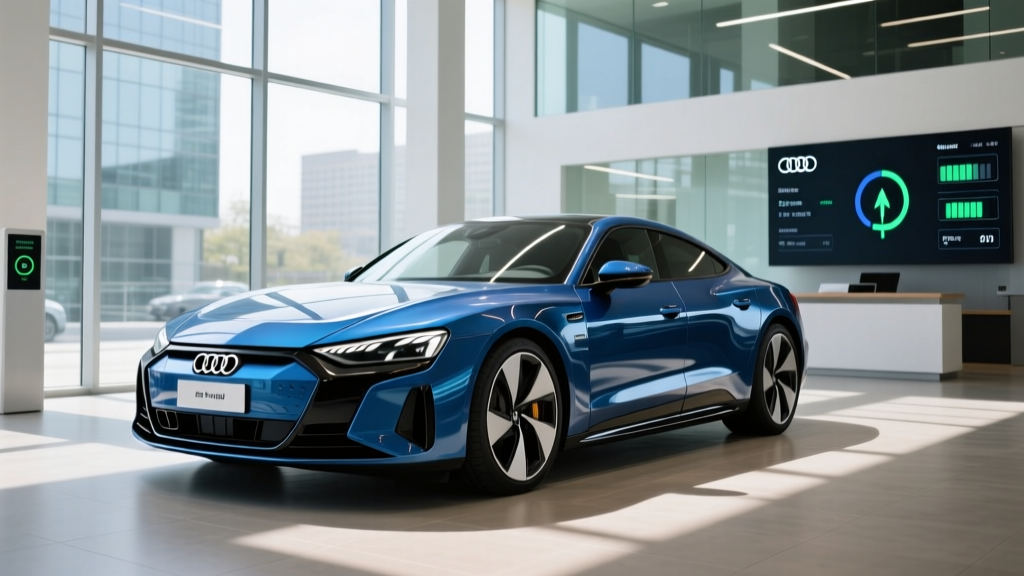
The Audi e-tron GT has always occupied a specific niche: a low-slung, performance-oriented luxury sedan that trades some practicality for dramatic design and genuine Autobahn-bred engineering. For the 2026 model year, Audi has refreshed the lineup with updated battery chemistry management, slightly improved efficiency, and revised pricing that makes leasing this EV more compelling than ever for buyers who want Porsche Taycan underpinnings with a more refined, daily-drivable character.
If you're searching for Audi e-tron GT lease deals, you're likely weighing this car against the Taycan, the Tesla Model S, and the Mercedes-AMG EQS. This review gives you every number you need — EPA range, real-world highway expectations, charging curves, trim pricing, and federal tax credit eligibility — so you can decide whether to lease, buy, or look elsewhere.
Range, Battery, and Real-World Efficiency
Real-World Expectation: Plan on 220–240 miles at sustained highway speeds (70–80 mph). In cold weather (below 32°F), expect a further 15–25% reduction, putting winter highway range closer to 175–200 miles. City driving with regen braking recovers more energy and can approach or slightly exceed the EPA sticker.
The 2026 e-tron GT uses an 84 kWh usable battery pack (93.4 kWh gross) with NMC (nickel manganese cobalt) cell chemistry. Audi has opted for NMC over LFP to prioritize energy density and sustained high-speed performance — a deliberate choice for a grand tourer intended for long-distance driving at high velocities. The trade-off is that NMC batteries are slightly more sensitive to repeated 100% charging, so Audi's battery management system maintains a larger buffer than some competitors.
| Spec | e-tron GT quattro | RS e-tron GT | RS e-tron GT Performance |
|---|---|---|---|
| EPA Range | 270 mi | 266 mi | 300 mi (est.) |
| Battery (Usable/Gross) | 84 / 93.4 kWh | 84 / 93.4 kWh | 92 / 105 kWh (est.) |
| Chemistry | NMC | NMC | NMC |
| Drivetrain | Dual-motor AWD | Dual-motor AWD | Dual-motor AWD |
| Horsepower | 522 hp | 637 hp | 912 hp (est.) |
| 0–60 mph | 3.9 sec | 3.1 sec | 2.5 sec (est.) |
| Efficiency (MPGe) | 85 MPGe | 82 MPGe | 83 MPGe (est.) |
| Efficiency (kWh/100mi) | 39 kWh | 41 kWh | 40 kWh (est.) |
| Base MSRP | $108,300 | $142,400 | $164,900 (est.) |
Efficiency is rated at approximately 85 MPGe combined for the base e-tron GT quattro, translating to about 39 kWh per 100 miles. That's respectable for a 5,100-pound luxury performance sedan, though it trails the Tesla Model S Long Range (122 MPGe) due to the Audi's heavier weight and less aerodynamically optimized profile compared to Tesla's teardrop shape. Source: fueleconomy.gov.
Charging Speed: DC Fast Charging and Home Level 2
Charging capability is where the e-tron GT's Porsche J1 platform architecture shows its age compared to newer 800V+ platforms. The e-tron GT uses an 800-volt electrical architecture, which enables strong DC fast-charging performance, but it doesn't quite match the newest Hyundai/Kia E-GMP or Tesla vehicles at the plug.
| Charging Level | Rate | Speed |
|---|---|---|
| Level 1 (120V household) | ~1.4 kW | ~3–4 miles per hour |
| Level 2 (240V home/public) | 11 kW (onboard charger) | ~28–32 miles per hour; 0–100% in ~9 hours |
| DC Fast Charge (peak) | 270 kW | 10–80% in approximately 22 minutes |
| DC Fast Charge (sustained avg) | ~170 kW avg (10–80%) | Real-world average accounts for taper above 60% SoC |
The 270 kW peak DC fast-charge rate is impressive on paper, and the 800V architecture means the car can sustain strong charging speeds longer than 400V competitors. However, the charge curve tapers noticeably above 60% state of charge (SoC). In real-world testing at Electrify America 350 kW stations, the e-tron GT typically holds 200+ kW from roughly 10–50% SoC, then drops to 130–150 kW through 80%. The 10–80% session takes about 22 minutes under ideal conditions — plan for 25–28 minutes at older or thermally constrained stations.
For home charging, the 11 kW onboard AC charger is a strong point. Most EVs in this class offer 9.6–11.5 kW, and Audi's 11 kW unit means a full overnight charge in roughly 9 hours on a 48-amp Level 2 circuit. If your home electrical panel supports a 60-amp dedicated circuit, you'll maximize this capability. Note: always have a licensed electrician evaluate your panel capacity before installing a Level 2 charger — a 200-amp panel upgrade can add $1,500–$3,500 to installation costs.
Performance and Driving Dynamics
The e-tron GT shares its J1 platform with the Porsche Taycan, and the driving DNA is unmistakable. The base e-tron GT quattro produces 522 horsepower (with launch control engaged) from its dual-motor all-wheel-drive setup, achieving a 3.9-second 0–60 mph time. That's quick by any measure, but the RS e-tron GT's 637 hp and 3.1-second run is where this car truly separates from ordinary luxury sedans.
The new-for-2026 RS e-tron GT Performance variant pushes output to an estimated 912 hp, dropping the 0–60 to approximately 2.5 seconds — firmly hypercar territory from a four-door sedan. All trims feature adaptive air suspension, rear-axle steering (optional on base, standard on RS), and torque vectoring that makes the car feel smaller than its 195.4-inch length suggests.
Regenerative braking is handled through paddle shifters rather than a true one-pedal driving mode. This is a deliberate Audi choice — you select your regen level manually, which some drivers prefer for a more natural feel but which frustrates EV veterans accustomed to lifting off the accelerator and coming to a complete stop without touching the brake pedal.
Interior, Cargo, and Practicality
The e-tron GT's interior is a masterclass in material quality — Nappa leather, open-pore wood, and aluminum trim are executed at a level that makes the Tesla Model S interior feel spartan. The 12.3-inch Virtual Cockit Plus digital instrument cluster and 10.1-inch MMI touchscreen run Audi's latest MIB3+ infotainment, which supports wireless Apple CarPlay and Android Auto, natural-language voice commands, and over-the-air updates.
However, practicality is where the grand-tourer compromise becomes apparent:
- Rear trunk: 9.2 cu ft — tight for a sedan this size, with a narrow opening that limits what you can load
- Front trunk (frunk): 3.5 cu ft — enough for a charging cable bag and a small duffel, not much more
- Rear legroom: 32.1 inches — adults over 5'10" will find the sloping roofline and high floor create a knees-up seating position
- Front headroom: 37.4 inches — adequate but less airy than competitors due to the low roofline
If you regularly carry rear-seat passengers or need cargo flexibility, the Mercedes EQS (22.0 cu ft trunk, hatchback design) or even the Audi Q8 e-tron SUV will serve you better. The e-tron GT is a driver's car first, a practical family hauler never.
Pricing, Lease Deals, and Federal Tax Credit Eligibility
For 2026, the Audi e-tron GT lineup starts at $108,300 for the e-tron GT Premium Plus (before destination), scaling up to an estimated $164,900 for the range-topping RS e-tron GT Performance. Here's how the pricing breaks down by trim:
| Trim | Base MSRP | Federal §30D Credit | Effective Price |
|---|---|---|---|
| e-tron GT Premium Plus | $108,300 | $0 (exceeds MSRP cap) | $108,300 |
| e-tron GT Prestige | $115,800 | $0 (exceeds MSRP cap) | $115,800 |
| RS e-tron GT | $142,400 | $0 (exceeds MSRP cap) | $142,400 |
| RS e-tron GT Performance | $164,900 (est.) | $0 (exceeds MSRP cap) | $164,900 (est.) |
- IRS §30D imposes an MSRP cap of $55,000 for sedans (and $80,000 for SUVs/trucks). Every e-tron GT trim far exceeds $55,000.
- Even if pricing were lower, buyers must meet income caps ($150K single / $300K joint AGI) and the vehicle must meet critical mineral and battery component sourcing requirements.
- The e-tron GT is assembled in Germany (Böllingerhofe), and its battery cells are sourced from suppliers that do not currently meet the domestic content thresholds required under §30D for 2026.
- Bottom line: No e-tron GT trim qualifies for the $7,500 federal purchase credit.
So Why Lease? The Lease Loophole
Here's where searching for Audi e-tron GT lease deals gets interesting. Under current IRS guidance, the §30D commercial clean vehicle credit (§45W) can be claimed by the leasing company (the lessor) on vehicles that don't qualify for the consumer purchase credit. Many luxury automakers — Audi included — have historically passed this benefit through as a "lease cash" incentive, effectively reducing the capitalized cost of the lease by up to $7,500.
As of early 2026, Audi Financial Services has offered lease cash incentives on the e-tron GT in varying amounts ($5,000–$7,500 depending on the month and region). This means a lease effectively functions as a workaround for the MSRP cap, reducing your effective monthly payment. Always confirm current lease cash availability with your dealer, as these programs change monthly. Typical 36-month lease deals on the e-tron GT Premium Plus have ranged from $1,100–$1,400/month with $5,000–$7,500 due at signing, depending on credit tier and regional incentives.
Driver Assistance, Safety, and Technology
The e-tron GT comes equipped with Audi's Adaptive Cruise Assist, which bundles adaptive cruise control, lane centering, and traffic jam assist into a single SAE Level 2 driver-assistance system. This means the car can handle steering, acceleration, and braking on highways, but you must remain fully engaged and ready to take over at all times. This is not autonomous or "self-driving" capability — it's a convenience and safety aid.
Standard safety tech includes forward collision warning with automatic emergency braking, blind-spot monitoring, rear cross-traffic alert, and parking sensors with a surround-view camera. The e-tron GT has not been crash-tested by NHTSA as of this writing, but the IIHS-rated previous model years showed strong structural performance in moderate overlap front tests. Source: IIHS.org.
Standout tech includes Audi's matrix-design LED headlights with dynamic turn signals, a head-up display with augmented-reality navigation overlays (Prestige trim), and a 16-speaker Bang & Olufsen 3D audio system. Wireless phone charging and four USB-C ports round out connectivity.
How It Compares: e-tron GT vs. Taycan vs. Model S vs. EQS
| Spec | Audi e-tron GT quattro | Porsche Taycan 4S | Tesla Model S LR | Mercedes EQS 450+ |
|---|---|---|---|---|
| EPA Range | 270 mi | 288 mi | 402 mi | 390 mi |
| Battery (kWh usable) | 84 | 83.7 | ~95 | 107.8 |
| Peak DC Charge (kW) | 270 | 270 | 250 | 200 |
| 0–60 mph | 3.9 sec | 3.8 sec | 3.1 sec | 5.9 sec |
| HP | 522 | 522 | 670 | 355 |
| Cargo (trunk + frunk) | 12.7 cu ft | 14.3 cu ft | 28.0 cu ft | 22.0 cu ft |
| Base MSRP | $108,300 | $107,400 | $79,990 | $105,550 |
| Federal Tax Credit | No | No | No (sedan MSRP cap) | No (sedan MSRP cap) |
Warranty and Long-Term Ownership
Audi provides a competitive warranty package for the e-tron GT:
- New vehicle limited warranty: 4 years / 50,000 miles
- Battery warranty: 8 years / 100,000 miles (capacity retention guaranteed above 70% of original capacity)
- Powertrain warranty: 8 years / 100,000 miles (electric motors, power electronics)
- Corrosion perforation: 12 years, unlimited miles
- Roadside assistance: 4 years / unlimited miles
The 70% capacity retention threshold over 8 years is industry-standard. NMC chemistry in the e-tron GT, managed by Audi's sophisticated thermal management system (liquid cooling and heating), has shown degradation rates of approximately 2–3% per year in European fleet data for earlier model years — translating to roughly 85–90% state of health at the 5-year mark under normal use. Avoiding repeated DC fast-charging to 100% and keeping the battery between 20–80% SoC for daily use will extend longevity.
Pros, Cons, and Final Verdict
- Exceptional build quality and interior materials — best in class
- Porsche J1 platform delivers genuine sports-sedan handling
- 800V architecture enables strong 270 kW DC charging
- Quiet, refined ride quality at highway speeds
- Lease cash incentives can offset the lack of purchase tax credit
- Standard adaptive air suspension and rear-axle steering (RS trims)
- EPA range of 270 miles trails Tesla Model S and Mercedes EQS significantly
- Does not qualify for the $7,500 federal purchase credit (MSRP cap)
- Cargo space (12.7 cu ft total) is the smallest in the luxury EV sedan class
- Rear seat is tight for adults on longer trips
- No true one-pedal driving mode
- MMI infotainment, while improved, still lags Tesla and MBUX in responsiveness
The verdict: The 2026 Audi e-tron GT is the luxury EV sedan for buyers who value craft and driving refinement over maximum range and cutting-edge software. If your priority is a beautifully built, dynamically accomplished grand tourer and you can live with ~230 real-world highway miles between charges, the e-tron GT delivers an experience that no Tesla can match. Lease deals remain the smartest path to ownership given the tax credit ineligibility, and with lease cash incentives, monthly payments become competitive with the Porsche Taycan — while offering a more comfortable daily driver.
Frequently Asked Questions
What is the real-world range of the 2026 Audi e-tron GT?
The EPA rates the e-tron GT quattro at 270 miles. In real-world highway driving at 70–80 mph, expect 220–240 miles. In cold weather (below freezing), highway range can drop to 175–200 miles. City driving with regenerative braking recovers more energy and can approach the EPA figure.
How fast does the Audi e-tron GT charge?
On DC fast chargers, the e-tron GT peaks at 270 kW and charges from 10–80% in approximately 22 minutes under ideal conditions (real-world: 25–28 minutes). At home on a Level 2 (240V) charger, the 11 kW onboard charger delivers about 28–32 miles of range per hour, with a full charge taking roughly 9 hours.
Does the Audi e-tron GT qualify for the federal EV tax credit?
No. Under IRS §30D rules for 2026, the e-tron GT exceeds the $55,000 MSRP cap for sedans on every trim. It is also assembled in Germany with battery components that do not meet current domestic sourcing requirements. However, leasing may allow you to benefit from the commercial clean vehicle credit passed through as lease cash by Audi Financial Services.
How much does a 2026 Audi e-tron GT lease cost per month?
Typical 36-month leases on the e-tron GT Premium Plus range from $1,100–$1,400/month with $5,000–$7,500 due at signing, depending on Audi Financial Services' current lease cash incentives, your credit tier, and regional programs. Always confirm current offers with your dealer.
Is the Audi e-tron GT worth it over the Porsche Taycan?
The e-tron GT and Taycan share the same J1 platform and offer similar performance. The e-tron GT wins on ride comfort, interior quietness, and often on price (especially with lease incentives). The Taycan wins on handling precision, brand cachet, and slightly better EPA range (288 vs. 270 miles). If comfort and value matter more, choose the Audi. If driving engagement is paramount, choose the Porsche.
What is the battery replacement cost for the e-tron GT?
Out-of-warranty battery replacement for the e-tron GT is estimated at $20,000–$28,000 including labor. However, under Audi's 8-year/100,000-mile battery warranty, any degradation below 70% capacity is covered. Real-world data suggests most owners will retain 85–90% battery health at the 5-year mark with normal charging habits.