Quick Verdict: A Grand Tourer That Actually Earns the Badge
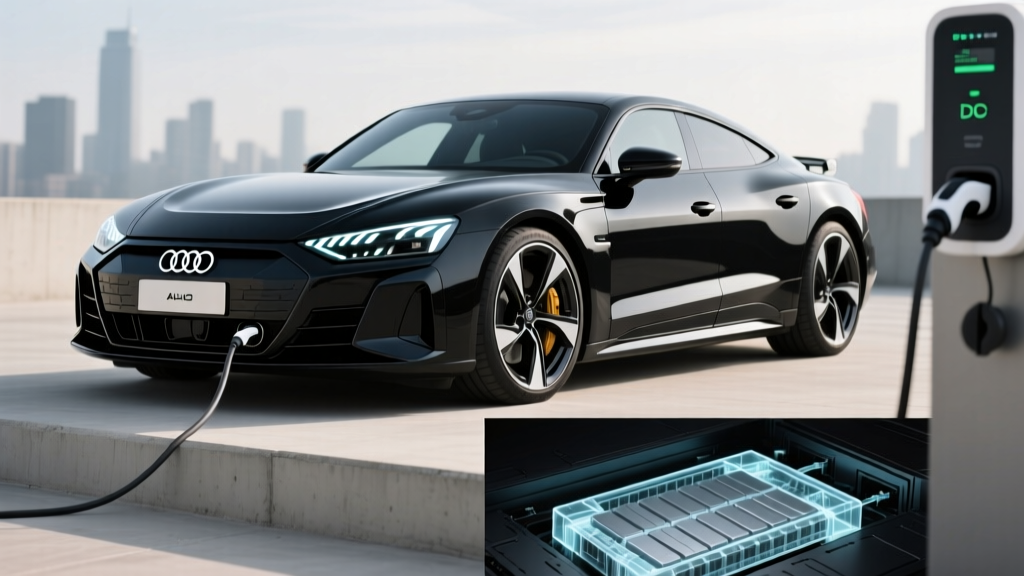
The Audi e-tron GT has always traded on its Porsche Taycan sibling's engineering while wrapping it in a more refined, daily-drivable package. For 2026, Audi has sharpened the formula: more power across the lineup, faster charging thanks to an updated 800-volt architecture, and a subtly reworked interior that addresses prior infotainment complaints. If you're searching for Audi e-tron GT horsepower figures, you'll find plenty — up to 912 hp in the top-spec RS e-tron GT Performance — but the real story is how this car delivers that power alongside genuine grand-touring comfort and improved efficiency.
This review breaks down every trim with exact numbers: EPA range, real-world highway expectations, DC fast-charging curves, pricing before and after federal incentives, and whether the e-tron GT still makes sense against the Taycan, Tesla Model S, and Lucid Air.
2026 Audi e-tron GT Lineup: Horsepower, Range & Core Specs
Audi offers three e-tron GT variants for 2026. All share the same J1 platform and an updated 97.0 kWh (usable) lithium-ion NMC battery pack with an 800-volt electrical architecture. Here's how they stack up:
| Spec | e-tron GT quattro | RS e-tron GT | RS e-tron GT Performance |
|---|---|---|---|
| Horsepower (with Launch Control) | 496 hp | 680 hp | 912 hp |
| Torque (lb-ft) | 472 | 612 | 738 |
| 0–60 mph (seconds) | 4.1 | 2.8 | 2.3 |
| Drivetrain | Dual-motor AWD | Dual-motor AWD | Dual-motor AWD |
| Usable Battery (kWh) | 97.0 (NMC) | 97.0 (NMC) | 97.0 (NMC) |
| EPA Range (miles) | 276 | 263 | 250 |
| EPA MPGe (combined) | 85 | 81 | 78 |
| Efficiency (kWh/100 mi) | 39 | 41 | 43 |
| Top Speed (mph) | 152 | 155 | 155 |
The horsepower headline belongs to the RS e-tron GT Performance, whose 912 hp makes it the most powerful production Audi ever built. But for most buyers, the RS e-tron GT's 680 hp and 2.8-second 0–60 time represent the sweet spot — you're giving up very little real-world acceleration for significantly better range and a lower starting price.
Charging Speed: 800V Architecture Pays Dividends
The 800-volt platform is the e-tron GT's biggest practical advantage over 400-volt competitors. It enables faster DC charging at compatible stations and thinner, lighter cabling within the vehicle.
| Charging Level | Max Power | Rate / Time | Notes |
|---|---|---|---|
| Level 1 (120V household) | 1.4 kW | ~3 mi/hr | Emergency / trickle only |
| Level 2 (240V home) | 11.0 kW | ~33 mi/hr; full charge ~9.5 hr | Requires 48-amp circuit (60-amp breaker) |
| DC Fast Charge (CCS) | 320 kW peak | 10–80% in ~18 min | At 350 kW-capable station; see curve note |
Understanding the charging curve: The e-tron GT peaks at 320 kW only between roughly 10–30% State of Charge (SoC). From 30–60%, it sustains around 200–250 kW. Above 80%, the rate tapers sharply to protect the NMC cells — expect 50 kW or less, which is why Audi (and every EV maker) quotes 10–80% times rather than 0–100%. If you're road-tripping, plan your stops around 10–80% increments for the fastest overall journey.
At home on Level 2, the 11.0 kW onboard charger is generous. A full overnight charge adds roughly 260+ miles in about 9.5 hours, meaning most owners will never need to visit a public charger during the work week.
Performance & Driving Dynamics
The e-tron GT shares its bones with the Porsche Taycan, and it shows. The low-slung battery pack gives it a center of gravity that makes the 5,100-pound curb weight largely disappear on twisty roads. All three trims feature standard adaptive air suspension with adjustable ride height, rear-wheel steering (up to 2.8 degrees on RS trims), and Audi's quattro all-wheel drive with torque vectoring.
Acceleration by trim:
- GT quattro (496 hp): 4.1 seconds to 60 mph — brisk by any standard, effortless for highway merging.
- RS e-tron GT (680 hp): 2.8 seconds — supercar territory, with a relentless mid-range pull that makes 80–110 mph passes trivially quick.
- RS e-tron GT Performance (912 hp): 2.3 seconds — violent, almost disorienting acceleration. This is a party trick that you'll demonstrate twice and then leave in Comfort mode forever.
Regenerative braking is handled via steering-wheel paddles (three levels) or an auto mode that uses radar and navigation data to modulate regen based on traffic and upcoming curves. Unlike some competitors, the e-tron GT does not offer true one-pedal driving to a full stop — it creeps at very low speeds, which some drivers prefer and others find annoying.
Interior, Cargo & Technology
The 2026 e-tron GT interior gets Audi's updated MMI infotainment system running on a faster processor, with a 14.5-inch curved OLED touchscreen replacing the prior dual-screen setup. Wireless Apple CarPlay and Android Auto are standard. A 12.3-inch digital instrument cluster (Audi Virtual Cockpit Plus) and an available head-up display with augmented-reality navigation round out the tech.
Driver Assistance (SAE Level 2): Audi's Adaptive Cruise Assist with lane centering, intersection assist, and emergency braking is standard. An available park-assist package adds remote parking via smartphone. This is a Level 2 driver-assist system — you must keep your hands on the wheel and eyes on the road at all times. It is not autonomous driving.
Cargo and passenger space:
- Rear trunk: 12.9 cu ft (with 40/20/40 split-folding seats for longer items)
- Front trunk (frunk): 4.1 cu ft — enough for a charging cable bag and a small duffel
- Rear legroom: 32.7 inches — tight for adults over 6 feet on long trips
- Front legroom: 41.5 inches
Let's be direct: the e-tron GT is a grand tourer, not a family hauler. The sloping roofline compromises rear headroom, and the frunk is small compared to a Tesla Model S or Lucid Air. If you regularly carry rear-seat passengers or cargo, this is a significant drawback.
Pricing, Trims & Federal Tax Credit Eligibility
| Trim | Base MSRP | As-Tested (typical) | §30D Credit Eligible? |
|---|---|---|---|
| e-tron GT quattro | $109,895 | $118,000–$125,000 | No (MSRP exceeds $55,000 sedan cap) |
| RS e-tron GT | $129,895 | $142,000–$155,000 | No (MSRP exceeds $55,000 sedan cap) |
| RS e-tron GT Performance | $158,895 | $170,000–$185,000 | No (MSRP exceeds $55,000 sedan cap) |
Tax credit reality: Under current IRS §30D rules, new EVs classified as sedans must have an MSRP at or below $55,000 to qualify for the federal clean vehicle credit. The e-tron GT, in every trim, far exceeds this cap. No e-tron GT buyer should expect to receive the $7,500 federal credit at the point of sale or on their tax return.
Additionally, §30D imposes adjusted gross income caps ($150,000 single / $300,000 married filing jointly) and battery critical-mineral sourcing requirements — but these are moot here because the MSRP cap alone disqualifies the vehicle.
Some states offer their own incentives that aren't subject to the federal MSRP cap. Check your state's energy or DMV website, and consult a tax professional for your specific situation.
Ownership Costs, Warranty & Efficiency
Audi provides the following warranty coverage for the 2026 e-tron GT:
- Battery: 8 years / 100,000 miles (whichever comes first), with a capacity retention threshold of 70% — if the pack degrades below 70% of original capacity within the warranty period, Audi will repair or replace it.
- Powertrain (motors, power electronics): 8 years / 100,000 miles
- New-vehicle limited warranty: 4 years / 50,000 miles
- Complimentary maintenance: 2 years / 20,000 miles (covers cabin air filter, brake fluid, wiper blades)
Efficiency and fuel cost comparison: At the GT quattro's 39 kWh/100 mi and the EPA's national average electricity rate of ~$0.17/kWh, you're paying roughly $6.63 per 100 miles. A comparable gas-powered Audi A7 (24 MPG combined) at $3.50/gallon costs about $14.58 per 100 miles. Over 15,000 annual miles, the e-tron GT saves approximately $1,190/year in fuel — meaningful, though it won't offset the higher purchase price quickly.
Insurance premiums for the e-tron GT run 15–30% higher than a comparable gas sedan due to repair costs and vehicle value. Get quotes before purchasing.
Audi e-tron GT vs. Key Competitors
| Attribute | Audi e-tron GT (RS) | Porsche Taycan 4S | Tesla Model S Plaid | Lucid Air Pure |
|---|---|---|---|---|
| Horsepower | 680 hp | 590 hp | 1,020 hp | 430 hp |
| 0–60 mph | 2.8 sec | 3.8 sec | 1.99 sec | 5.0 sec |
| EPA Range | 263 mi | 246 mi | 396 mi | 419 mi |
| Peak DC Charge | 320 kW | 320 kW | 250 kW | 300 kW |
| Starting MSRP | $129,895 | $108,550 | $89,990 | $74,990 |
| Cargo (total cu ft) | 17.0 | 15.7 | 28.0 | 32.0 |
Pros
- Class-leading 320 kW DC fast charging; 10–80% in ~18 minutes
- Gorgeous design with premium materials and excellent build quality
- 680+ hp RS variants deliver supercar acceleration with daily-driver comfort
- Air suspension and rear steering provide exceptional ride/handling balance
- 800V architecture future-proofs for next-gen charging infrastructure
- 8-year/100,000-mile battery warranty with 70% retention threshold
Cons
- No federal §30D tax credit (MSRP far exceeds $55,000 sedan cap)
- Rear seat and cargo space are tight vs. Lucid Air and Tesla Model S
- EPA range trails competitors — 263 mi (RS) vs. 419 mi (Lucid Air Pure)
- No true one-pedal driving to a full stop
- Starting price above $109K; as-tested RS models push $150K+
- Insurance costs 15–30% above comparable gas sedans
Who Should Buy the 2026 Audi e-tron GT?
Choose the Audi e-tron GT if: You want a luxury electric grand tourer with striking design, top-tier build quality, 320 kW fast charging, and enough horsepower (496–912 hp depending on trim) to embarrass sports cars at stoplights. You primarily drive solo or with one passenger, you have home Level 2 charging, and you value driving refinement over maximum range.
Look elsewhere if: You need back-seat space for adults (Lucid Air, Mercedes EQS), you want 400+ miles of range (Lucid Air, Tesla Model S), you're counting on the $7,500 federal tax credit to make the math work, or you want the best value per horsepower (Tesla Model S Plaid undercuts the RS by $40K with more power and double the range).
Frequently Asked Questions
What is the real-world range of the 2026 Audi e-tron GT?
In mixed real-world driving, the GT quattro delivers about 250–260 miles, the RS about 235–245 miles, and the RS Performance around 220–235 miles. Highway driving at 75+ mph reduces these by 5–10%, and cold weather (below freezing) can cut range by 15–25%. The EPA figures (276/263/250 miles) are achievable in city and moderate-temperature suburban driving but optimistic for road trips.
How fast does the Audi e-tron GT charge?
On a 350 kW-capable DC fast charger (Electrify America, EVgo, etc.), the e-tron GT peaks at 320 kW and charges from 10–80% in approximately 18 minutes. At home on a Level 2 (240V, 48-amp) charger, it charges at 11.0 kW, adding roughly 33 miles of range per hour — a full charge takes about 9.5 hours.
Does the Audi e-tron GT qualify for the federal EV tax credit?
No. Under current IRS §30D rules, sedans must have an MSRP of $55,000 or less. The e-tron GT starts at $109,895, disqualifying every trim. State-level incentives may still apply — check your local program.
How much Audi e-tron GT horsepower do I actually need?
The base GT quattro's 496 hp is more than enough for any real-world driving scenario, including spirited highway passes. The RS's 680 hp is the enthusiast's pick — thrilling but not absurd. The Performance model's 912 hp is a halo-car number that's impressive but difficult to use on public roads. Most buyers are best served by the RS trim.
Is the Audi e-tron GT worth buying vs. the Porsche Taycan?
They share the same platform, battery, and 800V architecture. The Taycan is slightly more engaging to drive (sharper steering, better brake feel), while the e-tron GT is slightly more comfortable and refined as a daily driver. Range and charging are nearly identical. If driving dynamics are your top priority, drive both back-to-back. If luxury and design matter more, the Audi wins.
What is the battery warranty on the e-tron GT?
Audi covers the high-voltage battery for 8 years or 100,000 miles, whichever comes first. The warranty guarantees at least 70% capacity retention. If the battery degrades below this threshold within the warranty period, Audi will repair or replace the affected modules or the entire pack.