Quick Verdict: The Grand Tourer That Charges Like a Sports Car
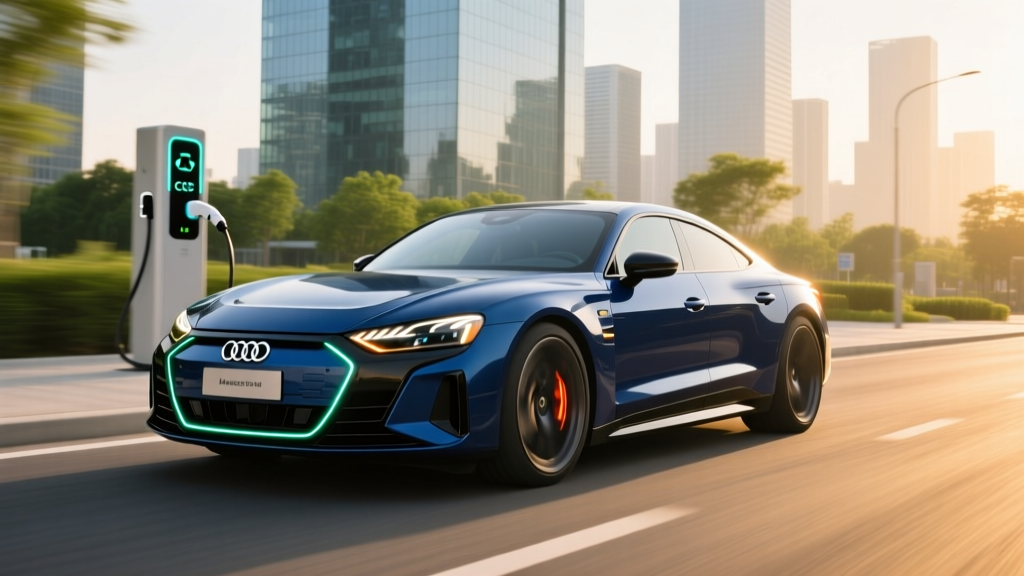
The 2026 Audi e-tron GT occupies a rare position in the EV market: a genuine grand tourer that delivers cross-country comfort with sports-car acceleration and some of the fastest DC charging available on any production electric vehicle. Built on the J1 Performance platform shared with the Porsche Taycan, the e-tron GT pairs an 800-volt architecture with a 93.4 kWh battery pack to achieve EPA-estimated range up to 270 miles while sustaining peak charge rates of 270 kW. Starting at $106,395, it is unapologetically premium — but buyers at this price point get engineering depth that justifies the cost.
This review examines the 2026 Audi e-tron GT lineup — the base e-tron GT quattro, the S e-tron GT, and the range-topping RS e-tron GT performance — with exact specifications, real-world range data, charging curves, and a clear-eyed look at tax credit eligibility under current IRS §30D rules.
| Specification | e-tron GT quattro | S e-tron GT | RS e-tron GT performance |
|---|---|---|---|
| EPA Range | 270 mi | 258 mi | 248 mi |
| Battery (Usable / Gross) | 83.7 kWh / 93.4 kWh | 83.7 kWh / 93.4 kWh | 83.7 kWh / 93.4 kWh |
| Chemistry | NMC (Nickel Manganese Cobalt) | NMC | NMC |
| Drivetrain | Dual-motor AWD | Dual-motor AWD | Dual-motor AWD |
| Horsepower (Launch Control) | 522 hp | 670 hp | 912 hp |
| 0–60 mph | 3.9 sec | 3.1 sec | 2.5 sec |
| Max DC Charge Rate | 270 kW | 270 kW | 270 kW |
| 10–80% DC Charge Time | ~18 min | ~18 min | ~18 min |
| Level 2 Charge Rate | 11 kW (AC) | 11 kW (AC) | 11 kW (AC) |
| MPGe (Combined) | 85 MPGe | 80 MPGe | 76 MPGe |
| Base MSRP | $106,395 | $126,395 | $166,395 |
| Federal Tax Credit (§30D) | Not eligible | Not eligible | Not eligible |
| Battery Warranty | 8 yr / 100,000 mi | 8 yr / 100,000 mi | 8 yr / 100,000 mi |
Range and Efficiency: EPA Numbers vs. Reality
EPA Estimate: 270 miles (e-tron GT quattro) / 258 mi (S) / 248 mi (RS performance)
Real-World Expectation: 230–250 mi highway cruising at 70–75 mph; 200–220 mi in freezing temperatures with cabin heat; up to 275+ mi in moderate city driving with regenerative braking.
The e-tron GT's 93.4 kWh gross battery pack (83.7 kWh usable) uses NMC chemistry optimized for power delivery and thermal stability under sustained high-load driving. Audi reserves approximately 10% of gross capacity as a buffer to protect long-term battery health — a conservative approach that aids longevity but limits total usable energy compared to some competitors.
Efficiency varies meaningfully across the lineup. The base e-tron GT quattro achieves 85 MPGe combined (approximately 39 kWh/100 mi), which translates to roughly 2.6 miles per kWh. The RS e-tron GT performance, with its 912 hp output and stickier performance tires, drops to 76 MPGe (~44 kWh/100 mi). In real-world highway testing at sustained 75 mph speeds, expect consumption closer to 42–46 kWh/100 mi across the range, driven by aerodynamic drag and the vehicle's 5,100-pound curb weight.
Cold-weather range loss is a real consideration for buyers in northern climates. NMC chemistry loses efficiency below freezing, and the e-tron GT's heat pump (standard on 2026 models) mitigates but does not eliminate cabin-heating energy draw. Plan for 15–25% range reduction in sub-32°F conditions, particularly on short trips where the cabin and battery must warm from cold-soak.
For context, the EPA figures are sourced from fueleconomy.gov and represent standardized testing. Your mileage will vary based on driving style, terrain, temperature, and tire selection.
Charging: 800-Volt Architecture Done Right
The e-tron GT's 800-volt electrical architecture is its most significant technical advantage for road-trip usability. While many EVs peak at high charge rates for only a few minutes before tapering, the e-tron GT sustains charge rates above 200 kW for a substantial portion of the 10–80% session, making its 270 kW peak rating genuinely useful rather than a marketing headline.
| Charging Level | Power | Connector | Speed / Time |
|---|---|---|---|
| Level 1 (120V household) | ~1.4 kW | J1772 (adapter) | ~4 mi/hr added |
| Level 2 (240V home/public) | 11 kW (48A) | J1772 / NACS (adapter) | ~30 mi/hr; 0–100% in ~9.5 hr |
| DC Fast Charge | Peak 270 kW | CCS1 (NACS adapter included) | 10–80% in ~18 min; 100 mi in ~5 min at peak |
Understanding the charge curve: The e-tron GT reaches peak 270 kW only when the battery is preconditioned (via the MMI navigation-based route planner) and the state of charge is below ~30%. From 10–50% SoC, expect sustained rates of 220–270 kW. Between 50–80%, the rate tapers to approximately 130–170 kW. Above 80%, charging slows significantly to protect cell longevity — a full 80–100% top-off can add another 25–30 minutes. This taper behavior is universal across lithium-ion packs but particularly pronounced on high-performance NMC cells.
For home charging, the 11 kW onboard AC charger is adequate for overnight replenishment. A typical daily drive of 40–60 miles requires roughly 2–3 hours on a Level 2 home station (such as a 48A ChargePoint Home Flex or Wallbox Pulsar Plus). Buyers should budget $800–$2,500 for professional Level 2 installation, depending on panel capacity and run length from the electrical panel to the garage. A 200-amp service panel is usually sufficient; older homes with 100-amp panels may require an upgrade ($1,500–$3,500 additional).
Audi provides a NACS (Tesla connector) adapter with 2026 models, enabling access to Tesla Supercharger V3 and V4 stations — though Supercharger V3 stalls are capped at 150 kW for non-Tesla vehicles, meaning you will not reach the e-tron GT's 270 kW peak on Tesla's network. For maximum charge speed, seek out Electrify America or IONITY (in applicable markets) 350 kW stalls.
Performance: From Grand Touring to Supercar Territory
The 2026 e-tron GT lineup spans a remarkable performance envelope. The base quattro model's 522 hp (with launch control engaged) and 3.9-second 0–60 time place it firmly in sports-sedan territory — quick enough for any on-ramp merge or passing maneuver, yet composed and quiet during relaxed highway cruising. The dual-motor AWD system distributes torque continuously between axles, with a rear-bias under normal conditions for a more engaging driving character.
The S e-tron GT steps up to 670 hp and a 3.1-second 0–60, aided by a two-speed transmission on the rear axle — a rare feature in EVs that optimizes both launch acceleration and high-speed efficiency. The RS e-tron GT performance is the flagship: 912 hp in launch-control mode, 2.5 seconds to 60 mph, and a top speed electronically limited to 155 mph. At this output level, the e-tron GT competes directly with the Porsche Taycan Turbo GT and the Tesla Model S Plaid.
Adaptive air suspension is standard across the lineup, offering adjustable ride height and damping. The system lowers the car by up to 0.6 inches at highway speeds for aerodynamic efficiency and raises for driveway clearance. Rear-axle steering (standard on S and RS, optional on the base quattro) shrinks the turning circle and improves high-speed stability — a worthwhile option for a car of this size.
Regenerative braking offers multiple modes: coast (freewheeling for maximum range on highways), mild regen, and a maximum regen setting that approaches but does not fully achieve one-pedal driving. The brake pedal feel, often a weak point in EVs blending regenerative and friction braking, is notably well-calibrated in the e-tron GT — linear and predictable.
Interior, Cargo, and Daily Practicality
The e-tron GT's cabin reflects Audi's current design language: minimalist, material-rich, and technology-forward. The 10.1-inch MMI touchscreen handles infotainment, while a 12.3-inch Virtual Cockit Plus digital instrument cluster sits behind the steering wheel. Wireless Apple CarPlay and Android Auto are standard, along with a 16-speaker Bang & Olusen sound system on S and RS trims.
Seating accommodates four adults (the rear center position is essentially unusable due to the transmission tunnel hump housing electrical components). Front legroom measures 41.5 inches; rear legroom is 33.1 inches — adequate for adults on shorter trips but tight for passengers over six feet tall on long journeys. The low roofline, a consequence of the grand-tourer silhouette, limits rear headroom to 37.0 inches.
Cargo capacity is the e-tron GT's most obvious practicality limitation:
- Rear trunk: 9.2 cubic feet (with rear seats up)
- Front trunk (frunk): 3.5 cubic feet
- Total: 12.7 cubic feet
This is sufficient for two carry-on bags and a laptop bag for a weekend trip, but it falls well short of an SUV or even a midsize sedan. Buyers who regularly haul cargo, golf clubs, or family gear should consider the Audi Q8 e-tron SUV instead. The e-tron GT is a driver's car first, a hauler second.
Notable tech features include:
- Matrix-design LED headlights with dynamic turn signals
- Head-up display with augmented-reality navigation overlays (S/RS standard)
- Audi Adaptive Cruise Assist with lane-centering (SAE Level 2 — driver must remain engaged)
- Park assist with 360-degree camera system
- Over-the-air software updates for infotainment and powertrain management
Pricing, Trims, and Tax Credit Reality
| Trim | Base MSRP | As-Tested (Typical Options) | §30D Federal Credit | Effective Price |
|---|---|---|---|---|
| e-tron GT quattro | $106,395 | $115,000–$120,000 | $0 (MSRP exceeds $55K cap) | $106,395+ |
| S e-tron GT | $126,395 | $138,000–$145,000 | $0 (MSRP exceeds $55K cap) | $126,395+ |
| RS e-tron GT performance | $166,395 | $175,000–$185,000 | $0 (MSRP exceeds $55K cap) | $166,395+ |
Federal tax credit eligibility: Under current IRS §30D rules, the new clean vehicle credit is capped at vehicles with an MSRP of $55,000 for sedans (and $80,000 for SUVs/pickups). Every trim in the e-tron GT lineup exceeds the $55,000 sedan cap, meaning no 2026 Audi e-tron GT variant qualifies for the $7,500 federal tax credit. Additionally, buyer income caps ($300,000 joint / $150,000 individual AGI) and battery critical-mineral sourcing requirements apply even to eligible vehicles.
Some state-level incentives may partially offset the purchase price — California's Clean Fuel Rebate, Colorado's EV tax credit, and various utility-company rebates can collectively save $2,000–$5,000 depending on your jurisdiction. Check your state's energy office and local utility for current programs, as these vary widely and change frequently.
Destination charges ($1,195), dealer-installed accessories, and state/local taxes and registration fees add to the out-the-door cost. Lease customers should investigate whether Audi Financial Services passes through any available commercial clean vehicle credit (§45W) as a lease incentive — this has historically been a workaround for luxury EV buyers, though availability varies by model year and manufacturer policy.
Ownership Costs: Warranty, Insurance, and Depreciation
Audi backs the e-tron GT with a competitive warranty package:
- New vehicle limited warranty: 4 years / 50,000 miles
- Battery and powertrain warranty: 8 years / 100,000 miles (covers battery capacity below 70% of original)
- Corrosion perforation warranty: 12 years, unlimited miles
- Roadside assistance: 4 years / unlimited miles
The 70% capacity retention threshold over 8 years is industry-standard for NMC packs. Real-world degradation data from J1-platform vehicles (including the Porsche Taycan, which shares this battery architecture) suggests typical capacity loss of 5–8% over the first 60,000 miles, with the curve flattening thereafter. Most owners should expect well over 80% capacity at the 8-year mark under normal use patterns.
Insurance premiums for the e-tron GT reflect its performance and repair costs. Expect annual premiums of $3,200–$4,800 for the base quattro, and $4,500–$6,500+ for the RS performance variant, depending on driver profile, location, and coverage level. These figures are 30–50% higher than comparable internal-combustion luxury sedans, driven by specialized collision repair requirements for high-voltage systems and aluminum body panels.
Depreciation remains a concern for luxury EVs. The original e-tron GT (2022–2024 model years) experienced steeper-than-average depreciation, with 3-year-old examples retaining approximately 45–55% of original MSRP. The 2026 refresh with improved range and charging may stabilize residuals somewhat, but buyers should plan for 40–50% depreciation over a 4-year ownership period.
Pros, Cons, and the Competition
Pros
- Class-leading 270 kW DC charging with sustained high-rate delivery
- 800V architecture enables genuine road-trip practicality
- RS performance variant delivers supercar acceleration (2.5s 0–60)
- Build quality, materials, and cabin quietness exceed segment average
- Adaptive air suspension balances comfort and sportiness well
- NACS adapter included for Supercharger network access
Cons
- Cargo space is severely limited (12.7 cu ft total)
- Rear seat headroom and legroom are tight for tall passengers
- No federal tax credit eligibility due to MSRP cap
- Real-world highway range falls 20–40 miles below EPA in cold weather
- Insurance and depreciation costs are above segment average
- Infotainment system relies heavily on touchscreen — limited physical controls
Key competitors: The e-tron GT competes against the Porsche Taycan (same J1 platform, sportier tuning, similar price), the Tesla Model S (more range at 402 mi EPA, more cargo, lower starting price, but aging interior), the BMW i5 M60 (less powerful, more practical sedan shape, lower price), and the Mercedes-AMG EQE (comparable luxury, lower efficiency). For buyers prioritizing driving dynamics and charging speed, the e-tron GT and Taycan lead the segment. For those prioritizing range and practicality, the Model S or i5 are stronger choices.
Who Should Buy the Audi e-tron GT?
Choose the e-tron GT if:
- You want a luxury performance EV with the fastest road-trip charging in the segment
- You primarily drive solo or with one passenger and rarely haul bulky cargo
- You value build quality, cabin materials, and design over maximum range
- You have reliable home Level 2 charging and access to 350 kW DC fast chargers on road-trip routes
Look elsewhere if:
- You need family-hauler practicality (consider Audi Q8 e-tron, Rivian R1S, or Tesla Model X)
- You want 350+ miles of range for remote-area road trips (consider Lucid Air or Tesla Model S)
- Federal tax credit eligibility is a deciding factor in your purchase
- You frequently carry rear-seat passengers over six feet tall
Frequently Asked Questions
What is the real-world range of the 2026 Audi e-tron GT?
In mixed driving at moderate temperatures (55–75°F), expect 240–260 miles from the base e-tron GT quattro. Highway driving at 75 mph reduces this to approximately 220–240 miles. In freezing weather with cabin heating, plan for 200–220 miles before needing to charge. The RS performance variant will deliver 15–25 fewer miles in each scenario due to higher power output and stickier tires.
How fast does the e-tron GT charge at home and on the road?
At home on a 240V Level 2 station (48A/11 kW), the e-tron GT adds approximately 30 miles of range per hour, fully charging from empty in about 9.5 hours. On a 350 kW DC fast charger with battery preconditioning, it peaks at 270 kW and charges from 10–80% in approximately 18 minutes — adding roughly 100 miles of range in 5 minutes at peak rate.
Does the 2026 Audi e-tron GT qualify for the federal EV tax credit?
No. Under IRS §30D rules, the new clean vehicle credit is limited to sedans with an MSRP at or below $55,000. The e-tron GT starts at $106,395, making it ineligible regardless of buyer income or battery sourcing. Some state and utility incentives may apply — consult your state energy office for current programs.
How does the e-tron GT compare to the Porsche Taycan?
Both share the J1 800V platform, 93.4 kWh battery, and 270 kW peak charging. The Taycan is tuned more aggressively for track performance (sharper steering, firmer suspension, available rear-axle steering on more trims), while the e-tron GT leans toward grand-touring comfort with a quieter cabin and softer ride. Pricing is comparable, and both are ineligible for the federal tax credit. The choice comes down to brand preference and whether you prioritize sport (Taycan) or luxury-touring (e-tron GT) character.
Is the e-tron GT's battery reliable long-term?
The NMC pack is covered for 8 years/100,000 miles against capacity loss below 70%. Data from J1-platform vehicles in the field since 2020 indicates typical degradation of 5–8% over 60,000 miles, with most examples retaining 85–90% capacity at the 5-year mark. Avoiding routine charging to 100% and frequent DC fast charging from very low SoC will extend battery life. The 800V architecture's thermal management system is robust, actively cooling cells during high-rate charging.
Can the e-tron GT use Tesla Superchargers?
Yes. The 2026 e-tron GT ships with a NACS adapter, enabling access to Tesla's Supercharger network. However, Supercharger V3 stalls deliver a maximum of 150 kW to non-Tesla vehicles, meaning you will not reach the e-tron GT's 270 kW peak. For the fastest possible charges on road trips, prioritize Electrify America 350 kW stations.