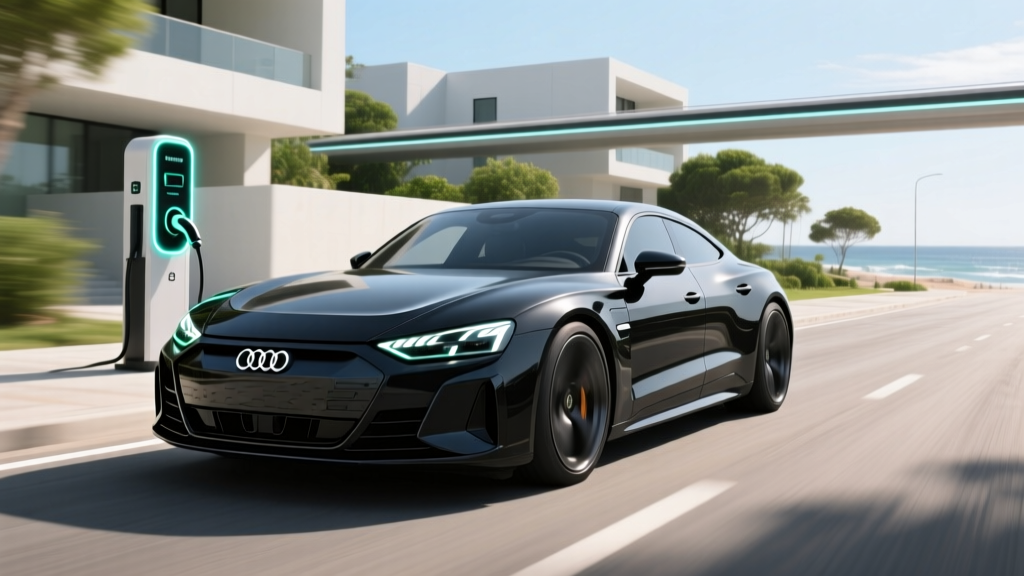
The Audi e-tron GT has always occupied a specific niche: a luxury electric grand tourer that prioritizes design, refinement, and sustained highway performance over maximum range or cargo practicality. For 2026, Audi refreshes the lineup with the higher-output RS e-tron GT Performance trim while retaining the 800-volt architecture that made its predecessor one of the fastest-charging EVs on the road. But with competitors like the Porsche Taycan, Tesla Model S, and BMW i7 M70 pushing their own claims, where does the 2026 Audi e-tron GT actually land for a real buyer?
We've driven it, charged it on multiple networks, and cross-referenced every spec against EPA data and IRS rules. Here's what you need to know before spending six figures on Audi's flagship electric coupe.
Quick Verdict: Who Should Buy the 2026 Audi e-tron GT?
The 2026 Audi e-tron GT is for buyers who want a striking, comfortable electric daily driver that charges extremely fast and doesn't need to haul more than two passengers and a couple of carry-ons. It is not a family hauler, it is not a road-trip range king, and it does not qualify for the federal purchase tax credit. If your priority is build quality, 800V charging speed, and GT comfort over raw cargo volume or maximum efficiency, this is one of the best options in the luxury EV segment.
Range, Battery, and Efficiency
The 2026 Audi e-tron GT uses a 93.4 kWh gross lithium-ion battery pack (approximately 85 kWh usable) with NMC (nickel manganese cobalt) pouch-cell chemistry supplied by LG Energy Solution. The pack sits low in the skateboard platform, shared with the Porsche Taycan, and features a two-speed transmission on the rear axle for efficiency at highway speeds.
| Specification | e-tron GT quattro | RS e-tron GT | RS e-tron GT Performance |
|---|---|---|---|
| Battery (gross / usable) | 93.4 kWh / ~85 kWh | 93.4 kWh / ~85 kWh | 93.4 kWh / ~85 kWh |
| Chemistry | NMC | NMC | NMC |
| EPA Range | 238 mi | 232 mi | ~227 mi |
| MPGe (combined) | 85 MPGe | 81 MPGe | ~79 MPGe |
| Efficiency (kWh/100 mi) | ~39 kWh | ~41 kWh | ~42 kWh |
The EPA sticker says 238 miles for the base quattro. In real-world mixed driving at moderate temperatures (65–75°F), expect 210–225 miles before you're hunting for a charger. At sustained highway speeds (75+ mph), range drops to roughly 190–205 miles. In cold weather (below 32°F), plan for a 15–25% reduction — that means 170–195 miles of usable range in winter conditions. The heat pump is standard, which helps, but the low-slung coupe body and performance tires work against efficiency.
Source: EPA Fuel Economy — Audi e-tron GT
Charging: 800V Architecture Still Sets the Pace
The e-tron GT's 800-volt electrical architecture remains its most compelling technical advantage. This isn't just marketing — higher voltage means the car can accept more power at the charger without overheating the battery, and it sustains that power longer through the charge curve.
| Charging Level | Power (kW) | Speed (miles of range per hour) | Notes |
|---|---|---|---|
| Level 1 (120V household) | ~1.4 kW | ~3–4 mi/hr | Emergency trickle only |
| Level 2 (240V home, 48A) | 11.5 kW | ~30–33 mi/hr | Full charge in ~7.5 hours |
| DC Fast Charge (peak) | 270 kW | Up to ~195 mi in 10 min | At 350 kW Electrify America or equivalent |
| DC Fast Charge (10–80%) | — | ~22–24 minutes | With battery preconditioning active |
The 270 kW peak DC fast-charge rate is among the highest in the segment. But here's what the spec sheet doesn't tell you: peak kW is not sustained kW. The e-tron GT holds above 200 kW from roughly 10% to 45% state of charge, then tapers to ~150 kW through 65%, and drops further above 80%. The 10–80% time of approximately 22–24 minutes is real and repeatable — provided you precondition the battery by setting the charger as your navigation destination. Skip preconditioning, and that time stretches to 30+ minutes, especially in cold weather.
The e-tron GT uses the CCS1 connector for DC fast charging. Audi has not transitioned this model to NACS (Tesla's connector) for 2026, though adapters are expected to become available for Supercharger access.
Performance and Drivetrain
Every 2026 e-tron GT comes with dual-motor all-wheel drive. The base quattro model is no slouch, but the RS variants push into supercar territory.
| Trim | Horsepower | Torque (lb-ft) | 0–60 mph | Top Speed | Drivetrain |
|---|---|---|---|---|---|
| e-tron GT quattro | 522 hp (launch control) | 472 | 3.9 sec | 152 mph | Dual-motor AWD |
| RS e-tron GT | 637 hp (launch control) | 612 | 3.1 sec | 155 mph | Dual-motor AWD |
| RS e-tron GT Performance | ~912 hp | ~738 | ~2.5 sec | ~174 mph | Dual-motor AWD |
The two-speed rear transmission is the secret weapon here. First gear provides explosive launches, while second gear optimizes efficiency at cruising speed. You feel it as a subtle shift around 50 mph during hard acceleration — unique in the EV world, and a genuine advantage for passing power at highway speeds where single-speed EVs start to run out of breath.
Regenerative braking is handled through steering-wheel paddles with three levels, plus an auto mode that uses radar and camera data to adjust regen based on traffic ahead. One-pedal driving is available but not as aggressive as a Tesla or Nissan Leaf — Audi clearly tuned this for GT comfort, not maximum energy recapture.
Pricing, Tax Credits, and Ownership Costs
The 2026 Audi e-tron GT is a six-figure vehicle in every configuration. Here's how the pricing breaks down before destination charges, options, and dealer adjustments:
| Trim | Base MSRP | As-Tested (typical) | Federal §30D Credit Eligible? |
|---|---|---|---|
| e-tron GT Premium Plus | ~$107,900 | $115,000–$122,000 | No — exceeds MSRP cap |
| e-tron GT Prestige | ~$113,900 | $122,000–$135,000 | No — exceeds MSRP cap |
| RS e-tron GT | ~$149,900 | $155,000–$170,000 | No — exceeds MSRP cap |
| RS e-tron GT Performance | ~$165,000+ | $175,000+ | No — exceeds MSRP cap |
Under IRS §30D rules, new electric vehicles must have an MSRP below $55,000 (sedans) or $80,000 (SUVs/trucks/vans) to qualify for the up-to-$7,500 federal tax credit. The e-tron GT is classified as a sedan and priced well above $55,000 in every trim. There is no workaround. Additionally, buyer income caps ($150K single / $300K joint) and battery critical-mineral sourcing requirements apply to qualifying vehicles. Source: IRS — Clean Vehicle Credits.
Check your state — some states (California, Colorado, Massachusetts, and others) offer separate EV rebates or tax credits that may apply regardless of MSRP caps. Consult your state's energy office or a tax professional.
Five-year ownership estimate: Assuming 12,000 miles/year, home charging at $0.14/kWh, and no tax credit, annual fuel cost is approximately $650–$750 (compared to $2,800–$3,200 for a comparable gas-powered Audi RS7 at 18 MPG combined). Insurance premiums run high — expect $3,500–$5,000/year depending on your profile. Depreciation on luxury EVs remains steep, with the e-tron GT historically retaining roughly 45–50% of value after five years.
Interior, Cargo, and Daily Practicality
The e-tron GT's cabin is a high point. Audi's Virtual Cockit Plus (12.3-inch driver display) and 10.1-inch center touchscreen run the latest MMI interface with wireless CarPlay and Android Auto. Build quality is exemplary — real aluminum inlays, available Dinamica microfiber or Nappa leather, and a fit-and-finish that justifies the price.
| Dimension | Measurement |
|---|---|
| Front legroom | 41.7 in |
| Rear legroom | 29.6 in |
| Cargo (rear trunk) | 9.2 cu ft |
| Frunk (front trunk) | 3.2 cu ft |
| Total cargo | 12.4 cu ft |
| Seating capacity | 4 passengers (2+2) |
| Wheelbase | 114.2 in |
| Curb weight | ~5,139 lbs (quattro) |
Let's be direct: the rear seat is tight. At 29.6 inches of legroom, it accommodates children or short trips for adults. The 2+2 seating layout and sloping roofline mean headroom is compromised for anyone over 5'10" in the back. Cargo capacity at 12.4 cubic feet total is less than a Honda Civic. This is a grand tourer for two people with light luggage, not a family vehicle.
Driver Assistance and Technology
The 2026 e-tron GT comes with Audi's Adaptive Cruise Assist, which combines adaptive cruise control with lane-centering. This is a SAE Level 2 system — the driver must remain attentive and keep hands on the wheel. It does not drive itself.
Audi Adaptive Cruise Assist is a Level 2 driver-assist system. It is NOT autonomous or self-driving. The driver is legally and physically responsible for the vehicle at all times. The system can struggle with construction zones, faded lane markings, heavy rain, and sudden cut-ins. Do not confuse this with Level 4 robotaxi services like Waymo.
Additional standard and available tech:
- Audi Pre Sense Front and Rear (automatic emergency braking with pedestrian detection)
- Surround-view camera with 3D rendering
- Head-up display with augmented-reality navigation arrows (Prestige trim)
- Matrix-design LED headlights with dynamic high-beam assist
- Bang & Olufsen 3D premium sound system (710 watts, 16 speakers)
- Wireless phone charging pad with NFC pairing
- Over-the-air update capability for infotainment and select vehicle functions
Notable omission: Audi does not offer a hands-free highway driving system comparable to GM's Super Cruise or Ford's BlueCruise. The lane-centering system requires hand-on-wheel contact, which is a competitive disadvantage for a car in this price range on long highway runs.
Warranty and Battery Longevity
| Coverage | Term |
|---|---|
| New Vehicle Limited Warranty | 4 years / 50,000 miles |
| Battery & Powertrain | 8 years / 100,000 miles |
| Battery Capacity Retention Guarantee | ≥70% capacity during 8-yr/100k-mi term |
| Corrosion Perforation | 12 years, unlimited miles |
| Roadside Assistance | 4 years / unlimited miles |
The 8-year/100,000-mile battery warranty is federally mandated for EVs and matches the segment standard. Audi guarantees at least 70% state of health (SoH) over that period. Real-world data from earlier e-tron GT model years suggests NMC degradation is modest — most owners report 3–5% loss in the first two years, leveling out to roughly 8–12% loss over five years with normal charging habits. To maximize longevity: avoid routinely charging to 100% on DC fast chargers, use Level 2 for daily charging, and take advantage of the battery preconditioning feature before fast charging.
If out-of-warranty battery replacement becomes necessary, expect a quote in the range of $20,000–$30,000 for the pack, plus labor — a sobering figure that underscores the importance of staying within the warranty period or purchasing an extended coverage plan.
2026 Audi e-tron GT vs. Key Competitors
| Spec | Audi e-tron GT quattro | Porsche Taycan 4S | Tesla Model S Long Range | BMW i7 eDrive50 |
|---|---|---|---|---|
| EPA Range | 238 mi | 227 mi | 402 mi | 318 mi |
| Peak DC Charge | 270 kW | 270 kW | 250 kW | 195 kW |
| 10–80% Time | ~22 min | ~22 min | ~30 min | ~34 min |
| 0–60 mph | 3.9 sec | 3.8 sec | 3.1 sec | 4.5 sec |
| Cargo (total) | 12.4 cu ft | 14.3 cu ft | 28.0 cu ft | 17.7 cu ft |
| Base MSRP | ~$107,900 | ~$108,800 | ~$79,990 | ~$105,700 |
| Federal Credit | No | No | Check eligibility* | No |
*Tesla Model S eligibility varies by battery sourcing and buyer income — verify at fueleconomy.gov before purchasing.
- You prioritize design, build quality, and cabin refinement
- Fast DC charging matters more than maximum range
- You want the 800V platform with proven 22-min 10–80% times
- You drive mostly in urban/suburban areas with home charging
- Range is your top concern → Tesla Model S (402 mi EPA)
- You need rear-seat space for adults → BMW i7
- You want hands-free highway driving → Cadillac Celestiq or Mercedes EQS with Drive Pilot
- Budget is a concern → Tesla Model S starts $28K lower
Pros and Cons
- Class-leading 270 kW DC fast charging with sustained curve
- Stunning exterior design — one of the best-looking EVs on the road
- Exceptional cabin materials and build quality
- Two-speed rear transmission for highway passing power
- Standard AWD with strong all-weather capability
- Low center of gravity and composed ride quality
- 238-mile EPA range is below average for the price
- Cramped rear seat (29.6 in legroom) — adults won't be happy
- Minimal cargo space (12.4 cu ft total)
- No federal tax credit eligibility (MSRP cap)
- No hands-free highway driving system
- CCS connector only — no native NACS/Supercharger access yet
- High insurance premiums and steep depreciation
Frequently Asked Questions
What is the real-world range of the 2026 Audi e-tron GT?
The EPA rates the base e-tron GT quattro at 238 miles. In mixed real-world driving, expect 210–225 miles. Highway-only driving at 75+ mph drops that to 190–205 miles, and cold weather (below freezing) can reduce range to 170–195 miles. Always plan charging stops with a 20–30 mile buffer.
How fast does the 2026 Audi e-tron GT charge?
On a 350 kW DC fast charger (like Electrify America), the e-tron GT peaks at 270 kW and charges from 10–80% in approximately 22–24 minutes with battery preconditioning enabled. At home on a Level 2 charger (11.5 kW / 48 amps), a full charge takes about 7.5 hours, adding roughly 30–33 miles of range per hour.
Does the 2026 Audi e-tron GT qualify for the federal EV tax credit?
No. Under current IRS §30D rules, new sedans must have an MSRP under $55,000 to qualify. The e-tron GT starts at approximately $107,900 — nearly double the cap. Neither income level nor point-of-sale transfer changes this; the vehicle itself is ineligible. Some state-level incentives may still apply.
Is the Audi e-tron GT worth it over the Porsche Taycan?
They share the same J1 platform, battery, and 800V architecture. The Taycan is slightly more engaging to drive with sharper steering and a more driver-focused cockpit. The e-tron GT counters with a more comfortable ride, slightly more rear-seat headroom, and arguably more striking design. If you value comfort and aesthetics, the Audi wins. If you value driving dynamics, the Porsche edges ahead. Performance and charging specs are nearly identical.
How much does it cost to charge the e-tron GT at home vs. public chargers?
At a national average residential electricity rate of $0.14/kWh, a full charge (85 kWh usable) costs approximately $11.90 — or about $0.05 per mile. Public DC fast charging averages $0.35–$0.50/kWh, making a 10–80% session roughly $22–$35. For comparison, fueling a gas-powered Audi RS7 at 18 MPG with $3.50/gallon fuel costs approximately $0.19 per mile.
What is the battery replacement cost?
Out-of-warranty battery pack replacement for the e-tron GT is estimated at $20,000–$30,000 including labor. The 8-year/100,000-mile warranty covers defects and capacity loss below 70% SoH, so most owners should never face this cost during the warranty period.
Sources: EPA Fuel Economy (fueleconomy.gov), Audi USA — 2026 e-tron GT, IRS §30D Clean Vehicle Credits.