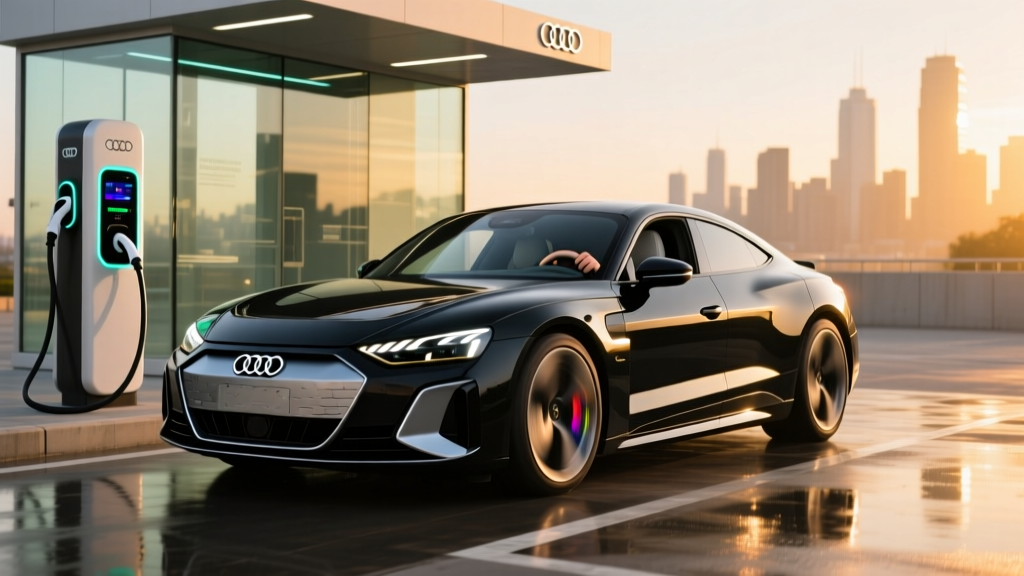
The 2025 Audi e-tron GT occupies a rare space in the electric-vehicle market: a luxury grand tourer that prioritizes sustained highway composure and 800-volt charging architecture over raw practicality. With the Porsche Taycan as its platform sibling, the e-tron GT shares the J1 architecture but wraps it in a more comfort-oriented, design-forward package. For 2025, Audi refreshes the lineup with updated battery capacity, faster charging, and a new entry-level trim that lowers the barrier to entry — though "lower" is relative when the base MSRP still exceeds six figures.
This review covers every number a prospective buyer needs: EPA range versus real-world expectations, the charging curve at DC fast stations, actual cargo dimensions, and whether the federal EV tax credit applies. If you're cross-shopping the Taycan, Tesla Model S, or Lucid Air, the data below should clarify where the e-tron GT lands.
2025 Audi e-tron GT at a Glance: Full Spec Sheet
| Spec | e-tron GT quattro | RS e-tron GT | RS e-tron GT Performance |
|---|---|---|---|
| Base MSRP | $106,395 | $149,095 | $189,095 |
| EPA Range | 270 mi | 278 mi | 278 mi (est.) |
| Battery (usable / gross) | 97.0 kWh / 105.0 kWh | 97.0 kWh / 105.0 kWh | 97.0 kWh / 105.0 kWh |
| Chemistry | NMC (nickel manganese cobalt) | NMC | NMC |
| Drivetrain | Dual-motor AWD | Dual-motor AWD | Dual-motor AWD |
| Horsepower (boost) | 496 hp | 646 hp | 912 hp |
| 0–60 mph | 3.9 sec | 3.1 sec | 2.5 sec |
| Max DC Fast Charge | 270 kW | 320 kW | 320 kW |
| 10–80% DC Time | ~21 min | ~18 min | ~18 min |
| Level 2 Home Charge | 11 kW (~32 mi/hr) | 11 kW (~32 mi/hr) | 11 kW (~32 mi/hr) |
| Efficiency (MPGe) | 85 MPGe combined | 82 MPGe combined | ~80 MPGe combined (est.) |
| Battery Warranty | 8 yr / 100,000 mi | 8 yr / 100,000 mi | 8 yr / 100,000 mi |
Range: EPA Sticker vs. Real-World Expectations
EPA Estimate: 270–278 miles (depending on trim and wheel size)
Real-World Highway (70–80 mph): Expect 220–245 miles in moderate temperatures
Cold Weather (below 32°F): Range drops to approximately 185–210 miles
City / Mixed Driving: Closer to EPA figures — 250–270 miles thanks to regenerative braking
The e-tron GT's 97.0 kWh usable battery (from a 105.0 kWh gross pack) is one of the larger cells in the luxury-sedan segment. According to fueleconomy.gov, the base e-tron GT quattro achieves 270 miles EPA, while the RS variant with the efficiency-oriented 20-inch wheel package reaches 278 miles.
However, the e-tron GT's low, aerodynamic coupe profile comes with a trade-off: its 85 MPGe combined efficiency is middling compared to the Lucid Air Grand Touring (131 MPGe) or even the Tesla Model S Long Range (124 MPGe). The heavier curb weight (~5,100 lbs) and performance-tuned motors consume more energy per mile, particularly at sustained highway speeds where aerodynamic drag dominates.
In practice, plan for roughly 230 miles of usable range on a road trip before needing to stop for a charge. That's adequate for most intercity routes given the growing DC fast-charging network, but it falls short of the 350+ mile real-world range you'll get from a Lucid Air or a well-equipped Tesla Model S. Cold weather further compresses the envelope — NMC chemistry loses roughly 20–30% of its capacity in sub-freezing temperatures without consistent preconditioning.
Charging Performance: 800-Volt Architecture in Practice
The e-tron GT's 800-volt electrical architecture remains one of its strongest technical advantages. While many competitors still use 400-volt systems, the higher voltage enables faster DC charging with lower current, reducing heat buildup and improving sustained charge rates.
| Charging Method | Power (kW) | Speed (miles of range per hour) | Notes |
|---|---|---|---|
| Level 1 (120V household) | 1.4 kW | ~4 mi/hr | Emergency/trickle only; full charge in ~70 hours |
| Level 2 (240V, 48A home charger) | 11 kW | ~32 mi/hr | Full 0–100% in ~9.5 hours; overnight-ready |
| DC Fast Charge (base GT quattro) | 270 kW peak | ~200 mi in 15 min (peak) | 10–80% in ~21 min; tapers above 80% |
| DC Fast Charge (RS / RS Performance) | 320 kW peak | ~230 mi in 15 min (peak) | 10–80% in ~18 min; requires 350 kW station |
A few important caveats on the charging curve: the 320 kW peak rate on the RS models is only achievable at chargers capable of delivering that power (such as Electrify America's latest 350 kW dispensers or IONITY stations in Europe). At a typical 150 kW DC fast charger, you'll see roughly 145–150 kW sustained, making the 10–80% time closer to 28–32 minutes regardless of trim.
Preconditioning is critical. The e-tron GT's navigation system will automatically warm or cool the battery when a DC fast charger is set as your destination. Skipping this step — or arriving at a charger with a cold-soaked battery — can cut peak charge rates by 40–60%. Always navigate to the charger rather than just driving there.
For home charging, the 11 kW onboard charger means you'll need a 48-amp or 60-amp Level 2 circuit (hardwired, NEMA 14-50 won't deliver the full 11 kW — you'll cap at 9.6 kW on a 40-amp circuit). Budget $800–$2,500 for a quality Level 2 home installation depending on panel proximity and local permitting, per industry estimates.
Performance: Where the e-tron GT Justifies Its Price
The base e-tron GT quattro delivers 496 horsepower in boost mode (launch control engaged) and hits 60 mph in 3.9 seconds — genuinely quick for a 5,100-pound sedan. But the RS variants are where the performance story becomes extraordinary.
The RS e-tron GT produces 646 hp and a 3.1-second 0–60 time, while the new-for-2025 RS e-tron GT Performance pushes 912 hp and a staggering 2.5-second sprint. That places the Performance variant in hypercar acceleration territory, rivaling the Tesla Model S Plaid (2.3 sec) at a fraction of the Plaid's price disadvantage relative to its own MSRP.
What sets the e-tron GT apart from the Model S Plaid isn't straight-line speed — it's chassis composure. The Audi's adaptive air suspension, rear-axle steering (optional on RS, standard on Performance), and torque-vectoring rear differential deliver a level of ride-and-handling balance that feels more grand tourer than drag-strip weapon. On long highway drives, the cabin is notably quieter than the Tesla's, and the seat comfort over 3+ hours is substantially better.
The two-speed rear transmission (a carryover from the J1 platform) gives the e-tron GT stronger acceleration from a stop via a short first gear, then shifts to a taller ratio for efficient highway cruising. You won't feel the shift, but it contributes to the car's flexibility.
Interior, Cargo, and Daily Practicality
The e-tron GT's cabin is a high-water mark for Audi — premium materials, excellent build quality, and a driver-focused cockpit that feels appropriately expensive. The 10.1-inch touchscreen runs Audi's latest MIB3+ infotainment with wireless Apple CarPlay and Android Auto. The virtual cockpit digital instrument cluster is standard, and a head-up display is available.
Where the e-tron GT struggles is space. The low-roofline coupe proportions create real compromises:
- Rear cargo: 9.2 cubic feet (trunk) — roughly half what a Model S offers
- Front trunk (frunk): 3.0 cubic feet — enough for a charging cable bag and a small duffel
- Rear legroom: 32.6 inches — tight for adults over six feet on longer trips
- Front headroom: Adequate for most, but taller drivers may find the low roofline restrictive with the seat raised
This is a two-adult-plus-luggage grand tourer, not a family hauler. If you need rear-seat practicality for children or regular cargo hauling, the Model S, Lucid Air, or even the Audi Q8 e-tron SUV are more functional choices.
Driver assistance is comprehensive but firmly SAE Level 2 — meaning the driver must remain engaged at all times. The Audi adaptive cruise assist with lane guidance works well on highways, and the parking system plus (surround-view cameras with automated parking) is excellent for tight urban spaces. However, Audi does not offer a hands-free driving system comparable to GM's Super Cruise or Ford's BlueCruise on mapped highways.
Pricing, Trims, and Federal Tax Credit Eligibility
| Trim | Base MSRP | As-Tested (Typical Options) | §30D Federal Tax Credit |
|---|---|---|---|
| e-tron GT quattro | $106,395 | $112,000–$118,000 | Not eligible (MSRP cap: $55,000 for sedans) |
| RS e-tron GT | $149,095 | $158,000–$170,000 | Not eligible |
| RS e-tron GT Performance | $189,095 | $195,000+ | Not eligible |
The IRS §30D clean vehicle credit caps eligible sedans at $55,000 MSRP. Since the least expensive e-tron GT starts at $106,395, no trim qualifies for the up-to-$7,500 federal tax credit. This is a straightforward disqualification — not a sourcing or income issue, but a hard price-cap barrier.
Buyers may still benefit from state-level incentives (California's CVRP, Colorado's state credit, and various utility rebates), but these vary by jurisdiction and change frequently. Check your state energy office or utility provider for current programs.
For buyers considering the used market, a pre-owned e-tron GT (model year 2022–2024) may qualify for the up-to-$4,000 used clean vehicle credit (§25E) if the sale price is $25,000 or less — though given current depreciation curves, that price point is unlikely for the next several years on this model.
Ownership Costs: Warranty, Efficiency, and Depreciation
Audi backs the e-tron GT with a competitive warranty package:
- Limited vehicle warranty: 4 years / 50,000 miles
- Battery and powertrain: 8 years / 100,000 miles (covers defects and capacity loss below 70% of original)
- Complimentary maintenance: 1 year / 10,000 miles (first scheduled service)
- Roadside assistance: 4 years / unlimited miles
The 70% capacity-retention threshold is standard for the industry, though some competitors (Hyundai/Kia at 70% for 10 years/100,000 miles, Tesla at 70% for 8 years/120,000 miles on Model S) offer longer coverage windows. NMC batteries in the e-tron GT are expected to retain roughly 88–92% of original capacity after 100,000 miles based on fleet data from similar J1-platform vehicles, so hitting the 70% threshold is unlikely under normal use.
Efficiency costs matter for TCO. At 85 MPGe combined (~36 kWh/100 mi), the e-tron GT consumes roughly 40% more electricity per mile than a Lucid Air. At the national average residential electricity rate of ~$0.17/kWh, that translates to approximately $610/year in home-charging electricity for 10,000 miles — versus roughly $430 for the Air. Not a deal-breaker at this price point, but worth noting for cost-conscious buyers.
Depreciation is the larger concern. Luxury EVs have experienced steeper-than-average depreciation since 2023, and the e-tron GT is no exception. Expect roughly 45–55% value retention after three years / 36,000 miles, which is below the Tesla Model S (~50–60%) and significantly below the Porsche Taycan (~55–65%). Buyers who lease may find more favorable monthly terms given the depreciation risk.
Pros, Cons, and the Verdict
- Class-leading ride quality and cabin quietness
- 800V charging delivers 10–80% in 18–21 min at capable stations
- RS Performance's 912 hp / 2.5-sec 0–60 is supercar territory
- Stunning exterior design with premium interior materials
- Air suspension and rear-axle steering provide excellent handling composure
- Comprehensive Level 2 driver assists standard
- EPA range of 270–278 mi trails Lucid Air (400+ mi) and Tesla Model S (350+ mi)
The e-tron GT is ideal for luxury buyers who prioritize ride quality, design, and brand prestige over maximum range or cargo practicality. It excels as a daily commuter and weekend grand tourer for one or two adults who have reliable home charging and access to DC fast chargers for longer trips. It is not the right choice for families needing rear-seat space, buyers who regularly drive 300+ miles between charging stops, or those seeking maximum value per dollar of range.
Frequently Asked Questions
What is the real-world range of the 2025 Audi e-tron GT?
The EPA rates the e-tron GT at 270–278 miles depending on trim. In real-world highway driving at 70–80 mph in moderate temperatures, expect 220–245 miles. Cold weather (below freezing) can reduce range to 185–210 miles. City driving with regenerative braking recovers more energy, bringing real-world figures closer to the EPA estimate.
How fast does the e-tron GT charge at home and on the road?
At home on a 240V Level 2 charger (48A circuit), the e-tron GT charges at 11 kW, adding roughly 32 miles of range per hour — a full charge takes about 9.5 hours. On DC fast chargers, the base GT quattro peaks at 270 kW (10–80% in ~21 min), while the RS models peak at 320 kW (10–80% in ~18 min) at a capable 350 kW station.
Does the 2025 Audi e-tron GT qualify for the federal EV tax credit?
No. The IRS §30D clean vehicle credit caps eligible sedans at $55,000 MSRP. The least expensive e-tron GT starts at $106,395, so no trim qualifies. State and utility incentives may still apply — check your local programs.
Is the e-tron GT worth buying over the Porsche Taycan or Tesla Model S?
It depends on your priorities. The e-tron GT offers a more comfortable ride and quieter cabin than the Taycan, with similar performance and charging speed, but at the cost of slightly less driving engagement. Versus the Model S, the Audi wins on interior quality, build, and ride comfort but loses significantly on range (270 vs. 350+ miles), cargo space, and access to the Supercharger network (though NACS adapters are increasingly available). The Lucid Air is the efficiency and range leader if those are your top criteria.
What is the battery warranty on the e-tron GT?
Audi covers the high-voltage battery for 8 years or 100,000 miles, whichever comes first. The warranty covers defects and capacity degradation below 70% of original capacity. Based on data from similar NMC packs in the J1 platform, most owners should expect 88–92% retention at 100,000 miles under normal use.
Can the e-tron GT use Tesla Superchargers?
As of 2025, the e-tron GT uses a CCS1 connector natively. Audi has not announced a factory NACS port for the e-tron GT (unlike some newer models). However, CCS-to-NACS adapters are available, and Audi has indicated compatibility with select adapters — verify with your dealer before purchasing one. The Electrify America and EVgo networks remain the primary DC fast-charging options for CCS-equipped Audis.