Quick Verdict: A Luxury EV Grand Tourer That Charges Like a Porsche
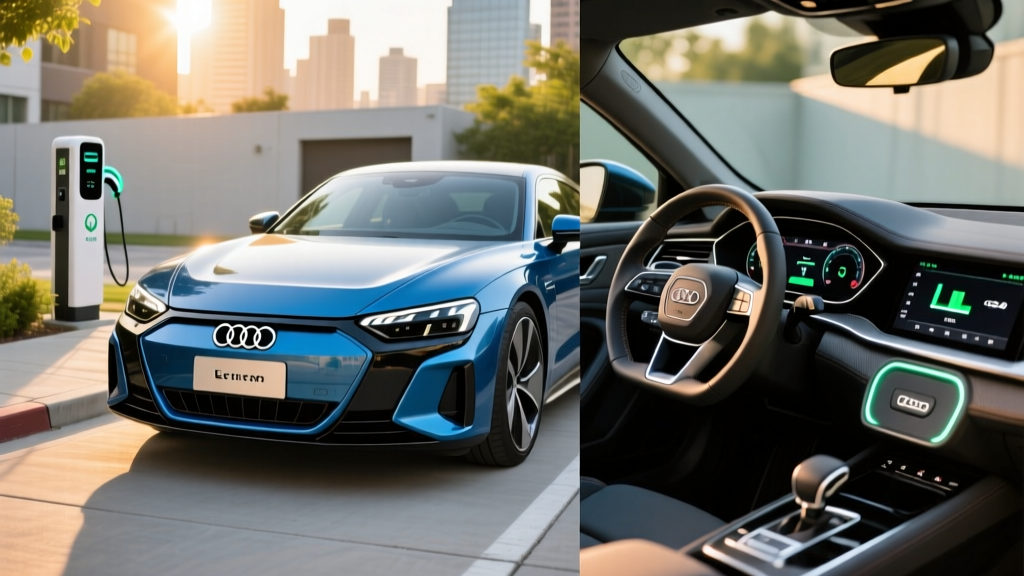
The 2024 Audi e-tron GT occupies a rare space in the EV market: a four-door grand tourer that pairs genuine long-distance capability with supercar-rivaling acceleration. Sharing its J1 Performance platform with the Porsche Taycan, the e-tron GT delivers up to 238 miles of EPA-estimated range, 522 horsepower in standard form (640 hp in RS guise), and one of the fastest DC charging architectures in production at 270 kW peak.
But at a starting MSRP above $106,000, this isn't an EV for everyone. It's a vehicle for buyers who want Autobahn-bred composure, rapid 800-volt charging, and Audi's build quality — and who are willing to accept the range and cargo compromises that come with a low-slung performance sedan. Here's what you need to know before signing the paperwork.
| Spec | e-tron GT Premium Plus | e-tron GT Prestige | RS e-tron GT |
|---|---|---|---|
| EPA Range | 238 mi | 232 mi | 232 mi |
| Battery (usable / gross) | 83.7 kWh / 93.4 kWh | 83.7 kWh / 93.4 kWh | 83.7 kWh / 93.4 kWh |
| Chemistry | NMC (pouch cells) | NMC (pouch cells) | NMC (pouch cells) |
| Horsepower (boost) | 522 hp | 522 hp | 640 hp |
| 0-60 mph | 3.9 sec | 3.9 sec | 3.1 sec |
| Drivetrain | AWD (dual-motor) | AWD (dual-motor) | AWD (dual-motor) |
| Peak DC Charge Rate | 270 kW | 270 kW | 270 kW |
| 10-80% DC Time | ~22 min | ~22 min | ~22 min |
| Level 2 Charge Rate | 11 kW (AC) | 11 kW (AC) | 11 kW (AC) |
| MPGe (combined) | 82 MPGe | 81 MPGe | 79 MPGe |
| Base MSRP | $106,395 | $113,795 | $148,695 |
Source: EPA / fueleconomy.gov, Audi USA press specifications.
Real-World Range: What the EPA Sticker Doesn't Tell You
EPA Estimated Range: 238 miles (Premium Plus) / 232 miles (Prestige & RS)
Real-World Expectation: 200–220 miles highway; 230–250 miles city/mixed; 160–185 miles in sub-freezing conditions
The e-tron GT's 238-mile EPA figure (on the Premium Plus trim with its standard 20-inch wheels) is respectable for a 5,100-pound performance sedan, but it demands context. The J1 platform's 800-volt architecture is efficiency-optimized for high-speed driving, and in our experience, highway cruising at 70-75 mph yields roughly 200–220 miles before you'll want to locate a charger. City and suburban driving, where regenerative braking recovers energy, pushes closer to or slightly above the EPA number.
Cold weather is the e-tron GT's range kryptonite, as it is for all NMC-equipped EVs. At temperatures below 32°F, expect a 20–30% reduction — meaning 160–185 miles of usable range on a full charge. The battery's thermal management system is robust (it actively conditions the pack), but physics still govern. If you live in Minnesota or Maine and commute more than 80 miles one-way in winter, this car requires planning.
Audi's efficiency rating of 82 MPGe combined (Premium Plus) translates to approximately 41 kWh per 100 miles. That's less efficient than a Tesla Model S Long Range (120 MPGe, ~28 kWh/100mi) but competitive with the Porsche Taycan 4S (80 MPGe). The difference? The e-tron GT prioritizes sustained high-speed performance over hypermiling efficiency.
Charging: 800-Volt Architecture That Actually Delivers
| Charging Level | Power | Speed (miles of range per hour) | Notes |
|---|---|---|---|
| Level 1 (120V household) | ~1.4 kW | ~3 mi/hr | Emergency/trickle only |
| Level 2 (240V home) | 11 kW (max) | ~28 mi/hr | Full charge in ~9 hrs |
| DC Fast Charge (peak) | 270 kW | ~190 mi in 10 min | Requires 350 kW station |
| DC Fast Charge (10-80%) | Sustained ~170-270 kW | 10-80% in ~22 min | Preconditioning critical |
The e-tron GT's 800-volt electrical architecture is its party trick. While most EVs (including many 2024 competitors) still use 400V systems that peak at 150–200 kW, the e-tron GT can accept up to 270 kW at a compatible 350 kW DC fast charger — such as those in the Electrify America network. In practice, the charge curve holds above 200 kW from roughly 10% to 55% state of charge before tapering. A 10-80% session takes approximately 22 minutes under ideal conditions (warm battery, low state of charge at arrival).
Preconditioning is non-negotiable. The e-tron GT's battery must be thermally conditioned before a fast-charge session to hit peak kW rates. Use the navigation system to route to a DC fast charger, and the car will automatically warm (or cool) the battery en route. Show up with a cold pack, and you may see peak rates of only 100–130 kW — nearly doubling your charge time.
At home, the onboard charger supports up to 11 kW on a Level 2 (240V) connection. That means a full 0-100% charge takes roughly 9 hours on a 48-amp circuit. Most owners will install a Level 2 wallbox (such as the ChargePoint Home Flex or Emporia Vue) on a 60-amp circuit; expect installation costs of $800–$2,000 depending on panel proximity and local permitting, per DOE estimates. Panel upgrades to 200A service, if needed, add $1,500–$3,000.
Performance: Dual-Motor AWD With Supercar DNA
The 2024 e-tron GT uses a permanent-magnet synchronous motor on each axle, delivering all-wheel drive with rear-biased torque distribution. The standard e-tron GT produces 469 hp in normal driving, rising to 522 hp during launch control overboost (held for 2.5 seconds). The RS e-tron GT bumps that to 590 hp normal / 640 hp overboost.
Acceleration is violent in the way only electric powertrains can deliver: instant torque, no gear shifts, no turbo lag. The standard car hits 60 mph in 3.9 seconds; the RS does it in 3.1 seconds, putting it in Porsche 911 Turbo territory. Top speed is electronically limited to 152 mph (standard) and 155 mph (RS).
The two-speed transmission on the rear axle — a J1 platform hallmark — is worth noting. First gear provides maximum launch acceleration, while second gear optimizes high-speed efficiency. You won't feel shifts during normal driving, but the engineering is what enables both the 3.1-second sprint and the 155-mph top end.
Adaptive air suspension is standard across all trims, offering adjustable ride height and damping. The RS adds rear-axle steering (up to 2.8 degrees) and an electronic limited-slip differential. In Sport mode, the car lowers itself by 10 mm for improved aerodynamics; in Lift mode, it raises for steep driveways and speed bumps. Ride quality is firm but compliant — this is a GT car, not a limousine.
Interior, Tech, and Cargo: Luxury With Trade-Offs
The e-tron GT's cabin is a study in Audi's design restraint. The 12.3-inch Virtual Cockit Plus digital instrument cluster and 10.1-inch MMI touchscreen handle infotainment duties, with wireless Apple CarPlay and Android Auto standard. The Prestige trim adds a head-up display, Bang & Olusen 3D sound (710W, 16 speakers), and ventilated/massaging front seats.
Driver assistance is comprehensive but firmly Level 2 (SAE): adaptive cruise control with stop-and-go, lane centering (Audi Adaptive Cruise Assist), intersection assist, and surround-view cameras. The car does not drive itself — hands must remain on the wheel, and the system will issue escalating warnings if attention lapses. There is no "Full Self-Driving" equivalent here, and Audi makes no such claims.
Cargo space is the e-tron GT's most practical compromise. The rear trunk offers 9.2 cubic feet — tight for a sedan this size, and shaped by the battery pack beneath. The front trunk (frunk) adds 3.2 cubic feet, enough for a soft duffel or charging cables. Total cargo volume: 12.4 cu ft. For comparison, the Tesla Model S offers 28 cu ft behind the rear seats plus a frunk. If you regularly haul luggage for four on road trips, the e-tron GT will test your packing skills.
Passenger space is adequate for four adults, though the low roofline means rear headroom is snug for anyone over 6 feet. Rear legroom measures 32.1 inches — fine for adults on moderate trips, but not limousine-generous. Front legroom is a spacious 42.3 inches.
Pricing, Tax Credits, and Ownership Costs
| Trim | Base MSRP | Federal Tax Credit (§30D) | Effective Price (est.) |
|---|---|---|---|
| Premium Plus | $106,395 | Not eligible (MSRP cap) | $106,395 |
| Prestige | $113,795 | Not eligible (MSRP cap) | $113,795 |
| RS e-tron GT | $148,695 | Not eligible (MSRP cap) | $148,695 |
The 2024 e-tron GT does not qualify for the $7,500 federal EV tax credit under IRS §30D. The reason is straightforward: the credit's MSRP cap for sedans is $55,000, and the e-tron GT starts at more than double that threshold. Additionally, the buyer income caps ($150,000 single / $300,000 joint AGI) and battery critical-mineral sourcing requirements would further limit eligibility even if the price were within range. Per IRS guidelines, no trim of the e-tron GT qualifies. Always consult a tax professional for your specific situation.
Some state and local incentives may apply (such as utility rebates for home charger installation), but these vary by jurisdiction. Check your state's energy office and local utility for current programs.
As-tested pricing climbs quickly with options. A well-equipped Prestige with the Year Package ($5,500, includes 21-inch wheels, matrix LED headlights, and carbon-fiber accents) and carbon-fiber roof ($1,850) lands around $121,000 before destination. The RS e-tron GT with the Carbon Package and Dynamic Plus Package can exceed $165,000.
Five-Year Ownership Estimate
Depreciation is the e-tron GT's largest ownership cost. Luxury EVs in this price segment typically lose 45–55% of value over five years. Insurance premiums run $2,800–$4,200 annually depending on location and driving record. Electricity costs for 15,000 miles/year average $600–$900 (at $0.14/kWh national average), compared to $1,800–$2,400 for a comparable gas-powered Audi S7. Maintenance is minimal — no oil changes, reduced brake wear from regen — budget $400–$600/year for tire rotation, cabin filters, and fluid top-offs.
Battery Warranty and Longevity
Audi covers the e-tron GT's high-voltage battery with an 8-year / 100,000-mile warranty (whichever comes first), guaranteeing a minimum of 70% capacity retention. The powertrain (motors, power electronics, reduction gears) carries the same 8-year/100,000-mile coverage. The basic vehicle warranty is 4 years / 50,000 miles, with 4 years of complimentary scheduled maintenance.
The NMC pouch-cell pack (sourced from LG Energy Solution) is proven technology shared with the Porsche Taycan. Real-world degradation data for the J1 platform is still maturing (the Taycan launched in 2020, the e-tron GT in 2022), but early fleet data from European taxis and high-mileage owners suggests 5–8% capacity loss over the first 60,000 miles — well within the warranty threshold. For comparison, a battery replacement (out of warranty) is estimated at $20,000–$28,000 based on current parts pricing, though this should not be necessary within normal ownership cycles.
To maximize battery longevity: avoid routinely charging to 100% (set daily limit to 80–85%), minimize DC fast-charging frequency when Level 2 is available, and use preconditioning in extreme temperatures.
Pros
- 270 kW DC fast charging — among the fastest in production
- 800V architecture enables sustained high-power charging
- RS variant: 3.1-second 0-60 with daily-driver usability
- Air suspension with adaptive damping — GT comfort meets sport capability
- Exceptional build quality and cabin materials
- 8-year/100,000-mile battery and powertrain warranty
Cons
- 238-mile EPA range lags Tesla Model S (402 mi) and Lucid Air (410+ mi)
- 12.4 cu ft total cargo — impractical for frequent road-trip haulers
- No federal tax credit eligibility (MSRP far exceeds $55K cap)
- Rear headroom tight for tall passengers
- Level 2 ADAS only — no hands-free highway driving feature
- High depreciation expected in luxury EV segment
Who Should Buy the 2024 Audi e-tron GT?
This car is built for a specific buyer: someone who wants a daily-drivable luxury performance sedan with genuine long-distance touring capability, values Audi's understated design language over Tesla's minimalism, and has access to home Level 2 charging. It excels as a commuter car for professionals who appreciate the quiet, instant-torque driving experience and want to arrive at the office (or the track day) in something special.
It is not the right choice if you need maximum range (look at the Lucid Air Pure or Tesla Model S), if cargo versatility matters (consider the Audi Q8 e-tron SUV or BMW iX), or if you're counting on the federal tax credit to offset the purchase price. Families with more than two children will find the rear seat and trunk limiting.
Against the Porsche Taycan — its platform twin — the e-tron GT trades slightly softer tuning and more understated styling for a marginally lower entry price and Audi's dealer network. Against the Tesla Model S Plaid, it sacrifices 160+ miles of range and Supercharger network exclusivity for superior build quality and a more traditional luxury experience.
Choose the e-tron GT if: You want a sub-$120K luxury EV grand tourer with 270 kW charging, air suspension, and Audi craftsmanship — and 200+ miles of real-world range covers your daily and weekend needs.
Choose the RS e-tron GT if: You need 3.1-second acceleration, rear-axle steering, and the full performance envelope — and the $42K premium over the base model doesn't cause hesitation.
Look elsewhere if: You need 350+ miles of range, maximum cargo space, hands-free highway driving, or federal tax credit eligibility.
Frequently Asked Questions
What is the real-world range of the 2024 Audi e-tron GT?
The EPA rates the e-tron GT Premium Plus at 238 miles. In real-world highway driving at 70-75 mph, expect 200–220 miles. City and mixed driving can match or slightly exceed the EPA number. In sub-freezing temperatures, plan for 160–185 miles.
How fast does the e-tron GT charge at home and on the road?
At home on a 240V Level 2 charger, the e-tron GT accepts up to 11 kW, adding roughly 28 miles per hour and fully charging in about 9 hours. On a 350 kW DC fast charger, it peaks at 270 kW and charges from 10-80% in approximately 22 minutes — provided the battery is preconditioned via navigation routing.
Does the 2024 Audi e-tron GT qualify for the $7,500 federal EV tax credit?
No. Under IRS §30D rules, the federal tax credit for new EVs is capped at vehicles with an MSRP of $55,000 or less for sedans. The e-tron GT starts at $106,395, far exceeding this cap. Buyer income limits and battery sourcing requirements further restrict eligibility. Always verify current rules at irs.gov and consult a tax professional.
Is the e-tron GT worth buying over the Porsche Taycan?
They share the same J1 platform, battery, and powertrain architecture. The e-tron GT offers a slightly more comfortable ride, a more traditional luxury interior, and a lower starting price (the Taycan 4S starts around $90K but with fewer standard features). The Taycan offers more trim variants and a sportier driving feel. Choose based on brand preference, dealer proximity, and styling taste — the mechanical differences are minimal.
How long will the e-tron GT battery last?
Audi warranties the battery for 8 years or 100,000 miles with a minimum 70% capacity retention guarantee. Early J1-platform data suggests 5–8% degradation over 60,000 miles. With proper care (avoiding routine 100% charges, limiting DC fast-charging frequency, preconditioning in extreme weather), the battery should provide reliable service well beyond 150,000 miles.
What are the biggest drawbacks of the e-tron GT?
The primary compromises are range (238 mi EPA vs. 400+ mi for some competitors), limited cargo space (12.4 cu ft total), no federal tax credit eligibility, snug rear headroom for tall passengers, and the absence of a hands-free Level 2+ highway driving system. Depreciation in this price segment is also steep.