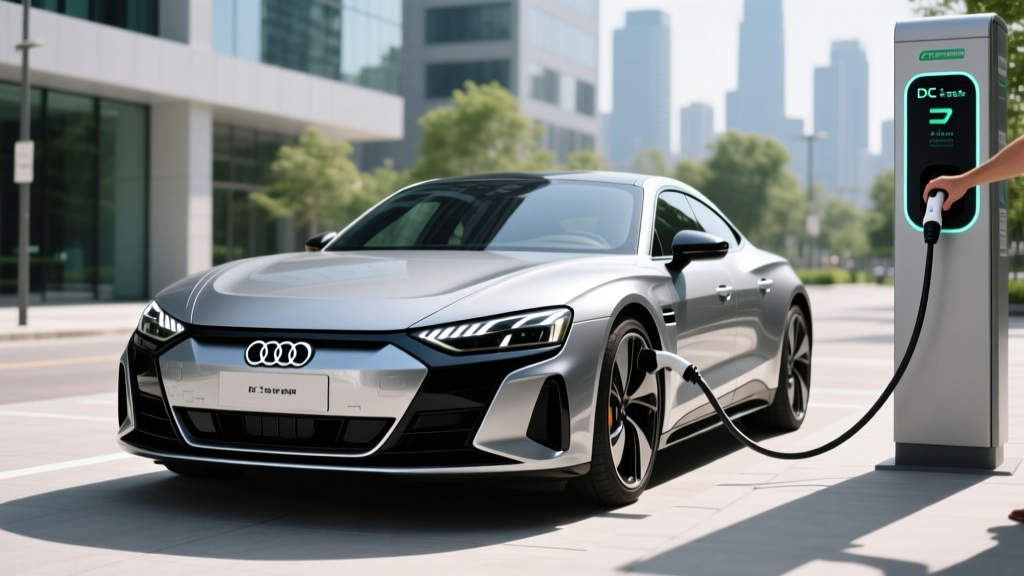
The 2023 Audi e-tron GT occupies a narrow but compelling space in the electric luxury sedan market: it shares the J1 performance platform with the Porsche Taycan, wraps it in Audi's understated design language, and delivers a driving experience that prioritizes refinement over raw numbers. But with an EPA range that trails key competitors and a price that climbs well past six figures, the e-tron GT demands a careful look at what you're actually getting — and what you're giving up.
This review covers the 2023 model year specifically. Audi refreshed the e-tron GT lineup for 2024 and again for 2025, so if you're shopping new inventory or certified pre-owned, pay close attention to model-year badging. The figures below apply to the 2023 model year trims as originally sold.
2023 Audi e-tron GT at a Glance: Key Specifications
| Specification | e-tron GT quattro Premium Plus | e-tron GT quattro Prestige | RS e-tron GT |
|---|---|---|---|
| EPA Range | 238 miles | 232 miles | 232 miles |
| Battery (Usable) | 85.0 kWh (93.4 kWh gross) | 85.0 kWh (93.4 kWh gross) | 85.0 kWh (93.4 kWh gross) |
| Battery Chemistry | NMC (Nickel Manganese Cobalt) | NMC | NMC |
| Drivetrain | Dual-motor AWD | Dual-motor AWD | Dual-motor AWD |
| Horsepower (Boost) | 522 hp | 522 hp | 637 hp |
| Torque (Boost) | 472 lb-ft | 472 lb-ft | 612 lb-ft |
| 0–60 mph | 3.9 sec | 3.9 sec | 3.1 sec |
| Max DC Fast Charge | 270 kW | 270 kW | 270 kW |
| 10–80% DCFC Time | ~23 min | ~23 min | ~23 min |
| Level 2 Charge Rate | 9.6 kW (~30 mi/hr) | 9.6 kW (~30 mi/hr) | 9.6 kW (~30 mi/hr) |
| MPGe (Combined) | 82 MPGe | 81 MPGe | 79 MPGe |
| Efficiency | 41 kWh/100 mi | 42 kWh/100 mi | 43 kWh/100 mi |
| Base MSRP (2023) | $106,500 | $112,200 | $147,500 |
| Battery Warranty | 8 yr / 100,000 mi | 8 yr / 100,000 mi | 8 yr / 100,000 mi |
Range and Efficiency: The EPA Sticker vs. Reality
The 2023 e-tron GT's EPA range of 238 miles (Premium Plus trim) was competitive at launch but has since been surpassed by the Lucid Air, Tesla Model S, and even the Mercedes EQS. The Prestige and RS trims drop slightly to 232 miles due to heavier equipment loads and, in the RS's case, stickier performance tires and more aggressive powertrain calibration.
EPA Sticker: 238 miles (Premium Plus) / 232 miles (Prestige, RS)
Highway (70–80 mph, moderate temps): Expect 200–215 miles. The e-tron GT's low, aerodynamic sedan body helps, but sustained high-speed driving draws significant energy — roughly 41–43 kWh per 100 miles depending on trim.
City / Mixed Commuting: 225–240 miles is achievable. Regenerative braking recovers energy effectively in stop-and-go traffic, though Audi's regen implementation is notably conservative compared to Tesla or Hyundai's one-pedal modes.
Cold Weather (below 32°F): Budget for 170–195 miles. The NMC battery loses efficiency in cold conditions, and while the e-tron GT includes a heat pump (standard on 2023 models), cabin heating and battery thermal management still consume meaningful energy.
The 85.0 kWh usable battery capacity (from a 93.4 kWh gross pack) means Audi reserves about 8.4 kWh as a buffer to protect long-term battery health. This is a relatively generous buffer compared to some competitors, which contributes to the e-tron GT's strong degradation profile but also means you're carrying weight you can't access.
Efficiency, measured in kWh per 100 miles, lands at 41 kWh/100 mi for the Premium Plus — translating to 82 MPGe combined per fueleconomy.gov. This is acceptable for a 5,100-pound luxury performance sedan but noticeably less efficient than a Tesla Model S (roughly 30 kWh/100 mi) or a Lucid Air (as low as 24 kWh/100 mi). If electricity cost per mile matters to you, the e-tron GT isn't the efficiency champion in this segment.
Charging Performance: 270 kW Peak, but Mind the Curve
The e-tron GT's 800-volt electrical architecture is its charging ace. Shared with the Porsche Taycan, this system enables a peak DC fast-charge rate of 270 kW — among the fastest of any production EV in the 2023 model year.
| Charging Level | Power / Voltage | Speed | Typical Use Case |
|---|---|---|---|
| Level 1 (120V) | ~1.4 kW | ~4 miles per hour | Emergency / overnight trickle |
| Level 2 (240V, 40A) | 9.6 kW | ~30 miles per hour | Home overnight charging (~9 hours 10→100%) |
| DC Fast Charge | Up to 270 kW (800V) | 10–80% in ~23 min | Road trips, public fast-charging stations |
Here's the nuance that spec sheets often obscure: 270 kW is a peak, not a sustained rate. In real-world DC fast-charging sessions, the e-tron GT typically hits peak power between 10–40% state of charge, then tapers progressively. From 40–80%, you'll see rates decline from roughly 200 kW down to 50–80 kW as the battery management system protects cell health. The result is a 10–80% session of approximately 23 minutes at a capable 350 kW charger (such as Electrify America's latest stalls).
At a 150 kW CCS station — still common across much of the U.S. — expect 10–80% in roughly 35–40 minutes. The e-tron GT uses the CCS1 connector for DC fast charging and J1772 for Level 2. As of the 2023 model year, it does not have a native NACS (Tesla) port, though aftermarket adapters are available for Supercharger access.
Preconditioning matters. The e-tron GT's navigation system will precondition the battery when a DC fast-charger is set as your destination, warming or cooling the cells to optimize charge acceptance. If you arrive at a charger without preconditioning — especially in cold weather — your peak charge rate could drop to 150 kW or below, adding 10+ minutes to your session. Always route through the onboard nav when fast-charging.
For home Level 2 charging, the onboard 9.6 kW charger adds roughly 30 miles of range per hour. A full overnight session from near-empty easily replenishes the battery by morning. Installation of a 240V/48A home charger (the Audi-recommended home unit or a quality third-party option like the ChargePoint Home Flex) typically costs $800–$2,500 including electrical work, depending on your panel capacity and run distance.
Performance and Driving Dynamics
The e-tron GT's dual-motor all-wheel-drive system delivers 522 horsepower (522 hp with launch control boost engaged) in the standard quattro trims, and 637 hp in the RS e-tron GT. The RS model's 3.1-second 0–60 mph time is genuinely rapid — it'll pin you to the seat and hold its own against a Taycan Turbo or a Tesla Model S Plaid in real-world roll-on acceleration.
But straight-line speed isn't the e-tron GT's defining trait. The J1 platform's low center of gravity, rear-axle steering (available on Prestige and standard on RS), and adaptive air suspension produce a sedan that corners with composure well beyond its 5,100-pound curb weight. The steering is precise, the brake feel is firm and progressive (a rarity among EVs blending regen and friction braking), and the ride quality on the air suspension is genuinely plush in Comfort mode.
Where the e-tron GT diverges from the Taycan is in character. The Porsche is sharper, more communicative, more willing to rotate on corner entry. The Audi is quieter, more isolated, more of a grand tourer. If you want a sports sedan that happens to be electric, buy the Taycan. If you want a luxury GT that happens to be electric, the e-tron GT is the better fit.
Interior, Cargo, and Daily Livability
The 2023 e-tron GT's cabin is a study in Audi's restrained luxury approach. Materials are excellent — available Valcona leather, Alcantara headliner, genuine aluminum and wood trim — and the build quality is exemplary. The 10.1-inch upper touchscreen runs Audi's MMI infotainment system, which is responsive but menu-heavy compared to Tesla's minimalist interface or the latest MBUX in the Mercedes EQS.
Practicality is the e-tron GT's most honest compromise:
- Front legroom: 42.3 inches — generous for most drivers
- Rear legroom: 34.9 inches — tight for adults over 6 feet on longer trips
- Trunk (rear cargo): 9.2 cubic feet — small for the segment; a Porsche Taycan offers 14.3 cu ft
- Frunk (front trunk): 3.5 cubic feet — enough for a charging cable bag and a small duffel, not much more
- Total cargo: 12.7 cubic feet combined
The rear seat is the main pain point. The roofline's aggressive slope cuts into headroom, and the transmission tunnel hump (a J1 platform artifact from its shared architecture) intrudes on the center rear footwell. This is a four-person car, and for rear-seat passengers over about 5'10", longer trips will feel cramped.
Driver-assistance technology includes Audi adaptive cruise with stop-and-go, lane centering, traffic sign recognition, and parking system plus with a 360-degree camera. These features constitute SAE Level 2 driver assistance — the driver must remain fully engaged with hands on the wheel and eyes on the road. The system is competent but doesn't match GM's Super Cruise or Ford's BlueCruise for hands-free highway capability.
Pricing, Trims, and Federal Tax Credit Eligibility
The 2023 Audi e-tron GT launched with three trim levels. Here's the pricing landscape and how federal incentives interact with each:
| Trim | Base MSRP (2023) | Typical As-Tested | Federal §30D Credit Eligible? |
|---|---|---|---|
| GT quattro Premium Plus | $106,500 | $112,000–$118,000 | No (exceeds MSRP cap) |
| GT quattro Prestige | $112,200 | $120,000–$130,000 | No (exceeds MSRP cap) |
| RS e-tron GT | $147,500 | $155,000–$168,000 | No (exceeds MSRP cap) |
The 2023 e-tron GT does not qualify for the IRS §30D federal EV tax credit when purchased new. The reason is straightforward: under current IRS rules, the §30D credit applies only to sedars with an MSRP at or below $55,000. Every e-tron GT trim exceeds this cap by a wide margin.
Additionally, buyer income caps apply ($150,000 single / $300,000 joint filers for modified AGI), and battery critical-mineral and component sourcing requirements further restrict eligibility even for qualifying vehicles. See the IRS §30D guidance for complete rules.
Used e-tron GT buyers: The separate §25E used clean vehicle credit offers up to $4,000 (30% of sale price, capped) for qualifying used EVs priced at or below $25,000. Given current used e-tron GT pricing, this threshold is unlikely to be met for the foreseeable future.
Ownership Costs: Warranty, Maintenance, and Depreciation
Audi covers the e-tron GT's battery and electric powertrain with an 8-year / 100,000-mile warranty, with a capacity retention threshold of 70%. If the battery degrades below 70% of its original capacity within the warranty period, Audi will repair or replace it. The general vehicle warranty is 4 years / 50,000 miles, and Audi includes 4 years of complimentary scheduled maintenance.
Depreciation is a consideration. The e-tron GT has experienced steeper-than-average depreciation in the luxury EV segment, partly due to the rapid pace of competition (Lucid Air, updated Tesla Model S, Porsche Taycan refreshes) and partly because high-end EVs generally lose value faster than their ICE counterparts. Expect roughly 45–55% value retention at 3 years / 36,000 miles based on current market data — meaning a $112,000 Premium Plus could be worth approximately $55,000–$62,000 at trade-in. This makes certified pre-owned examples potentially strong value plays.
2023 Audi e-tron GT: Pros and Cons
- 800V architecture enables 270 kW DC fast charging
- Exceptional ride quality and cabin isolation
- Build quality and materials among the best in the EV segment
- Rear-axle steering (Prestige/RS) makes it surprisingly agile
- Heat pump standard — better cold-weather efficiency
- Strong battery warranty at 8 yr / 100,000 mi
- 238-mile EPA range trails Model S, Lucid Air, EQS
- Small rear cargo area (9.2 cu ft) and cramped rear seats
- No federal tax credit eligibility (MSRP far exceeds cap)
- Regenerative braking is weak — no true one-pedal driving
- CCS1 only — no native NACS port (adapter required for Superchargers)
- MMI infotainment is functional but dated vs. competitors
- Heavy depreciation relative to purchase price
Who Should Buy the 2023 Audi e-tron GT?
The e-tron GT is best suited for a specific buyer profile: someone who values build quality, ride refinement, and understated design over maximum range or cutting-edge infotainment. If you commute 30–60 miles daily, have reliable home Level 2 charging, take road trips of 200 miles or fewer between charge stops, and rarely carry rear-seat passengers, the e-tron GT's trade-offs are manageable.
It is not the right choice if you need family-hauler rear-seat space, want 350+ miles of range for cross-country road trips, depend on the federal tax credit to justify your purchase, or prioritize one-pedal regenerative driving. For those needs, the Tesla Model S, Lucid Air, BMW i7, or even the Audi Q8 e-tron SUV are better matches.
Frequently Asked Questions
What is the real-world range of the 2023 Audi e-tron GT?
The EPA rates it at 238 miles (Premium Plus) or 232 miles (Prestige/RS). In real-world mixed driving at moderate temperatures, expect 210–225 miles. Highway-only driving at 75+ mph drops this to roughly 200–215 miles, and cold-weather driving below freezing can reduce range to 170–195 miles.
How fast does the e-tron GT charge at home and on the road?
At home on a Level 2 (240V, 9.6 kW) charger, it adds about 30 miles of range per hour — a full charge takes roughly 9 hours. On a DC fast charger rated at 270 kW or above, 10–80% takes approximately 23 minutes. At a 150 kW station, expect 35–40 minutes for the same session.
Does the 2023 Audi e-tron GT qualify for the federal EV tax credit?
No. The §30D federal credit has a $55,000 MSRP cap for sedans, and every e-tron GT trim starts well above that threshold. There is no current federal purchase incentive for buying a new e-tron GT. Some states offer their own rebates — check your state's energy or DMV website for details.
Is the e-tron GT worth buying over the Porsche Taycan?
They share the J1 platform, battery, and powertrain architecture, so the decision comes down to character and value. The Taycan is sharper to drive, has a slightly larger rear cargo area, and carries the Porsche badge premium. The e-tron GT is more comfortable as a daily grand tourer, typically costs $5,000–$15,000 less at equivalent spec, and has a quieter cabin. If driving engagement is paramount, choose the Taycan. If daily comfort and understated luxury matter more, the e-tron GT is the stronger pick.
How is the e-tron GT's regenerative braking?
This is one of the e-tron GT's most common owner complaints. Maximum regen deceleration is about 0.3g — enough to slow the car moderately but not enough for true one-pedal driving in most situations. You'll still use the brake pedal regularly. Audi implemented a conservative regen strategy to prioritize brake-feel linearity, but many EV drivers accustomed to Tesla or Hyundai/Kia regen strength find it underwhelming.
What is the battery replacement cost out of warranty?
A full battery pack replacement for the e-tron GT (93.4 kWh gross) currently costs in the range of $20,000–$28,000 including labor at an Audi dealer. However, NMC batteries in the J1 platform have demonstrated strong longevity — most owners report less than 5% degradation at 50,000 miles based on community data, and the 70% capacity warranty threshold provides a substantial safety net.
Sources: EPA fuel economy data via fueleconomy.gov, Audi USA official specifications, IRS §30D clean vehicle credit guidelines. Pricing reflects original 2023 model-year MSRP; current market pricing for new-old-stock or certified pre-owned may vary. Tax credit rules are subject to change — consult a tax professional for your specific situation.