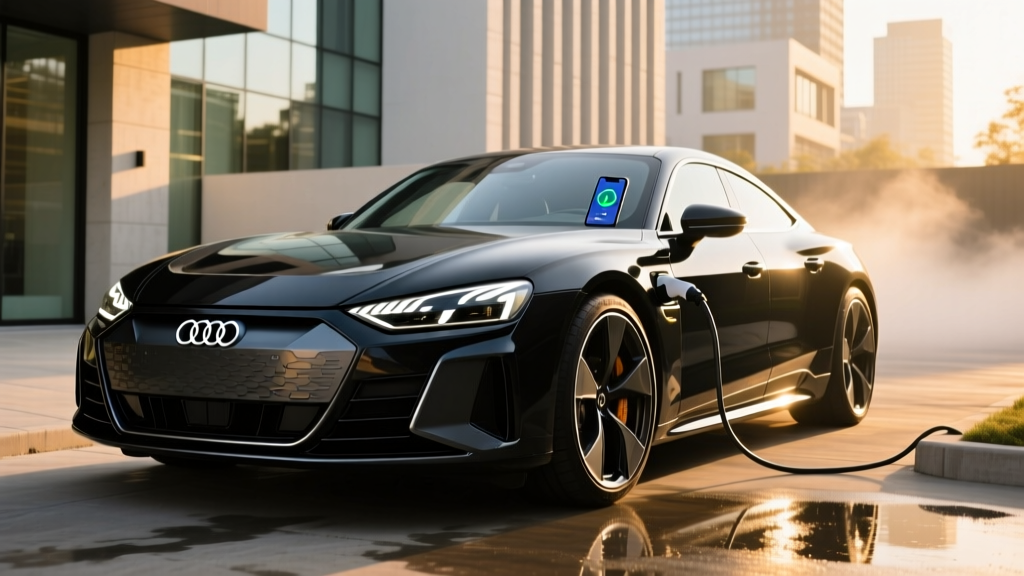
The 2022 Audi e-tron GT arrived as the brand's first dedicated electric performance sedan, sharing its J1 platform and 800-volt architecture with the Porsche Taycan. It targets buyers who want supercar-rivaling acceleration wrapped in a grand-touring silhouette — and who are willing to accept range and practicality trade-offs to get it. Now several model years into production, the 2022 e-tron GT is a known quantity with well-documented real-world behavior. Here's what the data actually says.
Spec Sheet: 2022 Audi e-tron GT at a Glance
| Specification | e-tron GT Premium Plus | e-tron GT Prestige | RS e-tron GT |
|---|---|---|---|
| EPA Range | 238 mi | 232 mi | 232 mi |
| Battery (gross / usable) | 93.4 kWh / ~83.7 kWh | 93.4 kWh / ~83.7 kWh | 93.4 kWh / ~83.7 kWh |
| Chemistry | NMC (Nickel Manganese Cobalt) | NMC | NMC |
| Drivetrain | Dual-motor AWD | Dual-motor AWD | Dual-motor AWD |
| Horsepower (boost) | 522 hp | 522 hp | 637 hp |
| 0–60 mph | 3.9 sec | 3.9 sec | 3.1 sec |
| Max DC Fast Charge | 270 kW | 270 kW | 270 kW |
| 10–80% DCFC Time | ~23 min | ~23 min | ~23 min |
| Level 2 Charge Rate | 9.6 kW (11 kW capable) | 9.6 kW (11 kW capable) | 9.6 kW (11 kW capable) |
| MPGe (combined) | 82 MPGe | 81 MPGe | 79 MPGe |
| Base MSRP (2022) | $102,400 | $107,100 | $139,900 |
Sources: EPA fueleconomy.gov, Audi USA press archives.
Real-World Range: What to Actually Expect
EPA Sticker: 232–238 miles (depending on trim and wheel size)
Real-World Highway (70–80 mph, moderate temps): ~190–210 miles
Real-World Mixed City/Suburban: ~215–230 miles
Cold Weather (below 32°F, highway): ~155–180 miles
The e-tron GT's low-slung aero profile helps highway efficiency, but its 20/21-inch performance tires and NMC chemistry's cold sensitivity cut range hard in winter. Plan for ~18–20% loss in freezing conditions.
The 2022 e-tron GT's 83.7 kWh usable battery (from a 93.4 kWh gross pack) is smaller than what you'll find in a Tesla Model S or Lucid Air, and it shows. The EPA's combined rating of 79–82 MPGe translates to roughly 2.4–2.6 kWh per mile in mixed driving. On a long highway run at 75 mph in 65°F weather, expect to see closer to 2.8–3.0 kWh per mile, which compresses range to roughly 200 miles before you'll want to stop.
For context, the Porsche Taycan 4S — which shares this platform — tests similarly. The e-tron GT's thermal management system is excellent at preserving battery health, but it prioritizes charge-speed consistency over squeezing out extra miles. That's a deliberate engineering trade-off: Audi optimized this car for repeatable performance and fast charging, not maximum range.
Charging Performance: The 800V Advantage
This is where the e-tron GT earns its keep. The 800-volt architecture enables DC fast charging at up to 270 kW — among the fastest in production when the 2022 model launched, and still competitive today.
| Charging Level | Power | Speed / Notes |
|---|---|---|
| Level 1 (120V household) | ~1.4 kW | ~4 mi/hr — emergency trickle only |
| Level 2 (240V home, 48A) | 9.6–11 kW | ~28–33 mi/hr; full charge in ~8–9 hrs |
| DC Fast Charge (peak) | 270 kW | 10–80% in ~23 min on 350 kW charger |
| DC Fast Charge (150 kW station) | ~150 kW sustained | 10–80% in ~35 min |
Charging curve reality: The e-tron GT does not sustain 270 kW for the entire session. Peak rate holds roughly from 10–40% State of Charge (SoC), then tapers to ~150 kW through 60%, and drops further above 80%. This is why the 10–80% figure of ~23 minutes is the meaningful benchmark — not the peak kW number alone. On a 350 kW Electrify America or Ionity station with preconditioning enabled, the curve is impressively flat compared to 400V competitors.
Preconditioning matters: Navigate to a DC fast charger using the e-tron GT's built-in navigation, and the car will warm or cool the battery to the optimal temperature window before you arrive. Skip this step (for instance, by driving to a charger without routing through nav) and your peak charge rate could drop by 30–50%, especially in cold weather.
Home charging: The onboard charger supports up to 11 kW (48A on a 240V/60A circuit). With a typical home Level 2 setup delivering 9.6 kW, you'll add roughly 30 miles of range per hour of charging — enough to fully replenish the battery overnight. Expect a quality Level 2 home charger installation to cost $800–$2,000 depending on panel capacity and run length.
Performance and Driving Dynamics
The standard e-tron GT produces 469 hp in normal driving, rising to 522 hp in boost mode (activated via launch control or kickdown). The RS e-tron GT bumps this to 590 hp standard and 637 hp on boost. Both use a two-speed transmission on the rear axle — first gear multiplies torque for brutal launches, second gear optimizes highway efficiency.
The 0–60 mph time of 3.9 seconds (standard) or 3.1 seconds (RS) is repeatable thanks to the sophisticated thermal management. Unlike some EVs that derate after consecutive hard launches, the e-tron GT's liquid-cooled battery and stator cooling allow multiple full-power starts without noticeable degradation.
Ride quality leans grand-touring rather than track-focused. The standard adaptive air suspension absorbs road impermissions well, and the low center of gravity keeps body roll minimal. Steering feel is precise if somewhat muted — typical of electric power steering tuned for comfort. The RS model adds rear-axle steering and an electronic limited-slip differential for sharper cornering, but neither trim is a raw sports car. This is a fast, refined cruiser first.
Interior, Cargo, and Daily Practicality
The e-tron GT's cabin quality is excellent — Audi's virtual cockpit digital cluster, a 10.1-inch upper touchscreen with haptic feedback, and standard leather or available leather-free upholstery with recycled materials. The Prestige trim adds a head-up display, Bang & Olufsen audio, and matrix LED headlights.
However, the GT silhouette imposes real compromises:
- Front trunk (frunk): 3.5 cu ft — enough for a charging cable bag, not much more
- Rear cargo: 9.2 cu ft — a shallow, narrow space behind the rear seats (no pass-through in 2022)
- Rear headroom: 36.5 inches — tall passengers will notice the sloping roofline
- Rear legroom: 32.1 inches — adequate for adults on shorter trips, tight for long hauls
- Front legroom: 41.7 inches — generous and comfortable
This is a four-seat grand tourer, not a family hauler. If you regularly carry rear-seat passengers or need cargo versatility, the Tesla Model S (28 cu ft rear, available third row) or even the Porsche Taycan Cross Turismo (wagon variant) serve better.
Pricing, Trims, and Federal Tax Credit Eligibility
| Trim | 2022 Base MSRP | Typical As-Tested | Federal §30D Credit |
|---|---|---|---|
| Premium Plus | $102,400 | $110,000–$118,000 | See eligibility below |
| Prestige | $107,100 | $115,000–$125,000 | See eligibility below |
| RS e-tron GT | $139,900 | $148,000–$160,000 | See eligibility below |
- MSRP cap: Sedans must have an MSRP at or below $55,000 to qualify. All 2022 e-tron GT trims exceed this cap — the vehicle does NOT qualify for the new-vehicle §30D credit when purchased new.
- Income cap: AGI limits ($150K single / $300K joint) apply regardless of MSRP.
- Battery sourcing: Critical-mineral and battery-component requirements phase in annually and further restrict eligibility.
- Used EV credit (§25E): If purchasing a used 2022 e-tron GT from a dealer for $25,000 or less, you may qualify for up to $4,000 (30% of sale price) — but given original MSRPs above $100K, used examples are unlikely to meet the $25K price cap in 2026.
The absence of the federal tax credit is a significant cost factor. Buyers are paying full MSRP for this vehicle, which makes the competitive comparison even more critical.
Tech, Driver Assistance, and Notable Drawbacks
Infotainment: The dual-screen MMI setup (10.1" upper, 8.6" lower for climate) is responsive and supports wireless Apple CarPlay and Android Auto. Audi's virtual cockpit (12.3") is one of the best digital clusters in the industry. However, the lower touchscreen's reliance on touch for climate and seat controls can be distracting while driving.
Driver assistance (SAE Level 2): The e-tron GT comes standard with Audi adaptive cruise assist (stop-and-go capable), lane-keeping, intersection assist, and parking system plus. This is a Level 2 driver-assist system — you must keep hands on the wheel and eyes on the road at all times. It does not offer hands-free highway driving like GM's Super Cruise or Ford's BlueCruise. Audi's system is competent but unremarkable compared to Tesla Autopilot or Mercedes Drive Pilot.
Notable drawbacks:
- No over-the-air (OTA) updates for core vehicle functions — only infotainment maps and minor features
- No one-pedal driving mode; regen braking is mild even in the strongest setting
- Rear visibility is compromised by the sloping roofline and thick C-pillars
- Insurance premiums tend to run 15–25% above comparable ICE Audi models
Who Should Buy the 2022 Audi e-tron GT?
- You prioritize build quality, ride refinement, and understated design over maximum range
- You want 800V fast-charging capability for road trips (23-min 10–80% stops)
- Your daily commute is under 150 miles and you have reliable home Level 2 charging
- You value repeatable launch performance over one-time drag-strip numbers
- Rear-seat and cargo space are secondary concerns
- You need 300+ miles of real-world range (consider Tesla Model S, Lucid Air, or Mercedes EQS)
- You regularly carry four adults or need cargo versatility
- Federal tax credit eligibility is important to your purchase math
- You want cutting-edge hands-free driver assist or frequent OTA feature updates
- Budget is a primary concern — the Taycan 4S, Model S, and EQS offer more range or practicality per dollar
Pros and Cons
- 270 kW DC fast charging — among the fastest in its class
- Exceptional build quality and cabin materials
- Repeatable 3.1–3.9s 0–60 with no derating
- Refined air-suspension ride quality
- 800V architecture future-proofs for next-gen chargers
- Standard AWD with torque vectoring
- 232–238 mi EPA range trails key competitors by 50–100+ miles
- Tight rear seats and minimal cargo (9.2 cu ft)
- No federal tax credit eligibility (MSRP exceeds $55K cap)
- No one-pedal driving; regen is underwhelming
- Infotainment showing its age vs. 2025+ competitors
- Driver assist is competent but not class-leading
Warranty and Battery Longevity
Audi covers the 2022 e-tron GT with the following warranty structure:
- New vehicle limited: 4 years / 50,000 miles
- Battery (high-voltage): 8 years / 100,000 miles — guarantees at least 70% capacity retention
- Powertrain (e-motors, power electronics): 8 years / 100,000 miles
- Corrosion perforation: 12 years, unlimited miles
The 8-year/100,000-mile battery warranty with a 70% retention floor is industry-standard and consistent with Porsche's Taycan coverage. NMC chemistry in the e-tron GT benefits from the sophisticated thermal management system, which keeps cell temperatures in the optimal 20–40°C window during charging and hard driving. Early real-world data from European fleets suggests degradation of roughly 3–5% over the first 60,000 miles — well within the warranty buffer.
Frequently Asked Questions
What is the real-world range of the 2022 Audi e-tron GT?
The EPA rates the e-tron GT at 232–238 miles depending on trim. In real-world highway driving at 70–80 mph in moderate temperatures, expect 190–210 miles. City and suburban driving can stretch this to 215–230 miles. In freezing weather, plan for 155–180 miles — a 20–25% reduction is typical for NMC chemistry without a heat pump dedicated to battery warming.
How fast does the e-tron GT charge at home and on the road?
On a 350 kW DC fast charger, the e-tron GT peaks at 270 kW and charges from 10–80% in approximately 23 minutes. At home on a 240V Level 2 charger (9.6 kW), it adds roughly 30 miles of range per hour, fully charging overnight in 8–9 hours. Always use navigation routing to precondition the battery before DC fast charging for best results.
Does the 2022 Audi e-tron GT qualify for the federal EV tax credit?
No. Under current IRS §30D rules, new sedans must have an MSRP of $55,000 or less to qualify for the up-to-$7,500 clean vehicle credit. Every e-tron GT trim starts well above this threshold. The used-EV credit (§25E) requires a sale price of $25,000 or less — also unlikely for this model in 2026. Verify all rules at IRS.gov.
Is the e-tron GT worth buying vs. the Porsche Taycan or Tesla Model S?
It depends on your priorities. The Taycan 4S shares the same platform with nearly identical range and charging but offers a more engaging chassis and a wagon variant (Cross Turismo). The Tesla Model S provides over 400 miles of EPA range, a Supercharger network advantage, and hands-free-capable Autopilot — but interior quality and ride refinement trail the Audi. The e-tron GT is the comfort-and-quality pick; the Taycan is the driver's pick; the Model S is the range-and-tech pick.
How much does it cost to insure the e-tron GT?
Insurance for the e-tron GT typically runs $2,800–$4,200 annually depending on location, driving record, and coverage levels — roughly 15–25% higher than a comparable ICE Audi A7 or S7. Get quotes from EV-friendly insurers before purchasing.
Does the e-tron GT have one-pedal driving?
No. Audi chose not to implement a true one-pedal driving mode. The strongest regenerative braking setting (activated via steering-wheel paddles or "B" mode on the shifter) provides moderate deceleration but will not bring the car to a complete stop. You'll still use the friction brake pedal regularly. This is a deliberate choice favoring brake-blending feel over one-pedal convenience.