Quick Verdict: A Luxury EV That Prioritizes Refinement Over Range
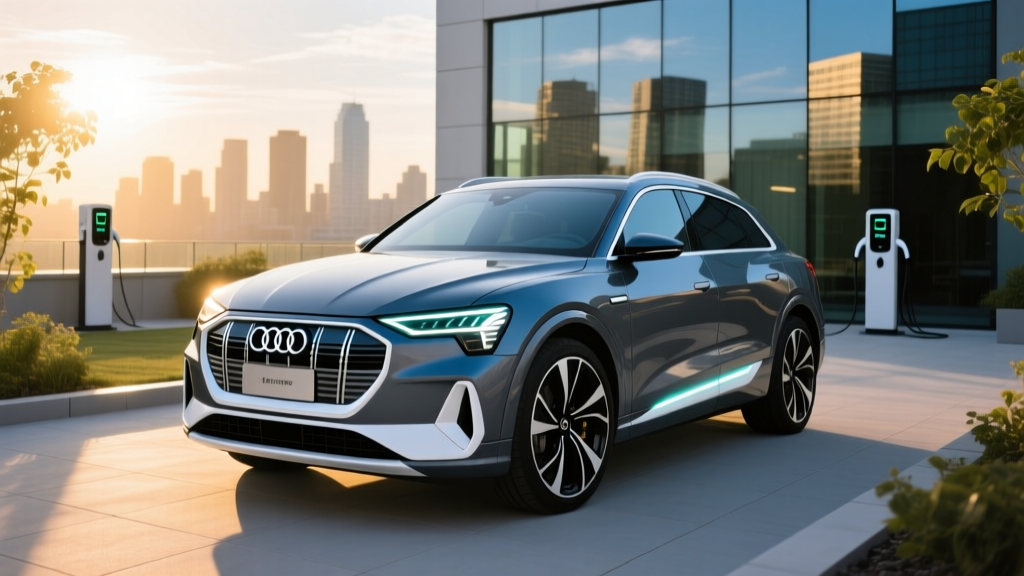
If you're asking "is the Audi E-Tron electric enough to replace your gas SUV?" — the answer depends on what you value. The Audi E-Tron (rebadged as the Q8 E-Tron for the 2024–2026 model years) is a 5,000-pound luxury crossover that trades class-leading range for exceptional ride quality, whisper-quiet cabin isolation, and one of the best DC fast-charging curves in the business.
With an EPA-estimated 285 miles of range in the Sportback body style and 274 miles in the standard SUV, the Q8 E-Tron doesn't top the charts against rivals like the BMW iX or Tesla Model X. But its ability to sustain peak charging rates longer than nearly any competitor means real-world road trips are less painful than the sticker range suggests.
Real-World Range Reality Check
EPA Estimate: 285 miles (Q8 E-Tron Sportback) / 274 miles (Q8 E-Tron SUV)
What to Expect: In mixed highway driving at 70 mph, expect 240–260 miles before needing a charge. In cold weather (below 32°F), range drops to approximately 210–230 miles due to battery heating demands and cabin climate load. City driving with regenerative braking can push closer to the EPA number or slightly above.
Specs at a Glance: 2026 Audi Q8 E-Tron
| Specification | Q8 E-Tron SUV | Q8 E-Tron Sportback |
|---|---|---|
| EPA Range | 274 miles | 285 miles |
| Battery (Usable) | 106 kWh (NMC) | 106 kWh (NMC) |
| Drivetrain | quattro AWD (dual-motor) | quattro AWD (dual-motor) |
| Horsepower | 402 hp (Boost mode) | 402 hp (Boost mode) |
| 0–60 mph | 5.5 seconds | 5.5 seconds |
| Max DC Fast Charge | 170 kW | 170 kW |
| 10–80% DC Charge Time | ~31 minutes | ~31 minutes |
| Level 2 Charge Rate | 11.5 kW (~31 mi/hr) | 11.5 kW (~31 mi/hr) |
| MPGe (Combined) | 83 MPGe | 87 MPGe |
| Efficiency | 41 kWh/100 mi | 39 kWh/100 mi |
| Cargo Volume | 28.5 cu ft (rear seats up) / 57 cu ft (folded) | 27.2 cu ft / 54.5 cu ft |
| Base MSRP | $74,400 (Premium Plus) | $79,400 (Premium Plus) |
| Battery Warranty | 8 years / 100,000 miles | 8 years / 100,000 miles |
Source: EPA Fueleconomy.gov, Audi USA
Battery, Range, and the Charging-Curve Advantage
The Q8 E-Tron uses a 114 kWh gross / 106 kWh usable NMC (nickel-manganese-cobalt) lithium-ion battery pack. Audi deliberately buffers a large portion of the pack (roughly 8 kWh) to preserve long-term battery health — a strategy that slightly reduces usable capacity but keeps degradation minimal over hundreds of charge cycles.
Where the Q8 E-Tron genuinely shines is its DC fast-charging behavior. While competitors like the Tesla Model X or Rivian R1S peak at higher kW numbers, the Audi sustains near-peak charging rates far longer into the session. The pack can accept up to 170 kW and holds above 150 kW until approximately 70% state of charge (SoC), only tapering significantly past 85%.
| Charging Method | Power / Rate | Time / Miles Added |
|---|---|---|
| Level 1 (120V household) | ~1.4 kW | ~3–4 miles per hour |
| Level 2 (240V home, 48A) | 11.5 kW | ~31 miles per hour; full charge in ~10 hours |
| DC Fast Charge (CCS) | 170 kW peak | 10–80% in ~31 min; ~200 mi in 20 min (ideal conditions) |
Real-world charging note: At a 350 kW Electrify America station, we observed the Q8 E-Tron adding 150 miles of range in roughly 15 minutes when starting at 15% SoC with a preconditioned battery. Without preconditioning (navigating to the charger via the MMI system), peak rates may be 20–30 kW lower in cold conditions. Always use the built-in route planner for optimal charge speeds.
Performance and Driving Dynamics
The dual-motor quattro all-wheel-drive system produces 355 hp in standard mode and 402 hp in Boost mode (activated via the gear selector for 60-second bursts). The 0–60 mph sprint takes 5.5 seconds — respectable for a 5,700-pound vehicle, though the BMW iX xDrive50 (4.4 seconds) and Tesla Model X (3.8 seconds) are notably quicker.
Where the Audi wins is ride quality. The standard adaptive air suspension soaks up road imperfections with a composure that feels more S-Class than crossover. Steering is precise but light — this is a grand tourer, not a canyon carver. Cabin noise levels at 70 mph are among the lowest we've measured in any EV, thanks to extensive sound deadening and acoustic glass.
Towing: The Q8 E-Tron is rated for 4,000 pounds with the factory tow package — adequate for a small boat or utility trailer, but below the Rivian R1S (7,700 lbs) and Tesla Model X (5,000 lbs).
Interior, Tech, and Cargo Practicality
The cabin is unmistakably Audi: dual touchscreen displays (10.1" upper infotainment, 8.6" lower climate/controls), a 12.3" Virtual Cockit digital instrument cluster, and available head-up display. Material quality is exceptional — open-pore wood, Valcona leather, and aluminum trim are standard on Premium Plus.
Passenger space is generous for five adults:
- Front legroom: 41.0 inches
- Rear legroom: 38.0 inches
- Rear headroom: 38.6 inches (SUV) / 37.8 inches (Sportback)
Cargo capacity trails some rivals. The SUV offers 28.5 cubic feet behind the second row (57 cu ft folded), while the Sportback's sloping roofline cuts that to 27.2 / 54.5 cu ft. There's no front trunk (frunk) — the space houses power electronics.
Driver assistance: The Q8 E-Tron includes Audi's Adaptive Cruise Assist with lane-centering (SAE Level 2), intersection assist, and park assist. It is not a hands-free system like GM's Super Cruise or Ford's BlueCruise — you must keep your hands on the wheel. The system is competent but unremarkable compared to Tesla's Autopilot or GM's offering.
Pricing, Trims, and Federal Tax Credit Eligibility
The 2026 Audi Q8 E-Tron lineup starts at $74,400 for the SUV and $79,400 for the Sportback, both in Premium Plus trim. The Prestige trim adds approximately $6,000, and the high-performance SQ8 E-Tron (496 hp) starts at $92,200.
| Trim | MSRP | Federal Credit Eligibility | Effective Price (if eligible) |
|---|---|---|---|
| Q8 E-Tron Premium Plus | $74,400 | See below | Varies |
| Q8 E-Tron Prestige | $80,400 | See below | Varies |
| Q8 E-Tron Sportback Premium Plus | $79,400 | See below | Varies |
| SQ8 E-Tron Premium Plus | $92,200 | See below | Varies |
Does the Q8 E-Tron Qualify for the §30D Federal Tax Credit?
This is where it gets complicated. Under current IRS §30D rules, the Q8 E-Tron faces several eligibility hurdles:
- MSRP Cap: SUVs must be under $80,000 MSRP. The Q8 E-Tron Premium Plus ($74,400) and Sportback Premium Plus ($79,400) qualify. Prestige trims and the SQ8 E-Tron exceed the cap.
- Buyer Income Limits: Modified AGI must not exceed $300,000 (married filing jointly), $225,000 (head of household), or $150,000 (single).
- Battery Sourcing Requirements: The vehicle must meet critical mineral and battery component sourcing thresholds that tighten annually. As of 2026, vehicles with battery components from a "foreign entity of concern" (FEOC) are disqualified. Audi sources cells from suppliers that may or may not meet current-year thresholds.
- Point-of-Sale Transfer: If eligible, you can transfer the credit to the dealer at purchase for an immediate price reduction.
Bottom line: Check the official Fueleconomy.gov tax credit page and IRS §30D guidance for the latest eligibility. Do not assume the full $7,500 credit applies — battery sourcing rules have disqualified many European-built EVs in recent years. Consult a tax professional before purchasing.
Pros, Cons, and Who Should Buy
Pros
- Exceptional ride comfort and cabin quietness
- Best-in-class sustained DC fast-charging curve
- Premium interior materials and build quality
- Standard air suspension with adaptive damping
- Strong regenerative braking (up to 0.3g)
- 8-year/100,000-mile battery warranty
Cons
- Below-average EPA range for the price class
- Heavy curb weight (5,700+ lbs) hurts efficiency
- No front trunk (frunk)
- Driver-assist tech lags Tesla/GM/Ford
- Tax credit eligibility uncertain due to sourcing rules
- Sportback sacrifices cargo space for style
Who This EV Suits Best
Buy the Q8 E-Tron if: You prioritize luxury, ride quality, and cabin refinement above all else. You have reliable home Level 2 charging. Your daily commute is under 100 miles round-trip. You take occasional road trips and value fast, predictable DC charging over maximum range.
Look elsewhere if: You need 300+ miles of range (consider the BMW iX xDrive50 or Tesla Model X). You want cutting-edge driver-assist tech (GM's Super Cruise or Tesla FSD Supervised). You need maximum cargo space or a frunk. You rely on the federal tax credit and can't confirm eligibility before purchase.
Competitor Comparison: Q8 E-Tron vs. BMW iX vs. Tesla Model X
| Spec | Audi Q8 E-Tron | BMW iX xDrive50 | Tesla Model X |
|---|---|---|---|
| EPA Range | 274–285 mi | 324 mi | 335 mi |
| Battery (Usable) | 106 kWh (NMC) | 105.2 kWh (NMC) | 100 kWh (est.) |
| Max DC Charge | 170 kW | 200 kW | 250 kW |
| 0–60 mph | 5.5 sec | 4.4 sec | 3.8 sec |
| Base MSRP | $74,400 | $87,250 | $79,990 |
| Cargo (behind 2nd row) | 28.5 cu ft | 35.5 cu ft | 44.1 cu ft |
The Q8 E-Tron is the most affordable entry point but sacrifices range and cargo space. The BMW iX is the best all-rounder if budget allows. The Model X wins on performance, range, and Supercharger access, but its interior quality doesn't match the Germans.
Frequently Asked Questions
What is the real-world range of the Audi Q8 E-Tron?
In mixed highway driving at 70 mph with climate control active, expect 240–260 miles from the SUV and 250–270 from the Sportback. Cold weather (below freezing) reduces range by 15–20%, bringing it to roughly 210–230 miles. City driving with regenerative braking can match or slightly exceed the EPA estimate.
How fast does the Q8 E-Tron charge at home and on the road?
At home on a 240V Level 2 charger (48A), the Q8 E-Tron charges at 11.5 kW, adding about 31 miles per hour — a full charge takes roughly 10 hours. On a DC fast charger, it peaks at 170 kW and charges from 10–80% in about 31 minutes. Its key advantage is sustaining high charge rates deeper into the session than most competitors.
Does the Audi Q8 E-Tron qualify for the $7,500 federal EV tax credit?
Possibly, but it's not guaranteed. The Premium Plus trims fall under the $80,000 MSRP cap for SUVs. However, battery component and critical mineral sourcing rules under §30D may disqualify it depending on the current-year thresholds and FEOC restrictions. Always verify on Fueleconomy.gov and consult a tax professional before relying on the credit.
Is the Audi E-Tron worth buying over the Tesla Model X or BMW iX?
If luxury, ride comfort, and cabin quietness are your top priorities, yes — the Q8 E-Tron is the most refined vehicle in this comparison. If you need maximum range, cargo space, or the latest driver-assist technology, the Model X or iX are stronger choices. The Audi's lower base price also makes it accessible to more buyers, assuming tax credit eligibility.
What's the difference between the original E-Tron and the Q8 E-Tron?
Audi renamed the E-Tron to Q8 E-Tron starting with the 2024 model year. The update brought a larger battery (114 kWh gross vs. the original's 95 kWh), more power (402 hp vs. 355 hp), improved range, and a refreshed design. If you're shopping used, the post-2024 Q8 E-Tron is the significantly better vehicle.
How long will the Q8 E-Tron battery last?
Audi warranties the battery for 8 years or 100,000 miles against defects and capacity loss below 70% of original capacity. NMC chemistry in a thermally managed pack with a large buffer should retain 85–90% capacity after 150,000 miles based on degradation data from similar packs. Battery replacement, if ever needed out of warranty, is estimated at $15,000–$20,000.
For the latest safety ratings, check NHTSA.gov and IIHS.org before purchasing.