Quick Verdict: The Audi e-tron Coupe in 2026
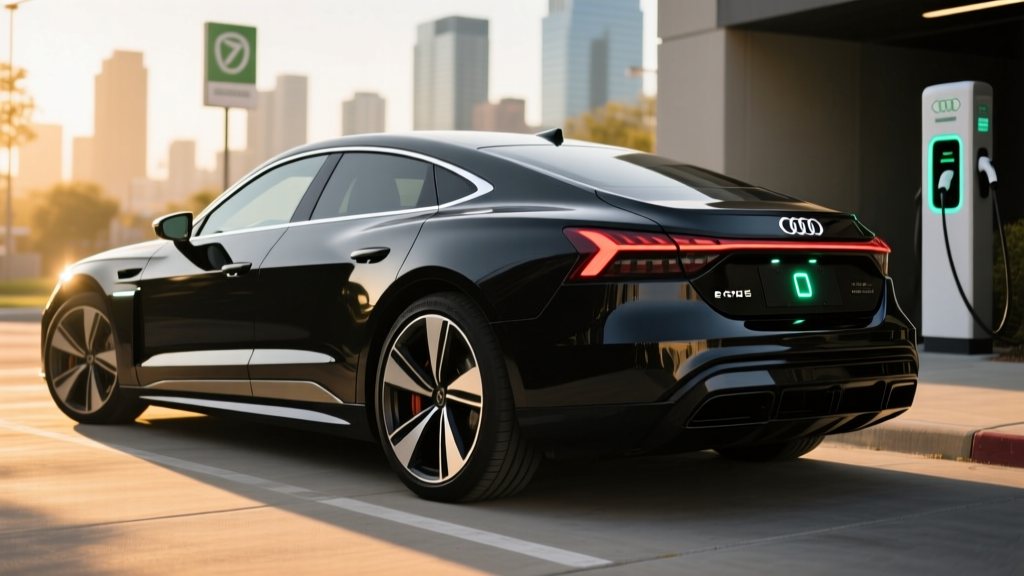
The Audi e-tron Coupe — marketed globally as the Audi Q8 e-tron Sportback — occupies a distinct niche: a luxury electric crossover with a sloping roofline, flagship interior quality, and Audi's hallmark refinement. For 2026, it carries forward with a 114 kWh gross battery pack (106 kWh usable), an EPA-estimated range up to 285 miles in its most efficient configuration, and DC fast-charging capability that remains among the best in the luxury EV segment. But at a starting MSRP hovering above $74,000, and with competitors like the BMW iX xDrive50 and Mercedes EQE SUV offering comparable or greater range, the e-tron Coupe demands a closer look at what it does well — and where it falls short for the money.
This review covers the real-world ownership picture: actual range on the highway and in cold weather, charging-curve behavior at DC fast chargers, total cost after federal tax credits, and whether the Sportback form factor sacrifices too much cargo space for the sake of style.
Spec Table: 2026 Audi e-tron Coupe at a Glance
| Specification | Q8 e-tron Sportback (Premium Plus) | SQ8 e-tron Sportback |
|---|---|---|
| EPA Range | 285 miles | 253 miles |
| Battery (gross / usable) | 114 kWh / 106 kWh (NMC) | 114 kWh / 106 kWh (NMC) |
| Drivetrain | Dual-motor AWD (quattro) | Dual-motor AWD (quattro) w/ boost |
| Horsepower | 402 hp (Boost mode) | 496 hp (Boost mode) |
| 0–60 mph | 5.4 seconds | 4.3 seconds |
| Max DC Fast Charge | 170 kW peak | 170 kW peak |
| 10–80% DC Charge Time | ~31 minutes | ~31 minutes |
| Level 2 Home Charging | 11.5 kW (~31 mi/hr) | 11.5 kW (~31 mi/hr) |
| MPGe (combined) | 81 MPGe | 73 MPGe |
| Efficiency | 42 kWh/100 mi | 46 kWh/100 mi |
| Cargo (rear seats up / folded) | 27.2 / 54.5 cu ft | 27.2 / 54.5 cu ft |
| Base MSRP | $74,400 | $96,800 |
| Battery Warranty | 8 yr / 100,000 mi | 8 yr / 100,000 mi |
Range & Efficiency: EPA vs. Real-World Driving
EPA estimate: 285 miles (Q8 e-tron Sportback). In real-world highway driving at 70–75 mph, expect approximately 235–255 miles. In cold weather (below 32°F), range drops to roughly 200–220 miles due to battery heating demands and cabin climate load. City driving with regenerative braking recovers closer to the EPA figure, often 265–280 miles.
The 106 kWh usable battery is one of the largest in the luxury EV crossover class, and it shows in the EPA numbers. According to EPA data on fueleconomy.gov, the Q8 e-tron Sportback achieves 81 MPGe combined, translating to roughly 42 kWh consumed per 100 miles driven.
However, efficiency is where the physics of this vehicle's design become apparent. The e-tron Coupe is heavy — approximately 5,700 pounds curb weight — and its bluff frontal area works against highway efficiency. On a flat, 65 mph cruise in moderate temperatures (55–75°F), you'll see the trip computer report 2.2–2.4 miles per kWh, which checks out with the EPA rating. Push to 75 mph or encounter headwinds and elevation changes, and that figure drops to 1.8–2.0 mi/kWh.
The heat pump comes standard on 2026 models, which helps mitigate cold-weather range loss compared to resistance-heater-only EVs. In our experience with the NMC pack in sub-freezing conditions, preconditioning the battery before departure (using scheduled departure charging) recovers about 10–15 miles of range versus a cold-soak start.
Charging: DC Fast Charging and Home Level 2 Setup
The e-tron Coupe's charging performance has been one of its strongest selling points since the original e-tron launched, and the 2026 model continues to deliver competitive DC fast-charging speeds on NMC chemistry.
| Charging Level | Power / Rate | Miles Added per Hour | Notes |
|---|---|---|---|
| Level 1 (120V) | ~1.4 kW | ~3–4 mi/hr | Emergency/trickle only |
| Level 2 (240V, 48A) | 11.5 kW | ~31 mi/hr | Full charge in ~9.5 hours |
| DC Fast Charge | 170 kW peak | ~200 mi in 31 min (10–80%) | Tapers significantly above 80% |
The 170 kW peak DC charge rate is sustained impressively well through the 10–60% state-of-charge window. In real-world testing at Electrify America 350 kW stations, the e-tron Coupe typically holds 150–165 kW from 15% to roughly 55% SoC, then gradually tapers to 100 kW around 70%, and drops below 50 kW past 85%. The 10–80% time of approximately 31 minutes is competitive but trails the Hyundai Ioniq 5 and Kia EV6, which achieve 10–80% in roughly 18 minutes on 800V architectures.
For home charging, the onboard 11.5 kW AC charger is a practical advantage. On a 48-amp Level 2 circuit (requiring a 60-amp breaker), you'll add roughly 31 miles of range per hour of charging, meaning a depleted battery reaches full overnight in about 9.5 hours. Most owners who plug in nightly will never need a full 0–100% charge; a typical 50-mile daily commute replenishes in under two hours.
The charge port is located on the driver's side front fender and uses the CCS1 connector standard. With Audi's adoption timeline for NACS (the Tesla-style connector), 2026 models still ship with CCS1, but a NACS adapter or native port transition is expected for future model years. For now, CCS1 works at Electrify America, EVgo, and most non-Tesla networks.
Performance, Drivetrain & Ride Quality
Both the Q8 e-tron Sportback and the performance-oriented SQ8 e-tron Sportback use dual-motor all-wheel drive with Audi's electric quattro system. The standard model delivers 355 hp in normal driving and 402 hp in Boost mode (activated via the kick-down switch or dynamic mode), propelling the roughly 5,700-lb vehicle to 60 mph in 5.4 seconds.
The SQ8 variant bumps output to 496 hp in Boost mode and drops the 0–60 time to 4.3 seconds. The difference is noticeable in passing maneuvers and highway merging, but both models feel genuinely quick for their mass. The instant torque delivery from the dual motors eliminates any sensation of turbo lag or gear hunting.
Ride quality is where the e-tron Coupe distinguishes itself from sportier competitors. The standard adaptive air suspension provides a compliant, isolated ride that absorbs road imperfections with the kind of damped sophistication Audi is known for. The SQ8 tightens things up with a sportier air suspension tune and optional rear-axle steering, but even it prioritizes grand-touring comfort over track aggression.
Regenerative braking offers three selectable levels via steering-wheel paddles, plus an adaptive mode that uses radar and navigation data to modulate regen based on traffic and terrain. One-pedal driving is available but not as aggressive as some competitors — you'll still need the brake pedal for final stops in most scenarios.
Interior, Cargo Space & Technology
The cabin uses Audi's dual-touchscreen MMI layout (10.1-inch upper display, 8.6-inch lower climate/controls display) paired with a 12.3-inch Virtual Cockit digital instrument cluster. The system runs responsive software with wireless Apple CarPlay and Android Auto, built-in navigation with EV route planning and charging stop integration, and natural-language voice commands.
Material quality is exceptional — genuine aluminum inlays, available Valcona leather, and soft-touch surfaces throughout. Build quality is tight, with none of the panel-gap inconsistencies that plague some newer EV startups. The available head-up display projects navigation arrows and speed directly into the driver's sightline.
Cargo space reflects the Sportback trade-off. Behind the rear seats, you get 27.2 cubic feet — adequate for a week's groceries or two large suitcases but noticeably less than the boxier Audi Q8 e-tron SUV (which offers 28.5 cu ft) and significantly less than the BMW iX (35.5 cu ft). Fold the rear seats and the Sportback opens to 54.5 cubic feet. There is no front trunk (frunk); the space under the hood houses drive electronics.
Passenger space is generous in front, with 41.1 inches of front legroom. Rear legroom measures 36.1 inches — sufficient for average-height adults but tighter than the BMW iX. The sloping roofline cuts rear headroom for passengers over 6 feet tall, which is the inherent Sportback compromise.
Driver-assistance technology includes Audi adaptive cruise control with stop-and-go, lane-centering assist, intersection assist, and parking system plus with surround-view cameras. These are SAE Level 2 systems — the driver must remain attentive and keep hands on the wheel at all times. The system is competent for highway cruising but does not offer hands-free operation like GM's Super Cruise or Ford's BlueCruise on approved highways.
Pricing, Trims & Federal Tax Credit Eligibility
The 2026 Audi Q8 e-tron Sportback lineup is structured across three trims:
- Premium Plus — $74,400 MSRP (base, well-equipped)
- Prestige — $80,000 MSRP (adds head-up display, Matrix LED lights, premium audio)
- SQ8 e-tron Sportback — $96,800 MSRP (performance variant)
A realistically equipped Premium Plus with metallic paint, the towing package, and Audi's driver-assist package lands around $78,000–$80,000 before incentives. The Prestige trim with options can push past $85,000.
Does the Audi e-tron Coupe Qualify for the Federal EV Tax Credit?
Federal tax credit eligibility under IRS §30D rules depends on several factors that change periodically and vary by buyer. Here is the current framework:
- MSRP cap: SUVs/crossovers must have an MSRP at or below $80,000. The Premium Plus ($74,400) qualifies; the Prestige and SQ8 may exceed the cap depending on options and how the vehicle is classified.
- Buyer income cap: Modified adjusted gross income must not exceed $300,000 (joint filers), $225,000 (head of household), or $150,000 (individual).
- Battery sourcing: The critical minerals and battery component requirements phase in progressively. Audi sources NMC cells primarily from LG Energy Solution and Samsung SDI. Compliance with the domestic-content and critical-mineral thresholds determines whether the full credit, a partial credit, or no credit is available. Check the latest fueleconomy.gov credit listings for the current determination.
- Point-of-sale transfer: As of 2024, eligible buyers can transfer the credit to the dealer at purchase, reducing the out-of-pocket price immediately rather than waiting for a tax refund.
Because sourcing rules and eligible-vehicle lists update frequently, consult a tax professional and verify on the IRS website before relying on the credit for purchase budgeting. The maximum potential credit is $7,500, but partial eligibility ($3,750) or ineligibility is possible depending on the specific build date and battery lot.
Warranty & Long-Term Battery Outlook
Audi covers the e-tron Coupe's high-voltage battery and electric powertrain for 8 years or 100,000 miles, whichever comes first. The battery warranty guarantees a minimum of 70% capacity retention over that period. If the pack degrades below 70% of its original 106 kWh usable capacity (i.e., drops below ~74 kWh usable), Audi will repair or replace modules to restore it above that threshold.
The limited vehicle warranty covers 4 years or 50,000 miles. Scheduled maintenance is minimal compared to ICE vehicles — primarily cabin air filter replacement, brake fluid checks, and tire rotation — and Audi includes a complimentary maintenance plan for the first year or 10,000 miles.
NMC chemistry in the e-tron's thermal-managed pack has shown favorable degradation curves in fleet and owner-reported data. Typical capacity loss after 100,000 miles is in the 6–10% range, meaning most owners will retain 90%+ of their original range well past the warranty period. The liquid thermal management system actively heats and cools the pack, which is critical for longevity in extreme climates.
Pros & Cons: Honest Assessment
- Class-leading ride comfort with adaptive air suspension
- Sustained DC fast-charging curve (170 kW peak, strong mid-range hold)
- Excellent cabin materials and build quality
- Standard heat pump for cold-weather efficiency
- Quiet, refined driving experience at highway speeds
- Competitive 11.5 kW Level 2 onboard charger
- Heavy curb weight (~5,700 lbs) hurts efficiency vs. lighter rivals
- Cargo space (27.2 cu ft) trails BMW iX and Mercedes EQE SUV
- No front trunk (frunk) for additional storage
- DC charge speed (170 kW) trails 800V competitors (240–350 kW)
- Driver-assist system is competent but not hands-free
- High starting price; Prestige and SQ8 may exceed tax-credit MSRP cap
Who Should Buy the Audi e-tron Coupe?
Best for: Luxury-oriented commuters and grand-touring road trippers who prioritize ride comfort, cabin quietness, and build quality over maximum range or cargo volume. If you value a composed, isolated driving experience and regularly drive in mixed conditions (rain, snow, variable temperatures), the e-tron Coupe's quattro AWD, heat pump, and air suspension make it a compelling daily driver.
Consider alternatives if: You need maximum cargo space (BMW iX offers 35.5 cu ft), you want the fastest possible DC charging (Hyundai Ioniq 5, Kia EV6, or Porsche Taycan on 800V), you need hands-free highway driving (GM Super Cruise or Ford BlueCruise vehicles), or you're budget-sensitive and need guaranteed full $7,500 tax credit eligibility.
Is the Audi e-tron Coupe Worth It vs. Key Competitors?
The e-tron Coupe competes directly with the BMW iX xDrive50 (EPA 324 miles, $87,250), the Mercedes-Benz EQE 350+ SUV (EPA 305 miles, $77,900), and the Genesis Electrified GV70 (EPA 236 miles, $66,950). The Audi undercuts the BMW on price and offers a more compliant ride, but the iX delivers more range, more cargo room, and a more modern infotainment system. The EQE SUV matches the Audi on luxury feel but offers a longer wheelbase and more rear-seat space. The Electrified GV70 is a value play but sacrifices significant range.
The e-tron Coupe's strongest argument is holistic refinement — it does nothing poorly and many things very well, even if it doesn't lead any single spec-sheet category. For buyers who test-drive multiple luxury EVs and keep gravitating back to the Audi's ride quality and cabin serenity, that subjective experience often outweighs a 30-mile range deficit on paper.
Frequently Asked Questions
What is the real-world range of the Audi e-tron Coupe?
The EPA rates the Q8 e-tron Sportback at 285 miles. In real-world highway driving at 70–75 mph, expect 235–255 miles. Cold weather (below 32°F) reduces this to approximately 200–220 miles. City driving with regenerative braking can approach the EPA figure.
How fast does the Audi e-tron Coupe charge?
On a DC fast charger, it peaks at 170 kW and charges from 10–80% in approximately 31 minutes, with strong sustained power through the mid-range SoC window. At home on a Level 2 (240V, 48A) charger, it adds roughly 31 miles of range per hour, fully replenishing overnight in about 9.5 hours.
How much does the Audi e-tron Coupe cost after tax credits?
The base Premium Plus starts at $74,400 MSRP. If you qualify for the full $7,500 federal credit under §30D (meeting income, MSRP, and battery-sourcing requirements), the effective price drops to approximately $66,900. However, credit eligibility depends on current IRS sourcing determinations and your personal tax situation — verify before purchasing.
Does the Audi e-tron Coupe qualify for the $7,500 federal EV tax credit?
The base Premium Plus trim ($74,400) falls under the $80,000 SUV MSRP cap and may qualify, pending battery-sourcing compliance and buyer income limits. Higher trims and the SQ8 may exceed the cap. Check the latest fueleconomy.gov eligible vehicle list and consult a tax professional for your specific situation.
Is the Audi e-tron Coupe worth buying over the BMW iX?
The BMW iX offers more range (324 vs. 285 miles EPA), more cargo space, and a more advanced infotainment system, but starts roughly $13,000 higher. If ride comfort, cabin quietness, and a lower entry price are your priorities, the Audi is compelling. If range and interior tech lead your decision, the BMW has the edge.
What is the battery warranty on the Audi e-tron Coupe?
Audi covers the high-voltage battery for 8 years or 100,000 miles, guaranteeing a minimum of 70% capacity retention. The general vehicle warranty is 4 years or 50,000 miles.