Quick Verdict: What the Audi e-tron Offers Today
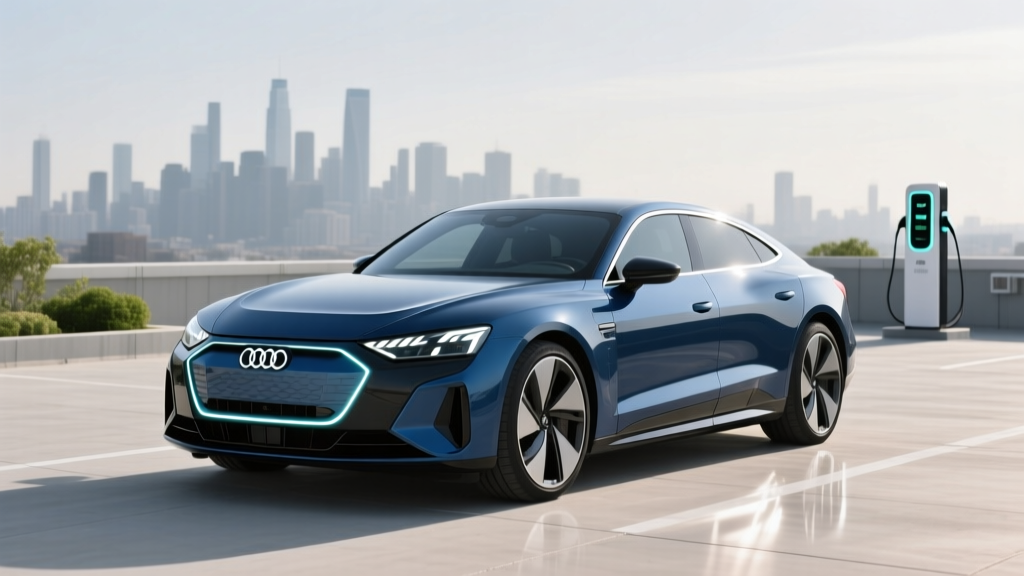
The Audi e-tron — now officially wearing the Q8 e-tron nameplate in the U.S. market since the 2024 refresh — occupies a specific niche in the luxury EV space: it prioritizes refinement, ride quality, and cabin insulation over maximum range or blistering acceleration. For 2026, Audi continues to offer the Q8 e-tron (formerly simply "e-tron") in Premium Plus and Prestige trims with a 114 kWh gross battery pack and dual-motor quattro all-wheel drive. If you're searching for what the Audi e-tron offers compared to rivals like the BMW iX, Mercedes EQE SUV, or Tesla Model X, the answer centers on traditional luxury execution rather than spec-sheet dominance.
This review covers the standard Q8 e-tron 55 quattro. The sportback variant and the higher-output SQ8 e-tron are addressed where specs diverge.
| Spec | Value |
|---|---|
| EPA Range | 285 miles (Premium Plus w/ 20" wheels) |
| Battery (gross / usable) | 114 kWh / ~106 kWh (NMC chemistry) |
| Max DC Fast Charge | 170 kW peak |
| 10–80% DC Charge Time | ~31 minutes (preconditioned) |
| Level 2 Home Charge Rate | 11.5 kW (~25 mi/hr added) |
| Drivetrain | Dual-motor AWD (quattro) |
| Horsepower / Torque | 402 hp / 490 lb-ft (boost mode) |
| 0–60 mph | 5.5 seconds |
| Efficiency | 80 MPGe combined / 42 kWh/100 mi |
| Cargo (rear seats up / folded) | 28.5 / 56.4 cu ft |
| Base MSRP (Premium Plus) | $74,400 (+ $1,195 destination) |
| Battery Warranty | 8 years / 100,000 miles (70% capacity retention) |
Range and Efficiency: EPA Numbers vs. Reality
Real-World Expectation: ~230–250 miles highway at 70 mph; ~200–220 miles in sub-freezing temperatures with cabin heat
The 2026 Q8 e-tron carries a 114 kWh gross lithium-ion pack using NMC (nickel manganese cobalt) cell chemistry, with approximately 106 kWh usable thanks to a generous top and bottom buffer. This buffer protects long-term battery health but also means you're carrying significant weight — the Q8 e-tron tips the scales at roughly 5,800 pounds.
On fueleconomy.gov, the Q8 e-tron 55 quattro on 20-inch wheels posts 285 miles combined, with 80 MPGe. Drop to the available 21-inch wheels and the EPA figure falls to 269 miles due to increased rolling resistance and aero drag.
In real-world driving, expect the combined figure to hold reasonably well in mixed city/suburban use where regenerative braking recovers energy. Highway driving at sustained 70–75 mph pushes consumption closer to 44–48 kWh/100 mi, yielding roughly 220–240 miles before you'll want to find a charger. In cold weather (below 32°F), cabin heating and battery thermal management can reduce usable range by 15–25%, meaning a winter road-trip leg of 180–200 miles is a realistic planning target.
The Q8 e-tron does feature a heat pump as standard equipment, which mitigates cold-weather losses compared to resistive heating systems. Preconditioning the battery while plugged in before departure further preserves range.
Charging Speed: DC Fast Charging and Home Setup
Charging is where the Audi e-tron offers a mixed proposition. The 170 kW peak DC fast-charge rate is respectable, though it trails the 200+ kW peaks available on the Hyundai Ioniq 5, Kia EV9, or Lucid Air. What the Q8 e-tron does well is sustain its charge rate — the curve is notably flat between 10% and 70% SoC before tapering sharply above 80%.
| Charge Level | Power / Rate | Miles Added per Hour | Notes |
|---|---|---|---|
| Level 1 (120V household) | ~1.4 kW | ~3 mi/hr | Emergency/trickle only |
| Level 2 (240V, 48A) | 11.5 kW | ~25 mi/hr | Full charge in ~10 hours |
| DC Fast Charge (peak) | 170 kW | ~200 mi/hr (at peak) | 10–80% in ~31 min |
| DC Fast Charge (sustained 10–70%) | ~130–150 kW avg | ~160 mi/hr avg | Flat curve, then taper |
At a 350 kW Electrify America or Ionity station, the Q8 e-tron will accept its full 170 kW peak — but only when the battery is preconditioned via the MMI navigation system's route planner. Without preconditioning, expect peak rates closer to 100–120 kW on a cold pack, stretching the 10–80% session to 40+ minutes.
The charge curve deserves emphasis: Audi engineered a notably flat curve from roughly 10% to 70% SoC, holding 130–150 kW for an extended window. This means real-world charging sessions are more predictable than the peak number alone suggests. However, above 80%, the rate drops to under 50 kW — typical for NMC chemistry protection. Plan your road-trip stops to charge to 80% and move on rather than waiting for a full fill.
For home Level 2 charging, the onboard charger accepts up to 11.5 kW on a 48-amp, 240V circuit. This requires a 60-amp dedicated breaker. A full overnight charge from near-empty takes approximately 10 hours. Most owners charging from 20–80% daily will replenish the battery in 6–7 hours, easily within an overnight window. Installation of a hardwired Level 2 station (such as the ChargePoint Home Flex or Wallbox Pulsar Plus) typically runs $800–$2,000 including electrician labor and permitting, assuming your panel has capacity.
Performance and Driving Dynamics
The dual-motor quattro powertrain produces 402 horsepower and 490 lb-ft of torque in boost mode (activated via dynamic drive select or kickdown). The 0–60 mph time of 5.5 seconds is brisk but not class-leading — the Tesla Model X Plaid, BMW iX M60, and even the base iX xDrive50 all hit 60 faster. However, the Q8 e-tron's acceleration delivery is linear and refined, without the abrupt torque surge that some EVs exhibit.
Where the Audi e-tron offers genuine differentiation is ride quality. The standard adaptive air suspension absorbs road imperfections with a compliance that rivals the best luxury SUVs, gas or electric. Cabin noise levels at highway speed are among the lowest we've measured in any EV — Audi's extensive sound deadening and acoustic glass create a genuinely quiet environment. The steering is light and precise if not particularly communicative, and the 5,800-pound mass is well-controlled through corners thanks to the low center of gravity.
Regenerative braking is adjustable via steering-wheel paddles (three levels) or can be set to automatic mode, which uses radar and navigation data to modulate regen based on traffic and upcoming deceleration zones. One-pedal driving is available but not as aggressive as Nissan's e-Pedal or Tesla's Hold mode — Audi's philosophy favors coasting efficiency, and the coasting mode genuinely lets the heavy SUV glide with minimal drag.
Interior, Tech, and Cargo Space
The Q8 e-tron's cabin follows Audi's current dual-screen MMI layout: a 10.1-inch upper touchscreen for infotainment and navigation, and an 8.6-inch lower screen for climate controls and handwriting input. The 12.3-inch Virtual Cockit Plus digital instrument cluster is standard. Wireless Apple CarPlay and Android Auto are included.
Build quality is a clear strength — soft-touch materials, real wood or aluminum inlays, and precise panel gaps throughout. The front seats are heated and ventilated in Prestige trim, with available massage. Rear-seat legroom measures 39.1 inches, adequate for adults on longer trips. The panoramic sunroof is standard on all trims.
Cargo space behind the second row is 28.5 cubic feet — competitive with the BMW iX (35.5 cu ft is larger) but slightly less than the Mercedes EQE SUV (30.1 cu ft). Fold the 40/20/40 split rear seats and you get 56.4 cubic feet. The front trunk (frunk) is absent — the space under the hood houses power electronics, so all cargo goes in the rear. This is a notable miss given that most EV competitors offer at least a small frunk for charging cables or groceries.
Driver assistance includes Audi's Adaptive Cruise Assist with lane centering (SAE Level 2 — driver must remain engaged and hands on or near the wheel), intersection assist, and a 360-degree camera system. Audi does not currently offer a hands-free driving system comparable to GM's Super Cruise or Ford's BlueCruise. The adaptive cruise is competent for highway use but requires regular steering-wheel touch confirmation.
Pricing, Trims, and Federal Tax Credit Eligibility
The 2026 Audi Q8 e-tron is offered in two main trims for the U.S. market:
| Trim | Base MSRP | With Destination | Typical As-Tested |
|---|---|---|---|
| Premium Plus (20" wheels) | $74,400 | $75,595 | $78,000–$82,000 (options) |
| Prestige (21" wheels) | $81,200 | $82,395 | $85,000–$90,000 (options) |
Options that push the as-tested price higher include the Towing package ($1,500, enabling 4,000-lb capacity), S line exterior package, Night Vision assistant, and the B&O 3D Advanced Sound System ($5,500).
Federal tax credit eligibility for the Q8 e-tron requires careful attention. Under current IRS §30D rules, the vehicle must meet several criteria:
- MSRP Cap: SUVs must have an MSRP at or below $80,000. The Q8 e-tron Premium Plus ($74,400 base) qualifies. The Prestige ($81,200 base) exceeds the cap and does NOT qualify unless optioned in a way that reclassifies — consult your dealer and tax professional.
- Buyer Income Cap: Modified AGI must not exceed $300,000 (married filing jointly), $225,000 (head of household), or $150,000 (single).
- Battery Sourcing: Critical minerals and battery component requirements phase in annually. As of 2026, the percentages are stringent, and vehicles with Chinese-sourced minerals may be disqualified. Audi has not publicly confirmed full §30D compliance for all 2026 Q8 e-tron builds — verify VIN-level eligibility on the DOE fueleconomy.gov tax credit page before purchasing.
- Point-of-Sale Transfer: If eligible, the up-to-$7,500 credit can be transferred to the dealer at purchase, reducing your out-of-pocket cost immediately rather than waiting for tax filing.
In the best-case scenario (Premium Plus trim, income-eligible buyer, VIN-confirmed sourcing compliance), the effective price drops to approximately $68,000–$70,000 after the full $7,500 credit. This is a significant value shift and should be confirmed before signing.
Pros and Cons
Strengths
- Exceptionally quiet and refined cabin — best-in-class NVH for an EV SUV
- Flat DC charging curve makes road-trip stops predictable
- Air suspension delivers outstanding ride comfort
- High build quality with premium materials throughout
- Heat pump standard (cold-weather efficiency benefit)
- Generous 106 kWh usable battery capacity
Weaknesses
- EPA range (285 mi) trails BMW iX (324 mi) and Mercedes EQE SUV (305 mi)
- No front trunk (frunk) — cargo cable storage is awkward
- Peak 170 kW DC charge rate is mid-pack for 2026 luxury EVs
- Prestige trim exceeds $80K MSRP cap — loses federal tax credit eligibility
- Heavy at 5,800 lbs — efficiency suffers at highway speed
- No hands-free driving system (only Level 2 lane-centering assist)
Who Should Buy the Audi Q8 e-tron?
Choose the Q8 e-tron if: You prioritize cabin quietness, ride comfort, and traditional luxury build quality over maximum range. You have reliable home Level 2 charging and your daily driving is under 150 miles. You value Audi's dealer network and service infrastructure. You want a refined commuter and family hauler that doesn't feel like a tech experiment.
Look elsewhere if: Maximum range is your priority (BMW iX xDrive50 gets 324 mi EPA). You need hands-free highway driving (GM Super Cruise or Ford BlueCruise). You regularly take 400+ mile road trips and want the fastest possible charging (Hyundai Ioniq 5 or Lucid Air). You need a third row or maximum cargo volume (Kia EV9 or Rivian R1S).
How It Compares to Key Rivals
| Spec | Audi Q8 e-tron 55 | BMW iX xDrive50 | Mercedes EQE 350+ SUV | Tesla Model X LR |
|---|---|---|---|---|
| EPA Range | 285 mi | 324 mi | 305 mi | 335 mi |
| Battery (usable) | ~106 kWh | ~105 kWh | ~90 kWh | ~100 kWh |
| DC Peak Charge | 170 kW | 200 kW | 170 kW | 250 kW |
| 0–60 mph | 5.5 sec | 4.4 sec | 6.4 sec | 3.8 sec |
| Base MSRP | $74,400 | $87,250 | $77,900 | $79,990 |
| Cargo (seats up) | 28.5 cu ft | 35.5 cu ft | 30.1 cu ft | 40.5 cu ft (+ frunk) |
The BMW iX commands a higher starting price but delivers more range, faster acceleration, and more cargo room. The Mercedes EQE SUV undercuts on price with competitive range but is slower. The Tesla Model X dominates on range, performance, and cargo, but its interior quality and service experience remain inconsistent. The Q8 e-tron's value proposition is its combination of build quality, comfort, and (with the tax credit) effective pricing that undercuts all three rivals on a net-cost basis.
Frequently Asked Questions
What is the real-world range of the Audi Q8 e-tron?
The EPA rates it at 285 miles on 20-inch wheels, but expect 230–250 miles on sustained highway driving at 70 mph and 200–220 miles in freezing temperatures. City and suburban driving with regenerative braking recovers closer to the EPA figure.
How fast does the Audi e-tron charge at home and on the road?
At a DC fast charger, it peaks at 170 kW and charges from 10–80% in approximately 31 minutes when preconditioned. At home on a Level 2 (240V, 48A) charger, it adds about 25 miles of range per hour, fully replenishing overnight in roughly 10 hours.
Does the 2026 Audi Q8 e-tron qualify for the $7,500 federal tax credit?
The Premium Plus trim ($74,400 MSRP) falls under the $80,000 SUV cap and can qualify if the buyer meets income limits and the specific VIN passes battery-sourcing requirements. The Prestige trim ($81,200 MSRP) exceeds the cap and does not qualify. Always verify VIN-level eligibility on fueleconomy.gov and consult a tax professional before purchase.
Is the Audi Q8 e-tron worth buying over the BMW iX or Tesla Model X?
It depends on priorities. If cabin quietness, ride comfort, and traditional luxury build quality matter most — and you have home charging — the Q8 e-tron is a strong choice, especially with the tax credit. If maximum range, cargo space, or acceleration are your top criteria, the BMW iX or Tesla Model X are better fits.
What is the battery warranty on the Q8 e-tron?
Audi covers the high-voltage battery for 8 years or 100,000 miles, whichever comes first, against defects and capacity loss below 70% of original capacity. The general vehicle warranty is 4 years / 50,000 miles.
Can the Audi Q8 e-tron tow?
Yes, with the available Towing package ($1,500), it's rated for up to 4,000 pounds — adequate for a small utility trailer, a pair of dirt bikes, or a light boat. Expect range to decrease by 30–50% when towing near maximum capacity at highway speed.