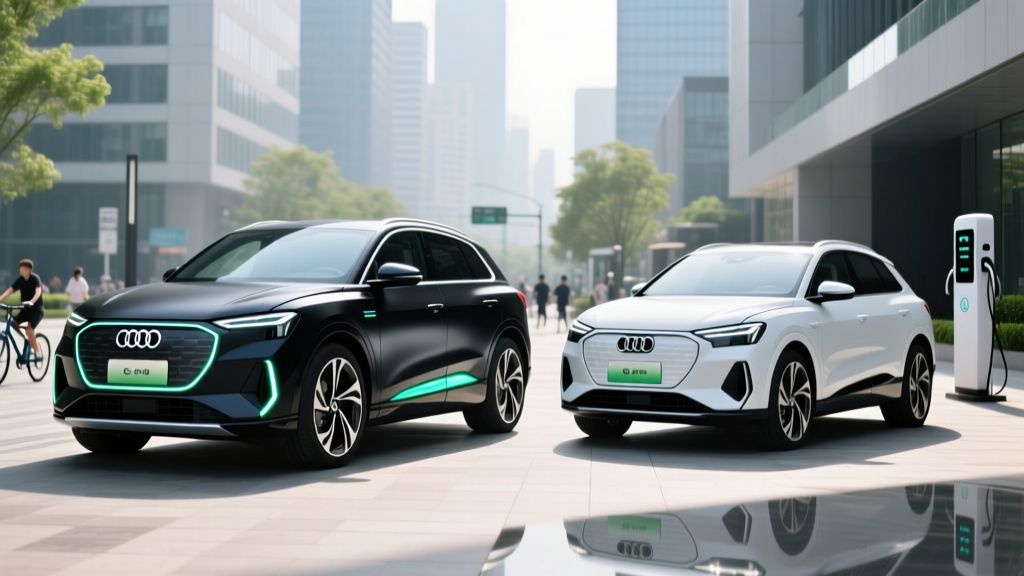
Quick Verdict: A Luxury Cruiser, Not a Drag Strip Star
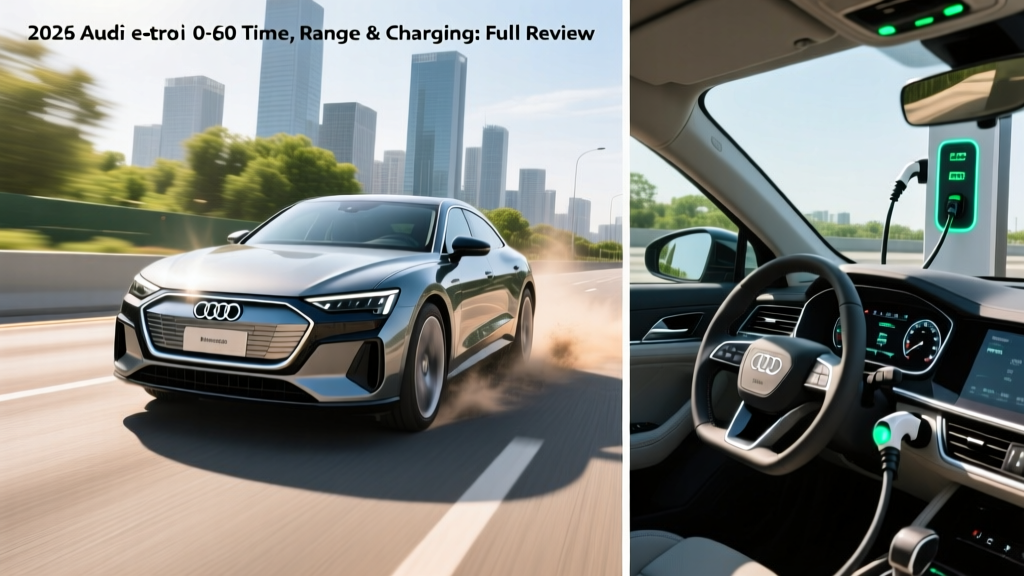
Search for "audi e tron 0-60" and you'll find a number that tells only part of the story. The 2026 Audi e-tron (officially the Q8 e-tron in Audi's updated naming convention) hits 60 mph in 5.5 seconds in its standard dual-motor configuration, or a brisker 5.0 seconds in the Sportback variant with the S-line package. But reducing this luxury electric SUV to a single acceleration figure misses what it actually does well: delivering a whisper-quiet, air-suspended, tech-laden cabin experience that rivals anything from BMW or Mercedes-Benz in the electric space.
With an EPA-estimated 255 miles of range, a usable 106 kWh battery (NMC chemistry), and peak DC fast-charging at 170 kW, the Q8 e-tron prioritizes refined touring over headline-grabbing specs. It's a deliberate choice — and one that makes sense for a specific buyer. Here's every number that matters.
Full Specifications at a Glance
| Spec | Q8 e-tron SUV | Q8 e-tron Sportback |
|---|---|---|
| EPA Range | 255 miles | 265 miles |
| Battery (Usable) | 106 kWh (NMC) | 106 kWh (NMC) |
| Drivetrain | Dual-motor AWD (quattro) | Dual-motor AWD (quattro) |
| Horsepower | 402 hp | 402 hp |
| Torque | 490 lb-ft | 490 lb-ft |
| 0-60 mph | 5.5 seconds | 5.0 seconds |
| Top Speed | 124 mph | 124 mph |
| Max DC Charge Rate | 170 kW | 170 kW |
| 10-80% DC Charge | ~31 minutes | ~31 minutes |
| Level 2 Charge Rate | 11.5 kW (~33 mi/hr) | 11.5 kW (~33 mi/hr) |
| MPGe (Combined) | 81 MPGe | 84 MPGe |
| Efficiency | 41 kWh/100 mi | 39 kWh/100 mi |
| Cargo (rear seats up) | 28.5 cu ft | 27.2 cu ft |
| Cargo (rear seats folded) | 57.0 cu ft | 54.5 cu ft |
| Towing Capacity | 4,000 lbs | 4,000 lbs |
| Base MSRP | $75,600 | $78,200 |
Source: EPA fueleconomy.gov, Audi USA specifications.
Real-World Range: What the EPA Sticker Doesn't Tell You
EPA Estimate: 255 miles (SUV) / 265 miles (Sportback)
Real-World Highway (70-75 mph): ~215-230 miles
Real-World City/Mixed: ~240-255 miles
Cold Weather (below 32°F): ~185-210 miles (20-28% reduction)
The Q8 e-tron's 106 kWh usable battery (114 kWh gross, NMC lithium-ion chemistry) is one of the largest in its class. That capacity is necessary because this is a heavy vehicle — curb weight exceeds 5,700 lbs — and Audi tunes the powertrain for comfort and quiet rather than hyper-efficiency. At 41 kWh per 100 miles in the SUV body, you're consuming noticeably more energy per mile than a Tesla Model X (37 kWh/100 mi) or a BMW iX xDrive50 (38 kWh/100 mi).
In practical terms, highway driving at sustained 70-75 mph speeds will net you roughly 215 to 230 miles before you need to find a charger. City driving with regenerative braking doing more work gets you closer to the EPA sticker. The critical number for road-trip planning: expect to stop every 180-200 miles in mixed conditions to maintain a comfortable buffer, which aligns well with typical rest-stop spacing on major interstates.
Cold weather is the Q8 e-tron's most significant range vulnerability. Without a heat pump as standard equipment on all trims (it's included on Premium Plus and Prestige), base Premium trim owners in northern climates should budget for a 20-28% range loss in sub-freezing temperatures. Preconditioning the battery while plugged in mitigates some of this loss — always schedule departure times through the MMI system when charging at home.
Charging Speed: DC Fast and Home Level 2
| Charging Level | Power | Miles Added Per Hour | Notes |
|---|---|---|---|
| Level 1 (120V household) | 1.4 kW | ~3-4 mi/hr | Emergency/trickle only; full charge in ~75+ hours |
| Level 2 (240V home) | 11.5 kW | ~33 mi/hr | Full 10-100% in ~10 hours; ideal overnight charge |
| DC Fast Charge (peak) | 170 kW | ~350 mi/hr (at peak) | 10-80% in ~31 minutes |
| DC Fast Charge (sustained avg) | ~120-130 kW | — | Actual average across the 10-80% curve |
The Q8 e-tron's 170 kW peak DC fast-charging capability is respectable but no longer class-leading. Competitors like the Hyundai Ioniq 5 (peak 240 kW on 800V architecture) and the Lucid Gravity (peak 300+ kW) have moved the goalposts. However, Audi's charge curve is notably flat — meaning the vehicle sustains a high charge rate for a longer portion of the session rather than spiking and immediately tapering. The result: a 10-80% session in roughly 31 minutes is competitive with vehicles boasting higher peak numbers but more aggressive taper curves.
On a 350 kW Electrify America or Tesla Supercharger (with NACS adapter, which Audi began offering for 2025+ models), you'll see the Q8 e-tron peak near 170 kW between roughly 10-40% state of charge, then step down to around 120 kW through the 40-65% range, and taper further above 70%. This is normal lithium-ion charging behavior — the battery management system protects cell longevity by reducing current as voltage rises.
For home charging, the onboard 11.5 kW AC charger is a genuine strength. On a properly installed 48-amp Level 2 circuit (hardwired, 60-amp breaker), you'll add roughly 33 miles of range per hour, meaning a depleted battery reaches full overnight in about 10 hours. This is faster than the 7.7 kW chargers found in some competitors and means most owners will start every morning with a full battery.
Installation note: A 48-amp Level 2 home charger typically requires a 60-amp dedicated circuit. Budget $800-$2,500 for professional installation depending on your electrical panel's capacity and the distance from panel to garage. Homes with older 100-amp panels may need a $2,000-$4,000 panel upgrade. Always consult a licensed electrician for final specifications.
Performance: The 0-60 Story and Driving Dynamics
The 2026 Q8 e-tron's dual-motor quattro all-wheel-drive system produces 402 horsepower and 490 lb-ft of torque in Boost mode (engaged via the drive-select system for short bursts). The standard SUV achieves a 5.5-second 0-60 mph time, while the Sportback's slightly lighter weight and more aerodynamic profile shave that to 5.0 seconds. These are respectable numbers, but context matters:
- Tesla Model X Long Range: 3.8 seconds 0-60 (670 hp)
- BMW iX xDrive50: 4.4 seconds 0-60 (516 hp)
- Mercedes EQE SUV 350 4MATIC: 6.4 seconds 0-60 (288 hp)
- Rivian R1S Dual-Motor: 4.5 seconds 0-60 (533 hp)
The Q8 e-tron sits in the middle of this pack — quicker than the Mercedes but notably behind the Tesla and BMW. If straight-line performance is a priority, this isn't the EV for you. If what you want is effortless highway merging, confident passing, and a powertrain that never feels strained in daily driving, the 402 hp and instant electric torque deliver exactly that.
The driving experience is where the Q8 e-tron earns its luxury badge. Standard adaptive air suspension smooths out broken pavement with a composure that feels genuinely premium. The steering is light and precise rather than sporty, the cabin isolation from wind and road noise is exceptional, and the regenerative braking system offers three levels of deceleration selectable via steering-wheel paddles. Audi does not offer true one-pedal driving (the vehicle won't come to a complete stop via regen alone), which is a deliberate choice that some EV converts find frustrating but that traditional luxury-car buyers often prefer.
Pricing, Trims, and Federal Tax Credit Eligibility
| Trim | Body Style | MSRP | Est. After §30D Credit* |
|---|---|---|---|
| Premium | SUV | $75,600 | $68,100 |
| Premium Plus | SUV | $81,300 | $73,800 |
| Prestige | SUV | $88,400 | $80,900 |
| Premium | Sportback | $78,200 | $70,700 |
| Premium Plus | Sportback | $83,900 | $76,400 |
| Prestige | Sportback | $91,000 | $83,500 |
*Estimated after $7,500 federal tax credit. Eligibility is NOT automatic — see requirements below.
- MSRP Cap: SUVs/vans/pickups must have MSRP ≤ $80,000. The Q8 e-tron Prestige trims ($88,400 / $91,000) EXCEED this cap and are NOT eligible.
- Buyer Income Cap: Modified AGI must not exceed $300,000 (joint), $225,000 (head of household), or $150,000 (single).
- Battery Sourcing: Critical minerals and battery components must meet phased-in percentage thresholds from US or FTA-partner countries. Verify current-year compliance on IRS.gov qualified vehicle list.
- Point-of-Sale Transfer: Eligible buyers can transfer the credit to the dealer at purchase, reducing the out-of-pocket price immediately rather than waiting for a tax refund.
- Final Assembly: Must be assembled in North America. The Q8 e-tron is assembled in Brussels, Belgium — this may disqualify it from the new-vehicle §30D credit. Always verify on the IRS qualified vehicle list before purchasing.
Consult a tax professional. Rules are subject to change. Source: IRS.gov
This is where Q8 e-tron buyers must pay close attention. The vehicle's Brussels, Belgium assembly location has been a persistent challenge for §30D eligibility, which requires North American final assembly. Audi's Premium and Premium Plus trims fall under the $80,000 SUV MSRP cap, but assembly location may override price eligibility. Always check the current IRS qualified clean vehicle list before committing to a purchase.
If the new-vehicle credit is unavailable due to assembly location, the used EV tax credit (up to $4,000 or 30% of sale price, whichever is lower, for vehicles under $25,000) may apply to pre-owned Q8 e-trons — a potentially compelling path for buyers open to certified pre-owned.
Interior, Tech, and Daily Livability
The Q8 e-tron's cabin is where Audi's luxury positioning justifies the price. The dual-screen MMI touch response system (10.1-inch upper, 8.6-inch lower) handles infotainment and climate controls respectively, with haptic feedback on presses. The 12.3-inch Virtual Cockit digital instrument cluster is standard, and a head-up display is included on Premium Plus and above.
Passenger space is generous for a midsize luxury SUV: 40.0 inches of front legroom and 38.1 inches of rear legroom accommodate tall adults comfortably in both rows. The rear seat is a true three-across bench, though the center position is best for shorter trips due to the floor tunnel (a remnant of the platform's versatility).
Cargo capacity is competitive: 28.5 cubic feet behind the second row in the SUV (57.0 cu ft with seats folded) and slightly less in the Sportback due to the sloping roofline. There is no front trunk (frunk) — the space under the hood houses electronics and the HVAC system.
Driver assistance includes Audi's Adaptive Cruise Assist with lane centering (SAE Level 2 — driver supervision required at all times), intersection assist, and a surround-view camera system. Audi does not currently offer a hands-free highway driving system comparable to GM's Super Cruise or Ford's BlueCruise, which is a notable gap at this price point.
Notable drawbacks: The dual-screen climate control interface requires looking down to adjust temperature, which some drivers find distracting. The MMI system, while feature-rich, has a steeper learning curve than Tesla's minimalist interface or BMW's iDrive. And the absence of a frunk means less total storage than competitors like the Rivian R1S.
Warranty and Long-Term Ownership
Audi backs the Q8 e-tron with a competitive warranty package:
- Limited Vehicle Warranty: 4 years / 50,000 miles
- Battery Warranty: 8 years / 100,000 miles (covers defects and capacity loss below 70% of original capacity)
- Powertrain Warranty: 4 years / 50,000 miles
- Complimentary Maintenance: 1 year / 10,000 miles (first scheduled service)
- Roadside Assistance: 4 years / unlimited miles
The battery warranty's 70% capacity retention threshold over 8 years is industry-standard, matching BMW, Mercedes, and Tesla. The 106 kWh NMC battery pack, if it ever requires out-of-warranty replacement, would cost an estimated $18,000-$25,000 based on current NMC cell pricing and labor — a sobering figure that underscores the importance of the warranty period.
Long-term NMC degradation data from earlier e-tron models (2019-2023) suggests these batteries hold up well, with most owners reporting 5-8% capacity loss over the first 60,000 miles. Audi's conservative battery management (a large buffer between gross and usable capacity — roughly 8 kWh) protects the cells by preventing true 0% or 100% states at the cell level.
Who Should Buy the Q8 e-tron — And Who Shouldn't
- You prioritize ride comfort, cabin quietness, and build quality over maximum range or acceleration
- You want a luxury brand badge with a dealer network and service infrastructure
- Your daily commute is under 100 miles round-trip and you can charge at home
- You value air suspension and a traditional luxury interior over minimalist tech
- You need 4,000-lb towing capacity for a small boat or trailer
- Maximum range is your top priority (consider the Tesla Model X or Lucid Gravity)
- You want sub-4-second 0-60 performance (Tesla Model X Plaid, Rivian R1S Quad-Motor)
- You need hands-free highway driving (GM Super Cruise or Ford BlueCruise vehicles)
- Federal tax credit eligibility is critical to your purchase math (assembly location is a risk)
- You want the lowest cost per mile — efficiency is below average for the class
Frequently Asked Questions
What is the real-world range of the Audi Q8 e-tron?
The EPA rates the Q8 e-tron SUV at 255 miles and the Sportback at 265 miles. In real-world highway driving at 70-75 mph, expect 215-230 miles. In cold weather below freezing, plan for 185-210 miles. City and mixed driving with regenerative braking gets you closest to the EPA figures.
How fast does the Audi e-tron charge?
On a DC fast charger, the Q8 e-tron peaks at 170 kW and charges from 10-80% in approximately 31 minutes. On a home Level 2 charger (11.5 kW), it adds about 33 miles of range per hour, reaching a full charge overnight in roughly 10 hours.
Does the Audi Q8 e-tron qualify for the federal EV tax credit?
Eligibility is uncertain. The §30D credit requires North American final assembly, and the Q8 e-tron is built in Brussels, Belgium. Premium and Premium Plus trims fall under the $80,000 SUV MSRP cap, but assembly location likely disqualifies the vehicle. Always verify on the IRS qualified vehicle list before purchasing. A tax professional can advise on your specific situation.
Is the Audi Q8 e-tron worth buying vs. competitors?
It depends on your priorities. For ride quality, cabin refinement, and luxury-brand ownership, the Q8 e-tron is excellent. For range, the BMW iX xDrive50 (324 mi EPA) is superior. For performance, the Tesla Model X (3.8s 0-60) dominates. For tax-credit certainty and value, the Rivian R1S (assembled in Illinois, credit-eligible) is compelling. The Q8 e-tron wins on comfort and build quality but compromises on efficiency and charging speed.
What are the biggest pros and cons?
Pros: Exceptional ride comfort via air suspension, whisper-quiet cabin, premium build quality, 4,000-lb towing, strong home Level 2 charging (11.5 kW), spacious rear seat.
Cons: Below-average efficiency (41 kWh/100 mi), no frunk, no hands-free driving system, DC charging speed trails newer competitors, federal tax credit eligibility is unlikely due to foreign assembly, high starting price.
How does the Audi e-tron 0-60 time compare to other luxury EV SUVs?
At 5.5 seconds (SUV) or 5.0 seconds (Sportback), the Q8 e-tron is mid-pack. It's quicker than the Mercedes EQE SUV 350 4MATIC (6.4s) but slower than the BMW iX xDrive50 (4.4s), Tesla Model X Long Range (3.8s), and Rivian R1S Dual-Motor (4.5s). For daily driving, 5.5 seconds is more than adequate — the instant torque makes it feel quicker than the number suggests in around-town driving.