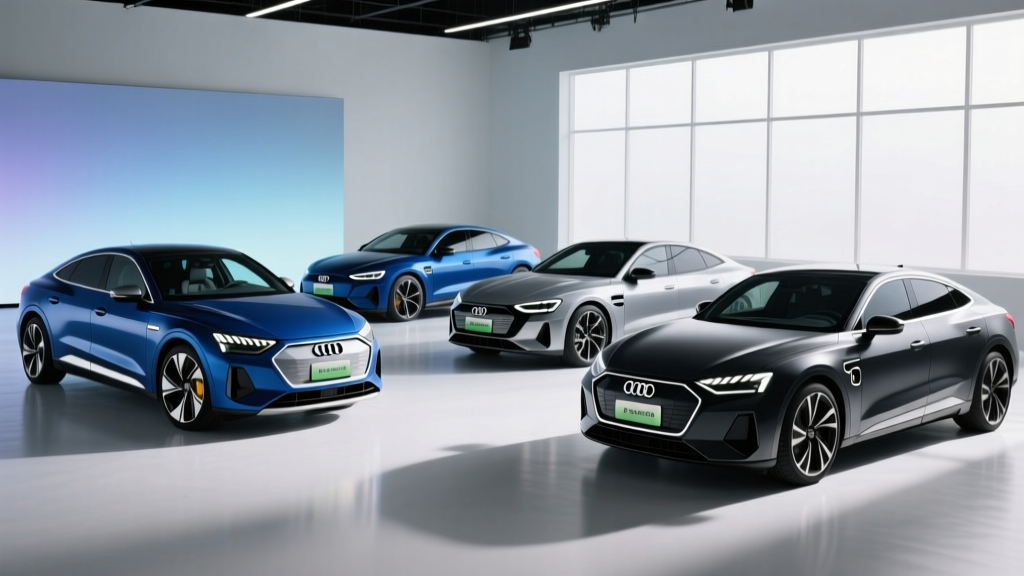
Audi's 2026 all-electric lineup spans three core models — the compact Q4 e-tron, the midsize Q6 e-tron, and the performance-focused e-tron GT — covering price points from roughly $50,000 to over $130,000. EPA range across the lineup sits between 242 and 321 miles depending on model and trim, DC fast-charging speeds reach up to 270 kW on the Q6 e-tron, and federal tax-credit eligibility varies by model, MSRP caps, and battery-sourcing rules under IRS §30D. This guide breaks down real-world ownership costs, charging practicality, and how Audi's EVs stack up against both gas alternatives and rival electrics.
Quick Answer: Should You Buy an Audi All-Electric in 2026?
If you want a premium EV with strong build quality, a refined ride, and access to Electrify America's DC fast-charging network, Audi's lineup delivers — but expect to pay a luxury premium and verify §30D tax-credit eligibility before committing. The Q6 e-tron is the sweet spot for range (up to 321 mi EPA) and charging speed (270 kW peak). The Q4 e-tron is the entry point near $50K. The e-tron GT is for performance buyers who prioritize 0-60 times over practicality.
Audi's 2026 All-Electric Lineup at a Glance
| Model | Base MSRP | EPA Range | Battery (kWh usable) | Peak DC Charge | 10–80% Time | 0–60 mph | Horsepower |
|---|---|---|---|---|---|---|---|
| Q4 e-tron (Premium) | $49,800 | 242–265 mi | 77 kWh (NMC) | 175 kW | ~28 min | 7.9 s | 201 (RWD) / 295 (quattro) |
| Q6 e-tron (Premium) | $63,800 | 308–321 mi | 94.4 kWh (NMC) | 270 kW | ~21 min | 5.8 s | 335 (RWD) / 422 (quattro) |
| e-tron GT (Premium) | $106,900 | 242–270 mi | 83.7 kWh (NMC) | 270 kW | ~22 min | 3.9 s (GT) / 3.1 s (RS) | 522 (GT) / 637 (RS) |
All three models use NMC (nickel-manganese-cobalt) lithium-ion battery packs. Audi pairs them with an 8-year/100,000-mile battery warranty guaranteeing at least 70% capacity retention, per Audi USA's official specifications. Note that real-world range typically falls 10–20% below EPA estimates during sustained highway driving at 75+ mph, and cold-weather operation (below 32°F) can reduce range by an additional 15–30% due to cabin heating and reduced battery efficiency.
Real-World Range vs. EPA Stickers: What to Actually Expect
Range Reality Check
Q4 e-tron: EPA 265 mi (RWD) → expect ~220–240 mi highway, ~180–200 mi in freezing temps.
Q6 e-tron: EPA 321 mi (RWD) → expect ~270–290 mi highway, ~220–250 mi in freezing temps.
e-tron GT: EPA 270 mi → expect ~230–250 mi highway, ~180–210 mi in freezing temps.
The Q6 e-tron benefits from Audi's newest PPE (Premium Platform Electric) architecture with an 800-volt electrical system, enabling its class-leading 270 kW peak charge rate. However, that peak rate only holds between roughly 10% and 40% State of Charge (SoC). Above 60%, the charge curve tapers significantly — from 270 kW down to under 100 kW past 80%. This is standard physics for NMC cells: charging fast at high SoC generates excess heat and accelerates degradation, so the Battery Management System (BMS) restricts current.
For the Q4 e-tron, built on the older MEB platform at 400 volts, the 175 kW peak is more modest but still competitive for its segment. A 10–80% session takes approximately 28 minutes on a capable DC fast charger. The critical ownership insight: if your typical trips stay under 200 miles round-trip, the Q4 e-tron's range is perfectly adequate. If you road-trip frequently or live in a cold climate, the Q6 e-tron's extra 56 miles of EPA range and faster charging curve meaningfully reduce stop duration.
Charging at Home and on the Road: Costs and Setup
| Charging Level | Power (kW) | Approx. Miles Added/Hour | Typical Cost | Best For |
|---|---|---|---|---|
| Level 1 (120V outlet) | 1.2–1.4 kW | 3–5 mi/hr | $0.12–0.18/kWh (home rate) | Overnight top-ups, PHEVs |
| Level 2 (240V, home) | 7.2–11.5 kW | 20–35 mi/hr | $0.12–0.18/kWh (home rate) | Daily full charges |
| DC Fast Charge | 50–270 kW | 150–500+ mi/hr | $0.30–0.55/kWh (public) | Road trips, quick stops |
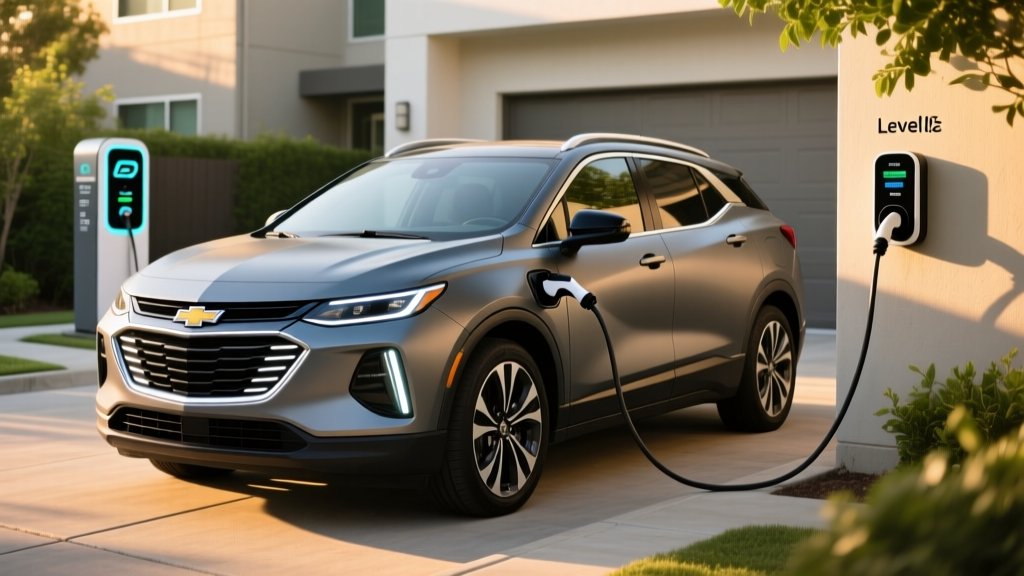
All three Audi EVs accept Level 2 AC charging at up to 11.5 kW (48 amps), meaning a full 0–100% home charge takes roughly 8–10 hours depending on the battery size. This is sufficient for overnight charging on a properly installed Level 2 home station.
Home Charger Installation Costs
| Item | Cost Range | Notes |
|---|---|---|
| Level 2 EVSE hardware | $300–$700 | ChargePoint, Emporia, Wallbox |
| Electrician (240V/50A circuit) | $600–$2,000 | Varies by panel distance, conduit run |
| Electrical panel upgrade (if needed) | $1,500–$3,500 | Required if panel is 100A or less |
| Permit/inspection | $50–$250 | Local jurisdiction dependent |
| Total (no panel upgrade) | $950–$2,950 | Most homes with 200A service |
| Total (with panel upgrade) | $2,450–$6,450 | Older homes with 100A service |
Audi provides three years of complimentary DC fast charging at Electrify America stations (capped at 800 kWh/year for the Q4 e-tron and 1,200 kWh/year for the Q6 and e-tron GT). This substantially offsets road-trip fueling costs during the initial ownership period. After the complimentary period expires, expect Electrify America pricing of $0.35–$0.55/kWh depending on your region and whether you subscribe to their Pass+ plan ($4/month for reduced per-kWh rates).
Audi All-Electric vs. Gas and Hybrid Alternatives
| Metric | Q6 e-tron quattro | Audi Q5 45 TFSI (Gas) | Audi Q5 PHEV (55 TFSI e) |
|---|---|---|---|
| Base MSRP | $67,200 | $47,200 | $57,900 |
| EPA Range / MPG | 308 mi / 95 MPGe | 25 MPG combined | 26 mi electric + 28 MPG |
| Fuel/Energy Cost (5 yr, 75K mi) | $4,800–$7,200 | $10,500–$12,500 | $6,800–$8,500 |
| Maintenance (5 yr) | $1,200–$1,800 | $3,500–$4,500 | $3,000–$4,000 |
| Estimated Insurance (5 yr) | $11,000–$14,000 | $8,500–$11,000 | $9,000–$12,000 |
| Federal Tax Credit (§30D) | Up to $7,500* | $0 | Up to $7,500* |
* §30D eligibility depends on MSRP caps ($80,000 for SUVs), buyer income limits ($300K joint / $150K single), and battery-sourcing requirements. Verify current rules at IRS.gov. The Q6 e-tron quattro at $67,200 falls under the $80K SUV cap, but credit eligibility depends on battery component and critical-mineral sourcing, which Audi has not fully publicly confirmed for all trims.
The 5-year energy cost advantage for the Q6 e-tron is significant — roughly $4,000–$6,000 less than the gas Q5 when charging primarily at home on average U.S. electricity rates ($0.16/kWh). Maintenance savings add another $2,000+ because EVs eliminate oil changes, transmission fluid, spark plugs, and exhaust system repairs. However, EV insurance premiums run 15–30% higher than equivalent gas models due to higher repair costs after collisions and battery replacement expense. Factor this into your total cost of ownership.
Per fueleconomy.gov, the Q6 e-tron achieves 95 MPGe combined. If you drive 15,000 miles annually and charge at home, your yearly electricity cost is approximately $900–$1,100. The gas Q5 at 25 MPG combined and $3.50/gallon costs roughly $2,100/year in fuel.
Federal Tax Credits and Incentives: What Applies in 2026
§30D Clean Vehicle Credit Requirements (2026)
- MSRP Cap: ≤ $80,000 for SUVs/pickups/vans; ≤ $55,000 for sedans (e-tron GT exceeds the sedan cap at $106,900)
- Buyer Income Cap: MAGI ≤ $300,000 (joint) / $225,000 (head of household) / $150,000 (single)
- Battery Sourcing: Percentage thresholds for critical minerals and battery components manufactured in North America or FTA-partner nations increase annually
- Point-of-Sale Transfer: You can transfer the credit to the dealer at purchase for an immediate price reduction — or claim it on your tax return
- FEOC Restriction: Vehicles with battery components from a "foreign entity of concern" (e.g., certain Chinese suppliers) are disqualified
For 2026, the Q4 e-tron (SUV, MSRP $49,800) and Q6 e-tron (SUV, MSRP $63,800) both fall under the $80,000 SUV cap. The e-tron GT, classified as a sedan with a $106,900 starting price, exceeds the $55,000 sedan cap and does not qualify for §30D regardless of buyer income. Always confirm the specific VIN's eligibility through the IRS portal or your dealer at the time of purchase, as battery-sourcing compliance can change between model years and production batches.
Common Misconceptions About Audi's Electric Vehicles
| Myth | Fact |
|---|---|
| "Audi EVs use Tesla Superchargers." | Audi uses the CCS1 connector and charges primarily on Electrify America. Audi has announced NACS adapter availability for Supercharger access, but native NACS ports are not yet standard on 2026 models. |
| "EV batteries need replacing every 5 years." | NMC batteries in Audi EVs are warrantied for 8 years/100,000 miles at ≥70% capacity. Industry data shows typical degradation of 8–12% over 150,000 miles with normal use. |
| "Home charging requires a panel upgrade." | Most homes with 200A service can add a 50A/240V circuit without a panel upgrade. Only older homes with 100A panels typically need an upgrade ($1,500–$3,500). |
| "All Audi EVs qualify for the $7,500 tax credit." | Only models under the MSRP cap with compliant battery sourcing qualify. The e-tron GT does not qualify due to its $106,900 MSRP exceeding the $55,000 sedan limit. |
| "EVs cost more to insure and always will." | EV insurance is currently 15–30% higher, but the gap is narrowing as collision repair data matures and EV market share grows. |
Decision Framework: Which Audi All-Electric Is Right for You?
Choose the Q4 e-tron if:
- Your budget is under $55,000 before incentives
- Your daily commute is under 80 miles round-trip
- You want the lowest entry price into Audi's EV lineup
- You rarely take road trips exceeding 200 miles
Choose the Q6 e-tron if:
- You need 300+ miles of EPA range for frequent road trips
- You want the fastest DC charging in Audi's lineup (270 kW)
- You want the newest PPE platform with the latest infotainment and driver-assist tech
- Your budget allows $64,000–$75,000 before incentives
Choose the e-tron GT if:
- Performance (sub-4-second 0–60) is your top priority
- You don't need the §30D tax credit (MSRP exceeds the sedan cap)
- You prefer a grand-tourer driving position over SUV practicality
- Your budget exceeds $100,000
Skip Audi's EV lineup and consider alternatives if:
- You need NACS native charging for seamless Tesla Supercharger access (look at Tesla, Rivian, or 2026+ Hyundai/Kia models)
- You want LFP battery chemistry for maximum cycle life and daily 100% charging tolerance (Tesla Model Y, Ford Mustang Mach-E Select)
- Your budget is under $40,000 (consider Chevrolet Equinox EV or used EV market)
First-Time EV Buyer Checklist
If this is your first electric vehicle, verify these before signing:
- Home charging access: Do you have a garage or driveway where a Level 2 charger can be installed? Apartment and condo dwellers should check building policies and shared-charging availability before purchasing.
- Electrical panel capacity: Have an electrician assess whether your panel can support a 50A/240V circuit. Get a written quote before committing to the car.
- Climate impact: If you live where winter temperatures regularly drop below freezing, budget 20–30% less range than the EPA sticker and consider a model with a heat pump (the Q6 e-tron includes one standard; the Q4 e-tron's availability varies by trim).
- Insurance quotes: Get quotes for the specific trim before purchasing — EV premiums vary significantly by insurer and model.
- Tax-credit confirmation: Use the IRS VIN-check tool or confirm with your dealer that the specific vehicle qualifies for §30D at point of sale.
- Charging network access: Download the Electrify America app and check DC fast-charger density along your most common road-trip routes.
Frequently Asked Questions
Does Audi make a fully electric SUV?
Yes. Audi offers two all-electric SUVs for 2026: the compact Q4 e-tron (starting at $49,800, up to 265 mi EPA range) and the midsize Q6 e-tron (starting at $63,800, up to 321 mi EPA range). Both are available in rear-wheel-drive and quattro all-wheel-drive configurations.
How long does it take to charge an Audi EV at home?
On a Level 2 home charger (11.5 kW), the Q4 e-tron charges from 0–100% in approximately 8 hours, the Q6 e-tron in about 10 hours, and the e-tron GT in roughly 9 hours. Most owners charge overnight and wake up to a full battery. On a standard 120V outlet (Level 1), expect 3–5 miles of range per hour of charging — adequate only for very low daily mileage or plug-in hybrids.
What is the real-world range of the Audi Q6 e-tron?
The EPA rates the Q6 e-tron RWD at 321 miles. In real-world highway driving at 70–80 mph, expect 270–290 miles. In freezing temperatures with cabin heating, expect 220–250 miles. These figures assume a full charge to 100% and driving to approximately 5% remaining SoC.
Are Audi EVs expensive to maintain?
No. EV maintenance is significantly cheaper than gas vehicles. Over 5 years/75,000 miles, expect $1,200–$1,800 for an Audi EV (cabin air filters, brake fluid, tire rotation, wiper blades) versus $3,500–$4,500 for a comparable gas Audi Q5 (oil changes, transmission service, spark plugs, belts). EVs also experience less brake wear due to regenerative braking.
Can I charge an Audi EV at a Tesla Supercharger?
Not natively. Audi EVs use the CCS1 connector. Tesla Superchargers use the NACS connector. Audi has indicated that a NACS adapter will become available for Supercharger access, but as of early 2026, Audi owners primarily rely on Electrify America and other CCS-compatible networks. Check with your dealer for adapter availability and compatibility for your specific model year.
What happens if the battery degrades?
Audi warranties its EV batteries for 8 years or 100,000 miles, guaranteeing at least 70% of original capacity. If your battery falls below this threshold within the warranty period, Audi will repair or replace it at no cost. Out-of-warranty battery replacement costs are estimated at $15,000–$25,000 depending on the model, though industry data suggests most NMC packs retain 85–90% capacity at 150,000 miles under normal use.
Sources: Audi USA, fueleconomy.gov (EPA), IRS §30D Clean Vehicle Credit.