Quick Answer: Is There an Audi A8 Electric?
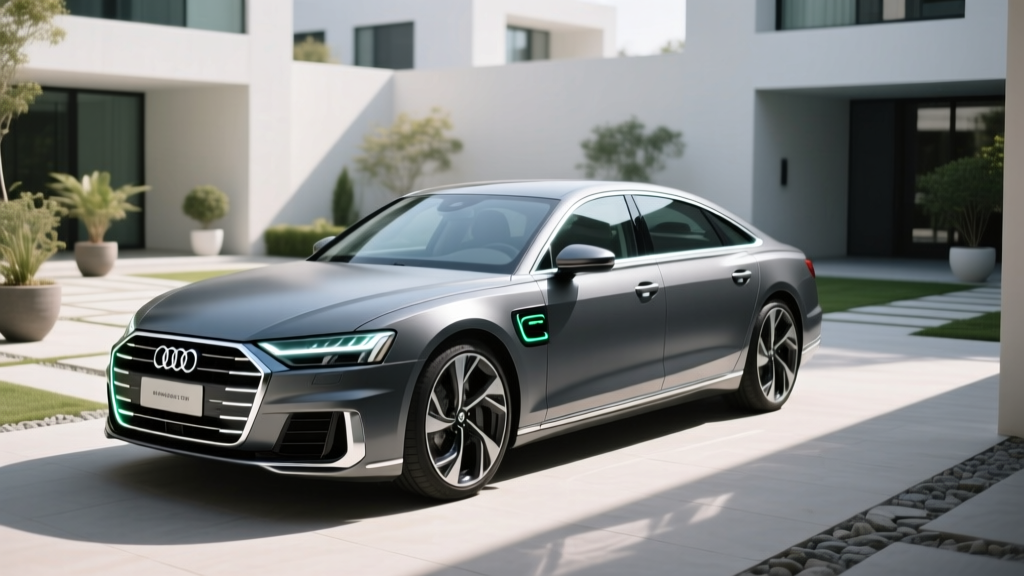
As of early 2026, Audi has not released a production electric A8 sedan. The current A8 (D5 generation) remains a mild-hybrid and plug-in hybrid (A8 L 60 TFSI e) offering. Audi's flagship EV sedan strategy has shifted toward the Audi Grandsphere concept (revealed 2021) and the upcoming Audi A6 e-tron on the PPE (Premium Platform Electric) architecture as its de facto electric luxury sedan. Buyers searching for an "Audi A8 electric" are likely looking for either the A8 PHEV, the A6 e-tron, or news on a future all-electric A8 successor. Below, we break down what exists, what's coming, and what to buy today if you want an electrified Audi flagship.
What Audi Offers Today: A8 Hybrid vs. A6 e-tron
Audi's current electrified luxury lineup splits into two distinct paths. The A8 L 60 TFSI e is a plug-in hybrid (PHEV) that pairs a 3.0L V6 with an electric motor and a 17.9 kWh battery pack, delivering an EPA-estimated 16 miles of electric-only range and a combined 456 horsepower. It's a bridge vehicle — electric for short commutes, gas for long hauls.
The Audi A6 e-tron, which began deliveries in select markets in late 2025 on the 800V PPE platform co-developed with Porsche, is the closest thing to a true "Audi A8 electric" in spirit. It offers:
- Battery: ~100 kWh usable (NMC chemistry)
- EPA Range: Est. 380–400 miles (final US EPA figures pending for 2026 model year; WLTP figures are higher at ~700 km)
- DC Fast Charging: Peak 270 kW on 800V architecture, 10–80% in approximately 21 minutes
- Level 2 Charging: Up to 22 kW AC (optional), 11 kW standard
- 0–60 mph: ~4.5 seconds (dual-motor quattro variant)
- Price: Expected from ~$75,000 MSRP (US pricing TBD at launch)
Neither vehicle is a direct electric A8 replacement. Audi has signaled that its next-generation flagship sedan will ride on the PPE platform, but no production timeline has been confirmed for a dedicated A8 e-tron.
A8 PHEV vs. A6 e-tron: Side-by-Side Comparison
| Spec | A8 L 60 TFSI e (PHEV) | A6 e-tron (BEV, est.) | A8 L 55 TFSI (Mild Hybrid Gas) |
|---|---|---|---|
| Powertrain | 3.0L V6 + electric motor (PHEV) | Dual-motor BEV (800V PPE) | 3.0L V6 turbo (MHEV) |
| Combined HP | 456 hp | ~469 hp (est.) | 335 hp |
| EPA Electric Range | 16 mi | ~380–400 mi (est.) | N/A |
| EPA Combined MPGe/MPG | 50 MPGe / 24 MPG (gas-only) | ~100+ MPGe (est.) | 22 MPG combined |
| Battery Capacity | 17.9 kWh | ~100 kWh usable (NMC) | 48V mild-hybrid system |
| DC Fast Charge Peak | N/A (AC only) | 270 kW | N/A |
| 10–80% Charge Time | ~2.5 hrs (Level 2, 7.2 kW) | ~21 min (DC) | N/A |
| 0–60 mph | 5.6 sec | ~4.5 sec (est.) | 5.6 sec |
| Base MSRP (approx.) | $100,900 | ~$75,000 (est.) | $89,900 |
| Federal Tax Credit (§30D) | Not eligible (MSRP cap exceeded) | Likely not eligible (MSRP cap for sedans is $55,000) | Not eligible |
| Battery Warranty | 8 yr / 100,000 mi | 8 yr / 100,000 mi (est.) | N/A |
Sources: fueleconomy.gov (EPA data), Audi USA specifications. A6 e-tron figures are preliminary estimates based on PPE platform data and European WLTP testing; US EPA ratings may differ.
Real-World Ownership: What Buyers Need to Know
If you're cross-shopping an electrified Audi flagship, here are the practical realities that spec sheets don't always surface:
Home Charging Access Is Non-Negotiable for BEVs
The A6 e-tron's 100 kWh battery means Level 1 (120V) charging adds roughly 3–4 miles per hour — effectively useless for daily replenishment. You need a Level 2 home charger (240V) to make BEV ownership practical. At 11 kW, a full charge takes roughly 9–10 hours overnight. A typical Level 2 home installation costs $1,200–$3,500 (charger unit + electrician + permit), and if your home has a 100-amp electrical panel, you may need a $2,000–$5,000 panel upgrade to 200 amps. (Always consult a licensed electrician for final specs.)
The A8 PHEV, by contrast, charges its smaller 17.9 kWh battery in about 2.5 hours on a standard Level 2 outlet — making it far less demanding on home electrical infrastructure. If you can't install a home charger, the PHEV still functions as a conventional hybrid.
Cold-Weather Range Loss
BEV batteries lose 20–30% of their range in freezing temperatures (below 32°F / 0°C), especially on short trips where the cabin heater draws heavily from the pack. An A6 e-tron with an EPA-estimated 400 miles might realistically deliver 280–320 miles in sustained winter highway driving. The PPE platform includes a heat pump (standard or optional depending on market), which mitigates this somewhat by using ambient heat more efficiently than resistive heating. The A8 PHEV's gas engine provides waste heat for cabin warming, making its winter efficiency penalty less severe.
Charging Deserts and Road Trips
For long-distance travel, the A6 e-tron's 270 kW peak charge rate on 800V architecture is excellent — adding roughly 190 miles of range in 10 minutes at a compatible DC fast charger. However, real-world charging curves taper significantly above 80% state of charge (SoC). Expect the final 80–100% to take nearly as long as the 10–80% session. Audi's PPE vehicles precondition the battery when a charger is set in the navigation system, which is essential for achieving peak charge rates.
The A8 PHEV eliminates this concern entirely — fill up in 5 minutes at any gas station. For buyers in areas with sparse DC fast-charging infrastructure (rural Midwest, mountain West), the PHEV offers flexibility the BEV cannot match today.
Cost Breakdown: 5-Year Ownership Comparison
| Cost Category (5 Years / 75,000 mi) | A8 L 60 TFSI e (PHEV) | A6 e-tron (BEV, est.) | A8 L 55 TFSI (Gas MHEV) |
|---|---|---|---|
| Purchase Price (MSRP) | $100,900 | ~$75,000 | $89,900 |
| Federal Tax Credit | $0 (MSRP cap exceeded) | $0 (MSRP cap for sedans: $55K) | $0 |
| Fuel / Electricity | ~$6,200 (mixed EV + gas) | ~$3,800 (home charging avg. $0.14/kWh) | ~$10,500 (premium gas at $4.00/gal, 22 MPG) |
| Maintenance | ~$4,500 | ~$2,800 (no oil changes, fewer fluids) | ~$5,200 |
| Insurance (avg.) | ~$12,000 | ~$11,500 | ~$11,000 |
| Estimated Depreciation | ~$45,000 | ~$35,000 | ~$42,000 |
| Est. 5-Year Total Cost | ~$168,600 | ~$128,100 | ~$158,600 |
Notes: Depreciation estimates based on historical Audi luxury sedan trends and emerging EV resale data. Fuel costs assume 15,000 mi/year. Electricity cost assumes 80% home charging at national average residential rate. Insurance varies significantly by driver profile, state, and insurer — get personalized quotes. The A8 PHEV and A8 gas models exceed the IRS §30D MSRP cap of $55,000 for sedans, making them ineligible for the federal credit regardless of income or battery sourcing.
Common Misconceptions About Electrified Audi Flagships
| Myth | Fact |
|---|---|
| "The Audi A8 has a fully electric version." | As of 2026, Audi does not sell a battery-electric A8. The A8 is available as a PHEV (60 TFSI e) and mild-hybrid gas model. The Grandsphere concept previews a future electric flagship but is not in production. |
| "I'll get the $7,500 federal tax credit on any Audi EV." | The §30D credit has a $55,000 MSRP cap for sedans (vans/SUVs/trucks: $80,000), buyer income caps ($150K single / $300K joint), and battery critical-mineral sourcing requirements. Most Audi luxury sedans exceed the MSRP cap. Always check IRS guidelines and consult a tax professional. |
| "The A8 PHEV can drive 50+ miles on electricity alone." | The EPA rates the A8 L 60 TFSI e at 16 miles of electric-only range. WLTP (European) figures are higher, but US drivers should plan around the EPA number. This covers short commutes but not longer trips. |
| "BEVs have no maintenance costs." | BEVs eliminate oil changes and have fewer moving parts, but they still require tire rotations (EVs wear tires faster due to instant torque and higher weight), brake fluid checks, cabin air filter replacement, coolant service for the thermal management system, and windshield washer fluid. Budget ~$500–$800/year. |
| "800V charging means I'll always charge at 270 kW." | Peak charge rate (270 kW) is achieved only at low SoC, optimal battery temperature (after preconditioning), and at a compatible 350 kW+ DC fast charger. Sustained average rate over a 10–80% session is typically 60–75% of peak. Expect ~180–200 kW average with proper preconditioning. |
Decision Framework: Which Electrified Audi Flagship Is Right for You?
Choose the Audi A8 L 60 TFSI e (PHEV) if:
- You want the prestige, rear-seat luxury, and long wheelbase of the A8 specifically
- Your daily commute is under 15 miles and you can charge at home (even Level 1 works for the small battery)
- You frequently drive 300+ miles in a single trip and don't want to plan around charging stops
- You live in a region with limited DC fast-charging infrastructure
- You value the A8's executive rear-seat package, adaptive air suspension, and flagship build quality
Choose the Audi A6 e-tron (BEV) if:
- You want a true battery-electric Audi sedan and can accept a slightly smaller vehicle than the A8
- You have reliable home Level 2 charging (240V, ideally 11 kW+)
- Your typical daily driving is under 250 miles and you road-trip infrequently (or are comfortable planning DC fast-charge stops)
- You want lower running costs (electricity vs. premium gas) and reduced maintenance
- You value the latest PPE platform technology, 800V fast charging, and OTA software updates
Wait for a future Audi A8 e-tron if:
- You specifically need a full-size luxury flagship sedan (S-class/EQ S competitor) that is fully electric
- You're not in a rush to buy and can monitor Audi's PPE-based flagship announcements through 2026–2028
- You want both the A8's dimensions and BEV powertrain — which doesn't exist in Audi's lineup today
First-Time EV Buyer Essentials
If this is your first electrified vehicle purchase, keep these fundamentals in mind:
kW vs. kWh — know the difference. kW (kilowatts) measures power — the rate at which you charge. kWh (kilowatt-hours) measures energy — the size of the battery. A 100 kWh battery charged at 11 kW takes roughly 9 hours. Think of kW as the width of the hose and kWh as the size of the tank.
Preconditioning matters. When navigating to a DC fast charger, the A6 e-tron's thermal management system will warm or cool the battery to its optimal temperature window. Skipping preconditioning (by not entering the charger in navigation) can cut your peak charge rate by 30–50%.
Level 2 is your daily workhorse. DC fast charging is for road trips. Daily charging should happen at home or work on Level 2 (240V). Repeated DC fast charging accelerates battery degradation slightly — NMC chemistry batteries (like those in the PPE platform) prefer slower charging for longevity.
Battery degradation is real but manageable. Modern NMC batteries typically lose 8–12% capacity over 100,000 miles. Audi's battery warranty covers defects and excessive degradation (typically below 70% state of health) for 8 years / 100,000 miles. A full battery replacement outside warranty for a 100 kWh pack currently costs $15,000–$25,000, though prices are declining.
Frequently Asked Questions
Will Audi make an all-electric A8?
Audi has not confirmed a production electric A8 as of early 2026. The Grandsphere concept (2021) previewed a Level 4-capable electric luxury sedan, but Audi's current electrified flagship strategy centers on the A6 e-tron on the PPE platform. Audi has committed to launching only all-electric models in most markets by 2026, so a future A8 e-tron or equivalent flagship is plausible but unannounced. Monitor Audi USA for official updates.
Is the Audi A8 hybrid self-charging?
No. The A8 L 60 TFSI e is a plug-in hybrid — you must plug it in to recharge the 17.9 kWh battery and access its 16 miles of electric range. It does recapture some energy through regenerative braking, but this alone won't fully recharge the battery. If you never plug it in, it operates as a conventional hybrid with reduced efficiency compared to dedicated hybrid systems.
Can I charge the Audi A6 e-tron at a Tesla Supercharger?
Audi's PPE-platform vehicles in North America are expected to use the NACS (North American Charging Standard) connector or ship with a CCS-to-NACS adapter, given the industry-wide shift toward NACS compatibility. Tesla has opened portions of its Supercharger network to non-Tesla EVs via the "Open Supercharging" program and Magic Dock adapter. Confirm connector compatibility with your dealer before purchase, as specifications can vary by model year and market.
How does the A8 PHEV compare to the Mercedes S 580e or BMW 750e xDrive?
The Mercedes S 580e offers approximately 30 miles of EPA electric range (nearly double the A8's 16 miles) thanks to a larger battery, while the BMW 750e xDrive offers roughly 29 miles. If electric-only commute range is your priority, both competitors outperform the A8 PHEV. The A8's advantage lies in its interior build quality, adaptive air suspension tuning, and Audi's MMI infotainment system. Cross-shop all three with your specific commute distance in mind.
What happens if the battery fails out of warranty?
Complete battery failure is rare in modern EVs and PHEVs — most degradation is gradual. If a battery does fail outside the 8-year/100,000-mile warranty, replacement costs for the A8 PHEV's 17.9 kWh pack might range from $5,000–$10,000, while the A6 e-tron's ~100 kWh pack could cost $15,000–$25,000. Third-party repair shops increasingly offer module-level repairs (replacing only degraded cells rather than the full pack) for significantly less. Extended battery warranties and certified pre-owned programs can mitigate this risk.
Bottom Line
There is no Audi A8 electric — yet. Today's buyers choosing an electrified Audi flagship must decide between the A8 L 60 TFSI e (PHEV, 16 miles electric, true flagship luxury, ~$101K) and the A6 e-tron (BEV, ~400 miles range, PPE platform, ~$75K est.). Neither qualifies for the federal §30D tax credit due to MSRP caps on sedans. Your decision hinges on three questions: Do you need the A8's full-size luxury cabin? Can you charge at home? And how often do you drive more than 250 miles in a day? Answer those, and the right Audi becomes clear.