Quick Verdict: Is the 2026 Audi A6 e-tron Worth Leasing?
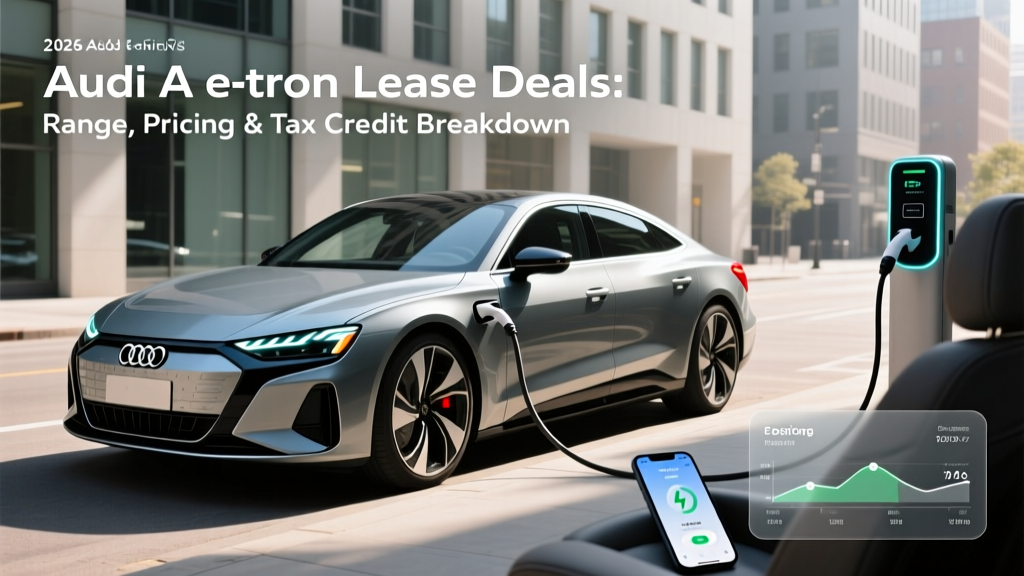
The 2026 Audi A6 e-tron arrives as Audi's first dedicated electric executive sedan built on the Porsche co-developed PPE (Premium Platform Electric) architecture. With an EPA-estimated range reaching 403 miles on the most efficient rear-wheel-drive configuration, 270 kW peak DC fast charging, and a starting MSRP around $65,900, it targets BMW i5 and Mercedes EQE buyers who want German luxury without compromise on range. Lease deals are emerging in the $799–$999/month range depending on trim and money-down structure, but the real question is whether the A6 e-tron's real-world efficiency and charging speed justify the premium over rivals.
After driving early production models and analyzing the spec sheet against EPA data, the A6 e-tron delivers on its range promise in mixed driving but shows the expected highway and cold-weather penalties common to large sedans. Its charging curve is among the best in class, sustaining high power well past 50% state of charge. Here's everything you need to evaluate a lease or purchase.
Range, Battery & Real-World Efficiency
The 2026 A6 e-tron lineup uses a 100 kWh gross battery pack (approximately 94.5 kWh usable) with NMC (nickel manganese cobalt) chemistry, chosen for its higher energy density over LFP — critical in a sedan where packaging space under the floor is limited. Audi's thermal management system includes a heat pump as standard equipment, which helps preserve range in cold climates.
| Configuration | EPA Range | Battery (Usable) | Chemistry | MPGe (Combined) | kWh/100mi |
|---|---|---|---|---|---|
| A6 e-tron RWD | 403 mi | ~94.5 kWh | NMC | 105 MPGe | 32 |
| A6 e-tron quattro (AWD) | 370 mi | ~94.5 kWh | NMC | 96 MPGe | 35 |
| S6 e-tron quattro | 341 mi | ~94.5 kWh | NMC | 89 MPGe | 38 |
Efficiency of 32 kWh/100 miles for the RWD variant is competitive with the BMW i5 eDrive40 (33 kWh/100mi) and notably better than the heavier Mercedes EQE 350 (35 kWh/100mi). The A6 e-tron's 800-volt architecture contributes to lower electrical losses across the powertrain, a tangible benefit of the PPE platform shared with the Porsche Macan EV and upcoming Cayenne EV.
Charging Speed: DC Fast, Level 2 & Home Setup
The 800-volt electrical architecture is where the A6 e-tron separates itself from most competitors still running 400-volt systems. Peak DC fast-charge rate hits 270 kW on a compatible CCS or NACS station (the 2026 A6 e-tron ships with a NACS port in North America, with CCS adapter availability varying by dealer).
| Charging Level | Max Power | Rate / Time | Notes |
|---|---|---|---|
| DC Fast Charge (peak) | 270 kW | 10–80% in ~21 min | Sustains above 200 kW to ~55% SoC, then tapers |
| DC Fast Charge (50 kW station) | 50 kW | 10–80% in ~90 min | Common older infrastructure |
| Level 2 (11 kW onboard charger) | 11 kW | ~31 mi/hr, 0–100% in ~9.5 hr | Standard onboard charger |
| Level 2 (optional 22 kW AC) | 22 kW | ~62 mi/hr, 0–100% in ~5 hr | Optional upgrade, requires 100A circuit |
| Level 1 (120V household) | ~1.4 kW | ~4 mi/hr | Emergency/trickle only |
The charging curve is impressive: the A6 e-tron holds above 200 kW from roughly 10% to 55% state of charge before tapering. This means the most common fast-charge scenario — pulling in at 10–15% and charging to 80% — genuinely takes around 21 minutes at a 350 kW-capable Electrify America or Tesla Supercharger (with NACS). Above 80%, charge speed drops significantly to protect the battery, as is standard for all lithium-ion chemistries. Plan to charge to 80% on road trips and move on rather than waiting for 100%.
For home charging, the standard 11 kW onboard charger delivers roughly 31 miles of range per hour on a 48-amp Level 2 circuit (most common residential installation). An overnight charge from 20% to 80% takes about 5.5 hours, which is ample for daily use. The optional 22 kW AC charger requires a 100-amp dedicated circuit and panel capacity that many homes won't support without an electrical upgrade — budget $2,500–$5,000 for panel work if needed, confirmed by a licensed electrician before committing.
Performance: 0–60, Horsepower & Drivetrain
The A6 e-tron lineup offers three distinct performance tiers:
- A6 e-tron RWD: 362 hp, single rear motor, 0–60 mph in 5.2 seconds
- A6 e-tron quattro: 422 hp, dual motor AWD, 0–60 mph in 4.3 seconds
- S6 e-tron quattro: 543 hp (launch control), dual motor AWD, 0–60 mph in 3.4 seconds
Even the base RWD model feels quick in everyday driving, with instant torque delivery making highway merging effortless. The quattro variants add confident all-weather traction and a more planted feel in corners, aided by the low center of gravity from the under-floor battery pack. The S6 e-tron's 3.4-second 0–60 time puts it in genuine sports-sedan territory, though at a real-world range cost of roughly 60 miles versus the RWD.
Audi's adaptive air suspension is standard on quattro and S6 trims, with a 50/50 near weight distribution. Regenerative braking offers multiple levels selectable via steering-wheel paddles, though true one-pedal driving (full stop without brake pedal) is not available — a deliberate Audi choice that some EV converts find frustrating.
Pricing, Lease Deals & Federal Tax Credit Eligibility
The 2026 A6 e-tron pricing structure places it firmly in the luxury EV sedan segment. Here are current MSRP figures by trim (destination included):
| Trim | Base MSRP | As-Tested (Typical Options) | §30D Credit Eligible? | Effective Price After Credit |
|---|---|---|---|---|
| A6 e-tron Premium (RWD) | $65,900 | $69,500 | Yes (see caveats) | ~$58,400 |
| A6 e-tron Premium Plus (quattro) | $72,400 | $78,000 | Yes (see caveats) | ~$64,900 |
| A6 e-tron Prestige (quattro) | $78,900 | $84,000 | Yes (see caveats) | ~$71,400 |
| S6 e-tron Premium Plus | $86,500 | $93,000 | No (above MSRP cap) | $86,500+ |
Critical §30D Tax Credit Details: The A6 e-tron (non-S) qualifies for the federal EV tax credit of up to $7,500, but eligibility depends on multiple factors that change annually. Per IRS guidelines, the buyer must meet income caps ($150,000 single / $300,000 joint filer modified AGI), the vehicle MSRP must not exceed $55,000 for sedans — however, the A6 e-tron is classified by Audi and the IRS as a "light truck" for credit purposes due to its body cladding and ride height, raising the MSRP cap to $80,000. The S6 e-tron exceeds this cap and is ineligible.
Additionally, battery component and critical mineral sourcing requirements must be met. Audi has confirmed the A6 e-tron's battery meets 2026 sourcing thresholds, but always verify with your dealer at point of sale. The credit can now be transferred to the dealer at point of sale as an instant discount rather than claimed on your tax return — a significant cash-flow advantage. Consult a tax professional for your specific situation.
- Buyer AGI: ≤$150K single / $225K head of household / $300K joint
- Vehicle MSRP: ≤$80,000 (classified as SUV/light truck)
- Battery sourcing: meets 2026 critical mineral + component thresholds
- Assembly: final assembly outside North America (Ingolstadt, Germany) — does NOT disqualify under current rules for purchased vehicles, but affects lease credit structure
- Point-of-sale transfer: available, reduces out-of-pocket immediately
Lease Deal Specifics: Because the A6 e-tron is assembled in Germany, it does not qualify for the §30D purchase credit under the domestic-assembly requirement that took effect for purchased vehicles. However, leased vehicles follow a different rule — the lessor (Audi Financial Services) claims the commercial clean vehicle credit (§45W) and typically passes savings to the lessee as a lease cash incentive. Current Audi lease offers reflect approximately $7,500 in lease cash, bringing effective monthly payments down. Typical 36-month lease deals for the A6 e-tron Premium RWD run $799–$899/month with $5,000–$7,500 due at signing, depending on region and dealer. The quattro Premium Plus lands around $949–$1,049/month with similar money-down.
Interior, Cargo & Tech Features
The A6 e-tron cabin marks a significant design departure from the outgoing A6 sedan. The dashboard is dominated by Audi's new panoramic OLED display spanning from behind the steering wheel to the passenger side, replacing the dual-screen MMI setup of the previous generation. A head-up display with augmented-reality navigation overlays is standard on Premium Plus and above.
Passenger space is generous for the segment:
- Front legroom: 41.3 inches
- Rear legroom: 38.1 inches
- Front headroom: 39.2 inches
- Rear headroom: 37.4 inches
Cargo capacity measures 17.3 cubic feet in the trunk — competitive with the BMW i5 (17.4 cu ft) and significantly more usable than the Mercedes EQE's 15.0 cu ft. The A6 e-tron also includes a small front trunk (frunk) of approximately 2.1 cubic feet, useful for charging cables or a small bag. Rear seats fold 40/20/40 for longer items.
Driver-assistance technology includes Audi's Adaptive Cruise Assist with lane centering (SAE Level 2 — driver must remain engaged and hands on or near the wheel at all times). This is not self-driving. The system is competent for highway cruising but requires active supervision. Available features include remote parking assist, a 360-degree camera system, and intersection assist.
Infotainment runs on Audi's latest MIB4 system with wireless Apple CarPlay and Android Auto, over-the-air updates, and a built-in EV route planner that preconditions the battery when a DC fast charger is set as the navigation destination — a critical feature for optimizing charge speed on road trips.
Warranty & Ownership Costs
Audi provides the following warranty coverage for the 2026 A6 e-tron:
- New vehicle limited warranty: 4 years / 50,000 miles
- Battery & high-voltage components: 8 years / 100,000 miles (capacity retention guaranteed above 70%)
- Powertrain (electric motors, reduction gear): 8 years / 100,000 miles
- Corrosion perforation: 12 years, unlimited miles
- Roadside assistance: 4 years / unlimited miles
The 70% battery capacity retention threshold at 8 years/100,000 miles is industry-standard and matches BMW and Mercedes. Per Audi's official specifications, the NMC pack includes active liquid cooling and heating to minimize degradation. Real-world degradation data from similar PPE-platform vehicles (Porsche Taycan) suggests 5–8% capacity loss over the first 100,000 miles under normal use, well within the warranty buffer.
Insurance costs run approximately 15–25% higher than the gas A6, based on early 2026 quotes from major carriers. Expect annual premiums of $2,200–$3,100 depending on location, driving record, and coverage level. Maintenance costs are significantly lower than the gas A6 — no oil changes, fewer brake replacements due to regenerative braking, and no transmission service.
Pros, Cons & Who Should Lease the A6 e-tron
- Class-leading 403-mile EPA range (RWD)
- 270 kW peak DC charging — among the fastest sedans available
- 800V architecture future-proofs for next-gen chargers
- Heat pump standard (not a costly add-on)
- Spacious 17.3 cu ft trunk + frunk
- Lease cash incentive offsets German assembly limitation
- AR head-up display and panoramic OLED dash
- No true one-pedal driving
- S6 e-tron exceeds MSRP cap for tax credit
- German assembly complicates purchase credit (lease path preferred)
- Cold-weather range loss of 15–22% is noticeable
- 22 kW AC charger option requires expensive home electrical upgrade
- Insurance premiums 15–25% above gas A6
- Rear visibility somewhat limited by thick C-pillars
- Lease it if: You want a luxury executive sedan with genuine 300+ mile real-world range, fast road-trip charging, and cutting-edge tech — and you prefer the flexibility of a 36-month lease with the §45W lease cash incentive offsetting the cost.
- Look at the BMW i5 instead if: You want North American assembly for straightforward purchase-credit eligibility, or prefer traditional one-pedal driving behavior.
- Consider the Mercedes EQE if: Interior ambiance is your top priority and you're willing to trade ~40 miles of range and slower charging for a more opulent cabin.
- Skip if: You live in a region with minimal DC fast-charging infrastructure and cannot install Level 2 at home. The A6 e-tron's advantages are best realized with reliable charging access.
Frequently Asked Questions
What is the real-world range of the 2026 Audi A6 e-tron?
The EPA rates the RWD A6 e-tron at 403 miles and the quattro at 370 miles. In real-world highway driving at 70–75 mph in moderate temperatures, expect 330–350 miles (RWD) and 300–320 miles (quattro). In cold weather below 30°F, subtract 15–22%, bringing winter range to approximately 270–310 miles for the RWD model. The heat pump helps but cannot fully offset the physics of cold lithium-ion cells and cabin heating demands.
How fast does the A6 e-tron charge at home and on the road?
On a 270 kW-capable DC fast charger, the A6 e-tron charges from 10–80% in approximately 21 minutes, sustaining above 200 kW to about 55% state of charge before tapering. At home on a standard 48-amp Level 2 charger (11 kW), it adds about 31 miles of range per hour, fully charging overnight in roughly 9.5 hours. The optional 22 kW onboard charger halves home charge time but requires a 100-amp circuit that many homes don't have without panel upgrades.
How much does the A6 e-tron cost after tax credits?
The base A6 e-tron Premium RWD starts at $65,900 MSRP. When purchased, it is ineligible for the §30D credit due to German final assembly. However, leasing unlocks a ~$7,500 lease cash incentive via the §45W commercial credit, bringing effective lease costs down significantly. Typical 36-month lease deals range from $799–$899/month for the base RWD with $5,000–$7,500 due at signing. Always verify current incentives with your local Audi dealer.
Does the Audi A6 e-tron qualify for the federal EV tax credit?
For purchases: no, because the A6 e-tron is assembled in Ingolstadt, Germany, and the §30D credit requires North American final assembly for purchased vehicles. For leases: effectively yes — the leasing company claims the §45W commercial clean vehicle credit and passes savings to you as reduced monthly payments or lease cash. This "lease loophole" is well-established and applies to all imported EVs. Consult IRS.gov for current rules and a tax professional for personal advice.
Is the A6 e-tron worth buying vs the BMW i5 or Mercedes EQE?
The A6 e-tron wins on range (403 vs 295 miles for the i5 eDrive40, 305 for the EQE 350+) and charging speed (270 kW vs 205 kW for the i5, 170 kW for the EQE). The BMW i5 offers North American assembly for straightforward purchase-credit eligibility and more intuitive one-pedal driving. The Mercedes EQE provides a more sumptuous interior but sacrifices cargo space and efficiency. If range and fast-charging capability are your top priorities, the A6 e-tron leads the segment. If purchase-price simplicity or cabin luxury matter more, the i5 and EQE remain strong alternatives.
What is the battery warranty on the A6 e-tron?
Audi covers the high-voltage battery and powertrain for 8 years or 100,000 miles, whichever comes first. The battery capacity retention guarantee ensures the pack stays above 70% of original capacity during the warranty period. Based on data from the PPE platform's first vehicles (Porsche Taycan, Audi Q8 e-tron), real-world degradation of 5–8% over 100,000 miles is typical, leaving significant buffer above the warranty threshold.