Quick Answer: Is the Audi A6 e-tron Worth It?
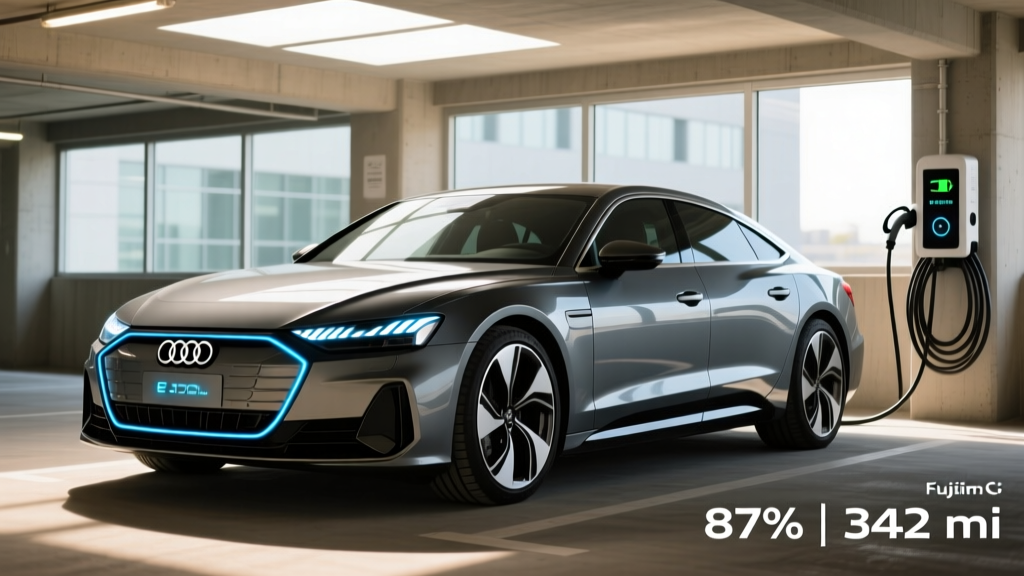
The 2026 Audi A6 e-tron delivers an EPA-estimated 321 miles of range (RWD) and charges from 10-80% in roughly 21 minutes at its 270 kW peak on 800V DC fast chargers. Starting around $65,000 before incentives, it undercuts the gas A6 on fueling and maintenance costs but demands home Level 2 charging access to make financial sense. Buyers with daily commutes under 80 miles and a garage charger will see the strongest total-cost-of-ownership advantage; apartment dwellers relying on public charging should weigh the added time and expense carefully.
Audi A6 e-tron Specs: Range, Battery, and Performance
| Spec | A6 e-tron (RWD) | A6 e-tron quattro (AWD) |
|---|---|---|
| EPA Range | 321 mi (est.) | 290 mi (est.) |
| Battery (usable) | 94.5 kWh, NMC | 94.5 kWh, NMC |
| Platform | PPE (Premium Platform Electric, 800V) | |
| Peak DC Charge Rate | 270 kW | 270 kW |
| 10-80% DC Fast Charge | ~21 min | ~21 min |
| Level 2 Charge Rate | 11 kW (AC) | 11 kW (AC) |
| Horsepower | 362 hp | 456 hp |
| 0-60 mph | 5.2 sec | 4.3 sec |
| Starting MSRP | ~$65,000 | ~$70,000 |
| Battery/Powertrain Warranty | 8 yr / 100,000 mi | |
The A6 e-tron rides on the PPE architecture co-developed with Porsche, the same 800-volt backbone underpinning the Macan Electric and Q6 e-tron. That 800V system is the reason it can sustain high charge rates longer than 400V rivals — a critical distinction between peak kW and sustained kW that many spec sheets obscure.
Real-World Range vs. EPA Sticker
EPA estimate: 321 miles (RWD) / 290 miles (quattro)
Real-world expectation: Expect 260–285 miles on highway-heavy trips at 70+ mph, and 200–230 miles in sub-freezing winter conditions. The NMC pack's active thermal management helps, but cold weather universally reduces lithium-ion efficiency by 20–30%. Preconditioning the battery while plugged in mitigates some of this loss.
Charging the A6 e-tron: What 270 kW Actually Means
Audi's 270 kW peak charge rate is among the fastest in the luxury sedan segment, but kW (power) and kWh (energy) are not interchangeable. The 94.5 kWh battery holds the energy; the 270 kW rate is how fast energy flows in under ideal conditions. That peak only holds between roughly 10% and 35% state of charge before tapering — this is the charge curve, and every EV exhibits it.
| Charging Level | Power | Miles Added per Hour | Best For |
|---|---|---|---|
| Level 1 (120V outlet) | ~1.4 kW | ~4 mi/hr | Emergency top-ups only |
| Level 2 (240V home) | 11 kW (max) | ~34 mi/hr | Daily overnight charging |
| DC Fast Charge | Up to 270 kW | ~180 mi in 10 min (peak) | Road trips |
At home on a Level 2 wallbox, a full overnight session (8–10 hours) replenishes the entire 94.5 kWh pack. Public DC fast charging on a 350 kW Electrify America station lets the A6 e-tron stretch its legs — you'll see the full 270 kW peak because the car can accept it. On a 150 kW charger, expect 10–80% in roughly 35 minutes instead of 21.
Connector note: The 2026 A6 e-tron uses the NACS (Tesla-style) charge port in North America, granting native access to Tesla Superchargers without an adapter. This is a significant practical advantage over CCS1-equipped rivals that still require dongles for Supercharger access.
A6 e-tron vs. Gas A6: Cost and Ownership Breakdown
The most common question from luxury sedan buyers: does going electric actually save money compared to the internal-combustion A6? Below is a five-year cost projection assuming 15,000 miles/year, $0.14/kWh home electricity, $3.60/gallon premium fuel, and 80% home / 20% public charging for the EV.
| Cost Category (5 Years) | A6 e-tron (RWD) | A6 45 TFSI (Gas) |
|---|---|---|
| Purchase Price (base MSRP) | $65,000 | $58,900 |
| Federal Tax Credit (§30D) | Up to $7,500* | $0 |
| Fuel / Electricity (75,000 mi) | ~$4,200 | ~$9,900 |
| Maintenance (oil, brakes, filters) | ~$1,200 | ~$3,800 |
| Estimated Insurance (5 yr total) | ~$14,500 | ~$12,800 |
| Estimated Depreciation | ~$28,000 | ~$24,000 |
| Total 5-Year Cost | ~$112,900 | ~$109,400 |
*§30D credit eligibility depends on buyer income caps ($150K single / $300K joint), MSRP limits ($55K sedans — the A6 e-tron likely exceeds this cap, meaning the new-vehicle credit may not apply), and battery mineral sourcing requirements. The IRS clean vehicle credit page has current rules. A used A6 e-tron may qualify for the up-to-$4,000 pre-owned credit instead. Consult a tax professional.
The gas A6 holds a slight edge in five-year total cost primarily because the EV's higher purchase price and depreciation offset fueling savings. However, the A6 e-tron pulls ahead in years six through ten as maintenance divergence widens (no oil changes, fewer brake replacements due to regenerative braking) and as the EV's drivetrain simplicity reduces failure points.
| Factor | A6 e-tron | Gas A6 |
|---|---|---|
| MPGe / MPG Combined | ~95 MPGe (est.) | 27 MPG combined |
| Energy cost per mile | ~$0.056 | ~$0.132 |
| 0-60 mph | 5.2 sec | 5.8 sec |
| Refuel/recharge time | 8 hr (home) / 21 min (DCFC) | ~5 min (gas station) |
| Scheduled maintenance | Cabin filter, tire rotation, fluid top-off | Oil, filters, spark plugs, brakes |
| Home "refueling" possible? | Yes (Level 2) | No |
Real-World Ownership: What First-Time EV Buyers Must Know
Home Charging Access Is Non-Negotiable for Most Buyers
If you cannot install a Level 2 charger at home or at work, the A6 e-tron's ownership experience degrades significantly. Public DC fast charging costs roughly 2–3× more per kWh than home electricity and adds 20–40 minutes per session. Apartment dwellers should verify workplace charging availability or consider a PHEV like the Audi A6 TFSI e instead.
Home charger installation costs: Budget $800–$2,500 for a quality Level 2 wallbox (e.g., ChargePoint Home Flex, Emporia V2) plus $500–$2,000 for electrician labor, depending on panel proximity and whether your electrical panel needs a 200A upgrade (an additional $1,500–$3,500 in older homes).
Cold Climate Considerations
The A6 e-tron's heat pump (standard on PPE vehicles) recovers waste heat from the drivetrain to warm the cabin, reducing the range penalty of winter heating. Still, expect 20–30% range loss at 20°F compared to the EPA sticker. Preconditioning while plugged in — a feature configurable through the myAudi app — warms the battery and cabin using grid power, preserving range.
Insurance Premiums
EV insurance costs 10–20% more on average than equivalent gas vehicles, driven by higher repair costs for battery-adjacent collision damage. Get quotes before purchasing — the gap varies widely by insurer and state.
Federal Tax Credit: Does the A6 e-tron Qualify?
This is where luxury EV buyers often face disappointment. Under current IRS §30D rules, new clean vehicle credits have strict MSRP caps:
- Sedan MSRP cap: $55,000 — the A6 e-tron at ~$65,000 base exceeds this, making the full $7,500 new-vehicle credit unlikely.
- Buyer income cap: $150,000 (single) / $300,000 (married filing jointly) modified AGI.
- Battery sourcing: Critical minerals and battery components must meet phased-in domestic/free-trade-partner thresholds.
- Point-of-sale transfer: If eligible, you can transfer the credit to the dealer for an immediate price reduction rather than waiting for a tax refund.
Practical workaround: The pre-owned clean vehicle credit (up to $4,000 or 30% of sale price, whichever is lower) applies to used EVs sold for $25,000 or less through a licensed dealer. A 2–3-year-old A6 e-tron may hit this threshold, making the used market a smart entry point. Always verify eligibility through the IRS and your tax advisor.
Common Misconceptions About the A6 e-tron
| Myth | Fact |
|---|---|
| "The battery will need replacing in 5 years." | Audi warranties the pack for 8 years/100,000 miles against degradation below 70% capacity. PPE platform NMC cells are engineered for 200,000+ mile lifespans based on degradation data from earlier Audi e-tron models showing ~8% loss at 100K miles. |
| "270 kW charging means a full charge in 21 minutes." | 270 kW is the peak rate, sustained only between ~10–35% SoC. The 21-minute figure is for 10–80%. Charging from 80–100% slows dramatically to protect the battery — plan to charge to 80% on road trips and move on. |
| "It's self-driving." | The A6 e-tron's adaptive cruise and lane-centering features are SAE Level 2 driver-assist systems. You must remain engaged, hands on or near the wheel, at all times. This is not autonomous driving. |
| "Public charging is always broken." | Reliability has improved substantially on networks like Electrify America and Tesla Superchargers. The A6 e-tron's native NACS port opens the Supercharger network, which consistently reports 95%+ uptime. Check PlugShare for station-specific reliability ratings before trips. |
| "EVs are worse for the environment." | Manufacturing an EV battery produces more upfront emissions, but lifecycle analyses by Argonne National Laboratory and the ICCT show EVs break even within 1–2 years of average US driving and produce 60–68% fewer lifetime emissions on the current US grid mix. |
Decision Framework: Should You Buy the A6 e-tron?
Buy the A6 e-tron if:
- You have home Level 2 charging access (garage or driveway with a 240V circuit).
- Your daily driving is under 150 miles, with road trips 2–4 times per year.
- You value instant torque, a quiet cabin, and low running costs over the lowest possible purchase price.
- You live in a mild-to-moderate climate, or you precondition and accept winter range loss.
- You plan to own the car 7+ years, allowing fueling and maintenance savings to offset the higher MSRP.
Consider the gas A6 or a PHEV instead if:
- You live in an apartment without workplace or home charging options.
- You regularly drive 300+ miles between charging-station-dense corridors (rural routes).
- You need the lowest possible five-year total cost and plan to sell or trade within 4 years.
- You frequently tow (the A6 e-tron is not rated for significant towing; the gas A6 handles light loads better).
Frequently Asked Questions
What is the real-world highway range of the Audi A6 e-tron?
Expect roughly 260–285 miles at 70–75 mph in moderate temperatures. The EPA's 321-mile figure assumes a mix of city and highway driving; sustained highway speeds above 70 mph increase aerodynamic drag and reduce efficiency. In winter at 20°F, plan for 200–230 miles.
How much does it cost to charge the A6 e-tron at home?
At the US average of $0.14/kWh, a full charge of the 94.5 kWh battery costs approximately $13.23 — good for ~300 real-world miles. That works out to roughly $0.044 per mile on home electricity, compared to $0.13/mile in the gas A6 on premium fuel.
Does the A6 e-tron use NACS or CCS?
The North American 2026 A6 e-tron uses the NACS connector natively, meaning it plugs directly into Tesla Superchargers and other NACS-equipped stations without an adapter. This future-proofs access as the industry consolidates around NACS.
What happens if the battery degrades significantly?
Audi's battery warranty covers replacement or repair if capacity drops below 70% within 8 years or 100,000 miles. Out-of-warranty replacement for a 94.5 kWh PPE pack is estimated at $15,000–$22,000 based on current PPE parts pricing, though this is expected to decline as the platform matures.
Can I road-trip the A6 e-tron cross-country?
Yes, with planning. Using the Supercharger and Electrify America networks, you'll stop for 20–25 minutes every 200–250 miles. A coast-to-coast trip adds roughly 2–3 hours of charging time versus a gas car. The EPA's fueleconomy.gov site and apps like A Better Routeplanner help optimize stop locations.
Is the A6 e-tron eligible for any state incentives?
State incentives vary widely — some states (e.g., California, Colorado, New York) offer additional rebates of $1,000–$5,000 for EV purchases, often with their own income and price caps. Check your state's energy office or DMV website for current programs, as these change frequently.