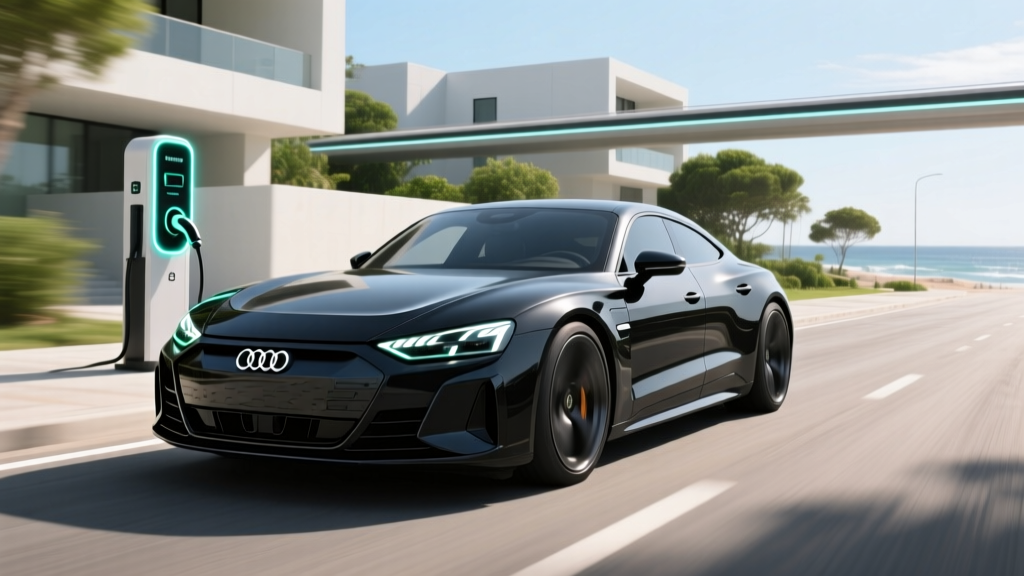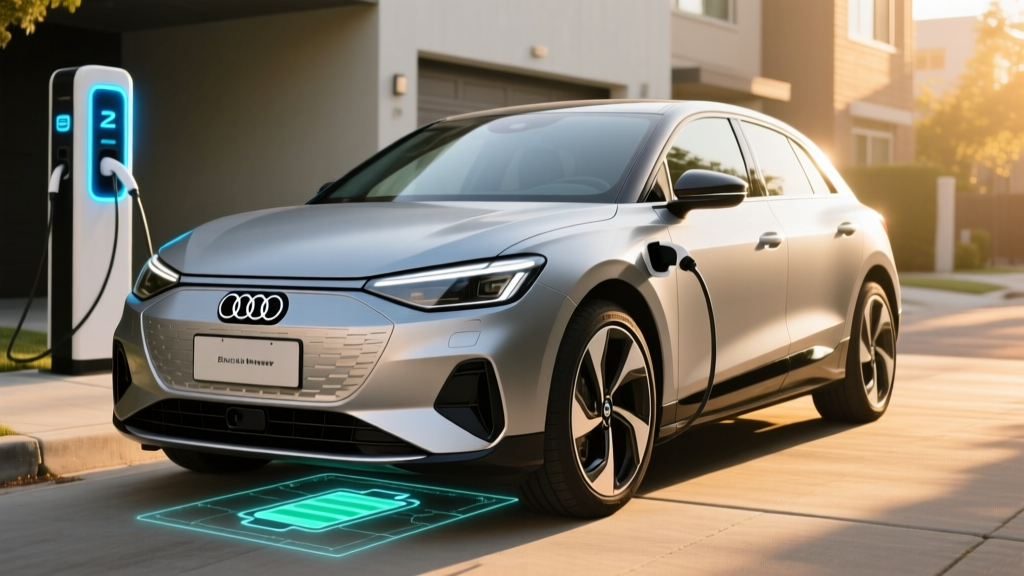
Audi's compact EV lineup gets a serious contender in the 2026 Audi A2 e-tron, a premium hatchback built on the VW Group's MEB+ platform. Positioned below the Q4 e-tron in both size and price, the A2 e-tron targets urban professionals and small households who want German build quality without stepping up to a full SUV. After spending time with the specs, charging data, and real-world efficiency numbers, here is everything you need to know before putting down a deposit.
Quick Verdict: Who the A2 e-tron Is For
The 2026 Audi A2 e-tron makes the most sense for buyers who prioritize a refined cabin, strong Level 2 charging infrastructure compatibility, and a manageable footprint for city driving. It is not a road-trip hauler or a family SUV replacement — cargo volume is modest, and the single-motor layout favors efficiency over all-weather traction. If your commute is under 60 miles round-trip and you have home Level 2 charging, the A2 e-tron is one of the most polished compact EVs available this year.
Choose the A2 e-tron if: You want a premium compact hatchback with sub-250-mile daily needs, value cabin quietness, and plan to charge primarily at home.
Look elsewhere if: You need AWD, regularly carry four adults, or take frequent 300+ mile road trips where the modest cargo area and 175 kW peak charge rate may feel limiting.
Range, Battery, and Real-World Efficiency
The A2 e-tron ships with a 77 kWh usable battery pack (82 kWh gross) using NMC (nickel-manganese-cobalt) chemistry. Audi rates it at an EPA-estimated 268 miles of range for the base Premium trim on 19-inch wheels. Stepping to the Premium Plus with 20-inch aero wheels drops that figure to 255 miles.
EPA Range: 268 miles (Premium, 19" wheels)
Real-World Expectation: Expect roughly 230–245 miles in mixed highway/city driving at 70 mph. In cold weather (below 32°F), plan for 195–215 miles due to cabin heating demand and increased battery resistance. The heat pump, standard on all trims, mitigates some winter loss compared to resistive heating systems.
Efficiency lands at 114 MPGe combined (29 kWh/100 mi), which is competitive with the BMW iX1 and slightly behind the Tesla Model Y RWD. The NMC chemistry favors energy density over the extreme cycle life of LFP, meaning you will see typical degradation of roughly 8–12% over 8 years based on VW Group's historical MEB pack data. Audi includes a battery buffer of approximately 5 kWh (the difference between gross and usable capacity) to protect long-term health.
Charging Speed: DC Fast, Level 2, and Level 1
Audi equips the A2 e-tron with a 175 kW peak DC fast-charge capability on CCS1 connectors (a NACS adapter is available for Tesla Supercharger access). The charge curve is the critical detail here: the pack sustains above 150 kW from roughly 10% to 45% SoC, then tapers progressively. The 10–80% session takes approximately 28 minutes at a 350 kW-capable station.
| Charging Level | Power / Voltage | Speed | Typical Use Case |
|---|---|---|---|
| Level 1 (120V) | 1.4 kW | ~4 mi/hr | Emergency / overnight trickle |
| Level 2 (240V, 48A) | 11.5 kW | ~38 mi/hr | Home wall connector, full charge in ~7 hr |
| DC Fast (CCS1) | 175 kW peak | 10–80% in ~28 min | Road trips, Electrify America / EA network |
For home charging, the onboard 11.5 kW AC charger is a strong point. On a 48-amp Level 2 circuit, you add roughly 38 miles of range per hour, meaning a 20% to 100% top-up takes about 6.5 hours — easily handled overnight. Preconditioning is available via the myAudi app and activates automatically when a DC fast-charging destination is set in navigation, warming the pack to optimal temperature for maximum charge acceptance.
Performance and Drivetrain
The A2 e-tron uses a single rear-mounted permanent-magnet synchronous motor producing 228 horsepower and 228 lb-ft of torque. Audi quotes a 0–60 mph time of 6.9 seconds. This is a comfort-oriented tune — the throttle mapping is progressive rather than aggressive, and regen braking offers three levels selectable via steering-wheel paddles but does not provide true one-pedal driving to a complete stop.
| Spec | Value |
|---|---|
| Drivetrain | Rear-wheel drive (single motor) |
| Horsepower | 228 hp |
| Torque | 228 lb-ft |
| 0–60 mph | 6.9 seconds |
| Top Speed | 112 mph (electronically limited) |
| Battery (Usable) | 77 kWh, NMC |
| EPA Range | 268 mi (Premium) |
| MPGe (Combined) | 114 MPGe |
| Max DC Charge | 175 kW |
| 10–80% DC Time | ~28 min |
| Level 2 Rate | 11.5 kW / ~38 mi/hr |
There is no dual-motor or quattro variant at launch. If you need all-wheel drive for snow-belt commuting, the Q4 e-tron 55 or the Volkswagen ID.4 AWD remain better choices in the VW Group family.
Interior, Cargo, and Technology
Inside, the A2 e-tron borrows heavily from the Q4 e-tron's architecture. The 11.6-inch MMI touchscreen runs the latest MIB4 infotainment software with wireless Apple CarPlay and Android Auto. A 10.25-inch digital instrument cluster sits behind the flat-bottom steering wheel. Build quality is where Audi earns its premium — soft-touch materials on the dash and door uppers, precise switchgear, and cabin noise levels that rival vehicles costing $20,000 more.
Passenger space: Front headroom is 39.1 inches, rear headroom 37.8 inches. Rear legroom measures 35.4 inches — adequate for adults on shorter trips but tighter than the Model Y's 41.6 inches.
Cargo volume: 17.8 cubic feet behind the rear seats, expanding to 44.2 cubic feet with the 60/40 split folded. There is no front trunk (frunk); the space under the hood houses power electronics.
Driver assistance comes via Audi's Adaptive Cruise Assist with lane-centering — a SAE Level 2 system that requires continuous driver supervision. It is competent on highways but does not offer hands-free operation like GM's Super Cruise or Ford's BlueCruise. Automatic emergency braking, blind-spot monitoring, and rear cross-traffic alert are standard across all trims.
Pricing, Trims, and Federal Tax Credit
The 2026 A2 e-tron launches in two trims. Pricing includes destination but excludes state-level incentives.
| Trim | Base MSRP | Est. §30D Credit | Effective Price |
|---|---|---|---|
| Premium | $44,900 | Up to $7,500* | ~$37,400 |
| Premium Plus | $49,400 | Up to $7,500* | ~$41,900 |
*Federal §30D credit eligibility depends on multiple requirements per current IRS rules:
- MSRP cap: The A2 e-tron qualifies as a "other vehicle" (not SUV/van/pickup), so the MSRP cap is $55,000. Both trims clear this threshold.
- Buyer income limits: AGI must not exceed $150,000 (single), $225,000 (head of household), or $300,000 (joint).
- Battery sourcing: The 77 kWh NMC pack must meet critical-mineral and battery-component sourcing requirements, which shift annually. Audi has indicated the A2 e-tron qualifies for the full $7,500 at launch, but always verify on fueleconomy.gov before purchasing.
- Point-of-sale transfer: You can transfer the credit to the dealer at purchase, reducing your out-of-pocket cost immediately rather than waiting for tax filing.
The Premium Plus trim adds a panoramic glass roof, heated front and rear seats, a 360-degree camera system, and the upgraded 20-inch wheels. A fully loaded Premium Plus with metallic paint and the Driver Assistance Package (adaptive cruise with lane-centering and emergency assist) tests around $52,800 — still under the MSRP cap.
Warranty and Ownership Costs
Audi provides a 4-year/50,000-mile limited vehicle warranty and an 8-year/100,000-mile battery and powertrain warranty. The battery warranty guarantees a minimum of 70% state-of-health (capacity retention) over the coverage period — if degradation exceeds 30%, Audi will repair or replace modules to bring the pack above that threshold.
Insurance premiums for the A2 e-tron are expected to run 10–15% higher than a comparable gas-powered Audi A3, based on early carrier quotes. Maintenance costs are minimal: no oil changes, no transmission fluid, and brake pad life extends well beyond 80,000 miles thanks to regenerative braking. Cabin air filter replacement every 20,000 miles and a brake-fluid flush every 3 years round out the scheduled service.
How It Stacks Up Against Competitors
| Spec | 2026 Audi A2 e-tron | 2026 BMW iX1 | 2026 Volvo EX30 |
|---|---|---|---|
| Base MSRP | $44,900 | $43,500 | $38,900 |
| EPA Range | 268 mi | 252 mi | 265 mi |
| Battery | 77 kWh NMC | 66 kWh NMC | 69 kWh NMC |
| Peak DC Charge | 175 kW | 130 kW | 153 kW |
| 10–80% Time | ~28 min | ~34 min | ~30 min |
| 0–60 mph | 6.9 sec | 7.1 sec | 6.3 sec (dual motor) |
| Cargo (rear seats up) | 17.8 cu ft | 19.4 cu ft | 15.3 cu ft |
The A2 e-tron's advantage is DC charging speed and interior refinement. The BMW iX1 offers slightly more cargo room but charges slower. The Volvo EX30 undercuts on price and is quicker with the dual-motor option, but its cargo area is noticeably smaller and its interior materials feel a step below the Audi.
Pros, Cons, and Final Take
Pros
- Class-leading 175 kW DC fast-charge capability
- Premium cabin materials and excellent NVH
- Standard heat pump for cold-weather efficiency
- Both trims qualify under the $55K §30D MSRP cap
- Strong 11.5 kW Level 2 onboard charger
Cons
- No AWD / dual-motor option available
- Modest 17.8 cu ft cargo area for the price
- SAE Level 2 driver assist requires hands-on-wheel
- No frunk for additional storage
- Real-world highway range drops to ~230 mi
The 2026 Audi A2 e-tron is not trying to be everything to everyone. It is a deliberate, well-executed compact hatchback for buyers who charge at home, commute in comfort, and appreciate Audi's fit-and-finish standards. The 175 kW charging capability is the standout technical spec — it meaningfully reduces road-trip downtime compared to rivals. If you can live without AWD and the cargo area fits your life, it earns a strong recommendation.
Frequently Asked Questions
What is the real-world range of the 2026 Audi A2 e-tron?
The EPA rates it at 268 miles (Premium trim). In real-world highway driving at 70 mph, expect 230–245 miles. In cold weather below freezing, plan for 195–215 miles. The standard heat pump helps limit winter losses compared to EVs using resistive cabin heating.
How fast does the A2 e-tron charge at home and on the road?
On a 48-amp Level 2 home charger (11.5 kW), you gain about 38 miles of range per hour, filling the pack in roughly 7 hours. On a DC fast charger, it peaks at 175 kW and charges from 10–80% in approximately 28 minutes, though sustained rates taper above 50% SoC.
Does the Audi A2 e-tron qualify for the $7,500 federal tax credit?
Both trims fall under the $55,000 MSRP cap for non-SUV vehicles. Eligibility also depends on your adjusted gross income (≤$150K single, ≤$300K joint) and the battery's critical-mineral and component sourcing. Verify current eligibility on fueleconomy.gov and consult a tax professional before relying on the credit.
Is the A2 e-tron worth buying over the BMW iX1 or Volvo EX30?
The A2 e-tron wins on DC charging speed and interior quality. The BMW iX1 offers more cargo room but slower charging. The Volvo EX30 is cheaper and quicker (with dual motor) but has a smaller cargo area and less premium trim materials. Your priorities — charging speed vs. cargo vs. price — should drive the decision.
Does the A2 e-tron have all-wheel drive?
No. The 2026 A2 e-tron is rear-wheel drive only, with a single motor. If you need AWD for winter conditions, consider the Audi Q4 e-tron 55 quattro or the Volkswagen ID.4 AWD within the VW Group lineup.
What is the battery warranty?
Audi covers the battery and powertrain for 8 years or 100,000 miles, whichever comes first. The warranty guarantees at least 70% capacity retention (state of health). If degradation exceeds 30%, Audi will service the pack to restore it above that threshold.