The Short Answer on the Audi A2 Electric Car
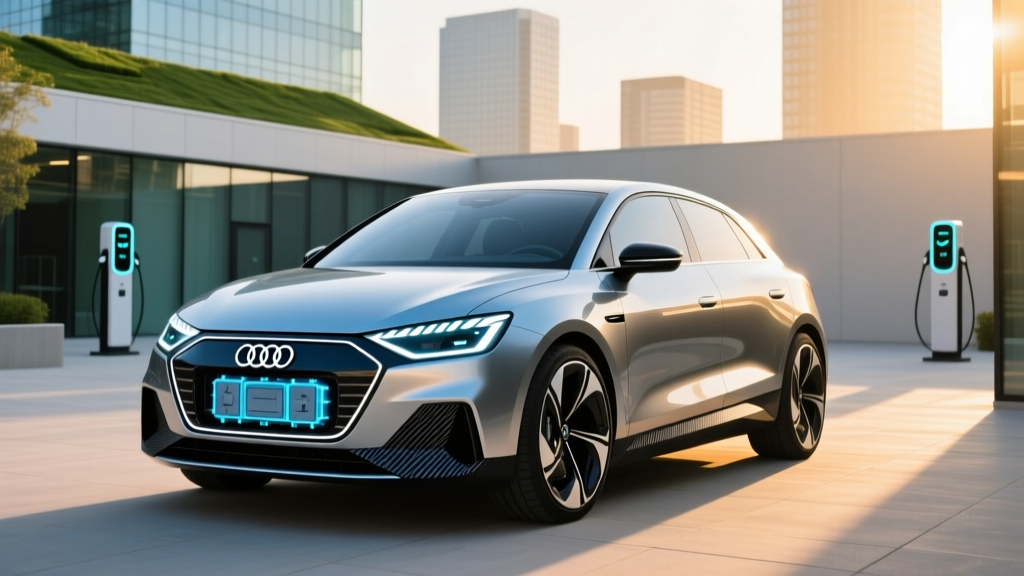
The Audi A2 electric car is not available for purchase in the United States in 2026. The original Audi A2 was a lightweight aluminum hatchback sold only in Europe from 2000–2005. Audi built a one-off e-tron concept based on the A2 in 2011, but it never reached production. As of 2026, Audi has not announced any plans to revive the A2 nameplate as a production EV. If you're searching for a compact Audi electric car, your real options in the US market are the Audi Q4 e-tron (starting ~$49,800) and the Audi Q6 e-tron (starting ~$63,800).
Why the Audi A2 Electric Car Still Generates Searches
The A2 occupies a unique space in automotive history. Built on Audi's Aluminum Space Frame (ASF), it weighed roughly 895 kg (1,973 lbs) — lighter than many modern city cars — and achieved exceptional fuel economy for its era. When Audi debuted the A2 e-tron concept at the 2011 Frankfurt Motor Show, it featured a 24 kWh lithium-ion battery pack, an 85 kW (114 hp) electric motor, and a claimed range of about 200 km (124 miles) on the NEDC cycle.
That concept was a technology demonstrator, not a production commitment. Audi instead directed its EV strategy toward the e-tron SUV (now called the Q8 e-tron), the Q4 e-tron on the VW Group's MEB platform, and the PPE-based Q6 e-tron. The compact hatchback segment in the US market has been deprioritized by most luxury brands, which focus on crossovers and SUVs for American buyers.
Occasional rumors surface about a spiritual A2 successor — potentially an electric compact on the MEB+ or a future SSP platform — but nothing has been officially confirmed for production, let alone for the US market.
The Real Audi EV Alternatives for US Buyers in 2026
If you want an Audi electric car, here's what's actually available, with EPA-confirmed data:
| Model | Battery (kWh, usable) | EPA Range | Peak DC Charge (kW) | 10–80% Time | 0–60 mph | Base MSRP |
|---|---|---|---|---|---|---|
| Q4 e-tron 55 quattro | 77 kWh, NMC | 265 mi | 175 kW | ~28 min | 5.8 sec | $49,800 |
| Q6 e-tron quattro | 94 kWh, NMC | 321 mi | 270 kW | ~21 min | 4.9 sec | $63,800 |
| Q8 e-tron 55 quattro | 106 kWh, NMC | 285 mi | 170 kW | ~31 min | 5.6 sec | $74,400 |
Real-world range caveat: Expect roughly 80–85% of EPA range during sustained highway driving at 70+ mph, and 25–35% range reduction in sub-freezing temperatures without preconditioning. The Q6 e-tron's 800V architecture gives it a meaningful charging-speed advantage over the Q4 and Q8 e-tron, which use 400V systems.
Audi EV vs. Gas Equivalent: The Ownership Cost Reality
Let's compare the Q4 e-tron 55 against a similarly equipped Audi Q5 45 TFSI (gas) over a 5-year, 75,000-mile ownership period. This is where the economics either work or don't — depending on your situation.
| Cost Category | Q4 e-tron 55 (EV) | Q5 45 TFSI (Gas) |
|---|---|---|
| Purchase Price (MSRP) | $49,800 | $45,600 |
| Federal Tax Credit (§30D)* | –$0 to $7,500 | $0 |
| Estimated Fuel/Energy (75k mi) | $3,200 (home charging @ $0.14/kWh) | $10,500 (25 MPG avg @ $3.50/gal) |
| Maintenance (5 yr) | $1,800 | $4,200 |
| Insurance (5 yr est.) | $9,500 | $7,800 |
| Total (before credit) | $64,300 | $68,100 |
| Total (after max credit) | $56,800 | $68,100 |
*The IRS §30D credit requires meeting MSRP caps ($80,000 for SUVs), buyer income limits ($150K single / $300K joint), and critical-mineral/battery-component sourcing thresholds. As of 2026, the Q4 e-tron's credit eligibility depends on its specific battery sourcing — verify on the fueleconomy.gov credit lookup before purchasing. The credit can now be transferred to the dealer at point of sale as a down-payment reduction.
The EV wins on fuel and maintenance savings — roughly $7,300 and $2,400 respectively over five years — but loses on higher insurance premiums (typically 15–25% more for EVs) and a higher sticker price. The tax credit, when available, tips the scales decisively in the EV's favor.
Real-World Ownership: What First-Time Audi EV Buyers Must Know
Before committing to any Audi EV — or any EV — evaluate these four practical factors honestly:
1. Home Charging Access Is the Make-or-Break Factor
Over 80% of EV charging happens at home. If you can install a Level 2 charger (240V, 40–48A circuit), you'll wake up every morning with a full battery and rarely visit a public charger. A typical Level 2 home installation costs $800–$2,500 total (charger unit plus electrician labor and permit), depending on panel capacity and wiring distance. If your home has a 100A electrical panel, you may need a $1,500–$3,000 panel upgrade to 200A.
No home charging? Relying exclusively on public DC fast charging costs roughly 2–3× more per mile than home charging (typically $0.30–$0.55/kWh at Electrify America or EVgo stations) and adds 20–30 minutes per session, 2–3 times per week. This is livable but noticeably less convenient and more expensive.
2. Cold Weather Range Loss Is Real
In testing and owner reports, NMC-based Audi EVs lose approximately 20–30% of range at 20°F (–7°C) compared to mild-weather driving. The Q4 e-tron's 265-mile EPA range may drop to 185–210 miles on a cold January commute. Audi's heat pump (standard on Q6 e-tron, optional on Q4 e-tron) mitigates this by ~5–8 percentage points. Preconditioning the battery while plugged in recovers some range and improves charging speed.
3. DC Fast Charging Isn't a Flat Rate
A "175 kW peak" charge rate applies only in the 10–40% state-of-charge window. Above 60%, the rate tapers significantly. The Q4 e-tron at 175 kW peak may sustain 150+ kW from 10–40%, then drop to 80 kW by 60%, and 40 kW by 80%. This is why manufacturers quote 10–80% times rather than 0–100% — charging the final 20% takes nearly as long as the first 70%.
4. Battery Degradation Is Slower Than Most Buyers Fear
Audi provides an 8-year/100,000-mile battery warranty guaranteeing at least 70% capacity retention. Real-world data from MEB-platform vehicles (shared with the Q4 e-tron) suggests approximately 5–8% degradation over 100,000 miles of typical use. NMC chemistry degrades slightly faster than LFP but offers higher energy density. For most owners, the battery will outlast the vehicle's useful life.
Common Audi EV Misconceptions — Addressed With Data
| Myth | Fact |
|---|---|
| "The Audi A2 electric car is available to buy" | The A2 e-tron was a 2011 one-off concept. No production version exists. Audi's US EV lineup starts with the Q4 e-tron. |
| "EV batteries need replacing every 5 years" | Industry data shows modern NMC packs retain ~90–95% capacity at 100k miles. Audi's warranty covers 8 yr / 100,000 mi at 70%+ capacity. |
| "Public charging takes hours" | A Q6 e-tron at a 350 kW Electrify America station adds ~180 miles in 15 minutes (10–80% in ~21 min). It's slower than gas fill-ups but viable for road trips. |
| "EVs cost more to own, period" | Higher purchase price is offset by $7,300+ fuel savings and $2,400+ maintenance savings over 5 years. With the §30D credit, total cost of ownership favors the EV. |
| "I need a Tesla to access Superchargers" | As of 2026, Audi EVs with NACS adapters (or built-in NACS ports on newer models) can access Tesla Supercharger V3/V4 stations, dramatically expanding the fast-charging network. |
Your Decision Framework: Should You Buy an Audi EV in 2026?
If-Then EV Buyer Guide
- IF you have home Level 2 charging access AND your daily commute is under 100 miles round-trip → THEN the Q4 e-tron is an excellent fit. You'll rarely need public charging and will save ~$1,400/year vs. gas.
- IF you take regular road trips (300+ miles) AND want the fastest possible charging → THEN prioritize the Q6 e-tron with its 800V architecture and 270 kW peak rate. The 21-minute 10–80% time is meaningfully faster than the Q4's 28 minutes.
- IF you live in a cold climate (frequent sub-30°F winters) AND your commute is long → THEN choose the Q6 e-tron (321 mi EPA) over the Q4 (265 mi) to maintain a comfortable buffer after cold-weather range loss. Specify the heat pump.
- IF you cannot install home charging AND reliable public chargers are scarce in your area → THEN consider a PHEV like the Audi Q5 TFSI e (23 miles electric-only, 27 MPG combined gas) as a bridge solution until charging access improves.
- IF you specifically want a compact hatchback (the A2's spiritual segment) → THEN look at the Volvo EX30 (265 mi EPA, ~$36,000) or the Mini Cooper SE as alternatives — Audi does not currently compete in this segment in the US.
Frequently Asked Questions
Will Audi ever make an electric A2?
Audi has not announced any production electric A2 as of early 2026. The brand's compact EV strategy focuses on the Q4 e-tron crossover. A future compact hatchback on the VW Group's upcoming SSP platform is possible but unconfirmed. Any announcement would likely debut in Europe first, with US availability uncertain.
Does the Audi Q4 e-tron qualify for the $7,500 federal tax credit?
Credit eligibility under IRS §30D depends on battery component sourcing and critical-mineral requirements that change annually. The Q4 e-tron's eligibility has varied by model year. Always check the current status on fueleconomy.gov and confirm with your dealer before signing. Income limits ($150K single / $300K joint AGI) and the $80,000 SUV MSRP cap also apply.
How much does it cost to charge an Audi EV at home?
At the US average electricity rate of ~$0.16/kWh, fully charging a Q4 e-tron's 77 kWh battery costs roughly $12.30, yielding about 265 miles of range. That's approximately $0.047 per mile — compared to $0.14 per mile for a Q5 getting 25 MPG at $3.50/gallon. Over 15,000 miles/year, home charging saves roughly $1,400 annually.
What's the difference between kW and kWh in EV specs?
kW (kilowatts) measures power — how fast energy flows. It's the charge rate at a DC fast charger (e.g., 175 kW peak). kWh (kilowatt-hours) measures energy capacity — how much the battery holds (e.g., 77 kWh). Think of kW as the width of a hose and kWh as the size of the tank. A wider hose (higher kW) fills the tank (kWh) faster.
Can I use Tesla Superchargers with an Audi EV?
Yes, with a caveat. Audi has been transitioning to the NACS (North American Charging Standard) connector. Newer 2025+ models may include NACS ports natively. Older CCS-equipped Audi EVs can access Superchargers using a manufacturer-approved CCS-to-NACS adapter. Verify adapter compatibility with Audi directly before purchasing a third-party adapter, as not all support full communication protocols.
Is the Audi Q4 e-tron all-wheel drive?
The Q4 e-tron 55 comes standard with quattro all-wheel drive (dual motors, 295 hp combined). The base Q4 e-tron 40 is rear-wheel drive with a single 201 hp motor and slightly higher range (265 vs. 242 miles EPA for AWD). In snowy climates, the AWD 55 is the stronger choice despite the modest range trade-off.