Quick Answer: Is an Aston Martin EV Available Now?
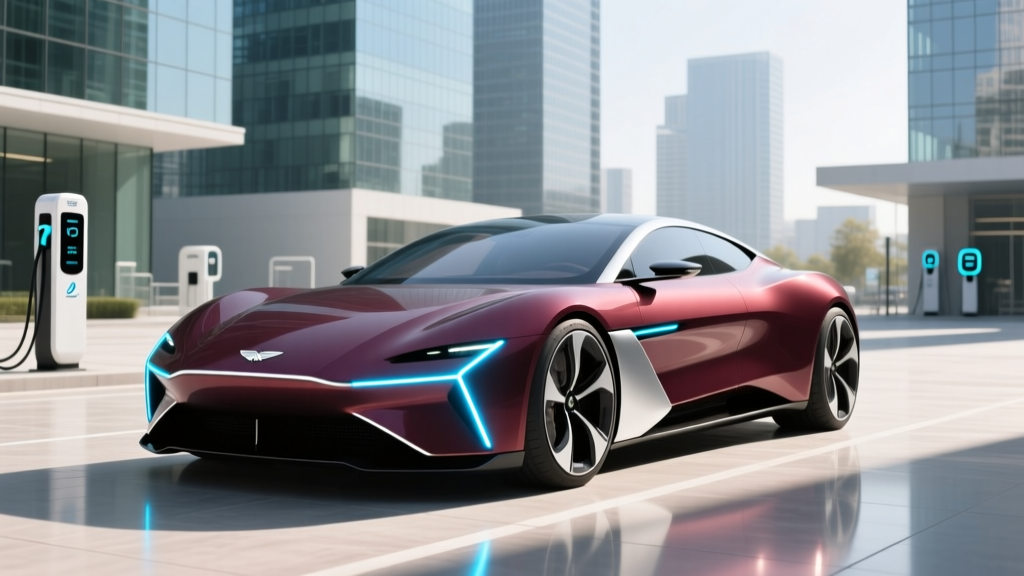
As of early 2026, Aston Martin does not sell a production EV. The brand's first dedicated electric vehicle — originally previewed as the DBX-e and now expected under Aston Martin's next-generation EV platform — remains in pre-production, with delivery targeted for late 2026 or 2027. Aston Martin's current electrified offerings are limited to the Valhalla plug-in hybrid (PHEV) and mild-hybrid V8 models like the DB12 and Vantage. If you want an electric Aston Martin today, you cannot buy one. If you are considering the brand and want to understand what's coming, this guide breaks down the announced specs, estimated ownership costs, and how an Aston Martin EV would compare against rivals like the Porsche Taycan, Lotus Eletre, and Rolls-Royce Spectre.
Aston Martin's Electrification Roadmap: Where Things Stand
Aston Martin's path to electrification has been neither linear nor fast. The brand originally announced a full EV — the Rapide E — back in 2019, produced just 155 units, and then shelved the program. Since then, under CEO Adrian Hallmark (appointed 2024) and with investment from Lucid Group, Aston Martin has pivoted toward a more deliberate electrification strategy.
In 2025, Aston Martin and Lucid announced a technology partnership: Lucid will supply powertrain components — including motors and battery systems — for Aston Martin's future EVs. This is significant because Lucid's drive units are among the most power-dense and efficient in the industry, powering the Lucid Air with up to 510 miles of EPA range from a ~118 kWh battery pack.
Current Electrified Lineup (2026 Model Year)
- Valhalla (PHEV): Mid-engine hybrid supercar. 4.0L twin-turbo V8 + electric motors. Combined output: ~1,012 HP. Limited electric-only mode (estimated under 10 miles). MSRP from ~$800,000. Production extremely limited.
- DB12 / Vantage / DBX707 (Mild Hybrid): These use a 48V mild-hybrid system to assist the 4.0L twin-turbo V8. They cannot drive on electric power alone. The hybrid system improves throttle response and marginally aids fuel economy but does not provide meaningful electric-only range.
Announced/Expected EV Program
- Platform: New dedicated EV architecture (not a rebadged existing model)
- Powertrain partner: Lucid Group (motors, inverter technology, battery engineering support)
- First model expected: Late 2026 announcement, deliveries likely 2027
- Target segment: High-performance luxury GT/SUV, competing with Porsche Taycan Turbo S, Lotus Eletre R, and Rolls-Royce Spectre
- Estimated price range: $200,000–$350,000+ based on brand positioning
Important: All specs for Aston Martin's upcoming EV are preliminary and subject to change. Aston Martin has not published official EPA range, battery capacity, or charging figures as of this writing. The estimates below are informed by the Lucid partnership, competitor benchmarks, and industry analysis.
Projected Specs: How an Aston Martin EV Might Compare
Until Aston Martin releases official specifications, the most useful exercise is benchmarking against the luxury EV competitors an Aston Martin EV would need to match or exceed. Given the Lucid powertrain partnership, we can make informed projections.
| Specification | Porsche Taycan Turbo S (2026) | Lotus Eletre R (2026) | Rolls-Royce Spectre (2026) | Aston Martin EV (Projected) |
|---|---|---|---|---|
| Est. Battery (kWh usable) | 97 kWh (NMC) | 112 kWh (NMC) | 102 kWh (NMC) | ~110–120 kWh (NMC est.) |
| EPA Range | ~280 mi | ~300 mi | 264 mi | ~300–350 mi (est.) |
| Peak DC Fast Charge | 320 kW | 350 kW | 195 kW | ~300–350 kW (est.) |
| 10–80% Charge Time | ~18 min | ~20 min | ~34 min | ~18–22 min (est.) |
| Horsepower | 939 HP (Launch Control) | 905 HP | 577 HP | ~700–1,000 HP (est.) |
| 0–60 mph | 2.4 sec | 2.95 sec | 4.4 sec | ~2.5–3.5 sec (est.) |
| Base MSRP | $197,400 | $145,000 | $420,000 | $200,000–$350,000 (est.) |
| Battery/Powertrain Warranty | 8 yr / 100,000 mi | 8 yr / 100,000 mi | 8 yr / unlimited mi | TBD (likely 8 yr / 100k mi) |
Sources: fueleconomy.gov (EPA data for Taycan and Spectre), manufacturer press pages. Aston Martin EV figures are projections, not confirmed specs.
Real Costs and Ownership: What to Budget For
Buying a $200,000+ EV involves different financial dynamics than a comparable gas-powered Aston Martin. Here is how the numbers break down.
Purchase Price and the Federal Tax Credit
Under current IRS §30D clean vehicle credit rules for 2026:
- MSRP cap: $80,000 for SUVs/pickups/vans; $55,000 for sedans/coupes. An Aston Martin EV will far exceed both caps.
- Result: An Aston Martin EV will not qualify for the $7,500 federal tax credit.
- Income cap: AGI limits ($150K single / $300K joint) would also exclude most buyers at this price point.
- State incentives: Some states offer additional credits or rebates that may apply — check your state's energy office for current programs.
Expect to pay full MSRP plus destination, dealer fees, and luxury tax where applicable. There is no federal purchase incentive at this price tier.
Charging vs. Fueling: A Concrete Comparison
| Metric | Aston Martin DB12 (Gas V8) | Aston Martin EV (Projected) |
|---|---|---|
| Combined efficiency | ~18 MPG (premium required) | ~2.5–3.0 kWh/mi (est.) |
| Annual miles driven | 8,000 mi (typical luxury GT usage) | 8,000 mi |
| Fuel/energy cost per unit | $5.20/gal (93 octane, 2026 avg) | $0.16/kWh (home) / $0.48/kWh (public DCFC) |
| Annual fuel/energy cost (home charging) | $2,311 | $320–$384 |
| Annual fuel/energy cost (public DCFC only) | $2,311 | $960–$1,152 |
| Annual savings (home charging) | — | ~$1,927–$1,991 vs. gas |
Context matters: At 8,000 miles per year — reasonable for a luxury grand tourer — the annual energy savings of roughly $2,000 are real but modest relative to a $250,000+ purchase price. The financial case for an Aston Martin EV rests more on performance, refinement, and lower maintenance costs than on fuel savings alone.
Maintenance Cost Differences
EVs eliminate oil changes, spark plugs, transmission fluid, and exhaust system maintenance. For a high-performance vehicle, this is meaningful:
- Aston Martin V8 annual maintenance (est.): $1,500–$3,000/year (oil, filters, brakes, fluids)
- EV annual maintenance (est.): $400–$800/year (cabin filter, wipers, brake fluid check, tire rotation)
- Tire wear caveat: High-performance EVs are heavy (5,000+ lbs) with instant torque. Expect tire replacement every 15,000–20,000 miles. A set of performance tires (e.g., Michelin Pilot Sport 4S or Pirelli P Zero) runs $1,600–$2,400 installed.
Insurance
Insurance for a $250,000+ performance EV will be substantial. Based on industry data for comparable vehicles:
- Expect $6,000–$12,000/year depending on driver profile, location, and coverage levels
- EV-specific insurers (e.g., through manufacturer partnerships) may offer competitive rates
- Collision coverage is critical given battery replacement costs ($30,000–$50,000+ for a large pack)
EV vs. Gas Aston Martin: The Decision Framework
With the Valhalla PHEV and mild-hybrid V8 models available now and a full EV on the horizon, here is how to think about the choice.
Choose a Gas/Mild-Hybrid Aston Martin (DB12, Vantage, DBX) If:
- You want to buy today — these models are in production and available through dealers
- You drive long distances frequently and cannot rely on charging infrastructure along your routes
- You value the sound, character, and emotional experience of a twin-turbo V8 — no EV replicates this
- Your annual mileage is low (under 6,000 mi/year), making fuel savings less impactful
- You prefer proven long-term service networks — Aston Martin's dealer network is built around ICE vehicles
Wait for the Aston Martin EV If:
- You have reliable home Level 2 charging (240V, 40A+ circuit) and your daily driving is under 200 miles
- You want maximum performance — electric motors deliver instant torque with no turbo lag or gear shifts
- You value near-silent cruising refinement at highway speeds
- You live in a region with robust DC fast-charging networks (Electrify America, EVgo, or Tesla Supercharger with NACS adapter)
- You are willing to wait until 2027+ for deliveries and accept first-model-year risk
Consider the Valhalla PHEV If:
- You want electrification and a V8 — the PHEV bridges both worlds
- Budget is flexible ($800,000+) and you accept extreme exclusivity and limited production
- Electric-only driving is a bonus, not a requirement (range is under 10 miles)
Real-World Ownership Considerations for a Luxury EV
If you are seriously considering an Aston Martin EV (or any $200K+ electric vehicle), these practical factors will shape your experience more than the spec sheet.
Home Charging Access Is Non-Negotiable
At this price point, relying solely on public charging is impractical and unnecessary. You need:
- A Level 2 home charger: 240V, 48A circuit (hardwired), delivering ~11.5 kW. This adds roughly 35–45 miles of range per hour of charging.
- Installation cost: $800–$2,500 if your electrical panel has capacity. If you need a panel upgrade (100A → 200A service), add $1,500–$4,000.
- Overnight charging: A 120 kWh battery charging from 20% to 80% at 11.5 kW takes roughly 6–7 hours — easily done overnight.
If you live in a condo, apartment, or street-parking situation without charging access, an EV at any price point introduces significant daily friction.
Cold-Weather Range Loss
All EVs lose range in cold weather due to battery chemistry and cabin heating demands. For a large-battery luxury EV:
- Expect 15–30% range reduction at temperatures below 32°F (0°C)
- A projected 320-mile EPA range could drop to 225–270 miles in sustained winter driving
- A heat pump (likely standard on a vehicle at this price) mitigates but does not eliminate this loss
- Preconditioning the battery while plugged in preserves range and improves charging speed in cold weather
Public Charging Infrastructure
For road trips beyond your battery's range, DC fast charging is essential. Key considerations:
- Connector: The industry is converging on NACS (Tesla's connector, now the North American standard). Expect Aston Martin to adopt NACS for its EV, given the Lucid partnership and industry direction.
- Charging speed reality: A "350 kW peak" charger does not deliver 350 kW for the entire session. The charge curve tapers significantly above 80% state of charge. Real-world 10–80% sessions typically average 60–70% of peak rate.
- Network reliability: As of 2026, Tesla Superchargers remain the most reliable public network (~97% uptime). Electrify America and EVgo have improved but still experience occasional downtime. For a luxury EV owner, this inconsistency can be frustrating.
Depreciation
Luxury EVs have experienced steep depreciation in recent years, driven by rapid technology advancement, price cuts from Tesla, and buyer uncertainty about battery longevity:
- The Porsche Taycan has seen 40–55% depreciation over 3 years in some trims (per industry resale data)
- The Rolls-Royce Spectre has held value better due to extreme exclusivity
- An Aston Martin EV's depreciation will depend heavily on production volume, brand cachet, and how quickly the technology ages
- First-model-year vehicles from any brand carry additional depreciation risk
Common Misconceptions About Aston Martin's EV Plans
| Myth | Fact |
|---|---|
| "Aston Martin already sells an electric car." | The Rapide E (2019) was a 155-unit limited run, never a production model. No Aston Martin EV is currently available for purchase. |
| "The Lucid deal means it's just a rebadged Lucid Air." | The partnership supplies powertrain components (motors, battery tech). Aston Martin is developing its own dedicated EV platform, chassis, and body. The driving experience will be distinct. |
| "It will qualify for the $7,500 federal tax credit." | Almost certainly not. The §30D credit has MSRP caps ($55K sedans, $80K SUVs) and income limits that exclude this vehicle class entirely. |
| "EVs don't need any maintenance." | EVs need less maintenance — no oil changes or exhaust repairs — but tires, brakes (fluid), cabin filters, coolant, and suspension components still require service. Heavy EVs wear tires faster. |
| "The battery will need expensive replacement within a few years." | Modern NMC batteries with active thermal management typically retain 85–90% capacity after 100,000 miles. Federal law mandates a minimum 8-year/100,000-mile battery warranty. At this price point, Aston Martin will likely exceed that minimum. |
| "I can charge it at any public station." | Connector compatibility matters. You will need to confirm the vehicle's connector type (likely NACS) and whether adapters are needed for CCS stations. Not all public chargers support every connector. |
What a First-Time Luxury EV Buyer Should Know
If the Aston Martin EV will be your first electric vehicle, here are the essentials that separate informed buyers from frustrated ones:
- kW vs. kWh — know the difference. kW (kilowatts) measures power — how fast you charge. kWh (kilowatt-hours) measures energy — how big the battery is and how far you can drive. A 120 kWh battery charged at 11.5 kW (Level 2) takes roughly 10 hours from empty. That same battery at 300 kW (DC fast charge) goes from 10–80% in about 20 minutes.
- EPA range is a best-case scenario. Real-world range depends on speed, temperature, terrain, and driving style. Highway driving at 75+ mph reduces range by 15–25% versus the EPA combined figure. Cold weather adds another 15–30% reduction. Plan trips using 70–75% of EPA range as your practical buffer.
- Charging speed matters more than battery size for road trips. A vehicle that charges at 350 kW can add 200 miles in 15 minutes. A vehicle limited to 150 kW takes twice as long. For frequent long-distance drivers, sustained charge rate is the spec that determines your travel experience.
- Preconditioning is essential. Most EVs allow you to warm the battery before a fast-charging stop (via navigation routing or manual activation). A preconditioned battery charges significantly faster — sometimes 30–50% faster in cold weather. Always precondition before DC fast charging.
- Install your home charger before the car arrives. A licensed electrician can install a Level 2 charger in 1–3 hours if your panel has capacity. Do this weeks before delivery. Showing up to a new EV with no home charging plan is a common first-owner mistake.
- Understand the charge curve. EVs charge fastest between 10–50% state of charge, then taper. The "10–80% in 20 minutes" spec means the last 20% (80–100%) might take another 20+ minutes. On road trips, charge to 80% and go — the time penalty for topping off is rarely worth it.
Frequently Asked Questions
When will the Aston Martin EV be available to buy?
Aston Martin has not confirmed an exact on-sale date. Based on the Lucid partnership timeline and industry reporting, the first EV is expected to be formally revealed in late 2026, with customer deliveries beginning in 2027. Reservations or deposit programs may open before the official reveal. Contact your local Aston Martin dealer for the latest allocation information.
Will the Aston Martin EV use Tesla Superchargers?
This has not been confirmed, but the industry direction strongly suggests yes. With Aston Martin's Lucid partnership (Lucid has committed to NACS), and nearly every major automaker adopting the NACS connector for North American vehicles, it is highly likely the Aston Martin EV will ship with a NACS port and have access to the Tesla Supercharger network (now over 25,000 stalls in North America).
How does the Aston Martin EV compare to buying a Porsche Taycan today?
The Taycan Turbo S is a proven, production vehicle with known specs: 939 HP, ~280 miles EPA range, 320 kW peak charging, and a starting price of ~$197,400. If you want a high-performance luxury EV now, the Taycan is the benchmark. The Aston Martin EV will need to match or exceed these figures while delivering the brand's distinctive design and GT character. Expect the Aston Martin to carry a price premium for exclusivity and brand cachet.
What will it cost to insure an Aston Martin EV?
Based on comparable luxury performance EVs, expect $6,000–$12,000 annually for comprehensive and collision coverage, depending on your driving record, location, and deductible. EVs can carry higher insurance premiums due to specialized repair requirements and expensive battery packs. Get quotes from multiple insurers before committing to a purchase.
Can I charge an Aston Martin EV on a standard 120V outlet?
Technically yes, but practically no. A standard 120V outlet (Level 1) delivers about 1.4 kW, adding roughly 4–5 miles of range per hour. Fully charging a ~120 kWh battery at this rate would take 80+ hours. Level 2 home charging (240V, 48A) is the practical minimum for daily ownership of a large-battery EV.
Will Aston Martin offer a hybrid before the full EV?
Aston Martin already offers mild-hybrid V8 models (DB12, Vantage, DBX707) with 48V systems that provide minor efficiency and performance assists but no electric-only driving. The Valhalla PHEV offers true plug-in hybrid capability but is a $800,000+ limited-production supercar. For a practical electrified Aston Martin you can actually buy and drive daily, the full EV program is the one to watch — but it is not yet available.
Editorial note: This article reflects information available as of early 2026. Aston Martin's EV specifications, pricing, and timeline are subject to change. For the latest official information, consult astonmartin.com or your authorized dealer. Tax credit information reflects 2026 IRS rules; consult a tax professional for personal eligibility. Range and efficiency figures for unreleased vehicles are projections based on industry benchmarks and the Lucid partnership, not EPA-certified data.