Quick Answer: Is There an Aston Martin Electric Vehicle You Can Buy Today?
No. As of early 2026, Aston Martin has not yet delivered a production electric vehicle. The brand's first EV — widely expected to be a high-performance luxury SUV built on a dedicated electric platform — remains in the announced/pre-production stage, with deliveries tentatively targeted for late 2026 or 2027. Aston Martin's previous all-electric model, the Rapide E (limited to 155 units in 2019), is long discontinued. If you need a six-figure electric luxury SUV now, alternatives like the Lotus Eletre, BMW iX M60, or Mercedes EQS SUV are currently available. If you're committed to the Aston Martin badge, you'll need to wait — and plan for a price likely starting above $200,000.
What We Know About Aston Martin's Electric Plans in 2026
Aston Martin has publicly committed to electrification, but the timeline has shifted multiple times. Under its "Racing. Green." strategy, the company announced plans for a fully electric model by 2025 — a target that has since slipped. CEO Adrian Hallmark, who took over in late 2022, has recalibrated expectations, emphasizing a plug-in hybrid (PHEV) bridge strategy before full battery-electric production.
Here's the current state of Aston Martin's electrification roadmap:
- Valhalla PHEV — The mid-engine hybrid supercar is the closest electrified Aston Martin product to market, using a twin-turbo V8 paired with electric motors. Expected output: ~937 hp combined. This is a PHEV, not a BEV.
- First dedicated BEV — Expected to be a luxury SUV or grand tourer, built on a new lightweight architecture. Aston Martin has not published final battery capacity (kWh), EPA range estimates, or DC fast-charge rates. Preliminary industry estimates suggest a 100+ kWh battery pack targeting 300+ miles of range, but these are unconfirmed.
- Partnership with Lucid — Aston Martin signed a technology agreement with Lucid Group to explore powertrain and battery supply for future EVs, though specific integration details remain undisclosed.
- Full electric lineup target — Aston Martin has stated an ambition to offer a fully electric core range by approximately 2030, contingent on market demand and regulation.
Bottom line: Any specs circulating online for an "Aston Martin electric" vehicle are preliminary or speculative. We'll update this guide when official EPA figures, pricing, and delivery dates are confirmed.
Estimated Specs vs. Current Luxury EV Competitors
Since official Aston Martin BEV specs don't yet exist, the table below compares estimated Aston Martin electric SUV figures against luxury EVs you can actually order today. Estimated values are marked clearly.
| Spec | Aston Martin Electric SUV (Estimated) | Lotus Eletre R | BMW iX M60 | Mercedes EQS 580 SUV |
|---|---|---|---|---|
| Status | Announced / Pre-production | Available | Available | Available |
| Battery (usable kWh) | ~105-115 (est.) | 112 | 105.2 | 108.4 |
| EPA Range (mi) | ~280-320 (est.) | ~300 | 296 | 305 |
| Horsepower | ~600-700 (est.) | 905 | 610 | 536 |
| 0-60 mph (sec) | ~3.5 (est.) | 2.9 | 3.6 | 4.4 |
| Peak DC Charge (kW) | TBD | 350 | 200 | 200 |
| 10-80% DCFC (min) | TBD | ~20 | ~31 | ~31 |
| Base MSRP | >$200,000 (est.) | $149,800 | $111,500 | $127,100 |
| Federal Tax Credit (§30D) | Unlikely (MSRP cap) | Unlikely (MSRP cap) | Possible (varies by sourcing) | Unlikely (MSRP cap) |
Sources: fueleconomy.gov, manufacturer press pages. Estimated Aston Martin figures are based on industry analysis of the brand's stated performance targets and platform partnerships — not confirmed specifications.
Real-World Ownership Costs: What a Six-Figure EV Actually Costs to Run
Even without final Aston Martin pricing, we can model ownership costs using comparable luxury EVs. Buyers in this segment should understand that the purchase price is only the beginning.
| Cost Category (5-Year Estimate) | Luxury EV (~$200K) | Luxury Gas SUV (~$200K) | Notes |
|---|---|---|---|
| Purchase Price | $210,000 | $200,000 | EV premium likely for Aston Martin BEV |
| Federal Tax Credit (§30D) | $0 | $0 | MSRP cap for SUVs is $80,000 — these don't qualify (IRS §30D rules) |
| Energy/Fuel (5 yr, 60K mi) | $5,400 – $8,100 | $14,500 – $19,000 | EV: $0.15-$0.22/kWh home; Gas: $4.00/gal at 14 MPG |
| Maintenance (5 yr) | $2,500 – $4,000 | $6,000 – $10,000 | No oil changes, fewer moving parts on EV; tire wear higher due to weight/torque |
| Insurance (5 yr) | $22,000 – $35,000 | $18,000 – $28,000 | EV insurance runs 15-30% higher on average for luxury segment |
| Depreciation (5 yr) | $95,000 – $125,000 | $80,000 – $110,000 | Luxury EVs depreciate steeply; first-gen models carry higher risk |
| 5-Year Total Cost of Ownership | $239,900 – $282,100 | $228,500 – $277,000 | EV saves on fuel/maintenance; higher insurance and depreciation offset gains |
Charging Costs in Practice
For a ~110 kWh battery pack (estimated), a full home charge at $0.18/kWh (national average for residential electricity) costs roughly $19.80, yielding an estimated 280-320 miles. That works out to about $0.06-$0.07 per mile on home charging.
DC fast charging on the road will cost more — Electrify America and similar networks charge $0.43-$0.56/kWh in many markets, pushing road-trip energy costs to $0.15-$0.18 per mile. Still cheaper than premium gasoline at $4.50/gal and 14 MPG ($0.32/mile), but the gap narrows significantly on long trips.
EV vs. Gas: What Changes When You Go Electric in This Segment?
| Factor | Aston Martin Electric (Projected) | Aston Martin DBX707 (Gas) |
|---|---|---|
| Powertrain | Dual/Tri-motor BEV | 4.0L Twin-Turbo V8, 697 hp |
| 0-60 mph | ~3.5 sec (est.) | 3.1 sec |
| EPA Range / Tank Range | ~300 mi (est.) | ~300 mi (19.4-gal tank, ~15 MPG combined) |
| Refuel/Recharge Time | 20-35 min (10-80% DCFC) | 5 min (gas station) |
| Annual Fuel/Energy Cost | ~$1,400 (home charging) | ~$3,600 (premium gas, 12K mi/yr) |
| Maintenance Intervals | Tire rotation, cabin filter, brake fluid | Oil, filters, spark plugs, transmission fluid, brakes |
| Home Fueling | Yes — Level 2 overnight | No |
| Exhaust Note | Silent (synthetic audio optional) | V8 — a core part of the Aston Martin identity |
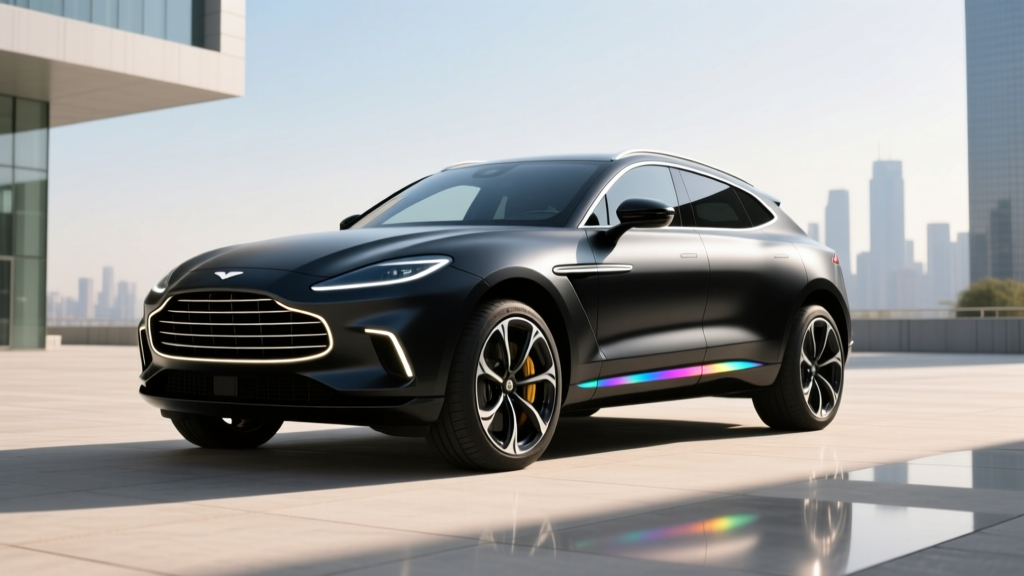
The DBX707 delivers the visceral sound and mechanical drama that defines Aston Martin. An electric successor will trade that for instant torque, lower running costs, and a quieter cabin — a fundamentally different character that may or may not align with what traditional Aston Martin buyers want.
Common Misconceptions About Luxury Electric SUVs
| Myth | Fact |
|---|---|
| "A luxury EV will qualify for the $7,500 federal tax credit." | The §30D credit has an $80,000 MSRP cap for SUVs and an $55,000 cap for sedans. A $200,000+ Aston Martin electric will not qualify. Buyer income limits ($300K joint / $150K single) also apply. See IRS guidelines. |
| "An EV with 300 miles of EPA range always goes 300 miles." | Real-world highway driving at 75+ mph typically yields 80-88% of EPA range. Cold weather (below 32°F) can reduce range by 20-35%. A 300-mile EPA rating realistically means 240-260 highway miles in mild weather, and potentially 195-230 in winter. |
| "I can charge an EV anywhere in 15 minutes." | Peak DC fast-charge rates (e.g., 350 kW) are sustained only briefly. Charging slows significantly above 80% SoC to protect the battery. A typical 10-80% session at a capable charger takes 18-35 minutes. Charging from 80-100% can add another 20-30 minutes. |
| "EVs don't need maintenance." | EVs eliminate oil changes and exhaust maintenance, but they still need tire replacement (often sooner due to vehicle weight and instant torque), cabin air filters, brake fluid flushes, coolant service, and wiper/washer upkeep. Budget $500-$800/year for a luxury EV. |
| "The battery will need replacing in 5 years." | Modern NMC and LFP battery packs are engineered for 1,000-2,000+ full charge cycles with <20% degradation. Most luxury EVs carry an 8-year/100,000-mile battery warranty (federal minimum). Replacement, if ever needed, costs $15,000-$30,000+ for large packs — but most packs outlast the vehicle's economic life. |
Home Charging: What You Need Before Ordering a Luxury EV
A $200,000 electric SUV deserves proper home charging infrastructure. Here's what that actually requires:
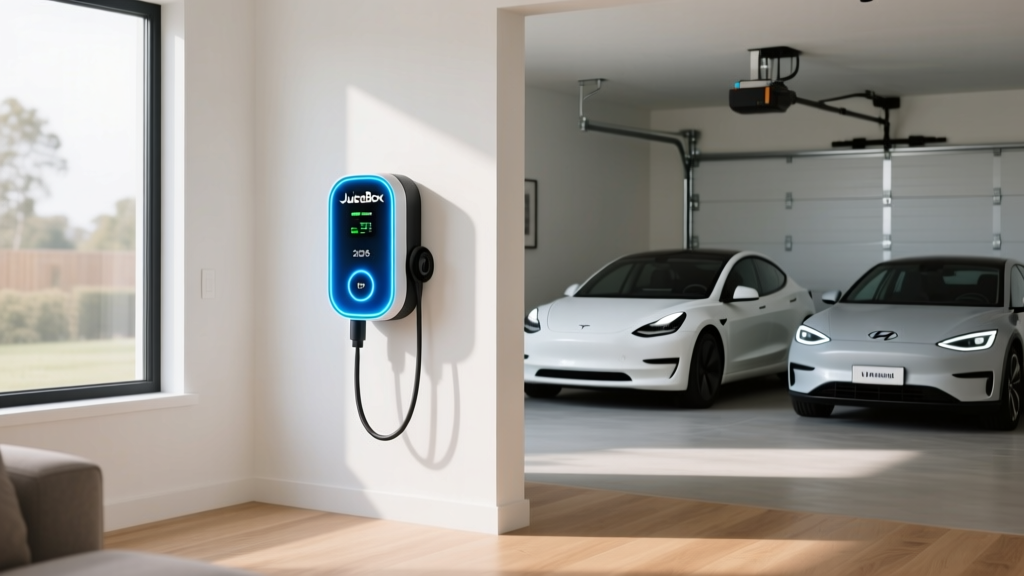
- Level 2 charger (240V, 48A recommended): Adds roughly 25-35 miles of range per hour of charging. A full overnight charge (8-10 hours) replenishes a ~110 kWh battery from near-empty. Equipment costs $500-$800 for a quality hardwired unit (ChargePoint Home Flex, Wallbox Pulsar Max, or Tesla Universal Wall Connector).
- Electrical panel capacity: A 60A circuit (for 48A continuous charging) requires two breaker slots and sufficient panel headroom. Many luxury homes have 200A or 400A service, but older homes may need a panel upgrade ($1,500-$4,000) before installation.
- Professional installation: Licensed electrician labor for a hardwired Level 2 install typically runs $800-$2,500 depending on conduit length, wall material, and local permit requirements.
- Total home charging setup: Budget $1,800-$5,000 all-in for equipment, labor, permits, and any panel work. This is a one-time cost that pays for itself in fuel savings within 1-2 years of regular driving.
If you lack home charging access — common in condos, apartments, and some urban settings — owning a luxury EV becomes significantly less convenient. Public DC fast charging is viable for road trips but expensive and time-consuming as a daily strategy. Confirm your charging situation before committing to any EV purchase.
Decision Framework: Should You Wait for Aston Martin or Buy Now?
Wait for the Aston Martin Electric if:
- You're a brand-committed Aston Martin owner or collector and no other badge satisfies
- You don't need a new vehicle within the next 12-18 months
- You're comfortable paying a first-generation premium ($200,000+) with unproven EV reliability data
- You value exclusivity and low production volume over charging network convenience
- You already have a daily driver and this would be a weekend/GT car
Buy a Current Luxury EV Now if:
- You need a six-figure electric SUV within the next 6 months
- You want proven charging infrastructure (Lotus Eletre on 350 kW architecture; BMW iX on established CCS networks)
- You prioritize warranty coverage, dealer service infrastructure, and software maturity
- You want real-world range and charging data validated by thousands of owners — not estimates
- You're open to brands like Lotus, BMW, Porsche (Macan EV), or Mercedes for your luxury electric experience
Frequently Asked Questions
When will the first Aston Martin electric vehicle be available?
Aston Martin has targeted its first dedicated BEV for approximately 2026-2027, but the timeline has shifted multiple times. No firm delivery date, pricing, or spec sheet has been published as of early 2026. The Valhalla PHEV (hybrid, not fully electric) is closer to production.
Will an Aston Martin electric qualify for the federal EV tax credit?
Almost certainly not. The IRS §30D credit caps eligible SUVs at an $80,000 MSRP. An Aston Martin BEV is projected to start well above $200,000, placing it far outside credit eligibility regardless of battery sourcing or buyer income.
What battery chemistry will Aston Martin use?
Unconfirmed. The brand's partnership discussions with Lucid (which uses NMC chemistry in its high-performance packs) suggest NMC is likely, prioritizing energy density and performance over the lower cost and longer cycle life of LFP. For a $200K+ performance vehicle, NMC's higher specific energy makes engineering sense.
How does charging an Aston Martin electric compare to fueling a DBX707?
Home Level 2 charging means you wake up with a "full tank" every morning — roughly 280-320 estimated miles of range. The trade-off is road-trip charging: even at peak DC rates, a 10-80% session will take 20-35 minutes versus 5 minutes at a gas pump. For daily driving, EV charging is more convenient. For cross-country trips, gas still wins on speed.
Should I reserve an Aston Martin electric sight unseen?
Exercise caution. Reserving an unpriced, un-spec'd vehicle from a low-volume manufacturer carries risk — production delays, spec changes, and pricing escalation are all common in this segment. If a refundable deposit ($1,000-$5,000) is offered, the financial risk is low, but manage your timeline expectations. Have a backup plan if deliveries slip to 2028.
What's the best luxury electric SUV I can buy right now instead?
For performance: Lotus Eletre R (905 hp, 350 kW charging, ~$149,800). For driving dynamics and brand cachet: Porsche Macan EV (from ~$78,800, qualifies for potential tax credit). For all-around luxury: BMW iX M60 ($111,500, proven platform). Each offers real-world data, established dealer networks, and immediate availability that Aston Martin cannot yet match.