What the Assarel Mine Electric Excavator Means for Fleet Electrification
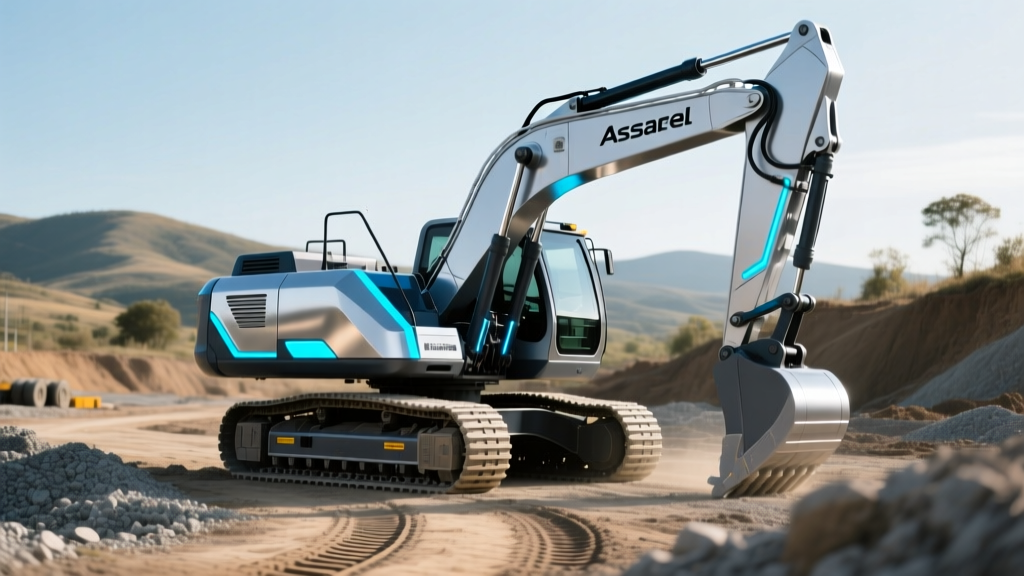
Bottom line: The Assarel Mine electric excavator project — a collaboration between Bulgaria's Assarel Medet AD mining operation and heavy-equipment manufacturers — demonstrates that battery-electric excavation machines can eliminate diesel fuel costs (often $80,000–$150,000+ annually per machine) and cut maintenance expenses by 30–50%. However, these are industrial-grade, site-specific machines requiring dedicated high-power charging infrastructure (typically 150–350 kW DC), significant upfront capital ($500,000–$1.2M+ depending on class), and careful duty-cycle analysis. They are not consumer vehicles, and the economics depend entirely on your operation's electrical grid capacity, duty cycle, and diesel pricing.
If you've searched for the "Assarel Mine electric excavator," you're likely evaluating whether battery-electric heavy equipment makes financial and operational sense for your mining, quarrying, or large-scale earthmoving operation. The Assarel Medet copper mine in Bulgaria has been a notable testbed for electric mining excavators and haul trucks as part of the broader push to decarbonize extractive industries. This guide breaks down the ownership calculus, infrastructure requirements, and decision framework for fleet managers considering electric excavation equipment in 2026.
How Electric Excavators Compare to Diesel: The Real Numbers
The core value proposition of an electric excavator is the elimination of diesel combustion in a machine that typically idles and works 8–20 hours per day. A standard 20–30 ton class diesel excavator burns approximately 5–10 gallons of diesel per hour under mixed load. At $3.80–$4.50 per gallon (bulk off-road pricing in 2026), that's $19–$45 per operating hour in fuel alone.
| Cost Factor | Diesel Excavator (20-30T Class) | Electric Excavator (Equivalent Class) |
|---|---|---|
| Fuel/Energy Cost Per Hour | $19–$45 (diesel) | $6–$18 (electricity at $0.08–$0.18/kWh) |
| Annual Fuel/Energy (2,500 hrs/yr) | $47,500–$112,500 | $15,000–$45,000 |
| Engine/Powertrain Maintenance | $8,000–$15,000/yr (oil, filters, DEF, injectors) | $2,000–$5,000/yr (coolant, hydraulic fluid, minimal drivetrain wear) |
| Upfront Purchase Price | $250,000–$450,000 | $500,000–$1,200,000+ |
| Estimated Service Life | 10,000–15,000 hours | 15,000–20,000+ hours (fewer moving parts) |
| Emissions at Point of Use | Tier 4 Final / Stage V diesel particulates + NOx | Zero tailpipe emissions |
| Underground/Ventilation Benefit | Requires extensive ventilation ($$$) | No exhaust — massive ventilation savings underground |
The payback period typically ranges from 3 to 6 years depending on operating hours, local electricity rates, and diesel prices. Operations running 10+ hours daily with high diesel costs see the fastest returns. The Assarel Medet operation's interest in electrification aligns with a broader European mining trend driven by carbon-reduction mandates and the economics of underground ventilation savings.
Battery Capacity, Charging Infrastructure, and Duty Cycle Reality
Electric excavators in the 20–50 ton class typically carry battery packs ranging from 150 kWh to 600+ kWh, using lithium iron phosphate (LFP) chemistry for its thermal stability, long cycle life (3,000–5,000+ cycles), and safety profile in harsh industrial environments. Unlike the NMC batteries common in passenger EVs, LFP tolerates the deep daily cycling and high ambient temperatures typical of mining operations.
Charging infrastructure is the single largest barrier to adoption. You cannot plug a 300 kWh excavator into a standard outlet. Here's what's actually required:
| Infrastructure Component | Specification | Estimated Cost (2026) |
|---|---|---|
| DC Fast Charger (150–350 kW) | CCS2 or proprietary industrial connector | $80,000–$200,000 per unit |
| Electrical Service Upgrade | 480V 3-phase, 400–800A dedicated feed | $50,000–$250,000+ depending on grid proximity |
| Transformer & Switchgear | Pad-mounted, sized to peak demand | $30,000–$120,000 |
| Site Wiring & Trenching | Heavy-gauge conduit to equipment staging areas | $20,000–$80,000 |
| Energy Management Software | Load balancing, off-peak scheduling | $10,000–$40,000 (annual license) |
| Battery Replacement Reserve | Budget for 60–80% SoH threshold at year 8–12 | $80,000–$250,000 per pack |
A 300 kWh battery charging at 150 kW DC will reach 10–80% State of Charge (SoC) in approximately 90–110 minutes, accounting for charge-curve taper above 80%. Many operations adopt opportunity charging — topping up during shift changes, lunch breaks, and blast-clearance windows — rather than full-cycle charging. This requires strategic charger placement near loading zones and maintenance areas.
For the Assarel Medet operation and similar mines, grid capacity is often the limiting factor. Remote mine sites may need dedicated substations or on-site generation (solar + battery storage) to support multiple electric machines simultaneously. According to the International Energy Agency, heavy-duty vehicle electrification is accelerating but remains constrained by infrastructure investment timelines.
Real-World Ownership: What Fleet Managers Must Plan For
Buying an electric excavator is not like ordering a diesel machine from a dealer. The procurement process involves:
- Duty-cycle analysis: Map your machine's daily energy consumption. An excavator in continuous trenching draws differently than one in spot-loading or demolition. Manufacturers provide kWh/hour estimates, but real-world figures vary 15–30% based on material density, ambient temperature, and operator technique.
- Climate derating: Battery capacity drops 10–25% in sub-freezing conditions. If your operation runs through winters in Montana, Minnesota, or northern Europe, size your battery 20% larger than summer duty-cycle calculations suggest.
- Operator training: Electric excavators deliver instant torque and use regenerative hydraulic systems. Operators accustomed to diesel lag and engine-braking characteristics need 2–4 weeks to adapt for optimal efficiency.
- Telematics integration: Most electric heavy equipment comes with fleet-management software tracking SoC, kWh consumed, cycle counts, and predictive maintenance alerts. Budget IT resources for integration with your existing fleet-management platform.
- Insurance and liability: High-voltage battery systems (typically 400V–800V architecture) require specialized first-responder training and site safety protocols. Insurance premiums may be 10–20% higher initially due to limited actuarial data, though this is normalizing as the installed base grows.
Common Misconceptions About Electric Heavy Equipment
| Myth | Fact |
|---|---|
| "Electric excavators don't have enough power for hard digging." | Electric motors deliver peak torque at 0 RPM. A 200 kW electric drive matches or exceeds the breakout force of a comparable diesel, with faster hydraulic cycle times due to independent electric pump control. |
| "The battery won't last a full shift." | A properly sized pack (matched to your specific duty cycle) covers 6–10 hours. Opportunity charging during breaks extends this indefinitely. LFP chemistry supports 3,000–5,000 full cycles before reaching 80% State of Health (SoH). |
| "Charging takes too long for production schedules." | At 150–350 kW DC, a 10–80% charge takes 60–110 minutes. Strategic opportunity charging during planned downtime (blasting, shift changes, maintenance) eliminates dedicated charging downtime. |
| "Battery replacement will bankrupt the operation." | LFP packs in industrial applications are warrantied for 5–8 years / 10,000–15,000 hours. Replacement cost ($80K–$250K) is spread over the machine's 15,000–20,000 hour service life and offset by years of diesel savings ($30K–$90K/yr). |
| "It only makes sense if you have cheap electricity." | Even at $0.15/kWh (above US industrial average), electric fueling costs $12–$18/hr vs. $25–$45/hr for diesel. The spread widens as diesel prices rise and electricity rates stabilize through PPAs or on-site solar. |
Tax Credits, Incentives, and Regulatory Tailwinds
For US-based operations, the IRS §45W Commercial Clean Vehicle Credit provides up to $40,000 for qualifying heavy-duty electric vehicles (GVWR over 14,000 lbs). However, most mining excavators exceed standard vehicle classifications, and eligibility depends on specific IRS guidance for off-road industrial equipment. Consult a tax professional familiar with heavy-equipment credits and your operation's entity structure.
Additional incentives may include:
- State-level electrification grants (particularly in California, Colorado, and New York for off-road equipment)
- Utility demand-charge offsets or make-ready programs for high-power charging installations
- Accelerated depreciation (MACRS) on both the equipment and charging infrastructure
- Carbon credit monetization in jurisdictions with cap-and-trade programs
The EPA's emissions regulations for off-road diesel equipment continue tightening, making the compliance case for electrification stronger with each regulatory cycle.
Decision Framework: Is an Electric Excavator Right for Your Operation?
Choose an electric excavator if:
- Your machines run 8+ hours daily, 5+ days per week (high utilization maximizes fuel savings)
- You operate underground or in enclosed spaces where diesel ventilation costs exceed $50,000/year
- Your site has (or can economically obtain) 480V 3-phase electrical service with 200A+ spare capacity
- Local diesel prices exceed $3.50/gallon and electricity is below $0.15/kWh
- You face tightening emissions regulations or corporate ESG mandates requiring Scope 1 emission reductions
- You plan to keep the machine 8+ years (allowing full payback and extended savings period)
Stick with diesel (or evaluate hybrid options) if:
- Your operation is remote with no grid access and generator-based electricity costs exceed $0.30/kWh
- Machine utilization is below 1,000 hours/year (payback period extends beyond service life)
- You need frequent long-distance repositioning without charging infrastructure at each site
- Your duty cycle involves sustained peak-power demands that exceed current battery energy density (e.g., continuous heavy ripping in hard rock for 12+ hours without break opportunities)
- Capital budgets cannot absorb the 2–3x upfront premium, and financing/leasing options are unavailable in your market
Frequently Asked Questions
What is the Assarel Mine electric excavator project?
Assarel Medet AD, a major copper mining operation in Bulgaria, has been involved in evaluating and deploying electric mining equipment — including excavators and haul trucks — as part of European mining industry efforts to reduce diesel dependency, cut underground ventilation costs, and meet carbon-reduction targets. The specific equipment models and deployment timelines vary by partnership with OEM manufacturers.
How much does a full-size electric excavator cost?
Electric excavators in the 20–30 ton operating weight class typically range from $500,000 to $1,200,000+ depending on battery capacity, manufacturer, and configuration. This is roughly 2–3x the cost of an equivalent diesel machine, with payback through fuel and maintenance savings typically achieved in 3–6 years of high-utilization operation.
What battery chemistry do electric excavators use?
Most industrial electric excavators use LFP (lithium iron phosphate) battery chemistry. LFP offers superior thermal stability, longer cycle life (3,000–5,000+ cycles to 80% SoH), and better safety in harsh environments compared to NMC. The trade-off is lower energy density (meaning heavier packs for the same kWh), which is less critical in heavy equipment where machine weight contributes to stability and breakout force.
Can electric excavators work in cold climates?
Yes, but with capacity derating. Expect 10–25% range/energy reduction in sub-freezing temperatures. Operations in cold climates should oversize battery packs by 20% and consider battery thermal preconditioning systems. Many industrial LFP packs include integrated thermal management (liquid cooling/heating) to maintain optimal operating temperature.
What charging connector do electric excavators use?
Most use CCS2 (common in Europe) or CCS1 (North America) for DC fast charging, though some manufacturers use proprietary high-current connectors rated for 500A+. Level 2 AC charging (19–22 kW) is typically available for overnight or maintenance-bay topping. Always confirm connector compatibility with your charging infrastructure provider before purchase.
How long do electric excavator batteries last?
LFP battery packs in industrial service are typically warrantied for 5–8 years or 10,000–15,000 operating hours at 80% State of Health (SoH). Real-world lifespan often extends to 12–15 years with proper thermal management and avoidance of sustained 100% SoC storage. Budget $80,000–$250,000 for end-of-life replacement, though by that point the machine will have saved $150,000–$500,000+ in diesel costs.