The Viral Asian Candy Tesla Video Phenomenon Meets Real EV Data
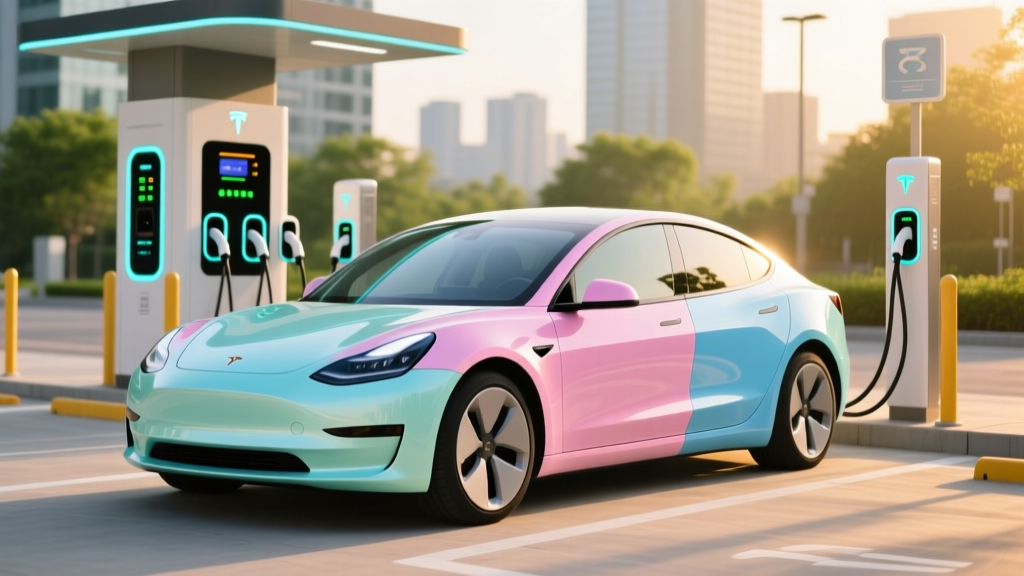
If you've scrolled through TikTok, YouTube Shorts, or Instagram Reels lately, you've likely encountered the Asian candy Tesla video trend — creators showcasing colorful, novelty candies from Japan, South Korea, and China while charging their Tesla at Supercharger stations or sitting in the cabin during a commute. These videos blend EV lifestyle content with ASMR-style snack reviews, and they've racked up millions of views across platforms. But behind the viral entertainment is a practical question: how well does the Tesla Model 3 — the car featured in most of these clips — actually hold up as a daily driver in 2026?
This review cuts through the social media hype and delivers the hard numbers on the current-generation Tesla Model 3 (Highland refresh), covering real-world range, charging speed, pricing after federal tax credits, and whether it still deserves its spot as the default EV recommendation.
2026 Tesla Model 3: Core Specifications at a Glance
| Spec | Long Range AWD | Performance AWD | Rear-Wheel Drive |
|---|---|---|---|
| EPA Range | 341 miles | 315 miles | 272 miles |
| Battery Capacity (usable) | 75 kWh (NMC) | 75 kWh (NMC) | 57.5 kWh (LFP) |
| Peak DC Fast Charge | 250 kW | 250 kW | 170 kW |
| 10–80% DC Charge Time | ~25 min | ~25 min | ~30 min |
| Level 2 Home Charging | 11.5 kW (~44 mi/hr) | 11.5 kW (~44 mi/hr) | 11 kW (~40 mi/hr) |
| 0–60 mph | 4.2 sec | 2.9 sec | 5.8 sec |
| Horsepower | 346 hp | 510 hp | 271 hp |
| Drivetrain | Dual-Motor AWD | Dual-Motor AWD | RWD |
| Base MSRP | $47,740 | $54,990 | $38,990 |
| Efficiency | 132 MPGe / 25 kWh/100mi | 120 MPGe / 28 kWh/100mi | 134 MPGe / 25 kWh/100mi |
| Battery Warranty | 8 yr / 120,000 mi | 8 yr / 120,000 mi | 8 yr / 100,000 mi |
Source: fueleconomy.gov and Tesla's official specifications page. MSRP reflects 2026 pricing before destination fees.
Real-World Range: What the EPA Sticker Doesn't Tell You
Long Range AWD: EPA 341 mi → Expect ~285–305 mi highway (75 mph), ~240–260 mi in cold weather (below 32°F).
RWD (LFP): EPA 272 mi → Expect ~225–245 mi highway, ~185–200 mi in freezing temps.
Performance AWD: EPA 315 mi → Expect ~260–280 mi highway, ~215–235 mi in cold weather.
The Tesla Model 3 Long Range's 341-mile EPA estimate is among the best in the segment, but real-world conditions tell a more nuanced story. Highway driving at sustained 75+ mph speeds reduces range by roughly 10–15% compared to the EPA combined cycle. Cold weather is the bigger equalizer: LFP (lithium iron phosphate) chemistry in the RWD variant suffers greater range loss in freezing temperatures than the NMC (nickel manganese cobalt) packs in Long Range and Performance trims — sometimes 25–30% without preconditioning.
Tesla's heat pump, standard across all 2026 Model 3 trims, helps mitigate winter losses. Preconditioning the battery while plugged in (a feature accessible via the Tesla app) is essential for preserving range and enabling peak DC fast-charge speeds in cold weather. If you're the type of creator filming an Asian candy Tesla video from a Supercharger stall in January, plan for longer charge stops.
Charging Speed: Supercharger Network and Home Setup
| Charging Level | Power (kW) | Miles Added per Hour | Use Case |
|---|---|---|---|
| Level 1 (120V household) | ~1.4 kW | ~5 mi/hr | Emergency / overnight trickle |
| Level 2 (240V home wall connector) | 11.5 kW | ~44 mi/hr | Daily home charging |
| DC Fast (Supercharger V3) | Up to 250 kW | ~170 mi in 15 min | Road trips |
| DC Fast (Supercharger V4) | Up to 350 kW* | Faster taper curve | Emerging locations |
*V4 Supercharger stalls with 350 kW capability are rolling out through 2026; the Model 3 currently caps at ~250 kW peak intake. kW = power (charge speed); kWh = energy (battery capacity) — these are not interchangeable.
The Model 3's charging architecture peaks at 250 kW on V3 Superchargers, achieving a 10–80% charge in roughly 25 minutes for Long Range and Performance variants. However, the charge curve tapers significantly above 60% state of charge (SoC). You'll pull the bulk of energy between 10–50%, where speeds sustain near peak. Above 80%, charging slows dramatically to protect the battery — plan to unplug at 80% on road trips unless you need the extra miles.
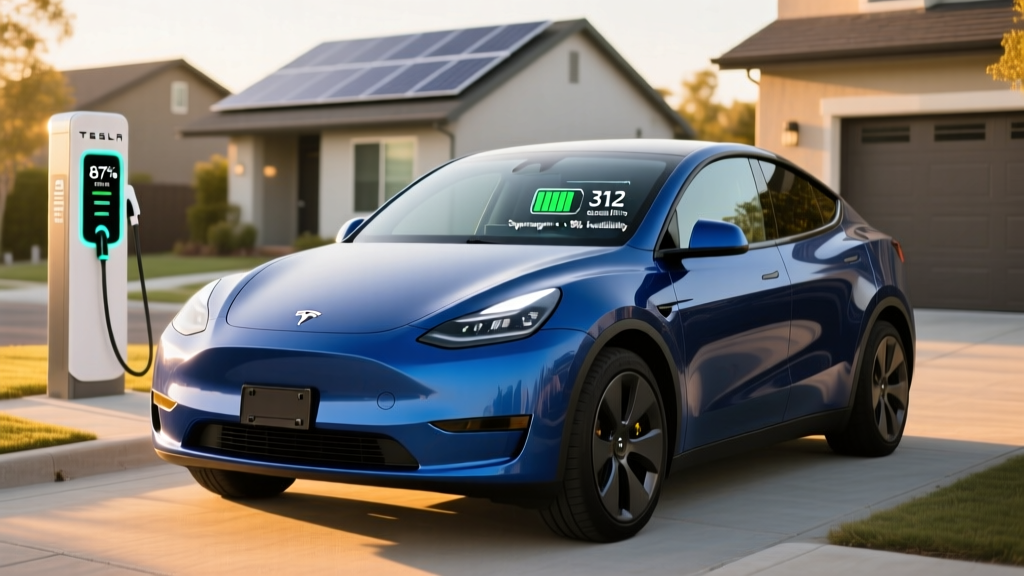
For home charging, Tesla's Wall Connector ($475) on a 60-amp circuit delivers 11.5 kW, adding roughly 44 miles of range per hour. A full overnight charge from 20% to 90% takes about 5–6 hours. Installation costs vary: expect $800–$2,000 for a straightforward install near your electrical panel, or $2,500–$5,000+ if a panel upgrade to 200 amps is needed. Always consult a licensed electrician for a site-specific quote.
With the 2025+ adoption of the NACS (North American Charging Standard) connector as the industry norm, the Model 3's native Tesla plug now works seamlessly across an expanding network of non-Tesla chargers equipped with NACS cables — a significant advantage over CCS-equipped competitors still navigating adapter logistics.
Interior, Tech, and the Creator-Friendly Cabin
The Highland-refreshed Model 3 interior is where the Asian candy Tesla video trend finds its stage. The minimalist cabin centers on a 15.4-inch touchscreen running Tesla's proprietary infotainment OS. There are no physical buttons — climate, mirrors, and glovebox controls all route through the display. This is polarizing: some owners love the clean aesthetic, while others find it distracting while driving.
Key tech features for 2026 include:
- Ventilated front seats (new for Highland) — a welcome upgrade for summer Supercharger stops
- Ambient lighting with customizable color zones
- Rear 8-inch touchscreen for climate and entertainment control
- Dashcam and Sentry Mode — multi-camera recording that doubles as a content-creation tool
- Over-the-air updates that regularly add features and refine performance
Cargo space: 23 cu ft trunk + 3.1 cu ft frunk (front trunk). Rear seats fold 60/40 for longer items. Rear legroom measures 35.3 inches — adequate for adults on shorter trips but tighter than a Hyundai Ioniq 6 or BMW i4.
Notable drawbacks: The turn-signal buttons on the steering wheel (replacing the traditional stalk) remain controversial and take weeks to build muscle memory. No Apple CarPlay or Android Auto — Tesla's ecosystem is closed. Panel gap quality has improved with Highland but still trails legacy automakers at this price point.
Pricing, Trims, and Federal Tax Credit Eligibility
| Trim | Base MSRP | Destination | Est. After §30D Credit* |
|---|---|---|---|
| Rear-Wheel Drive | $38,990 | $1,390 | ~$32,880 (if eligible) |
| Long Range AWD | $47,740 | $1,390 | ~$41,630 (if eligible) |
| Performance AWD | $54,990 | $1,390 | ~$48,880 (if eligible) |
*Federal tax credit eligibility is not guaranteed. See checklist below. Point-of-sale transfer available at participating dealers.
- MSRP cap: Vehicle must be under $55,000 (sedans) — ✅ RWD and Long Range qualify; Performance may exceed cap depending on options
- Buyer income cap: AGI ≤ $150,000 (single) / $300,000 (joint) in the purchase year or prior year
- Battery sourcing: Critical minerals and battery components must meet phased-in domestic/free-trade-partner thresholds — Tesla's supply chain has adapted, but confirm at purchase
- Point-of-sale transfer: You can transfer the credit to the dealer for an immediate price reduction (up to $7,500) rather than waiting for tax filing
- Form 8936: Required at tax filing; dealer must report sale to IRS
Rules change frequently. Verify current eligibility at irs.gov or consult a tax professional before purchasing.
How Does the Model 3 Stack Up Against Key Competitors?
The 2026 Tesla Model 3 doesn't exist in a vacuum. Here's how it compares to its most direct rivals on the metrics that matter:
| Metric | Tesla Model 3 LR | Hyundai Ioniq 6 SEL | BMW i4 eDrive40 | Polestar 2 LR |
|---|---|---|---|---|
| EPA Range | 341 mi | 305 mi | 307 mi | 298 mi |
| Peak DC Charge | 250 kW | 240 kW | 205 kW | 205 kW |
| 10–80% Time | ~25 min | ~18 min | ~31 min | ~28 min |
| Base MSRP | $47,740 | $43,500 | $57,900 | $49,900 |
| NACS Native? | Yes | No (CCS→adapter) | No (CCS→adapter) | No (CCS→adapter) |
| Supercharger Access | Native | Via adapter (2025+) | Via adapter (2025+) | Via adapter (2025+) |
The Ioniq 6 charges faster (10–80% in ~18 minutes thanks to its 800V architecture), and the BMW i4 offers a more traditional luxury interior. But the Model 3 Long Range leads on EPA range and has a decisive infrastructure advantage: native NACS and seamless Supercharger access without adapters. For road-trip-heavy owners and content creators who depend on reliable charging stops, this remains a significant differentiator.
Who Should Buy the 2026 Tesla Model 3?
- You want the longest EPA range in the segment under $50K
- Supercharger network reliability is your top priority
- You value OTA updates and a tech-forward cabin
- You create in-car content (dashcam, Sentry Mode, cabin camera)
- Your commute is under 60 miles round-trip and you can charge at home
- You need Apple CarPlay / Android Auto
- You prefer physical buttons and traditional controls
- Rear-seat space for adults is a priority (check Ioniq 6 or i4)
- You live in an area with limited Supercharger coverage and no home charging
- You want the absolute fastest DC charging (Ioniq 6's 800V system is quicker)
Autopilot and FSD: What the System Actually Does
Tesla's Autopilot and Full Self-Driving (Supervised) are Level 2 driver-assistance systems under the SAE automation scale. This means the vehicle can manage steering, acceleration, and braking under certain conditions, but the driver must remain fully engaged, hands on or near the wheel, and eyes on the road at all times. This is not autonomous driving. Level 4 driverless operation (no human needed) is currently limited to geofenced robotaxi services like Waymo in select cities.
For 2026, Tesla continues to refine FSD (Supervised) with vision-only neural network approaches. It handles highway interchanges, city intersections, and parking maneuvers with increasing competence, but requires constant supervision. The $8,000 FSD purchase or $99/month subscription remains a personal calculation — it's impressive technology that is not yet a substitute for an attentive driver.
Frequently Asked Questions
What is the real-world range of the 2026 Tesla Model 3?
The Long Range AWD achieves an EPA-estimated 341 miles, but real-world highway driving at 75 mph yields approximately 285–305 miles. In freezing temperatures, expect 240–260 miles without aggressive preconditioning. The RWD model with its LFP battery sees greater cold-weather losses — plan for 185–200 miles in sub-freezing conditions.
How fast does the Model 3 charge at home and on the road?
On a home Level 2 Tesla Wall Connector (240V, 60A), the Model 3 charges at up to 11.5 kW, adding roughly 44 miles of range per hour — enough for a full overnight charge. On a V3 Supercharger, it peaks at 250 kW and charges from 10–80% in about 25 minutes, though the curve tapers significantly above 60% SoC.
How much does the 2026 Model 3 cost after tax credits?
The RWD starts at $38,990 and could drop to approximately $32,880 after the maximum $7,500 §30D federal credit — if you meet income caps (≤$150K single / ≤$300K joint), the vehicle stays under the $55K MSRP cap for sedans, and battery sourcing requirements are satisfied. The Long Range at $47,740 similarly qualifies. Always verify current rules at irs.gov.
Is the Model 3 worth buying over the Ioniq 6 or BMW i4?
It depends on your priorities. The Model 3 wins on EPA range (341 mi vs. 305–307 mi) and charging infrastructure (native NACS + Supercharger access). The Ioniq 6 charges faster (18 min 10–80%) and costs less. The BMW i4 offers a more refined interior but at a $10K+ premium. For most buyers prioritizing range and road-trip convenience, the Model 3 Long Range remains the strongest all-around pick.
What are the biggest pros and cons of the 2026 Model 3?
- Class-leading 341-mile EPA range (LR)
- Native NACS + Supercharger network
- Excellent efficiency (132 MPGe)
- Strong OTA update track record
- Competitive pricing after tax credit
- Ventilated seats (new for Highland)
- No Apple CarPlay / Android Auto
- Steering-wheel turn-signal buttons
- Tight rear legroom (35.3 in)
- LFP battery cold-weather range loss (RWD)
- Minimalist controls require screen dependency
- FSD subscription adds significant cost
Does the 2026 Model 3 qualify for the federal EV tax credit?
The RWD and Long Range trims fall under the $55,000 MSRP cap for sedans and are generally eligible, provided the buyer meets income limits and the vehicle's battery satisfies critical-mineral and component sourcing thresholds for the 2026 tax year. The Performance trim may exceed the MSRP cap depending on options. Tesla has largely adapted its supply chain, but confirm eligibility with your dealer and reference IRS guidance on the clean vehicle credit before finalizing your purchase. Point-of-sale transfer is available, allowing you to apply the credit as an immediate price reduction.