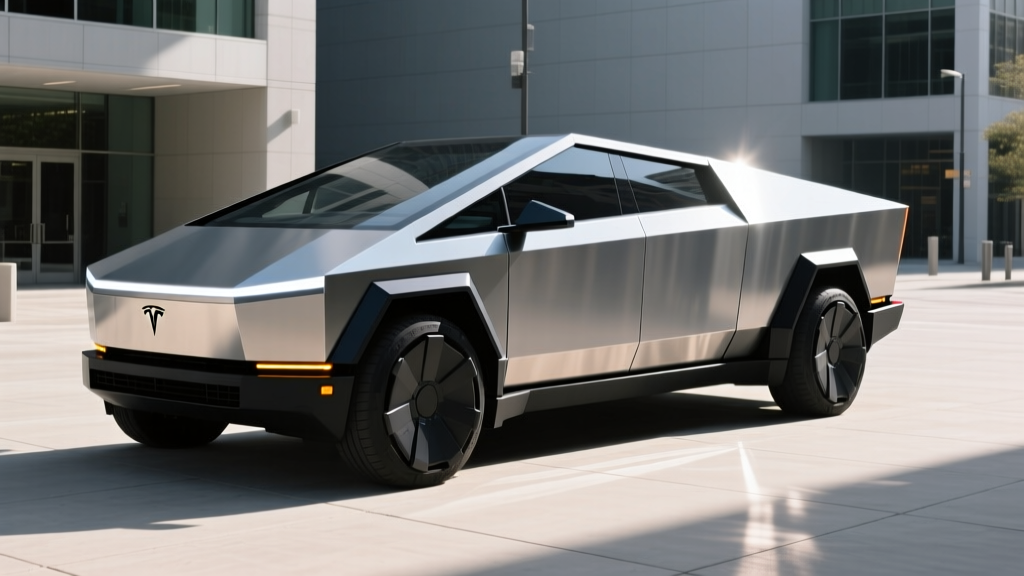
When people search for an "armored Tesla," they're almost always talking about the Cybertruck — the stainless-steel exoskeleton pickup that Tesla has been refining since its late-2023 delivery event. But there's also a growing aftermarket of third-party armor kits for the Model Y and Model 3, aimed at executives, diplomats, and high-risk-profile drivers. This review focuses primarily on the factory-armored 2025 Tesla Cybertruck (carried into 2026 with minor updates), while also addressing what aftermarket armoring means for Tesla sedan and SUV buyers.
The Real Story Behind the Armored Tesla Search
The Cybertruck's 30X cold-rolled ultra-hard stainless steel body panels are the closest thing Tesla offers to factory-installed armor. Tesla claims these panels resist denting from hail, minor impacts, and even some small-caliber rounds in controlled demonstrations — though the company has never published a formal ballistic rating (NIJ or VPAM) for the production vehicle. That's a critical distinction: the Cybertruck is dent-resistant and tough, but it is not a certified armored vehicle in the way an INKAS-armored Mercedes G-Class or a B6-rated BMW X5 Protection is.
For buyers who need true ballistic protection (NIJ Level III or VPAM BR6 and above), third-party outfitters like Alpine Armoring, INKAS, and Armored Group offer upfits for the Model Y and Model S, adding ballistic glass, reinforced panels, and run-flat systems. These conversions typically add 800–1,500 lbs and cost $80,000–$150,000 on top of the vehicle's MSRP — and they void Tesla's factory warranty on modified components.
Cybertruck AWD: Core Specs at a Glance
| Specification | 2025/2026 Cybertruck AWD |
|---|---|
| EPA Range | 325 miles |
| Battery (usable) | ~112 kWh, NMC (4680 cells) |
| Drivetrain | Dual-motor AWD |
| Horsepower | 600 hp (peak) |
| 0–60 mph | 3.9 seconds |
| Max DC Fast Charge | ~250 kW peak (800V architecture) |
| 10–80% DC Charge | ~28 minutes (V4 Supercharger) |
| Level 2 Home Charge | 11.5 kW (~37 mi/hr) |
| MPGe (combined) | 79 MPGe (est. based on EPA data) |
| Towing Capacity | 7,500 lbs |
| Cargo (bed + frunk) | ~67 cu ft bed, ~7 cu ft frunk |
| Base MSRP | $79,990 (AWD) |
| Battery Warranty | 8 years / 120,000 miles |
Real-World Range: What the EPA Number Doesn't Tell You
EPA Estimated: 325 miles (AWD, 20" wheels)
Real-World Expectation: Expect 270–290 miles on highway road trips at 70–75 mph in moderate weather. In cold weather (below 32°F), range drops to approximately 220–250 miles due to cabin heating demands and battery chemistry limitations. Towing a 5,000-lb trailer can cut range by 40–50%, yielding roughly 160–190 miles between charges.
The Cybertruck's angular stainless-steel body gives it a drag coefficient around 0.34–0.38 — significantly higher than the Model Y's 0.23. That means highway efficiency suffers more than in Tesla's streamlined vehicles. In EPA testing, the dual-motor AWD lands around 79 MPGe combined (roughly 42–44 kWh/100 mi). City driving with regenerative braking recovers more energy, so urban commuters will see closer to sticker range than road-trippers.
The 4680 NMC cells provide high energy density, but NMC chemistry is more cold-sensitive than LFP. Preconditioning the battery before a fast-charge stop (automatic when navigating to a Supercharger) is essential — without it, peak charge rates drop substantially in cold conditions.
Charging Speed: DC Fast, Level 2, and the 800V Advantage
The Cybertruck runs on an 800V electrical architecture, which allows higher charge power at lower current — reducing heat and improving efficiency. At a Tesla V4 Supercharger cabinet (capable of 350+ kW), the Cybertruck peaks around 250 kW and sustains roughly 180–200 kW through the bulk of the 10–80% window.
| Charging Method | Power (kW) | Rate / Notes |
|---|---|---|
| Level 1 (120V outlet) | ~1.4 kW | ~4–5 mi/hr — emergency/trickle only |
| Level 2 (240V, 48A) | 11.5 kW | ~37 mi/hr — full overnight charge |
| DC Fast (V3 Supercharger) | ~170 kW peak | 10–80% in ~38 minutes |
| DC Fast (V4 Supercharger) | ~250 kW peak | 10–80% in ~28 minutes |
| DC Fast (CCS via adapter) | ~150 kW peak | Varies by network (EA, EVgo) |
The charge curve tapers significantly above 80% — going from 80% to 100% can add another 25–30 minutes. For road trips, plan stops around the 10–80% sweet spot. Home Level 2 charging on a Tesla Wall Connector (48A circuit, requiring a 60A breaker) will fully replenish the pack overnight in roughly 10–11 hours.
One practical note: the Cybertruck's size and bed length make some older Supercharger stalls tight. Tesla has been widening V4 pull-through stalls to accommodate trucks and trailers, but availability varies by location.
Performance, Drivetrain, and the Armor Weight Penalty
The dual-motor AWD Cybertruck produces 600 hp and hits 0–60 mph in 3.9 seconds — quick for a 6,700-lb truck. The Cyberbeast (tri-motor) pushes 845 hp and a 2.6-second 0–60, but at a $99,990 MSRP. The stainless-steel body adds roughly 200–300 lbs compared to a conventional aluminum-body truck, which slightly reduces efficiency but contributes to the vehicle's planted feel at highway speeds.
Off-road, the Cybertruck offers 16 inches of ground clearance (in Extract Mode with adaptive air suspension) and approach/departure angles suitable for moderate trails. However, the stainless panels show scratches and scuffs from brush and rocks — a cosmetic tradeoff that owners of traditional body-on-frame trucks avoid with cheaper painted steel or plastic cladding.
Pricing, Tax Credits, and the True Cost of Ownership
Here's where the armored Tesla proposition gets complicated. The Cybertruck AWD starts at $79,990 before options, destination, or any aftermarket armor. The Cyberbeast tops out near $114,990 fully loaded.
| Trim | MSRP | §30D Federal Credit Eligibility | Estimated Net Price |
|---|---|---|---|
| Cybertruck AWD | $79,990 | Subject to MSRP cap ($80K for trucks), income cap, battery sourcing rules | $72,490–$79,990 |
| Cyberbeast (tri-motor) | $99,990 | Exceeds $80K MSRP cap — NOT eligible | $99,990 |
| Aftermarket B6 Armor (third-party, Model Y) | ~$55,000 + $100K upfit | Base vehicle may qualify; upfit does not | ~$147,500+ |
Federal tax credit (§30D) caveats: Under current IRS rules, the $7,500 credit requires the truck's MSRP to be at or below $80,000, the buyer's AGI to fall under $300,000 (MFJ) / $150,000 (single), and the battery's critical minerals and components to meet annual sourcing thresholds that tighten each year. The AWD trim squeaks under the cap; the Cyberbeast does not. Point-of-sale transfer is available if you buy through a participating dealer. Always confirm eligibility with a tax professional — rules shift annually.
Tech, Interior, and Driver-Assist Systems
The Cybertruck's cabin is minimalist even by Tesla standards: an 18.5-inch center touchscreen handles nearly all controls, including a digital instrument cluster projected in the driver's sightline. There are no physical stalks — turn signals are on the steering wheel rim, and gear selection is via a touchscreen slider (with a backup overhead capacitive panel).
Tesla's Autopilot comes standard and includes adaptive cruise control, lane centering, and automatic emergency braking. Full Self-Driving (Supervised) is a $8,000 option (or $99/month subscription as of late 2025) that adds city-street navigation, stop-light recognition, and lane changes — but it remains a SAE Level 2 system. The driver must keep hands on the wheel and eyes on the road at all times. Tesla's marketing of "FSD" has drawn scrutiny from NHTSA, and buyers should not confuse it with Level 4 autonomous capability (which no consumer vehicle currently offers).
Notable drawbacks: the stainless-steel fingerprint magnet finish requires frequent cleaning; the steer-by-wire system (on certain trims) has a learning curve; rear-seat legroom (32.5 inches) is tight for a full-size truck; and the tonneau cover bed vault, while secure, limits vertical cargo to roughly 30 inches.
Pros, Cons, and Who Should Buy
Pros
- Ultra-hard stainless body resists dents and minor impacts
- 325-mile EPA range is competitive for a full-size EV truck
- 250 kW peak DC charging on 800V architecture
- 7,500-lb towing capacity with integrated trailer brake controller
- Frunk + vault storage offers flexible cargo options
- Over-the-air updates continue to add features post-purchase
Cons
- No certified ballistic rating — not a true armored vehicle
- Highway efficiency suffers due to boxy aerodynamics
- Cold-weather range loss is pronounced (~25–30%)
- Cyberbeast exceeds §30D MSRP cap — no federal credit
- Steer-by-wire and touchscreen-only controls polarize drivers
- Aftermarket armor for other Teslas voids warranty and adds massive weight
Best for: Tech-forward truck buyers who want a distinctive, durable daily driver with genuine off-pavement capability and don't need certified ballistic protection. Also appeals to fleet buyers (executive transport, tech-campus security) who value the visual deterrent of the Cybertruck's armor-like appearance.
Look elsewhere if: You need a true B6/B7 armored vehicle for threat mitigation (consider INKAS-upfitted SUVs), you tow heavy loads over 300 miles regularly, or you prioritize rear-seat passenger comfort.
Frequently Asked Questions
Is the Tesla Cybertruck bulletproof?
No. Tesla demonstrated resistance to 9mm rounds on the stainless body panels in controlled tests, but the production Cybertruck carries no NIJ or VPAM ballistic certification. The glass, in particular, is not rated for ballistic threats. For genuine ballistic protection, a third-party armor upfit on a Model Y or dedicated armored SUV is required.
What is the real-world range of the armored Tesla Cybertruck?
The EPA rates the dual-motor AWD at 325 miles. Real-world highway driving at 70 mph yields roughly 270–290 miles. In freezing temperatures, expect 220–250 miles. Towing cuts range by 40–50%.
How fast does the Cybertruck charge at home and on the road?
At home on a 240V/48A Level 2 charger, it adds about 37 miles per hour (full charge in ~11 hours). On a V4 Supercharger, it peaks at ~250 kW and charges 10–80% in approximately 28 minutes.
Does the Cybertruck qualify for the $7,500 federal EV tax credit?
The AWD trim ($79,990 MSRP) is at the edge of the $80,000 truck cap and may qualify if buyer income, battery sourcing, and assembly requirements are all met. The Cyberbeast ($99,990) does not qualify due to the MSRP cap. Check current IRS §30D guidance and consult a tax professional.
Can I armor a Tesla Model Y or Model 3?
Yes, through third-party firms like Alpine Armoring or INKAS. Expect to pay $80,000–$150,000 for a B6-level upfit, adding 800–1,500 lbs. This dramatically reduces range (by 20–35%), voids the Tesla warranty on modified systems, and may require suspension reinforcement.
Is the Cybertruck worth buying over the Ford F-150 Lightning or Rivian R1T?
The Cybertruck wins on aesthetics, stainless durability, and Tesla's Supercharger network. The F-150 Lightning offers a more conventional truck experience, better rear-seat space, and Pro Power Onboard. The Rivian R1T excels in off-road capability and build quality but at a higher starting price. Your choice depends on whether the Cybertruck's polarizing design and tech-forward approach match your priorities.