Quick Verdict: The Armored Cybertruck Is a Niche Within a Niche
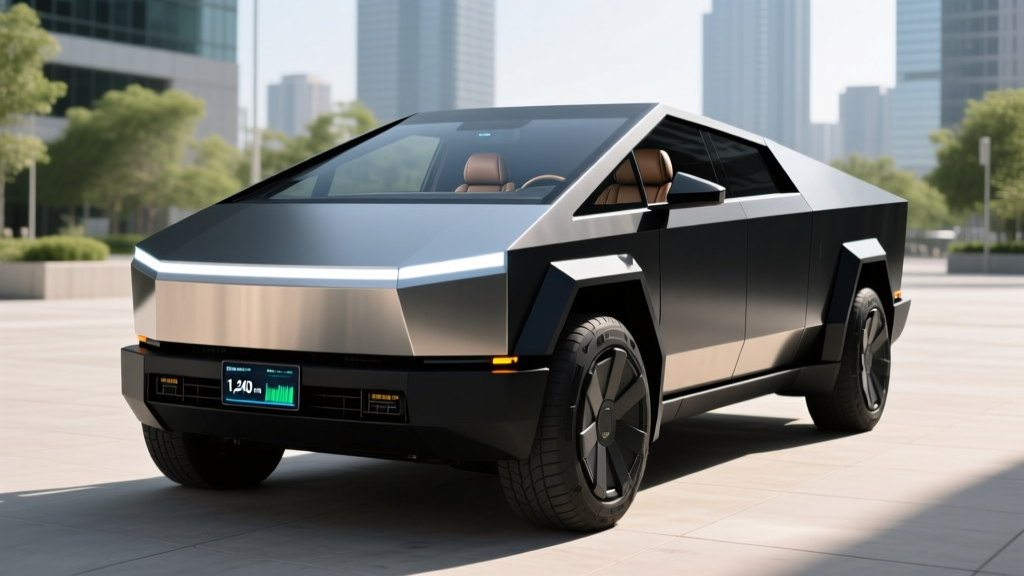
The Tesla Cybertruck was already polarizing when it launched with its cold-rolled stainless-steel exoskeleton and angular geometry. But for buyers researching an armored Cybertruck, the conversation shifts from aesthetics to survivability. Third-party upfitters and Tesla's own accessory ecosystem now offer ballistic glass upgrades, reinforced underbody plating, and run-flat inserts that push the truck closer to B4/B6 armoring standards — at a steep cost in range, efficiency, and ride quality.
This review covers the 2026 Tesla Cybertruck lineup (AWD and Cyberbeast trims) as the base platform, then layers in what armored modifications actually entail: how much range you lose, what charging looks like with added mass, and whether the federal EV tax credit still applies after upfitting. If you're evaluating an armored Cybertruck for executive transport, high-risk-area travel, or overland security, the numbers below will ground your expectations.
2026 Cybertruck Core Specifications
Before discussing armor, we need the baseline. Tesla offers the Cybertruck in two primary trims for the 2026 model year. The rear-wheel-drive variant was discontinued after limited availability. Here are the official figures from fueleconomy.gov and Tesla's spec sheets:
| Specification | Cybertruck AWD | Cyberbeast (Tri-Motor) |
|---|---|---|
| EPA Estimated Range | 340 miles | 320 miles |
| Battery Capacity (usable) | ~123 kWh (NMC) | ~123 kWh (NMC) |
| Drivetrain | Dual-Motor AWD | Tri-Motor AWD |
| Horsepower | 600 hp | 845 hp |
| 0–60 mph | 4.1 seconds | 2.6 seconds |
| Max DC Fast Charge | 250 kW (V3 Supercharger) | 250 kW (V3 Supercharger) |
| 10–80% DC Charge Time | ~28 minutes | ~30 minutes |
| Level 2 Home Charging | 11.5 kW (~37 mi/hr) | 11.5 kW (~37 mi/hr) |
| Efficiency (MPGe) | 72 MPGe combined | 69 MPGe combined |
| kWh per 100 miles | 47 kWh | 49 kWh |
| Base MSRP | $79,990 | $99,990 |
| Battery/Drive Unit Warranty | 8 years / 120,000 miles | 8 years / 120,000 miles |
Real-World Range Expectations
EPA Sticker: 340 mi (AWD) / 320 mi (Cyberbeast)
Highway (70 mph, 75°F): Expect ~270–290 mi (AWD), ~255–275 mi (Cyberbeast). The Cybertruck's 6,600+ lb curb weight and brick-wall aerodynamics (Cd ~0.38 estimated) punish highway efficiency.
Cold Weather (32°F, mixed driving): Range drops 20–30%. Plan for ~220–250 mi (AWD) in winter conditions. The heat pump helps, but the large battery still takes a hit.
With Armor Upgrades: Add 800–2,500 lbs of ballistic material and expect a further 10–18% range loss depending on the protection level. An armored Cyberbeast with B6 plating may realistically deliver 200–220 mi highway.
What 'Armored Cybertruck' Actually Means
Tesla does not sell a factory-armored Cybertruck. The stainless-steel exoskeleton (30X cold-rolled, ~1.8mm thick) provides dent and scratch resistance far beyond aluminum-body trucks, but it is not rated for ballistic threats. When buyers search for an armored Cybertruck, they're typically looking at one of three paths:
- Aftermarket ballistic upfit (B4/B6): Companies like AddArmor, Alpine Armoring, and Texas-based firms replace glass with polycarbonate-laminated ballistic panels, add aramid or composite door inserts, and reinforce the firewall and roof. B4 stops handgun rounds (.44 Magnum); B6 stops rifle rounds (7.62×39). Cost: $80,000–$200,000+ on top of the vehicle MSRP.
- Tesla's 'armor glass' accessory: After the infamous 2019 demo shatter, Tesla quietly offered a laminated glass option for production Cybertrucks. This improves impact resistance but is not ballistic-rated.
- Underbody and suspension reinforcement: Overland upfitters offer skid plates, reinforced control arms, and run-flat wheel inserts — useful for off-road durability but not personnel protection.
The critical trade-off: every pound of armor is a pound that the motors must accelerate and the battery must carry. A B6-armored Cybertruck can easily exceed 9,000 lbs gross weight, which degrades range, increases tire wear, and may require upgraded suspension components not covered under Tesla's warranty.
Charging an Armored Cybertruck: What Added Mass Does to the Charge Curve
Charging speed is measured in kilowatts (kW), which represents the rate of energy transfer. Battery capacity is measured in kilowatt-hours (kWh), the total energy stored. Adding armor doesn't change the Cybertruck's ~123 kWh battery, but it does change how you'll use it.
| Charging Level | Power / Rate | Time or Range Added |
|---|---|---|
| Level 1 (120V household) | ~1.4 kW | ~3–4 miles per hour |
| Level 2 (240V, 48A Wall Connector) | 11.5 kW | ~37 miles per hour; 0–100% in ~11 hours |
| DC Fast Charge (V3 Supercharger) | Peak 250 kW | 10–80% in ~28–30 minutes |
| DC Fast Charge (V4 Supercharger / CCS adapter) | Peak 250–350 kW (site-dependent) | 10–80% in ~22–26 minutes (best case) |
Real-world charging caveat: The Cybertruck's charge curve peaks at 250 kW only between roughly 15–35% state of charge. Above 50%, the rate tapers significantly — expect ~120 kW at 60% and ~50 kW above 85%. For armored variants, the additional mass means you'll consume more kWh per mile, so a "full" charge covers fewer real-world miles. You'll also generate more heat during fast charging due to sustained high-current draws at higher gross vehicle weight, which may trigger thermal management throttling on repeated DC sessions.
Home charging remains the practical backbone. A Level 2 Tesla Wall Connector on a 60A circuit delivers 11.5 kW, replenishing ~37 miles of range per hour. For an armored Cybertruck averaging 2.0–2.2 kWh/mile (vs. the stock ~1.7 kWh/mile), an overnight 10-hour charge yields roughly 170–185 miles — adequate for daily security detail routes but insufficient for long-distance travel without en-route DC stops.
Performance, Cargo, and Practicality
The Cybertruck's tri-motor Cyberbeast produces 845 hp and hits 60 mph in 2.6 seconds — a figure that becomes academic once you bolt on 1,500 lbs of composite armor. Armored upfits typically add 1–2 seconds to 0–60 times and increase braking distances noticeably. Tesla's adaptive air suspension helps manage the load, but it wasn't engineered for sustained 9,000-lb operation.
Cargo capacity (stock Cybertruck):
- Bed volume: 67 cu ft (vault, with tonneau closed)
- Front trunk (frunk): 7.1 cu ft
- Rear cabin: seating for 5 (6 in a pinch with the rear middle fold-down)
- Rear legroom: ~38.5 inches
- Towing capacity: 11,000 lbs (stock, before armor)
Armoring typically consumes the bed's usable volume for equipment storage (armor panels, reinforced bulkheads) and eliminates the frunk's practicality. Towing capacity drops as the truck's own weight increases; a B6-armored Cybertruck may have only 7,000–8,000 lbs of remaining tow capacity.
Standout tech:
- 18.5-inch center touchscreen with Tesla's latest infotainment (2026 refresh includes improved navigation and fleet-management APIs)
- Autopilot (Level 2 driver assistance) standard; FSD (Supervised) available as a subscription — not autonomous driving; driver must remain engaged
- Steer-by-wire with rear-wheel steering (up to 10°) for a surprisingly tight turning radius
- 48V electrical architecture with Powershare (V2L/V2H capable — 11.5 kW export for job-site or emergency power)
Notable drawbacks:
- Stainless-steel panels show fingerprints, are difficult to repair, and cannot be traditionally bodyworked after ballistic modification
- Wiper system is undersized for the massive windshield
- Rear visibility is poor; relies heavily on camera feeds
- No Apple CarPlay / Android Auto — Tesla's ecosystem only
- Insurance premiums are 30–50% above comparable trucks (higher still with aftermarket armor)
Pricing and Federal Tax Credit Eligibility
| Trim | Base MSRP | Federal §30D Credit | Effective Price (if eligible) |
|---|---|---|---|
| AWD Dual-Motor | $79,990 | $0 (exceeds MSRP cap) | $79,990 |
| Cyberbeast Tri-Motor | $99,990 | $0 (exceeds MSRP cap) | $99,990 |
| Cyberbeast + B6 Armor Upfit | $180,000–$300,000 (total) | $0 | $180,000–$300,000 |
The Cybertruck does not qualify for the $7,500 federal EV tax credit under IRS §30D. The reason is straightforward: the §30D credit caps eligible trucks at an $80,000 MSRP. The AWD trim starts at $79,990 — but once destination charges and any factory options push it above $80,000, it becomes ineligible. The Cyberbeast at $99,990 is well over the cap.
Even if you found a base AWD Cybertruck configured exactly at $79,990, you'd still need to satisfy:
- Buyer income cap: Modified AGI ≤ $150,000 (single) or ≤ $300,000 (joint) per IRS §30D rules
- Battery sourcing: Critical minerals and battery components must meet escalating domestic-content thresholds (2026 requirements are stricter than 2024)
- Point-of-sale transfer: If eligible, the credit can be transferred to the dealer at purchase, reducing out-of-pocket cost
For armored upfits, the tax credit is irrelevant — the total vehicle cost will exceed $150,000 in virtually every configuration. Buyers in this segment are typically paying fleet, corporate, or government procurement budgets, not optimizing for consumer tax incentives.
Who Should Buy an Armored Cybertruck?
Decision Framework
Choose an armored Cybertruck if:
- You need B4/B6 ballistic protection in an electric platform with V2L capability for command-post operations
- Your daily route is under 150 miles and you have depot-level Level 2 charging
- The stainless-steel exoskeleton's intimidation factor serves your security posture
- Budget exceeds $200,000 and range compromise is acceptable
Choose a different platform if:
- You need 300+ miles of real-world range for long-distance executive transport (consider an armored Mercedes EQS SUV or BMW iX upfit)
- You require traditional body-on-frame serviceability — Tesla's unibody and proprietary electronics complicate third-party repairs
- You want factory-supported armoring with warranty coverage (no OEM offers this yet in the EV truck segment)
Armored Cybertruck vs. Key Competitors
The armored EV truck market is nascent. Buyers cross-shopping this segment typically consider:
- Rivian R1T (armored upfit): Less cargo space, but better real-world range (~350 mi Max Pack). Easier to source aftermarket armor due to conventional body construction. Starting ~$90,000 + upfit.
- GMC Hummer EV Pickup: 329-mi range, 1,000+ hp, but massive 9,000-lb stock weight leaves little margin for armor without exceeding GVWR.
- Armored ICE trucks (Ford F-150, Toyota Land Cruiser 300): Established armoring supply chain, no range penalty from battery weight, but higher fuel cost and no V2L capability.
The Cybertruck's unique advantage is its stainless-steel skin, which provides a baseline of forced-entry resistance that aluminum or mild-steel trucks cannot match without adding weight. Its 48V architecture and 11.5 kW Powershare export are genuinely useful for mobile command scenarios. But the range penalty from armor, the lack of a traditional service network for ballistic repairs, and the ineligibility for federal tax credits make it a specialist tool, not a general-purpose choice.
Pros and Cons
Pros
- Stainless-steel exoskeleton provides inherent forced-entry resistance
- 48V Powershare (V2L/V2H) delivers 11.5 kW export — useful for mobile command or emergency power
- Tri-motor Cyberbeast offers 845 hp and AWD traction for evasive maneuvers
- Steer-by-wire and rear-wheel steering yield a tight 34-foot turning circle
- OTA updates keep software current without dealer visits
Cons
- No federal §30D tax credit — MSRP exceeds $80,000 cap on all trims
- Real-world highway range is 250–270 mi stock; 200–220 mi armored
- Armor adds 800–2,500 lbs, degrading range, handling, and tire life
- Stainless panels are difficult to modify or repair after ballistic upfit
- Insurance costs 30–50% above comparable trucks; higher with armor
- No Apple CarPlay; Tesla-only infotainment ecosystem
Frequently Asked Questions
What is the real-world range of an armored Cybertruck?
A stock 2026 Cybertruck AWD delivers ~270–290 miles highway in mild conditions. Adding B4 armor (~800 lbs) reduces this to ~240–260 miles. B6 armor (~1,500–2,500 lbs) drops highway range to ~200–220 miles. Cold weather compounds the loss by another 20–30%.
How fast does the Cybertruck charge at home and on DC fast chargers?
At home on a Level 2 Tesla Wall Connector (11.5 kW), expect ~37 miles of range per hour, or a full charge in ~11 hours. On a V3 Supercharger (250 kW peak), 10–80% takes ~28–30 minutes. The charge curve tapers sharply above 50% SoC — plan for longer stops if charging past 80%.
Does the Cybertruck qualify for the federal EV tax credit?
No. The IRS §30D credit caps eligible trucks at $80,000 MSRP. The Cybertruck AWD starts at $79,990 but typically exceeds the cap with options and destination. The Cyberbeast at $99,990 is ineligible regardless of configuration. See IRS §30D guidance for current rules.
Is the Cybertruck's stainless steel actually bulletproof?
No. Tesla's 30X cold-rolled stainless steel (~1.8mm) resists dents, scratches, and forced entry far better than mild steel or aluminum, but it is not ballistic-rated. Handgun and rifle protection requires aftermarket armor packages from certified upfitters, which add significant weight and cost.
What's the total cost of an armored Cybertruck?
A base Cybertruck AWD starts at $79,990. A B4 armor upfit adds $80,000–$120,000; a B6 upfit adds $150,000–$200,000+. Total landed cost for a B6-armored Cyberbeast typically falls between $200,000 and $300,000, excluding taxes, registration, and ongoing insurance premiums.
Can I still tow with an armored Cybertruck?
Stock towing capacity is 11,000 lbs. Armor adds 800–2,500 lbs to the truck's own weight, reducing available payload and tow capacity. A B6-armored Cybertruck may realistically tow 7,000–8,000 lbs — adequate for a light trailer but not heavy equipment.
Does armoring void the Tesla warranty?
Tesla's 8-year/120,000-mile battery and drive unit warranty covers manufacturing defects, but modifications that increase gross vehicle weight or alter suspension loads may void coverage on affected components. Consult the upfitter and Tesla before proceeding. Third-party armor shops typically offer their own warranties on installed components.