When you're deep into researching your next EV purchase, the question "are there electric planes?" might feel like a natural extension of the electrification conversation. The short answer is: yes, a handful of small, two-seat electric aircraft exist today, but no commercial electric airliner is flying passengers on scheduled routes in 2026. The physics of battery energy density make electric flight fundamentally different from electric driving — and understanding why reveals just how efficient ground-based EVs really are.
Why Electric Aviation Is So Much Harder Than Electric Cars
The core challenge comes down to energy density and weight sensitivity. In a car, if you add 500 pounds of battery, you get 300+ miles of EPA-rated range. In an aircraft, every pound of battery must be lifted against gravity for the entire flight — and unlike fuel, batteries don't get lighter as you consume energy.
Consider the numbers:
- Jet A fuel: ~12,000 Wh/kg effective energy (after engine efficiency losses)
- Best lithium-ion cells (2026 NMC): ~250-300 Wh/kg at cell level
- Pack-level energy density: ~180-220 Wh/kg (accounting for cooling, casing, BMS)
- LFP cells: ~160-200 Wh/kg — safer and longer-lasting, but heavier
This 40:1 to 60:1 energy density gap means a Boeing 737-equivalent electric aircraft would need batteries weighing several times the aircraft's maximum takeoff weight. That's why every serious electric aviation effort targets short-range, small-passenger aircraft — not transcontinental flights.
What Electric Aircraft Actually Exist Today
A few electric planes have achieved certification or are in limited operation:
| Aircraft | Battery Capacity | Range / Endurance | Seats | Status (2026) |
|---|---|---|---|---|
| Pipistrel Velis Electro | 34.5 kWh (2 packs) | ~50 min flight time | 2 | EASA certified; in use at flight schools |
| Eviation Alice | 820 kWh (announced) | ~250 nautical miles (claimed) | 9 | Prototype; certification pending |
| Heart Aerospace ES-30 | Hybrid-electric | ~200 km electric-only | 30 | Announced; development ongoing |
| Beta Alia (eVTOL) | ~250 kWh | ~150 miles (target) | 5+1 | FAA certification in progress |
The Velis Electro remains the only fully electric airplane with full type certification from a major aviation authority. Everything else is either in prototype testing, hybrid-electric, or still targeting future certification dates.
What This Means for Your EV Decision on the Ground
The constraints that make electric flight so difficult are exactly what make electric cars so compelling. Ground vehicles don't fight gravity, they benefit from regenerative braking (recovering energy on deceleration and downhill), and they can carry heavy batteries without catastrophic efficiency penalties.
Here's how a typical 2026 EV stacks up against the alternatives for a 300-mile road trip:
| Metric | 2026 Tesla Model Y LR | 2026 Toyota RAV4 Hybrid | 2026 Honda CR-V (Gas) |
|---|---|---|---|
| EPA Range / Tank | 320 mi | ~580 mi (14.5 gal × 40 mpg) | ~410 mi (14.0 gal × 29 mpg) |
| Energy Cost (300 mi) | ~$12-18 (home) / $25-40 (DCFC) | ~$25 (gas at $3.30/gal) | ~$35 (gas at $3.30/gal) |
| Energy per Mile | ~28 kWh/100mi (0.28 kWh/mi) | ~840 Wh/mi (gas equivalent) | ~1,140 Wh/mi (gas equivalent) |
| "Refuel" Time | ~18 min (10-80% at 250 kW) | ~5 min | ~5 min |
| Maintenance (annual avg) | ~$300-500 | ~$600-900 | ~$700-1,100 |
| Base MSRP | ~$44,990 | ~$33,000 | ~$32,000 |
The EV's energy efficiency per mile is 3-4x better than even a top-tier hybrid. That's the ground-transportation physics advantage that aviation can't replicate with current battery chemistry.
The Real Cost Picture: EV Ownership in 2026
While electric planes remain a niche novelty, the economics of ground-based EVs have matured significantly. Here's what a realistic 5-year ownership comparison looks like for a driver covering 12,000 miles annually:
| Cost Category (5 years) | EV (e.g., Hyundai Ioniq 5) | Hybrid (e.g., RAV4 HEV) | Gas (e.g., CR-V) |
|---|---|---|---|
| Purchase (after §30D credit) | ~$37,490* | ~$33,000 | ~$32,000 |
| Energy (60,000 mi) | ~$2,400 (home) / ~$5,400 (public) | ~$5,000 | ~$7,000 |
| Maintenance | ~$2,000 | ~$3,800 | ~$4,500 |
| Insurance (avg) | ~$9,500 | ~$7,500 | ~$7,200 |
| Total 5-Year | ~$51,390 - $54,390 | ~$49,300 | ~$50,700 |
*§30D credit eligibility depends on MSRP caps, buyer income limits, and battery sourcing requirements. Check current IRS rules and consult a tax professional. Point-of-sale transfer is available at participating dealers.
The EV breaks even or wins on total cost when you charge at home. Insurance premiums run 15-30% higher on EVs due to repair costs and parts pricing — a real expense that many buyers overlook.
Common Misconceptions About EVs and Electric Flight
| Myth | Fact |
|---|---|
| "If planes can go electric, batteries must be amazing now" | The only certified electric plane carries 2 people for 50 minutes. Battery energy density is still 40x below jet fuel. |
| "EVs are bad in cold weather" | Expect 15-30% range loss below freezing depending on model and heat pump presence. A 320-mi EPA EV still delivers ~230-270 mi real-world in winter — adequate for most daily driving. Preconditioning while plugged in recovers significant range. |
| "I need 400+ miles of range" | The average American drives 37 miles/day (FHWA data). A 250-300 mi EPA-rated EV covers a full week of commuting with home charging. |
| "Battery replacement will cost $20,000" | Most 2026 EV batteries carry 8-year/100,000-mile warranties (mandated minimum). Real-world degradation data from EPA sources and fleet operators shows 85-90% capacity retention at 150,000 miles for NMC chemistries; LFP batteries degrade even slower. Full replacements are rare and covered under warranty in most failure cases. |
| "Charging takes too long" | At home on a Level 2 (7.2-11.5 kW), you add 25-44 miles per hour of charging — your car refuels overnight while you sleep. On DC fast chargers, modern EVs add 10-80% in 18-25 minutes at 200-350 kW peak rates. |
Decision Framework: What Should You Actually Buy?
Electric planes won't affect your transportation decisions for decades, if ever. But choosing between an EV, a hybrid, and a gas car requires honest self-assessment. Here's a practical framework:
Choose a BEV (Battery Electric Vehicle) if:
- You have access to home charging (garage, driveway, or workplace Level 2)
- Your daily driving is under 80 miles round-trip
- You want the lowest per-mile energy cost (~$0.04-0.06/mi at home vs $0.12-0.15/mi for gas)
- You qualify for the federal §30D tax credit (income caps: $150K single / $300K joint; MSRP caps: $55K cars / $80K SUVs and trucks)
- You take fewer than 4 road trips over 250 miles per year
Choose a PHEV (Plug-in Hybrid) if:
- You can charge at home but regularly drive 200+ miles in a single day
- You want 25-45 miles of electric-only range for daily commuting with gas backup for road trips
- You live in an area with sparse DC fast-charging infrastructure
- You want EV-like daily driving without any range anxiety on long trips
Choose a HEV (Standard Hybrid) if:
- You cannot charge at home (apartment, street parking, no electrical access)
- You want better fuel economy without changing your fueling habits at all
- Your budget is under $35,000 and you want proven, low-risk technology
Stick with Gas if:
- You drive fewer than 5,000 miles per year (the fuel-cost savings don't offset higher purchase price)
- You need heavy towing capacity regularly (7,500+ lbs) and can't accommodate current EV range loss under load
What First-Time EV Buyers Must Know Before Signing
If you're leaning toward a BEV, here are the concrete realities that separate informed buyers from disappointed ones:
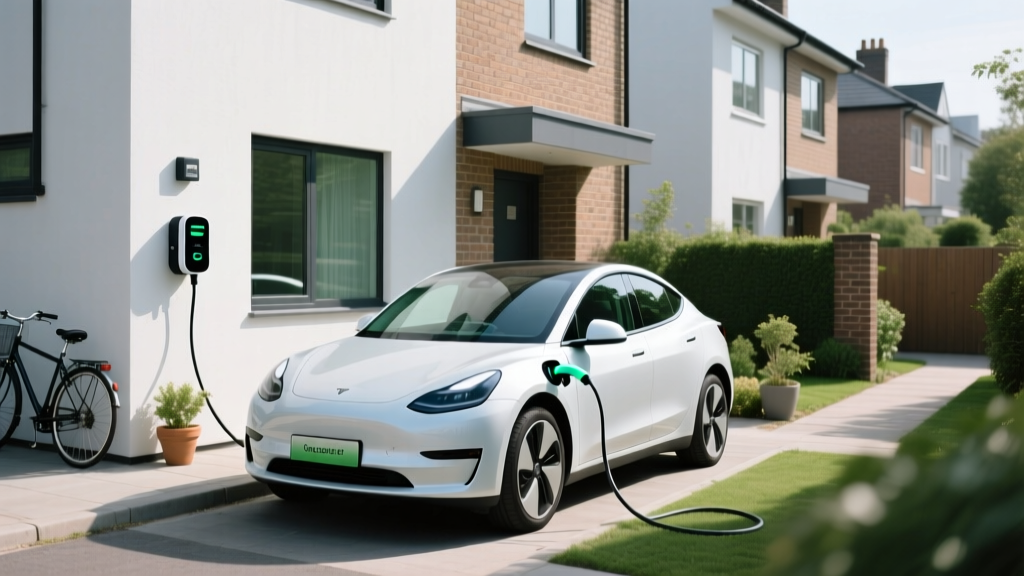
Home charging is non-negotiable for the best experience. A Level 2 home charger (240V, 32-48 amps) costs $500-$1,500 for equipment plus $800-$3,000 for electrician installation, depending on panel proximity and whether you need a panel upgrade from 100A to 200A service. Without home charging, you'll rely on public DCFC at $0.30-$0.50/kWh — erasing much of the fuel-cost advantage.
EPA range is not real-world range. Expect to lose 10-20% on sustained highway driving (70+ mph), 15-30% in freezing temperatures, and another 5-10% with a full cargo load. A 310-mile EPA rating translates to roughly 250-270 miles in mixed real-world conditions, and potentially 200-220 miles on a cold winter highway run.
Charging curves matter more than peak kW. A "250 kW max charge rate" only applies at low state-of-charge (typically 5-30%). Charging slows significantly above 50% and dramatically above 80%. The meaningful metric is 10-80% time — typically 18-25 minutes for modern 800V-architecture vehicles, 30-40 minutes for older 400V platforms.
Insurance costs are real. Get quotes before purchasing. EV insurance averages 15-30% higher than equivalent gas vehicles. Some insurers (like Tesla Insurance in certain states) offer competitive rates based on actual driving data.
Frequently Asked Questions
Will electric planes replace short-haul flights soon?
Not in the foreseeable future. The most optimistic projections from companies like Heart Aerospace and Eviation target 200-250 nautical mile routes with 9-30 passengers, potentially entering limited service in the late 2020s or early 2030s. For context, a New York to Boston flight is ~155 nautical miles — but the batteries required would be extremely heavy relative to payload, making economics challenging versus turboprops.
Are solid-state batteries going to make electric planes viable?
Solid-state batteries promise 40-60% higher energy density than current lithium-ion (potentially 400-500 Wh/kg at cell level). Even at that improvement, they'd still be roughly 25x less energy-dense than jet fuel. Solid-state may enable larger electric regional aircraft but won't make transcontinental electric airliners practical. For EVs on the ground, solid-state could mean 500+ mile EPA ranges in smaller, lighter battery packs — a more meaningful near-term impact.
Should I wait for better battery tech before buying an EV?
Current 2026 EVs with NMC or LFP batteries are proven, well-supported, and offer 250-350 miles of real-world range. Battery technology improves incrementally (roughly 3-5% energy density gains per year), but waiting perpetually means missing years of fuel savings. If a current EV meets your daily needs and you have home charging access, the math favors buying now. The Department of Energy tracks EV technology developments for those who want to follow the data.
How do eVTOL air taxis fit into this picture?
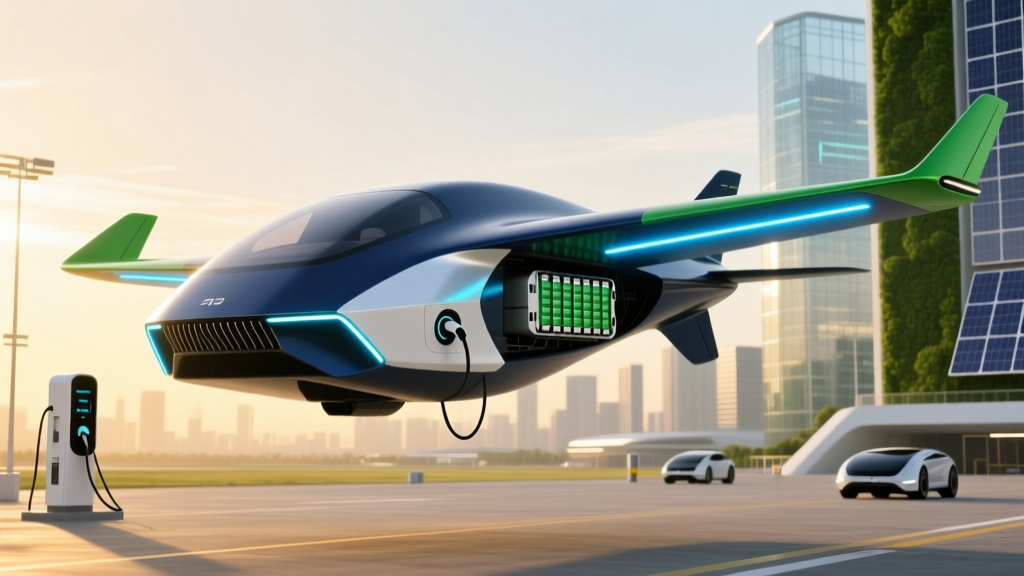
Companies like Joby Aviation, Archer, and Beta Technologies are developing electric vertical takeoff aircraft for short urban air taxi routes (20-60 miles). These are real programs with FAA certification pathways, but commercial passenger service remains limited to early pilot programs in 2026. They serve a fundamentally different use case than personal ground transportation and won't compete with your EV for daily commuting.
What's the single biggest mistake first-time EV buyers make?
Skipping the home charger installation quote before buying. Many buyers assume they'll "figure out charging later" and then discover their apartment doesn't allow charger installation, their electrical panel needs a $2,500 upgrade, or their workplace lacks charging. Secure your Level 2 charging plan first — then buy the car.