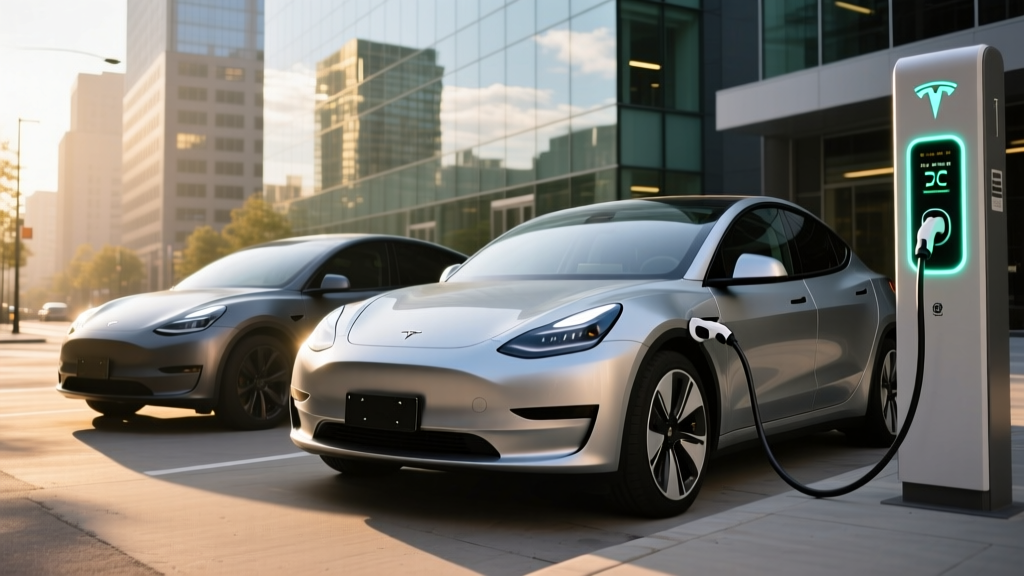
Quick Verdict: Are Teslas Actually Good?
Tesla's dominance in the EV space isn't accidental — the Supercharger network, software integration, and efficiency engineering remain benchmarks the industry still chases. But "good" depends on what you prioritize. If you value charging infrastructure, over-the-air updates, and class-leading efficiency, Tesla still leads. If you prioritize interior material quality, ride comfort, or physical controls, competitors like the Hyundai Ioniq 5 or Ford Mustang Mach-E may serve you better.
This review focuses on Tesla's two volume sellers — the 2026 Model 3 (sedan) and 2026 Model Y (crossover SUV) — the two vehicles most buyers cross-shop when asking whether a Tesla is the right call. We'll cover exact specs, real-world range, charging behavior, tax credit eligibility under current IRS §30D rules, and where each model falls short.
Range and Efficiency: EPA vs. Reality
Tesla's efficiency numbers are among the best in the industry, thanks to aggressive thermal management, heat pump standardization, and low-drag design. But EPA estimates don't tell the whole story.
Model 3 Long Range AWD: EPA 341 miles. Expect 280–300 miles on sustained highway driving at 70+ mph; 240–260 miles in freezing temperatures with cabin heating.
Model Y Long Range AWD: EPA 320 miles. Expect 260–285 miles highway; 220–245 miles in sub-freezing conditions.
Model 3 RWD: EPA 272 miles (LFP battery). Expect 225–245 miles highway; LFP chemistry holds up slightly better in cold than NMC but still loses 15–20%.
| Metric | Model 3 RWD | Model 3 Long Range AWD | Model Y Long Range AWD |
|---|---|---|---|
| EPA Range | 272 mi | 341 mi | 320 mi |
| Battery (usable) | ~60 kWh (LFP) | ~79 kWh (NMC) | ~79 kWh (NMC) |
| MPGe (combined) | 132 MPGe | 132 MPGe | 122 MPGe |
| kWh/100 mi | 25 | 25 | 28 |
| Drivetrain | RWD, single motor | AWD, dual motor | AWD, dual motor |
Tesla's LFP (lithium iron phosphate) battery in the RWD trims trades energy density for longevity and lower cost. You can — and should — charge LFP to 100% regularly, unlike NMC batteries where daily charging to 80% is recommended for longevity. This partially offsets the smaller pack size in daily use.
Charging Speed: DC Fast, Level 2, and the Supercharger Advantage
Charging is where Tesla's ecosystem advantage becomes tangible. The Supercharger network has the highest reliability rate among public DC fast-charging networks, consistently above 95% uptime. With Tesla opening select Supercharger stalls to NACS-equipped non-Tesla EVs, the network is more visible than ever — but Tesla owners still get the most seamless plug-and-charge experience.
| Charging Level | Model 3 RWD | Model 3 LR AWD | Model Y LR AWD |
|---|---|---|---|
| Max DC Fast Charge | 170 kW peak | 250 kW peak | 250 kW peak |
| 10–80% DC Time | ~25 min | ~18 min | ~20 min |
| Level 2 (240V/48A) | 11.5 kW / ~37 mi/hr | 11.5 kW / ~44 mi/hr | 11.5 kW / ~40 mi/hr |
| Level 1 (120V) | ~1 kW / ~3 mi/hr | ~1 kW / ~3 mi/hr | ~1 kW / ~3 mi/hr |
| Connector | NACS (native) | NACS (native) | NACS (native) |
Charging curve reality: The 250 kW peak on Long Range models is sustained only between roughly 10–30% State of Charge (SoC). Above 50%, the curve tapers significantly — by 80%, you're pulling around 70–80 kW. This is normal for all lithium-ion fast charging, but it means the advertised "18-minute 10–80%" time assumes you precondition the battery (navigate to a Supercharger in the car's nav, which triggers thermal preconditioning automatically).
For home charging, a Level 2 wall connector on a 60-amp circuit (48A continuous) adds enough range overnight for virtually any commute. Installation typically runs $800–$2,000 depending on panel proximity and local permitting, according to Tesla's Home Charging guide.
Performance and Driving Dynamics
Tesla's dual-motor AWD powertrains deliver instant torque with no transmission lag, making even non-Performance trims feel quick off the line.
| Metric | Model 3 RWD | Model 3 LR AWD | Model Y LR AWD |
|---|---|---|---|
| 0–60 mph | 5.8 sec | 4.2 sec | 4.8 sec |
| Horsepower | ~271 hp | ~384 hp | ~384 hp |
| Top Speed | 125 mph | 125 mph | 135 mph |
| Towing Capacity | Not rated | Not rated | 3,500 lbs |
The Model 3's low center of gravity and relatively firm suspension give it sporty handling for a commuter sedan, though some reviewers and owners note the ride quality on rough pavement is harsher than rivals like the Hyundai Ioniq 6 or BMW i4. The refreshed Model 3 (codenamed "Highland") improved cabin noise isolation and suspension tuning over pre-2024 models, but it's still a firm-riding car.
The Model Y, being taller and heavier, handles less eagerly but offers the cargo versatility most families need. Its 3,500-pound towing capacity is modest but adequate for a small trailer or pair of dirt bikes.
Interior, Tech, and Daily Usability
Tesla's interior philosophy remains minimalist to a fault. There are no physical buttons for climate, mirrors, or glovebox — everything routes through the 15.4-inch center touchscreen. This creates a clean aesthetic but demands eyes-on-screen for adjustments that competitors handle with tactile controls.
| Metric | Model 3 | Model Y |
|---|---|---|
| Front Legroom | 42.4 in | 41.8 in |
| Rear Legroom | 35.2 in | 39.5 in |
| Cargo (rear seats up) | 21.0 cu ft (trunk + frunk) | 30.2 cu ft (rear + frunk) |
| Cargo (rear seats folded) | N/A (sedan) | 72.1 cu ft |
| Frunk Volume | ~3.1 cu ft | ~4.1 cu ft |
Standout tech:
- Over-the-air (OTA) updates that add features post-purchase — Tesla's software pipeline remains the industry's most active
- Sentry Mode (360° camera-based security recording)
- Dashcam recording with USB export
- Tesla app with remote preconditioning, location tracking, and service scheduling
- Native Supercharger routing with automatic battery preconditioning
Notable drawbacks:
- No Apple CarPlay or Android Auto — Tesla's proprietary infotainment only
- Turn signals are on a steering wheel that may rotate (yoke or round), making them harder to find in roundabouts or multi-turn maneuvers
- Rear-seat headroom in the Model 3 is tight for passengers over 6 feet
- No physical speedometer display directly in front of the driver (speed shown on center screen)
Autopilot and FSD: What It Can and Cannot Do
Tesla Autopilot and Full Self-Driving (Supervised) are Level 2 driver-assistance systems under the SAE J3016 standard. The driver must remain attentive, keep hands on the wheel (or demonstrate engagement via camera monitoring), and be prepared to take over immediately. These systems are not "self-driving." Only Level 4 services like Waymo operate without a human driver.
Autopilot (standard): Includes Traffic-Aware Cruise Control and Autosteer (lane centering). Competent for highway driving but requires active supervision.
FSD Supervised ($8,000 add-on or $99/month): Adds automatic lane changes, Navigate on Autopilot (highway on/off-ramp navigation), Autopark, Summon, and Traffic Light/Stop Sign recognition. In 2026, FSD has improved significantly in urban environments but still makes errors at complex intersections, construction zones, and unprotected left turns. It is not a substitute for an attentive driver.
For a detailed breakdown of Tesla's safety data and how it compares, the National Highway Traffic Safety Administration (NHTSA) maintains crash and incident records.
Pricing, Trims, and Federal Tax Credit Eligibility
| Trim | Base MSRP | Est. After §30D Credit | §30D Eligible? |
|---|---|---|---|
| Model 3 RWD | $38,990 | ~$31,490* | Yes (if sourcing rules met) |
| Model 3 Long Range AWD | $47,740 | ~$40,240* | Yes (if sourcing rules met) |
| Model 3 Performance | $54,990 | ~$47,490* | Yes (under $55K sedan cap) |
| Model Y Long Range AWD | $44,990 | ~$37,490* | Yes (under $80K SUV cap) |
| Model Y Performance | $48,990 | ~$41,490* | Yes (under $80K SUV cap) |
*Estimated prices assume full $7,500 §30D credit eligibility. Actual credit depends on battery critical-mineral and component sourcing requirements, buyer income limits ($150K single / $300K joint MAGI), and MSRP caps ($55K sedans / $80K SUVs/vans/pickups). The credit can now be transferred to the dealer at point of sale as an instant discount. Always verify current eligibility at IRS.gov §30D before purchasing.
Tesla's North American battery sourcing has improved significantly, and most US-built Model 3 and Model Y vehicles currently qualify for the full or partial credit. However, mid-year supply chain changes can alter eligibility — always confirm the specific VIN's credit status at purchase.
Warranty, Longevity, and Ownership Costs
| Coverage | Model 3 | Model Y |
|---|---|---|
| Basic Vehicle | 4 years / 50,000 mi | 4 years / 50,000 mi |
| Battery & Drive Unit (LR) | 8 years / 120,000 mi | 8 years / 120,000 mi |
| Battery & Drive Unit (RWD) | 8 years / 100,000 mi | N/A |
| Capacity Retention Threshold | 70% minimum | 70% minimum |
Tesla's battery warranty guarantees the pack will retain at least 70% of its original capacity during the warranty period. If degradation drops below that threshold, Tesla will repair or replace the battery. Real-world data from high-mileage Tesla owners suggests typical degradation of 10–15% over the first 100,000 miles for NMC packs, with LFP packs showing even less measurable degradation.
Ownership cost advantages:
- No oil changes, spark plugs, or transmission fluid
- Regenerative braking significantly extends brake pad life (many owners report 80,000+ miles on original pads)
- Electricity cost: approximately $0.04–$0.06 per mile at home (varies by utility rate), vs. $0.12–$0.16 per mile for a comparable gas sedan
Ownership cost concerns:
- Insurance premiums run 15–30% higher than comparable gas vehicles in most states
- Tire wear is accelerated due to instant torque and vehicle weight — budget for replacement every 25,000–35,000 miles
- Out-of-warranty battery replacement: $12,000–$16,000 (rare but possible post-warranty)
- Service center wait times can be lengthy in high-density Tesla markets
Tesla vs. Key Competitors: Is It Worth It?
- You rely on public charging and want the most reliable network (Superchargers)
- You prioritize software features, OTA updates, and app integration
- You want best-in-class efficiency (kWh/100mi)
- You prefer a sporty sedan with strong performance
- You need crossover cargo space with EV efficiency
- You want access to the Supercharger network for road trips
- You need light towing capability (3,500 lbs)
- You want a family EV with strong safety ratings (IIHS Top Safety Pick+)
- You want Apple CarPlay/Android Auto (Hyundai Ioniq 5/6, Ford Mach-E, BMW i4)
- You prefer a quieter, more comfortable ride (Genesis GV60, BMW iX)
- You need more than 320 miles of range (Lucid Air, Chevrolet Silverado EV)
- You want physical climate controls and a traditional instrument cluster (Ford Mach-E, VW ID.4)
- Best-in-class Supercharger network reliability
- Industry-leading efficiency (low kWh/mi)
- Strong OTA update pipeline
- Excellent app and remote features
- LFP option for daily 100% charging
- Strong safety ratings (NHTSA 5-star, IIHS TSP+)
- No Apple CarPlay or Android Auto
- Firm ride quality, especially Model 3
- Minimalist interior frustrates some buyers
- FSD is expensive and still Level 2
- Insurance premiums above average
- Service center capacity in some regions
Who Should Buy a Tesla in 2026?
Best for: Tech-forward commuters and road-trippers who value charging infrastructure and software integration above traditional luxury cues. The Model 3 suits single professionals or couples without large cargo needs. The Model Y fits families of up to five who want crossover practicality with EV efficiency.
Not ideal for: Buyers who prioritize plush ride quality, physical controls, or CarPlay integration. Also less suited for those in apartments without home charging access who live outside Supercharger-dense metro areas.
Frequently Asked Questions
What is the real-world range of a Tesla Model 3 or Model Y?
The Model 3 Long Range AWD delivers an EPA-estimated 341 miles, but expect 280–300 miles on highway trips and 240–260 miles in freezing weather. The Model Y Long Range AWD rates at 320 miles EPA; plan for 260–285 highway and 220–245 in cold conditions. The Model 3 RWD (LFP) rates at 272 miles EPA with roughly 225–245 miles highway.
How fast does a Tesla charge at home and on the road?
On a Level 2 home charger (240V/48A), both the Model 3 and Model Y add roughly 37–44 miles of range per hour, fully charging overnight. On DC fast charging, Long Range models peak at 250 kW, achieving a 10–80% charge in approximately 18–20 minutes with battery preconditioning. The RWD model peaks at 170 kW with a 10–80% time around 25 minutes.
Does Tesla qualify for the $7,500 federal EV tax credit?
Most US-built Model 3 and Model Y vehicles qualify for some or all of the $7,500 §30D federal tax credit, but eligibility depends on battery critical-mineral sourcing, buyer income (under $150K single / $300K joint), and MSRP caps ($55K for sedans, $80K for SUVs). The credit can be applied as a point-of-sale discount. Verify your specific vehicle's eligibility at fueleconomy.gov and IRS.gov before purchasing.
Is a Tesla worth buying vs. competitors like the Ioniq 5 or Mach-E?
Tesla wins on charging network reliability, efficiency, and software. Competitors like the Hyundai Ioniq 5 offer faster peak charging (up to 350 kW on 800V architecture), Apple CarPlay, more comfortable ride quality, and physical controls. If Supercharger access matters for your road-trip habits, Tesla still has an edge. If you mostly charge at home and value comfort or CarPlay, competitors deserve a serious look.
How long do Tesla batteries last?
Tesla warranties its battery packs for 8 years / 100,000–120,000 miles (depending on trim) with a 70% minimum capacity retention guarantee. Real-world data from high-mileage owners shows typical NMC degradation of 10–15% over 100,000 miles. LFP packs in the Model 3 RWD tend to degrade even more slowly. Out-of-warranty replacement costs $12,000–$16,000, though most packs outlast the vehicle.
Is Tesla's Autopilot or FSD actually self-driving?
No. Both Autopilot and FSD (Supervised) are SAE Level 2 driver-assistance systems. You must remain attentive, monitor the road, and be ready to take control at any moment. FSD handles more scenarios than basic Autopilot but still makes errors at complex intersections, construction zones, and in adverse weather. No Tesla vehicle is capable of unsupervised autonomous driving.