Quick Verdict: Are Polestar Good Cars in 2026?
If you're asking "are Polestar good cars?" the honest answer is: they're among the best-built, best-driving EVs on the market — but they're not for everyone. Polestar, the Volvo-Geely joint venture, delivers Scandinavian design, genuinely engaging driving dynamics, and solid build quality. What they don't deliver is class-leading range, the cheapest charging, or a massive dealer network. After spending time with the current Polestar lineup — the Polestar 2, Polestar 3, and Polestar 4 — here's what the data actually says.
The Polestar 2 (now in its refreshed generation with rear-wheel-drive options and an NMC battery) remains the volume seller and the most accessible entry point. The Polestar 3 is the luxury SUV flagship. The Polestar 4 is the coupe-SUV that splits the difference. Each has distinct strengths, and each has trade-offs that matter more in real-world ownership than any spec sheet suggests.
Polestar 2 (2026): The Core Model, Tested and Measured
The Polestar 2 is where most buyers start, and it's the model that answers the question most directly. For 2026, it's available in Single Motor (RWD) and Dual Motor (AWD) configurations, both using an 82 kWh usable battery pack with NMC (nickel manganese cobalt) chemistry.
| Spec | Single Motor (RWD) | Dual Motor (AWD) |
|---|---|---|
| EPA Range | 320 miles | 290 miles |
| Battery (usable) | 82 kWh (NMC) | 82 kWh (NMC) |
| Horsepower | 299 hp | 421 hp |
| 0–60 mph | 5.9 sec | 4.3 sec |
| Max DC Fast Charge | 200 kW | 200 kW |
| 10–80% DCFC Time | ~26 min | ~26 min |
| Level 2 Home Charge | 11 kW (~37 mi/hr) | 11 kW (~37 mi/hr) |
| EPA Efficiency | 114 MPGe (29 kWh/100mi) | 104 MPGe (32 kWh/100mi) |
| Base MSRP | $51,300 | $56,800 |
| Cargo (rear seats up) | 14.4 cu ft + 1.4 cu ft frunk | 14.4 cu ft + 1.4 cu ft frunk |
Charging: Adequate but Not Class-Leading
The Polestar 2's 200 kW peak DC fast-charging rate is respectable, but it's important to understand the charge curve. The car hits peak rate only between roughly 15–45% state of charge. From 45–65%, it sustains around 140–150 kW, and from 65–80%, it tapers to approximately 90–110 kW. This means the advertised 26-minute 10–80% time is achievable at a properly rated 200+ kW station (like a Tesla Supercharger V3 or Electrify America 350 kW stall), but at a 150 kW station, expect 32–35 minutes.
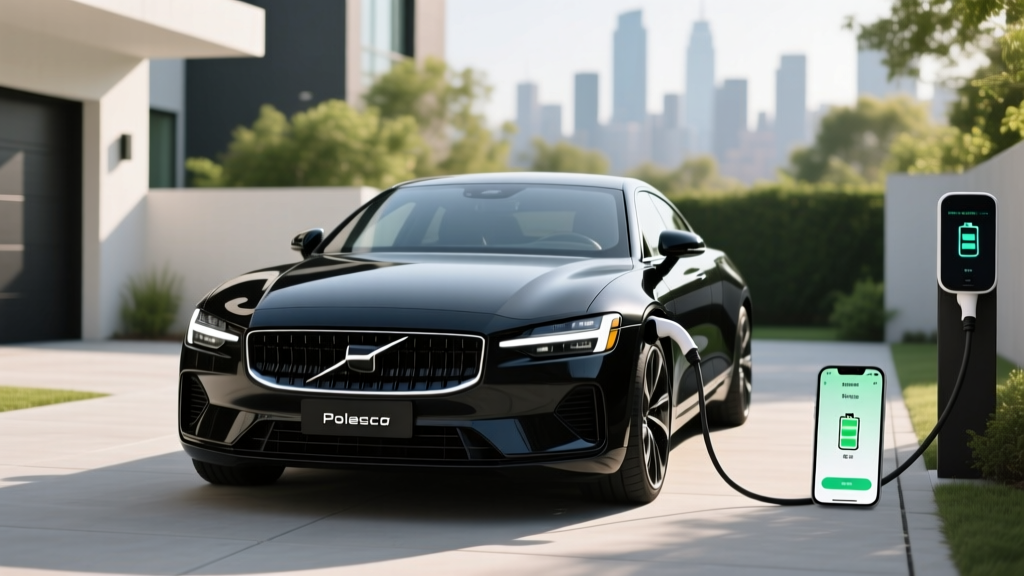
For home Level 2 charging on a 48-amp circuit (11.5 kW delivery to the car's 11 kW onboard charger), you'll add roughly 37 miles of range per hour. A full 10–80% home charge takes about 6 hours — fine for overnight top-ups.
| Charging Level | Power | Miles Added per Hour | 10–80% Time |
|---|---|---|---|
| Level 1 (120V outlet) | ~1.4 kW | ~5 mi/hr | ~40+ hours |
| Level 2 (240V, 48A) | 11 kW | ~37 mi/hr | ~6 hours |
| DC Fast (200 kW peak) | 200 kW peak | ~150 mi in 15 min | ~26 min |
Polestar 3 and Polestar 4: The SUV Options
For buyers who need more space, the Polestar 3 (large luxury SUV) and Polestar 4 (mid-size coupe-SUV) fill the gap. Both use larger battery packs and offer significantly more cargo room, but at higher prices and with different tax credit implications.
| Spec | Polestar 3 (Dual Motor) | Polestar 4 (Dual Motor) |
|---|---|---|
| EPA Range | 315 miles | 300 miles |
| Battery (usable) | 107 kWh (NMC) | 100 kWh (NMC) |
| Horsepower | 489 hp (517 w/Performance) | 544 hp |
| 0–60 mph | 4.7 sec (4.5 w/Perf) | 3.8 sec |
| Max DC Fast Charge | 250 kW | 250 kW |
| 10–80% DCFC | ~24 min | ~24 min |
| Base MSRP | $79,900 | $62,900 |
| Cargo (behind 2nd row) | 17.1 cu ft | 18.4 cu ft |
The Polestar 4 is the more interesting value proposition: it sacrifices the traditional rear window (replaced by a camera-based digital rearview mirror and a roof-mounted camera) for a sloping roofline, yet still offers competitive cargo space. The Polestar 3 competes directly with the BMW iX and Mercedes EQE SUV, offering comparable luxury at a slightly lower entry price.
Who Is the Polestar For? (And Who Should Look Elsewhere)
Polestar's target buyer is someone who values design integrity, driving engagement, and understated luxury over maximum specs-per-dollar. If you cross-shop the Tesla Model 3/Y and find the interior sparse or the brand too ubiquitous, Polestar is the alternative. If you cross-shop the Hyundai Ioniq 5 or Kia EV6 and want something that feels more premium, same answer.
- You want Scandinavian design and a high-quality interior without Tesla's minimalism
- You value driving dynamics — the Polestar 2 Dual Motor with the Performance Pack has Öhlins dampers and Brembo brakes that genuinely transform the car
- You prefer Android Automotive OS with native Google Maps, Google Assistant, and Play Store
- You want a less common EV — Polestar's US volume is a fraction of Tesla's
- Maximum range-per-dollar is your priority (Hyundai Ioniq 6 offers 361 EPA miles for less)
- You need a large frunk (Polestar's frunks are tiny — 1.4 cu ft in the Polestar 2)
- Fastest possible DC charging matters (Hyundai/Kia's 800V architecture charges 10–80% in ~18 min)
- You want a massive service-center network (Polestar uses a hybrid model with Volvo dealers and mobile service)
Pricing, Trims, and Federal Tax Credit Eligibility
Polestar pricing has shifted significantly as the brand works to qualify for the IRS §30D federal tax credit. As of 2026, the §30D credit offers up to $7,500 for new EVs, but eligibility depends on three moving targets: MSRP caps, buyer income limits, and battery component/critical mineral sourcing requirements.
| Model / Trim | Base MSRP | §30D MSRP Cap | Estimated Credit |
|---|---|---|---|
| Polestar 2 Single Motor | $51,300 | $55,000 (sedans) | Up to $7,500* |
| Polestar 2 Dual Motor | $56,800 | $55,000 (sedans) | Varies — often $3,750* |
| Polestar 4 Dual Motor | $62,900 | $80,000 (SUVs) | Up to $7,500* |
| Polestar 3 Dual Motor | $79,900 | $80,000 (SUVs) | Up to $7,500* |
*Eligibility depends on buyer AGI limits ($150K single / $300K joint), battery sourcing compliance, and point-of-sale transfer availability. The Polestar 2 Dual Motor has historically hovered near or above the $55,000 sedan MSRP cap, which can reduce or eliminate the credit depending on options. Always verify current eligibility at irs.gov and confirm with your tax professional before purchasing.
The point-of-sale transfer option (available since 2024) lets you apply the credit as a down payment reduction at the dealership rather than waiting for tax filing. Polestar Spaces (their retail locations) support this, but confirm before signing.
Warranty, Reliability, and Ownership Costs
Polestar's warranty is competitive with the European luxury segment but falls short of Hyundai/Kia's industry-leading coverage:
- Battery warranty: 8 years / 100,000 miles (retains at least 70% capacity)
- Powertrain warranty: 4 years / 50,000 miles
- Bumper-to-bumper: 4 years / 50,000 miles
- Complimentary maintenance: 3 years / 36,000 miles (scheduled service)
- Roadside assistance: 4 years / unlimited miles
The 70% capacity retention threshold is standard for the industry — if your battery degrades below 70% of original capacity within 8 years/100K miles, Polestar will repair or replace it. In practice, NMC batteries in well-thermal-managed packs (which Polestar's are) typically retain 85–90% capacity at the 100,000-mile mark based on industry-wide degradation data. The bigger concern for Polestar owners isn't battery failure — it's body repair wait times, which can be lengthy due to the brand's smaller parts supply chain compared to mainstream automakers.
Insurance costs run 10–20% higher than equivalent gas-powered Volvos, which is typical for the EV segment. Expect annual premiums of $2,200–$3,100 for a Polestar 2 depending on your state and driving record.
Tech, Driver Assistance, and Interior Quality
Polestar uses Android Automotive OS (not to be confused with Android Auto phone projection) as the native infotainment system. This means Google Maps is the built-in navigation, Google Assistant handles voice commands, and the Google Play Store offers native apps like Spotify and YouTube. The 11.2-inch portrait touchscreen is responsive, and the interface is clean. Wireless Apple CarPlay is also available for iPhone users.
The driver-assistance suite, branded as Pilot Pack, includes adaptive cruise control with stop-and-go, lane centering, and blind-spot intervention. It's a solid SAE Level 2 system — meaning you must keep your hands on the wheel and eyes on the road at all times. It's not "self-driving" and doesn't claim to be. The optional Pilot Pack with LiDAR (available on Polestar 3 and 4) adds hardware for future over-the-air feature expansion, but as of 2026, the active functionality is still Level 2.
Interior build quality is a genuine Polestar strength. The materials — whether the standard textile upholstery or the optional Nappa leather — feel premium. Panel gaps are tight. The Harman Kardon audio system (optional on Polestar 2, standard on 3 and 4) is one of the best in the segment. However, the rear seat in the Polestar 2 is snug for adults over 6 feet, with 33.5 inches of legroom — less than a Tesla Model 3 (35.2 in) or Hyundai Ioniq 6 (37.0 in).
Pros and Cons: The Honest Summary
- Premium Scandinavian design and interior quality
- Engaging driving dynamics, especially with Öhlins/Brembo Performance Pack
- Android Automotive OS with native Google Maps is genuinely useful for EV routing
- Competitive safety ratings (IIHS Top Safety Pick+ for Polestar 2)
- Less common than Tesla — distinctive without being flashy
- Solid DC fast-charging infrastructure compatibility (CCS + NACS adapter access to Tesla Superchargers)
- Range is good but not class-leading for the price
- 200 kW peak DCFC is outpaced by Hyundai/Kia's 800V system (~240 kW, ~18 min 10–80%)
- Tiny frunk (1.4 cu ft) — essentially unusable for real cargo
- Polestar 2 rear seat is tight for tall adults
- Limited service center network vs. legacy brands
- Some trims priced above §30D MSRP caps, reducing tax credit eligibility
Frequently Asked Questions
Are Polestars reliable cars?
Early Polestar 2 models (2021–2022) had software-related recalls and some inverter issues, but the 2024+ refresh addressed most of these. The powertrain shares architecture with Volvo's proven EV systems. Reliability data from Consumer Reports and J.D. Power places Polestar in the mid-pack for EVs — better than some startups, not as bulletproof as Toyota or Hyundai. The main ownership friction point is body repair turnaround, not mechanical failure.
What is the real-world range of the Polestar 2?
The EPA rates the 2026 Polestar 2 Single Motor at 320 miles. In real-world highway driving at 70–75 mph, expect 265–285 miles. In cold weather (below 30°F), that drops to approximately 215–245 miles. City driving with frequent regenerative braking can match or slightly exceed the EPA estimate.
Does the Polestar qualify for the $7,500 federal tax credit?
It depends on the model, trim, and your income. The Polestar 2 Single Motor (starting at $51,300) falls under the $55,000 sedan MSRP cap and may qualify for the full $7,500, subject to buyer income limits ($150K single / $300K joint) and battery-sourcing requirements. The Polestar 2 Dual Motor ($56,800) exceeds the sedan cap and may only qualify for $3,750 or nothing depending on current sourcing rules. The Polestar 3 and 4 fall under the $80,000 SUV cap and are more likely to qualify. Always verify at irs.gov before purchasing.
How fast does a Polestar charge at home and on the road?
At home on a Level 2 charger (240V, 48A), the Polestar 2 adds about 37 miles of range per hour, with a full 10–80% charge taking roughly 6 hours. On a DC fast charger, it peaks at 200 kW and charges 10–80% in approximately 26 minutes at a compatible station. The Polestar 3 and 4 peak at 250 kW with similar 10–80% times of around 24 minutes.
Is a Polestar worth buying over a Tesla Model 3 or Hyundai Ioniq 5?
If you prioritize interior quality, distinctive design, and engaging driving dynamics over maximum range-per-dollar, yes. If you want the longest range and cheapest price, the Hyundai Ioniq 6 or updated Tesla Model 3 offer more miles for less money. If you need the fastest charging, the Ioniq 5/EV6's 800V architecture wins. Polestar occupies a specific niche: premium, driver-focused, and understated — and it does that niche very well.
Can Polestars use Tesla Superchargers?
Yes. Polestar provides a NACS (North American Charging Standard) adapter for CCS-equipped vehicles, granting access to the Tesla Supercharger network. This significantly expands road-trip charging options, particularly in rural areas where Electrify America and other CCS networks have thinner coverage.