Quick Verdict: The Efficiency King With Caveats
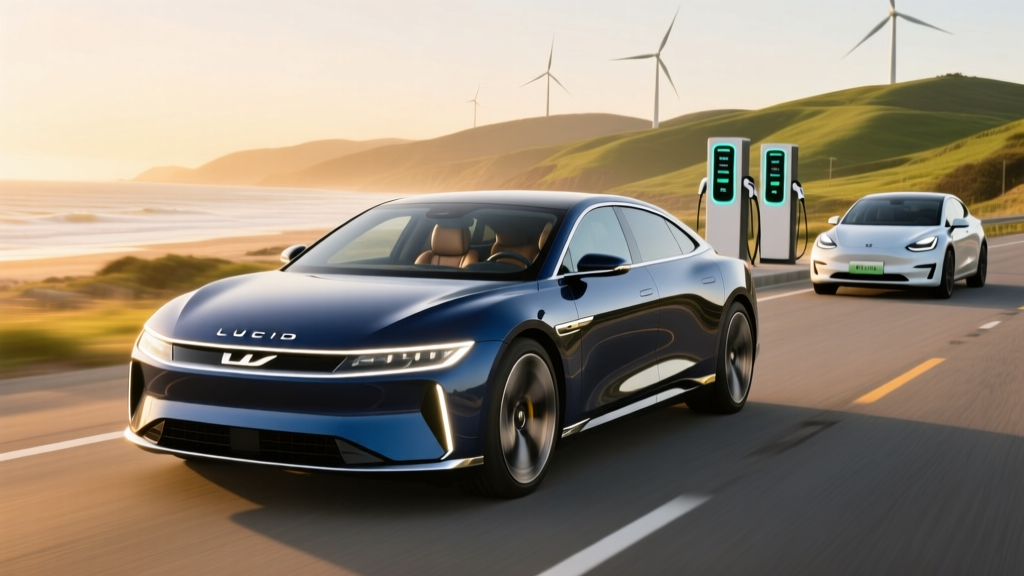
If you're asking "are Lucid cars good?" the short answer is yes — with important asterisks. The Lucid Air remains the most energy-efficient luxury electric sedan on the market, pairing class-leading range with blistering performance. But Lucid's dealership footprint, service infrastructure, and software maturity still lag legacy luxury rivals like BMW, Mercedes-Benz, and even Tesla. For buyers who prioritize range-per-kWh and driving dynamics over badge prestige and service convenience, the Air is a compelling, data-backed choice.
| Spec | Pure RWD | Touring AWD | Grand Touring AWD | Sapphire (Tri-Motor) |
|---|---|---|---|---|
| EPA Range | 419 mi | 425 mi | 516 mi | 427 mi |
| Battery (usable) | 88 kWh (NMC) | 112 kWh (NMC) | 112 kWh (NMC) | 118 kWh (NMC) |
| Horsepower | 430 hp | 620 hp | 819 hp | 1,234 hp |
| 0–60 mph | 5.0 sec | 3.4 sec | 3.0 sec | 1.89 sec |
| Drivetrain | RWD (single motor) | AWD (dual motor) | AWD (dual motor) | AWD (tri-motor) |
| Max DC Fast Charge | 200 kW | 250 kW | 300 kW | 300 kW |
| 10–80% DC Time | ~30 min | ~25 min | ~20 min | ~22 min |
| Level 2 (Home) | 19.2 kW (~70 mi/hr) | 19.2 kW (~70 mi/hr) | 19.2 kW (~70 mi/hr) | 19.2 kW (~70 mi/hr) |
| MPGe (combined) | 146 MPGe | 131 MPGe | 131 MPGe | 109 MPGe |
| kWh/100 mi | 23 | 26 | 26 | 31 |
| Base MSRP | $69,900 | $87,400 | $125,600 | $249,000 |
| Battery/Powertrain Warranty | 8 years / 100,000 miles | |||
Real-World Range: What the EPA Sticker Doesn't Tell You
EPA Sticker: Up to 516 miles (Grand Touring AWD with 19" Aero wheels)
Real-World Expectation: ~420–460 miles mixed driving; ~340–380 miles sustained 80+ mph highway; ~290–340 miles in sub-30°F cold weather
The Grand Touring's 516-mile EPA rating is real and verified by fueleconomy.gov. Lucid achieves this through industry-leading drivetrain efficiency — roughly 4.7 miles per kWh in combined driving — rather than simply packing in a larger battery. The 112 kWh usable NMC pack is large, but competitors like the Mercedes EQS 450+ carry similar battery sizes with ~100 fewer miles of range.
However, EPA testing favors low-speed city cycles. On sustained highway runs at 75–80 mph, expect efficiency to drop to roughly 3.8–4.0 mi/kWh, yielding 340–380 miles before you'll want to stop. In freezing temperatures (below 30°F), the NMC chemistry and cabin heating demands can knock 25–35% off range, though Lucid's standard heat pump mitigates some of that loss. The Pure RWD's lighter weight gives it surprisingly competitive real-world results despite its smaller battery.
Practical takeaway: You can realistically drive from Los Angeles to San Francisco (~380 miles) in the Grand Touring on a single charge at highway speeds in moderate weather. That's a feat no other production sedan matches without a charge stop.
Charging Speed: 900V Architecture Pays Off
Lucid's 900-volt electrical architecture is one of the highest in any production EV, enabling faster DC charging with lower current (and less heat). Here's what that looks like in practice:
| Charging Level | Max Power | Miles Added per Hour | Notes |
|---|---|---|---|
| Level 1 (120V / 12A) | ~1.4 kW | ~5 mi/hr | Emergency/trickle only |
| Level 2 (240V / 80A) | 19.2 kW | ~70 mi/hr | Requires hardwired 100A circuit; full overnight charge in ~6 hr (GT) |
| Level 2 (240V / 48A) | 11.5 kW | ~42 mi/hr | Standard NEMA 14-50 outlet; ~10 hr (GT) |
| DC Fast (350 kW stall) | Up to 300 kW (GT/Sapphire) | ~300 mi in 20 min | Peak rate; tapers significantly above 80% SoC |
| DC Fast (150 kW stall) | ~150 kW | ~150 mi in 20 min | Common Electrify America / EVgo rate |
The Grand Touring and Sapphire can accept up to 300 kW at a compatible DC fast charger. In real-world testing at 350 kW Electrify America stalls, the Air GT sustains above 250 kW from roughly 10–40% SoC, then gradually tapers. The 10–80% charge takes approximately 20 minutes — competitive with the Porsche Taycan and Hyundai Ioniq 5, though slightly behind the fastest-charging 800V rivals like the Kia EV6 GT.
Charging curve reality check: That 300 kW peak is not sustained. Above 80% SoC, charging drops to roughly 40–60 kW to protect battery longevity. Plan to charge to 80% on road trips and move on — the last 20% can add 25+ minutes.
At home, Lucid's 19.2 kW onboard charger is among the fastest available. If your electrician installs a dedicated 100-amp circuit with a hardwired wall connector, you'll add roughly 70 miles of range per hour. Most homes with a standard 240V/50A NEMA 14-50 outlet will see about 42 mi/hr — still enough for a full overnight charge. Panel upgrades may be necessary for the 100A circuit; budget $500–$2,000 for that electrical work.
Performance and Driving Dynamics
Even the base Pure RWD model delivers 430 hp and a 5.0-second 0–60 time — sports-sedan territory from a single rear motor. Step up to the Grand Touring's 819 hp dual-motor AWD, and the 3.0-second 0–60 time puts it in supercar territory while maintaining sedan practicality.
The Sapphire trim's 1,234 hp tri-motor setup achieves a 1.89-second 0–60 — one of the quickest production cars ever built — but at a $249,000 MSRP, it's a halo model, not a volume seller.
Beyond straight-line speed, the Air's driving dynamics benefit from a low center of gravity, a rigid aluminum spaceframe, and precise steering. The Grand Touring's adaptive air suspension offers a compliant ride in Comfort mode and firm body control in Sport. Road noise isolation is excellent, though the regenerative braking feel could be more progressive — Lucid offers adjustable regen levels but lacks a true one-pedal driving mode that brings the car to a complete stop without brake pedal input.
Interior Space, Tech, and Notable Drawbacks
The Air's interior is spacious but polarizing. Front-seat comfort is outstanding with available 30-way adjustable seats. Rear legroom measures 36.6 inches — adequate but not limousine-like given the car's 195.9-inch overall length. The sloping roofline cuts into rear headroom for taller passengers.
Cargo volume: 32 cu ft trunk (one of the largest sedan trunks available) plus a 10 cu ft front trunk (frunk). The trunk's wide opening and flat floor make it practical for luggage, though the lack of a hatchback limits hauling bulky items compared to a Tesla Model S or BMW i5.
Infotainment: Lucid uses a curved 34-inch glass "canopy" display spanning the driver cluster and center infotainment, plus a lower retractable touchscreen for secondary controls. The system is visually stunning but has drawn criticism for occasional sluggishness and a learning curve. Wireless Apple CarPlay and Android Auto are standard. A 21-speaker Surreal Sound Pro audio system (available on higher trims) is among the best in any luxury car.
Driver assistance (DreamDrive Pro): Lucid's ADAS suite includes adaptive cruise control, lane-keeping assist, automated emergency braking, and a 360-degree camera system. It uses a combination of cameras, radar, and lidar sensors (on equipped trims). This is an SAE Level 2 system — the driver must remain fully engaged with hands on or near the wheel at all times. DreamDrive Pro is competent for highway cruising but does not match Tesla's Autopilot or GM's Super Cruise in hands-off-permitted scenarios (Super Cruise on mapped highways) or overall route confidence. Lucid has not yet launched a supervised "navigate on autopilot"-style feature as of early 2026.
⚠️ DreamDrive Pro is SAE Level 2 driver-assist, NOT self-driving. You must monitor the road, keep hands available, and be prepared to take over instantly. No Lucid Air currently offers hands-free driving on public roads.
Notable drawbacks:
- Service network: Lucid operates roughly 25 service centers and a growing mobile service fleet across the US as of 2026. If you live outside a major metro, service access is a real concern compared to BMW or Mercedes dealerships.
- Software maturity: OTA updates have improved the system, but owners still report occasional infotainment glitches and slower feature rollout than Tesla.
- No hatchback or SUV variant: The Air is a sedan only. Lucid's upcoming Gravity SUV is expected to address family buyers, but it is not yet broadly available.
- Resale uncertainty: As a newer brand, long-term depreciation data is limited. Early indicators suggest steeper depreciation than Tesla or Porsche, though better than some legacy luxury EVs.
Pricing, Trims, and Federal Tax Credit Eligibility
| Trim | Base MSRP | §30D Credit Eligible? | Effective Price (with credit) |
|---|---|---|---|
| Pure RWD | $69,900 | Yes — under $55K sedan cap? No. Sedan MSRP cap is $55,000. Pure RWD exceeds cap. | $69,900 (no federal credit) |
| Touring AWD | $87,400 | No — exceeds $55K sedan MSRP cap | $87,400 |
| Grand Touring AWD | $125,600 | No — exceeds $55K sedan MSRP cap | $125,600 |
| Sapphire | $249,000 | No — exceeds $55K sedan MSRP cap | $249,000 |
Important tax credit note: Under IRS §30D rules, the federal EV tax credit for sedans is capped at vehicles with an MSRP of $55,000 or less. Every 2026 Lucid Air trim exceeds this threshold, meaning no new Lucid Air qualifies for the $7,500 federal purchase credit. The SUV MSRP cap is $80,000, which would apply to the Gravity (if classified as an SUV), but not the Air sedan.
Buyers should also note the income caps ($150K single / $300K joint MAGI) and battery critical-mineral sourcing requirements that apply to all §30D-eligible vehicles. Always consult a tax professional and verify current-year rules at IRS.gov before making a purchase decision based on credits.
State incentives may apply: Some states (California, Colorado, Massachusetts, and others) offer additional rebates or tax credits that are not subject to the same MSRP caps. Check your state's energy office or DMV for current programs.
Lease loophole: Under §45W, commercial clean vehicle credits can sometimes be passed through to lessees via reduced lease payments. Ask your Lucid dealer whether current lease offers include a passed-through credit — this has been a common strategy for luxury EVs above the MSRP cap.
Who Should Buy the Lucid Air — And Who Shouldn't
Choose the Lucid Air if:
- Maximum range-per-charge is your top priority (no other sedan matches 516 EPA miles)
- You value energy efficiency and want the lowest kWh/mi in the luxury class
- You live near a Lucid service center or are comfortable with mobile service
- You prefer a sedan with a traditional trunk over a hatchback or SUV
- You want supercar-level acceleration (Sapphire) or effortless grand-touring cruising (GT)
Look elsewhere if:
- You need a hands-free highway driving system (consider GM Super Cruise or BMW Highway Assistant)
- Service convenience is paramount (BMW i5, Mercedes EQE have far more dealers)
- You need hatchback cargo versatility (Tesla Model S, Porsche Taycan Sport Turismo)
- You want to maximize federal tax credit eligibility (look at sedans under $55K MSRP, or SUVs under $80K)
- You plan to tow (the Air is not rated for towing)
Pros
- Class-leading 516-mile EPA range (Grand Touring)
- Best-in-class efficiency (~26 kWh/100 mi for a 500+ mile, 819 hp car)
- 900V architecture enables 300 kW DC fast charging
- Spacious 32 cu ft trunk + 10 cu ft frunk
- Outstanding ride quality with adaptive air suspension
- 19.2 kW Level 2 onboard charger (fastest in class)
- 8-year / 100,000-mile battery & powertrain warranty
Cons
- No Lucid Air trim qualifies for the $7,500 federal tax credit (MSRP cap)
- Limited service center network (~25 US locations)
- Infotainment software still maturing vs. Tesla/BMW
- No true one-pedal driving mode
- Rear headroom limited by sloping roofline
- Sedan-only body style; no hatchback or SUV (yet)
- Long-term resale value uncertain for a startup brand
Lucid Air vs. Key Competitors
| Attribute | Lucid Air GT | Tesla Model S LR | BMW i5 M60 | Mercedes EQS 450+ |
|---|---|---|---|---|
| EPA Range | 516 mi | 402 mi | 295 mi | 390 mi |
| Battery | 112 kWh NMC | ~100 kWh | 84.3 kWh NMC | 108.4 kWh NMC |
| Horsepower | 819 hp | 670 hp | 593 hp | 355 hp |
| 0–60 mph | 3.0 sec | 3.1 sec | 3.7 sec | 5.9 sec |
| Max DC Charge | 300 kW | 250 kW | 205 kW | 200 kW |
| Base MSRP | $125,600 | $84,990 | $85,300 | $105,550 |
| Federal Credit? | No | No | No | No |
| Service Network | ~25 centers | 200+ service centers | 400+ BMW dealers | 380+ MB dealers |
The Air wins decisively on range and efficiency. The Model S offers a broader Supercharger network and more mature software. The i5 and EQS provide vastly larger service networks and more traditional luxury dealer experiences — but sacrifice 100–200+ miles of range.
Frequently Asked Questions
Are Lucid cars reliable?
Lucid is a newer automaker, so long-term reliability data (5–10 year) is limited. Early Air owners report solid build quality on the powertrain and battery, with most complaints centered on software bugs and minor interior fit-and-finish items. Lucid's 8-year/100,000-mile battery and powertrain warranty provides substantial coverage, and independent battery-health data suggests the 900V system and thermal management result in low degradation rates. However, the limited service network means that when issues arise, resolution can take longer than with established brands.
How long does a Lucid Air battery last?
Lucid uses NMC (nickel manganese cobalt) chemistry with an advanced liquid-cooling thermal management system. While Lucid hasn't published long-term degradation projections, NMC batteries in well-managed systems typically retain 85–90% capacity after 100,000 miles. The 8-year/100,000-mile warranty guarantees the battery will retain at least 70% of original capacity during the coverage period. For maximum longevity, Lucid recommends daily charging to 80–90% SoC and using the full 100% only for long trips.
Can I charge a Lucid Air at a Tesla Supercharger?
As of 2026, Lucid Air vehicles use the CCS1 connector standard. Lucid has announced plans to adopt the NACS (Tesla) connector on future vehicles, but current Air models require a CCS-to-NACS adapter to access Tesla Superchargers that have been opened to non-Tesla vehicles. Always verify adapter compatibility and check the Tesla app for stall availability before relying on Superchargers for a road trip.
Does the Lucid Air qualify for any tax credits?
No 2026 Lucid Air trim qualifies for the federal §30D new clean vehicle credit because all trims exceed the $55,000 MSRP cap for sedans. However, state-level incentives may apply depending on your location, and the commercial clean vehicle credit (§45W) may be passed through on leased vehicles. Consult IRS.gov and a qualified tax professional for your specific situation.
Is the Lucid Air good for road trips?
Yes — this is arguably the Air's strongest use case. The 516-mile range means fewer charge stops than any competing EV sedan, and the 300 kW DC fast charging capability adds roughly 300 miles in 20 minutes at a compatible charger. The comfortable seats, quiet cabin, and large trunk make it an excellent long-distance cruiser. The main road-trip limitation is charging network access in rural areas, where Electrify America and EVgo coverage can be sparse compared to Tesla's Supercharger network.
How does the Lucid Air compare to the Tesla Model S?
The Air Grand Touring offers 114 more miles of EPA range, higher peak charging speed (300 vs 250 kW), and a more luxurious, quieter interior. The Model S counters with Tesla's vastly larger Supercharger and service network, more mature software and Autopilot capability, and a hatchback trunk for more versatile cargo. If range and efficiency are your priorities, the Air wins. If network access and software features matter more, the Model S remains compelling — and costs roughly $40,000 less in the Long Range trim.