Quick Answer: Are Genesis Cars Electric?
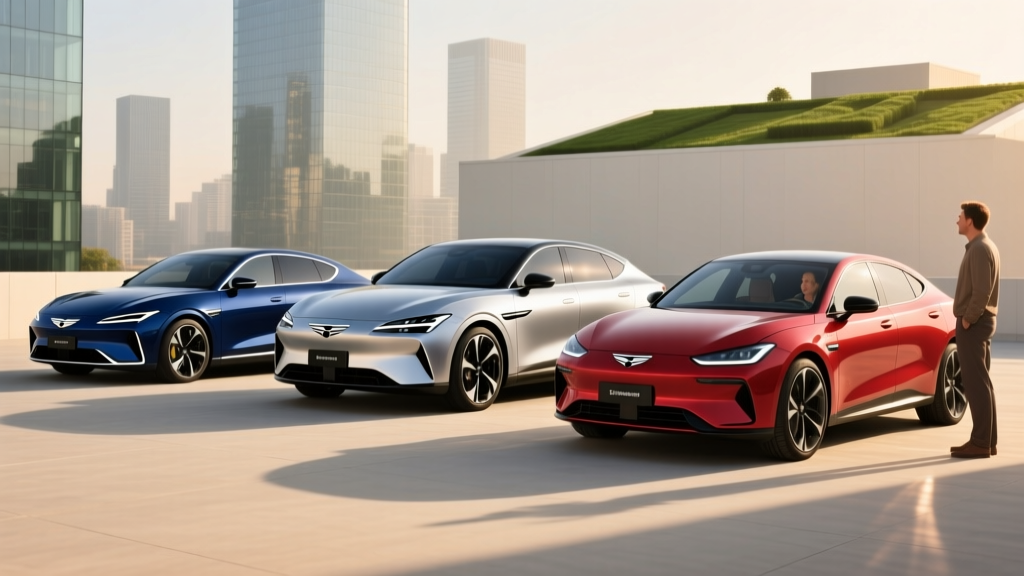
Yes — Genesis sells fully electric vehicles, but the brand is not exclusively electric. As of 2026, Genesis offers three battery-electric models in the U.S.: the GV60, Electrified G80, and Electrified GV70. These sit alongside traditional gas-powered Genesis sedans and SUVs. Genesis also offers hybrid variants of some models. The brand is transitioning toward full electrification, but you can still buy gas-only and hybrid Genesis vehicles today.
The 2026 Genesis EV Lineup: Specs at a Glance
Genesis built its EVs on the Hyundai Motor Group's E-GMP platform (shared with the Hyundai Ioniq 5 and Kia EV6), which means 800-volt architecture and impressively fast DC charging. Here's how the three current models stack up with exact EPA and manufacturer data:
| Model | EPA Range | Battery (kWh) | Peak DC Charge | 10–80% Time | 0–60 mph | HP | Base MSRP |
|---|---|---|---|---|---|---|---|
| GV60 Advanced (AWD) | 248 mi | 77.4 kWh (NMC) | 240 kW | ~18 min | 5.5 sec | 314 | $53,350 |
| GV60 Performance | 235 mi | 77.4 kWh (NMC) | 240 kW | ~18 min | 4.0 sec | 429 | $62,550 |
| Electrified G80 (AWD) | 282 mi | 87.2 kWh (NMC) | 240 kW | ~22 min | 4.9 sec | 365 | $80,300 |
| Electrified GV70 (AWD) | 236 mi | 77.4 kWh (NMC) | 240 kW | ~18 min | 4.5 sec | 429 | $67,550 |
Real-world range caveat: EPA estimates assume mixed driving. In sustained highway travel at 75 mph, expect roughly 10–15% less range than the sticker. In freezing temperatures (below 32°F), lithium-ion chemistry and cabin heating can reduce range by 20–30%. A GV60 Advanced rated at 248 miles may deliver 175–200 miles on a cold winter highway trip. Plan road trips accordingly.
Genesis EV vs. Gas Genesis: Real Cost Comparison
The most common question from luxury-car shoppers is whether going electric in a Genesis actually saves money. Let's compare the Electrified GV70 ($67,550) against the gas GV70 2.5T AWD ($48,250) over 5 years and 75,000 miles.
| Cost Category | Electrified GV70 (EV) | GV70 2.5T (Gas) |
|---|---|---|
| Purchase Price (MSRP) | $67,550 | $48,250 |
| Fed. Tax Credit (§30D)* | $0 (exceeds MSRP cap / sourcing) | $0 |
| Fuel/Energy (75k mi) | $4,200 (home L2 avg.) | $9,400 (premium gas) |
| Maintenance (5 yr) | $1,800 | $4,500 |
| Insurance (avg. 5 yr) | $11,200 | $9,800 |
| 5-Year Depreciation (est.) | $28,400 | $22,100 |
| 5-Year Total Cost | $56,350 | $45,850 |
*Federal §30D tax credit eligibility for Genesis EVs is limited. As of 2026, most Genesis electric models do not qualify for the full $7,500 credit due to battery-sourcing requirements and the $80,000 SUV MSRP cap. Always verify current eligibility on IRS.gov before purchasing. Some state-level rebates may apply — check your local energy provider.
The EV saves roughly $5,200 on fuel and $2,700 on maintenance over five years. But the higher purchase price, steeper depreciation, and elevated insurance premiums mean the gas GV70 still wins on total cost. The EV makes financial sense if you prioritize lower running costs, quieter operation, instant torque, and reduced tailpipe emissions — not pure dollar savings.
Charging the Genesis EV Fleet: What You Need to Know
Genesis EVs use the E-GMP 800-volt architecture, which is one of the fastest-charging platforms on the market. But peak charge rate (kW) is not sustained charge rate — here's what actually happens at the plug.
Charging Speeds by Level
| Level | Power | Miles Added per Hour | Use Case |
|---|---|---|---|
| Level 1 (120V) | ~1.4 kW | ~4 mi/hr | Emergency / overnight trickle |
| Level 2 (240V, 48A) | 11.5 kW | ~34 mi/hr | Home / workplace daily charging |
| DC Fast (peak) | 240 kW | ~180 mi in 18 min (10–80%) | Road trips |
The charge-curve reality: The 240 kW peak only holds roughly from 10% to 45% state of charge. From 45–80%, the rate tapers to 120–150 kW. Above 80%, it drops further to protect the NMC battery. A "10–80% in 18 minutes" claim assumes preconditioned battery and a capable 350 kW charger. On a 150 kW station, expect 25–30 minutes for the same 10–80% session.
Connector note: Current Genesis EVs use the CCS1 connector for DC fast charging. With the industry shifting to NACS (Tesla's standard), Genesis has confirmed that future models will adopt NACS. For now, CCS-to-NACS adapters are available if you need Tesla Supercharger access — but verify adapter compatibility with your specific model year.
Home Charging Setup Costs
Most Genesis EV owners charge at home overnight. Here's what a Level 2 installation typically costs:
| Item | Low Estimate | High Estimate |
|---|---|---|
| Level 2 Charger (ChargePoint, Emporia, etc.) | $350 | $700 |
| Electrician Labor (50A circuit, 240V) | $600 | $1,800 |
| Permit & Inspection | $50 | $300 |
| Panel Upgrade (if needed, 100A → 200A) | $1,500 | $4,000 |
| Total | $1,000 | $6,800 |
If your electrical panel is near the garage and has spare capacity, you'll likely land in the $1,000–$2,500 range. Older homes with 100-amp service may require a panel upgrade, which is the single biggest variable. Always get a quote from a licensed electrician before committing to an EV purchase.
Common Genesis EV Misconceptions — Addressed
| Myth | Fact |
|---|---|
| "All Genesis models are electric now." | Genesis sells 3 EVs alongside 6+ gas and hybrid models. The brand is not fully electric. |
| "Genesis EVs get the $7,500 federal tax credit." | Most do not qualify as of 2026 due to §30D battery-sourcing and critical-mineral requirements. Verify on IRS.gov. |
| "240 kW charging means 240 kW the whole session." | Peak rate holds only through ~45% SoC. Average rate over a 10–80% session is closer to 150–170 kW. |
| "The Electrified GV70 has the same range as the gas GV70." | The gas GV70 gets ~390 miles on a tank. The Electrified GV70 gets 236 EPA miles — significantly less per fill/charge. |
| "Genesis EV batteries need replacing every 5 years." | Genesis covers the battery with a 10-year/100,000-mile warranty. NMC degradation typically runs 8–12% over 8 years based on E-GMP fleet data. |
Genesis EV vs. German Rivals: Where They Fit
Genesis EVs compete against the BMW iX, Audi Q8 e-tron, and Mercedes EQE SUV. The key differentiator is price. The Electrified GV70 starts at $67,550 — roughly $15,000–$20,000 less than comparable German luxury EVs — while offering similar interior quality and faster peak charging than most rivals.
According to fueleconomy.gov, the Electrified G80 achieves 85 MPGe combined, which trails the BMW i5 (which achieves up to 97 MPGe) but offers more interior space and standard AWD. The GV60, at 95 MPGe combined in its most efficient trim, is competitive with the Audi Q4 e-tron but offers a more premium cabin.
The trade-off: Genesis has fewer U.S. service centers than BMW or Mercedes, which matters for warranty work and collision repair. Check dealer proximity before buying.
Decision Framework: Should You Buy a Genesis EV?
Choose a Genesis EV if:
- You have reliable Level 2 home charging and drive under 200 miles daily
- You want luxury build quality without paying BMW/Mercedes pricing
- Fast DC charging matters to you (800V architecture is a genuine advantage)
- You value Genesis's 10-year/100,000-mile powertrain and battery warranty
- You prefer a quiet, torque-heavy driving experience over engine sound
Stick with a gas or hybrid Genesis if:
- You lack home or workplace charging access
- You regularly drive 300+ miles in a day (the 236–282 mi range requires planning)
- You live in an area with limited CCS DC fast-charging infrastructure
- You prioritize lowest total cost of ownership over driving experience
- You need maximum cargo space — the gas GV70 offers more than the Electrified variant
What First-Time Genesis EV Buyers Should Know
Preconditioning matters. Genesis EVs can precondition the battery for fast charging when you navigate to a DC station via the built-in route planner. This warms the NMC cells to optimal temperature and can shave 5–8 minutes off your 10–80% session. Always use it in cold weather.
The complimentary maintenance program is strong. Genesis includes 3 years / 36,000 miles of complimentary scheduled service. On an EV, that mostly covers tire rotations, cabin air filters, and brake-fluid checks — but it eliminates early-ownership maintenance costs entirely.
Insurance is higher. Based on 2026 national averages, insuring a Genesis EV costs 12–18% more than the equivalent gas model. Luxury EV repair costs and battery-replacement risk drive this. Get quotes before purchasing — the premium gap may narrow depending on your state and driving record.
Resale value is still uncertain. Luxury EV depreciation has been steep across the industry. The Electrified G80 and GV70 may lose 45–55% of value over five years, compared to 35–45% for their gas counterparts. Lease incentives can offset this — check current Genesis Finance offers.
Frequently Asked Questions
Is Genesis making more electric cars?
Yes. Genesis has announced plans to become a fully electric brand by 2030. Upcoming models include the GV80 EV (announced, expected late 2026/2027) and a redesigned GV60. Current buyers should note that future models will adopt the NACS charging connector instead of CCS1.
Do Genesis EVs qualify for any tax incentives?
Federal §30D credit eligibility is limited for Genesis EVs in 2026 due to battery-component and critical-mineral sourcing rules. However, some states (California, Colorado, New York, etc.) offer separate rebates. Check IRS.gov and your state's energy office for current programs. Some utility companies also offer $250–$500 rebates for home charger installation.
How long do Genesis EV batteries last?
Genesis warranties its EV batteries for 10 years or 100,000 miles, whichever comes first, against capacity loss below 70%. Real-world data from the E-GMP platform (shared across Hyundai/Kia/Genesis) suggests 8–12% degradation over 8 years with normal use — meaning a 248-mile GV60 would still deliver roughly 218–228 miles when new-equivalent after 8 years.
Can I charge a Genesis EV at a Tesla Supercharger?
Not natively. Current Genesis EVs use CCS1 connectors. Tesla Superchargers use NACS. A CCS-to-NACS adapter may work at some Supercharger stalls — but Tesla's adapter compatibility list should be verified for your specific model. Future Genesis EVs will ship with NACS ports.
Is the Electrified GV70 just a gas GV70 with a battery?
Structurally, yes — the Electrified GV70 shares its body and interior with the gas GV70, which means it retains the transmission tunnel hump (unused in the EV) and slightly less cargo space than a dedicated EV platform. The GV60, by contrast, is built on the dedicated E-GMP EV platform with a flat floor and frunk.