Quick Answer: Are EVs Reliable?
Yes — mechanically, EVs are among the most reliable vehicles on the road. With no engine, transmission, exhaust system, or spark plugs to fail, EVs have roughly 20 moving parts in the drivetrain versus 2,000+ in a gas car. Consumer Reports' 2025 Annual Auto Reliability Survey consistently ranks EVs as having fewer problem areas than internal-combustion vehicles, though early-adopter models from some newer brands have shown higher rates of build-quality and software issues. The main reliability risk isn't the powertrain — it's electronics, infotainment glitches, and panel-gap inconsistencies from rapid production scaling.
If you're asking "are EVs reliable" before spending $35,000–$65,000, you're asking the right question. Reliability means different things: Will it start every morning? Will the battery degrade? Will I spend weekends at the dealer? Let's address each with actual numbers, not marketing.
EV Mechanical Reliability vs Gas Cars: The Data
The fundamental reliability advantage of a battery-electric vehicle (BEV) comes down to simplicity. A single-speed reduction gear replaces a 6-to-10-speed automatic transmission. Regenerative braking handles 70–90% of deceleration, meaning your friction brake pads can last 100,000–150,000 miles before replacement — compared to 30,000–50,000 miles on a gas car. There are no oil changes, no timing belts, no catalytic converters to replace ($1,500–$3,000 on a gas car), and no emissions systems to fail.
| Reliability Factor | Battery EV (BEV) | Gas Car (ICE) | Hybrid (HEV/PHEV) |
|---|---|---|---|
| Drivetrain moving parts | ~20 | 2,000+ | 1,500+ |
| Transmission failures | Virtually none (single-speed) | Common after 100k–150k mi | Rare (e-CVT is robust) |
| Brake pad life | 100k–150k mi (regen-assisted) | 30k–50k mi | 60k–100k mi |
| Oil changes required | None | Every 5k–10k mi (~$40–$80 each) | Every 5k–10k mi |
| Exhaust/emissions repairs | None | $500–$3,000 (catalytic converter, O2 sensors) | $500–$2,500 |
| Coolant system complexity | Moderate (battery thermal mgmt) | Moderate | High (dual cooling loops) |
| Annual maintenance cost (avg) | $0.061/mi (~$900/yr at 15k mi) | $0.101/mi (~$1,515/yr) | $0.090/mi (~$1,350/yr) |
Sources: fueleconomy.gov, AAA Your Driving Costs 2025, Consumer Reports Lifetime Maintenance Cost Study.
The Consumer Reports reliability data tells a nuanced story. Brands like Tesla (Model 3, Model Y) and Hyundai/Kia (Ioniq 5, EV6) have climbed into average-to-above-average reliability rankings by 2025, after early production years showed panel-gap and suspension complaints. Legacy automakers like BMW (iX, i4) and Porsche (Taycan) score well on build quality but carry higher repair costs when something does go wrong. The lesson: powertrain reliability is excellent across the board; brand-to-brand variance comes from fit-and-finish, software, and supplier electronics.
Battery Longevity: The Reliability Question Buyers Fear Most
The traction battery is the single largest component in an EV, and the one most buyers worry about. Here's what real-world degradation data actually shows:
- Average degradation at 100,000 miles: 5–10% of original capacity for NMC (nickel-manganese-cobalt) batteries; 3–6% for LFP (lithium iron phosphate) chemistry.
- Average degradation at 200,000 miles: 10–17% for NMC; 6–12% for LFP.
- Catastrophic battery failure rate: Well under 1% across major manufacturers in the first 8 years of ownership.
Most EV batteries are warranted for 8 years / 100,000 miles (10 years / 150,000 miles in California and states adopting CARB standards) with a guaranteed minimum capacity retention of 70%. If your 84 kWh battery drops below ~59 kWh usable within that window, the manufacturer replaces or repairs it at no cost. In practice, very few batteries hit that threshold under normal use.
LFP chemistry, now used in standard-range versions of the Tesla Model 3, Model Y, and the Ford Mustang Mach-E Select, offers a meaningful longevity advantage: LFP cells tolerate daily 100% charging and typically deliver 3,000+ full charge cycles versus ~1,500–2,000 for NMC. That translates to 500,000+ miles of cycle life — effectively outlasting the rest of the car. The trade-off is lower energy density (heavier pack for the same range) and reduced cold-weather performance (expect 30–40% range loss at 20°F versus 20–30% for NMC with a heat pump).
Out-of-warranty battery replacement costs in 2026 range from $8,000–$18,000 depending on pack size and chemistry, down from $15,000–$25,000 just three years ago as cell prices have declined. Third-party rebuild shops are increasingly offering module-level repairs for $3,000–$7,000.
Real Costs: EV vs Gas Over 5 Years and 75,000 Miles
Reliability only matters in context of total cost. Here's a side-by-side ownership comparison using a representative 2026 EV (Hyundai Ioniq 5 SEL, $48,250 MSRP, 310 mi EPA range) versus a comparable gas crossover (Toyota RAV4 XLE AWD, $33,750 MSRP, 30 MPG combined):
| Cost Category (5 yr / 75k mi) | 2026 Ioniq 5 SEL (EV) | 2026 RAV4 XLE AWD (Gas) |
|---|---|---|
| Purchase price (MSRP) | $48,250 | $33,750 |
| Federal §30D tax credit | −$7,500 (if eligible*) | $0 |
| Effective purchase price | $40,750 | $33,750 |
| Fuel / electricity cost | $2,625 (home charging at $0.16/kWh avg) | $8,125 (gas at $3.25/gal, 30 MPG) |
| Maintenance | $2,250 | $4,500 |
| Insurance (avg) | $9,750 ($1,950/yr) | $7,500 ($1,500/yr) |
| Depreciation (est. 5-yr) | $18,500 (45% retained value) | $13,500 (60% retained value) |
| Total 5-year cost | $73,875 | $67,375 |
| Cost per mile | $0.52 | $0.47 |
*§30D credit eligibility depends on buyer income caps ($150k single / $300k joint), vehicle MSRP caps ($55k cars / $80k SUVs/trucks), and battery critical-mineral sourcing requirements. Confirm eligibility at irs.gov or via point-of-sale transfer at the dealer.
The EV costs roughly $6,500 more over five years in this scenario, primarily due to higher depreciation and insurance premiums. However, if you charge primarily at home with off-peak electricity rates ($0.08–$0.12/kWh), have access to a workplace charger, or live in a state with additional rebates (California, Colorado, Massachusetts), the gap narrows to $2,000–$4,000 — and flips to EV advantage at year 7–8. For high-mileage drivers (20,000+ mi/yr), the fuel savings alone can close the gap by year 4.
One cost frequently overlooked: insurance. EVs carry 15–25% higher premiums on average due to higher repair costs after collisions (battery protection structures, sensor recalibration, specialized body-shop requirements). Always get an insurance quote before purchasing.
What Actually Goes Wrong: Common EV Problems Ranked
When EVs do need service, the issues are predictable and usually not powertrain-related:
- Software and infotainment glitches (frozen screens, OTA update failures, Bluetooth drops) — the #1 complaint across nearly every EV brand. Resolved via over-the-air updates in most cases, but dealer visits are sometimes required.
- 12V auxiliary battery failures — ironically, the small lead-acid or lithium 12V battery that powers electronics when the main pack is off fails more often than the traction battery. Replacement: $150–$350.
- Suspension wear — EVs are 500–1,000 lbs heavier than comparable gas cars, accelerating wear on bushings, struts, and ball joints. Expect suspension service around 80,000–120,000 miles.
- Tire wear — the combination of instant torque and extra weight means tires wear 20–30% faster. Budget for replacement at 25,000–40,000 miles. EV-specific tires (Hankook iON, Michelin Pilot Sport EV) cost $200–$350 per tire.
- Heat pump / HVAC issues — some 2022–2024 Hyundai/Kia EVs experienced heat pump failures that reduced cold-weather range. Warranty-covered, but inconvenient.
- Charging port / connector issues — CCS latch mechanisms and charge-port doors occasionally fail. Typically a $300–$800 repair under warranty.
Notice what's absent from this list: motor failure, inverter failure, and battery-pack failure. These are rare events in modern EVs from established manufacturers.
Common Misconceptions About EV Reliability
| Myth | Fact |
|---|---|
| "EV batteries need replacing every 5–7 years" | Average degradation is 1–2% per year. Most packs retain 85–90% capacity at 150,000 miles. Warranted for 8 yr / 100k mi minimum. |
| "EVs break down more often than gas cars" | J.D. Power and Consumer Reports data show EVs have fewer mechanical problem areas. Higher initial-quality complaints stem from software and build-quality issues at some newer factories, not drivetrain failures. |
| "If the battery dies, you're stranded" | EVs provide extensive low-charge warnings and "turtle mode" (reduced power) long before the pack is empty. Running out is almost always a planning failure, not a sudden mechanical event — no different from running out of gas. |
| "EVs can't handle cold weather" | Cold reduces range 20–40% (worst case at 0°F without a heat pump). A 310-mi EPA EV may deliver 200–230 mi in deep cold. Preconditioning while plugged in restores much of this. Gas cars also lose 10–20% fuel efficiency in cold. |
| "Charging infrastructure is unreliable" | Tesla Superchargers report 99.9% uptime. Non-Tesla networks (Electrify America, EVgo) average 85–92% uptime — improving yearly with NACS adoption. Home charging (Level 2) is 99.9%+ reliable and covers 80–90% of most owners' needs. |
Who Should (and Shouldn't) Buy an EV: A Decision Framework
Reliability alone shouldn't drive your decision. Whether an EV is the right reliable vehicle for you depends on your specific situation:
Choose an EV if:
- You have access to home charging (garage, driveway, or landlord-approved Level 2 install — expect $500–$2,000 for equipment and electrician work on a 240V/48A circuit).
- Your daily driving is under 80 miles round-trip (covers 95% of American commutes, meaning you'll rarely need public fast charging).
- You live in a region with moderate-to-mild winters, or you're willing to spec a heat pump and accept 20–30% winter range loss.
- You want to minimize routine maintenance visits (no oil, filters, spark plugs, or emissions checks).
- You qualify for the §30D federal tax credit (income under $150k single / $300k joint; vehicle MSRP under cap; battery sourcing compliant).
Choose a Hybrid (HEV/PHEV) instead if:
- You cannot charge at home (apartment without EV infrastructure, street parking only, HOA restrictions).
- You regularly drive 300+ miles between stops in areas with sparse charging infrastructure (rural Midwest, Mountain West corridors).
- You experience extreme cold (frequent sub-zero temperatures) and need maximum range certainty without preconditioning logistics.
- Your budget is under $30,000 — the hybrid market offers more options at lower price points (Toyota Prius at $28,350, Hyundai Elantra Hybrid at $27,250).
Stick with gas (for now) if:
- You tow heavy loads frequently (5,000+ lbs) — EV towing range drops 40–60%, and few models exceed 7,500-lb capacity.
- You drive a commercial route exceeding 400 mi/day without predictable charging stops.
First-Time EV Buyer: 5 Reliability Tips
- Prioritize models 2+ years into production. First model-year vehicles from any factory carry higher build-quality risk. A 2026 Ioniq 5 benefits from four years of production refinement; a brand-new startup model does not.
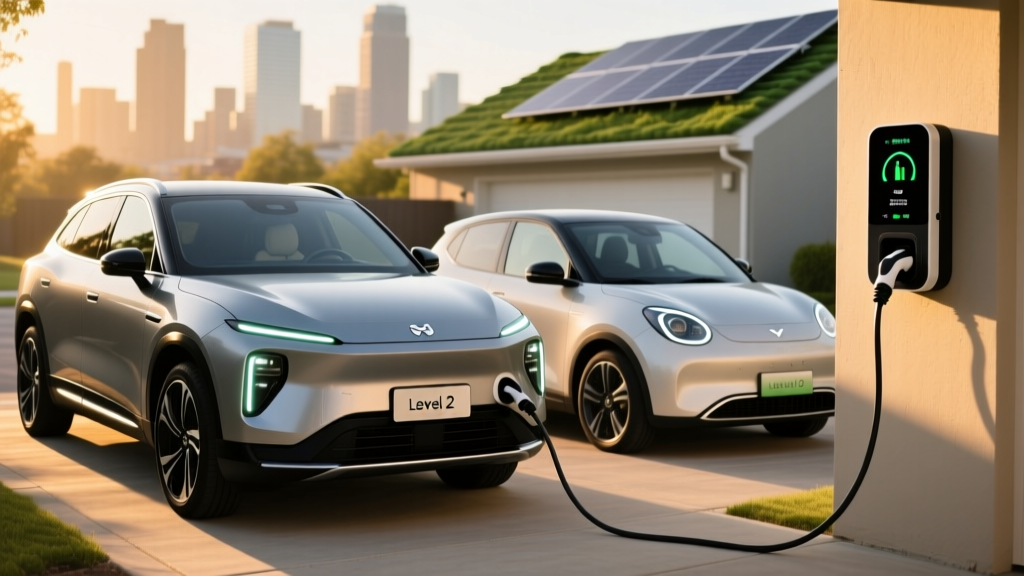
- Install a Level 2 home charger before delivery day. A 240V/48A hardwired unit (ChargePoint Home Flex, Emporia Vue, or Tesla Wall Connector) adds 25–44 miles of range per hour of charging and eliminates daily range stress. Budget $500–$1,500 for the unit and $500–$1,500 for electrician installation (more if your panel needs a 200A upgrade — $1,500–$3,500).
- Set your daily charge limit to 80% for NMC batteries (100% for LFP). This single habit can extend battery life by years. Use the car's scheduled-charging feature to hit 80% by departure time.
- Get an insurance quote before signing. EV insurance varies wildly — sometimes $400/yr more than a comparable gas car. Shop multiple carriers; some now offer EV-specific discounts.
- Download the charging network apps (Tesla, Electrify America, EVgo, ChargePoint) and plan one long trip before committing. Knowing where 150+ kW DC fast chargers are along your common routes eliminates the perception of unreliability.
Frequently Asked Questions
How long do EV motors last?
Electric motors have essentially one moving part (the rotor) and are rated for 300,000–500,000+ miles. Motor failures in modern EVs are exceedingly rare — well under 1% incidence. The inverter (which converts DC battery power to AC for the motor) is more likely to need service, but still uncommon within warranty periods.
Do EVs need any regular maintenance?
Yes, but minimal: cabin air filter replacement ($30–$80, every 15,000–20,000 mi), tire rotation (every 6,000–8,000 mi), brake fluid check (every 2 years), coolant top-off for the battery thermal management system (every 3–5 years), and windshield washer fluid. Total annual maintenance: typically $300–$600 versus $900–$1,500 for a gas car.
What happens if an EV sits unused for weeks?
Modern EVs lose roughly 1–3% State of Charge per week when parked. Leaving an EV at 50% SoC for a month is perfectly safe. However, the 12V auxiliary battery can discharge if the car sits unplugged for 4–6+ weeks — plug in to a Level 2 charger or use the car's "storage mode" if available.
Are used EVs reliable?
A used EV from a major manufacturer (Tesla, Hyundai, Kia, BMW, Ford) with a battery State of Health (SoH) above 90% is generally an excellent reliability bet. Always check SoH via the car's battery health screen or a third-party OBD-II tool before purchasing. Avoid used EVs with unknown charging history (frequent DC fast charging to 100% accelerates degradation).
Which EV brands are most reliable in 2026?
Based on aggregated owner-survey data (Consumer Reports 2025, J.D. Power 2025 Vehicle Dependability Study), the top-scoring EV brands for reliability are: Tesla (Model 3/Y, mature production), Hyundai/Kia (Ioniq 5/EV6, strong warranty support), BMW (i4/iX, excellent build quality), and Porsche (Taycan, premium but robust). Newer entrants like Rivian and Lucid have shown improvement year-over-year but still trail on sample-size data.