The Short Answer: Are EVs More Reliable?
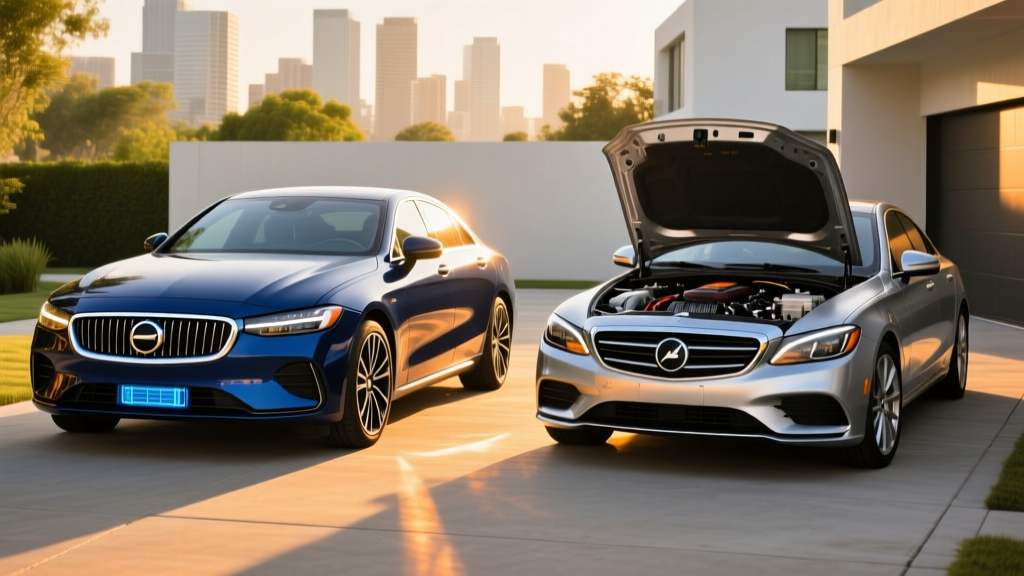
Based on aggregated owner-survey data, battery electric vehicles (BEVs) show fewer mechanical problems per 100 vehicles than internal-combustion engine (ICE) cars after the first ownership year, primarily because EVs eliminate the engine, transmission, exhaust system, and associated fluids. However, EVs currently score lower in build-quality surveys during the first 12 months — mostly due to panel gaps, infotainment bugs, and trim-rattle issues at newer EV startups. By year three and beyond, EVs consistently outpace gas cars in reliability. The caveat: battery replacement risk after warranty expiration, though real-world degradation data shows most modern packs retain 90%+ capacity at 100,000 miles.
What the Reliability Data Actually Shows
Consumer Reports' 2025 Annual Auto Reliability Survey, which aggregates data from over 330,000 vehicles, found that BEVs have 29% fewer problems on average than gas-powered vehicles when measured across model years 2019–2024. Plug-in hybrids (PHEVs), by contrast, showed 42% more problems than gas cars — a result of combining two complete powertrains with added complexity.
But the headline number hides nuance. Here's how reliability breaks down by category:
| Category | BEV (Electric) | Gas (ICE) | PHEV |
|---|---|---|---|
| Powertrain / Motor | Excellent — few moving parts | Average — timing chains, turbo failures | Average — dual-system risk |
| Transmission | N/A (single-speed) | Poor-to-Average — 8/9/10-speed issues | Average — CVT/automatic |
| Brakes | Excellent — regen extends pad life 2-3× | Average | Average |
| Cooling / Thermal | Average — complex battery cooling loops | Average | Average |
| Build Quality (Year 1) | Poor-to-Average (startup brands drag average) | Good | Good |
| Infotainment / Software | Poor-to-Average | Average | Average |
| Battery / HV System | Good (warranty-covered to 8 yrs) | N/A | Good (warranty-covered) |
The critical insight: EV powertrain reliability is outstanding. The problems dragging down early-model-year EV scores are overwhelmingly software and assembly quality issues — things like misaligned panels, touchscreen freezes, and phantom sensor warnings — not powertrain failures. Established automakers like Hyundai, BMW, and Tesla (post-2022 Fremont production) score markedly better here than early-stage brands.
EV vs Gas Car: Maintenance Cost Comparison
This is where EVs shine unambiguously. Without engine oil, transmission fluid, spark plugs, timing belts, fuel injectors, catalytic converters, or exhaust systems, the routine maintenance checklist shrinks dramatically.
| Service Item | BEV Cost | Gas Car Cost | Notes |
|---|---|---|---|
| Oil changes | $0 | $600–$1,200 | Every 5,000–10,000 mi for ICE |
| Brake pads | $0–$300 | $600–$1,500 | Regen braking extends pad life to 80k+ mi on EVs |
| Coolant flush | $150–$300 | $200–$400 | EV thermal loops still need periodic service |
| Air filters (cabin) | $100–$200 | $100–$200 | Same for both |
| Transmission fluid | $0 | $200–$600 | Most EVs have sealed single-speed gearboxes |
| Tire rotation / replacement | $1,200–$2,000 | $800–$1,500 | EVs are heavier + instant torque = faster tire wear |
| Spark plugs / ignition | $0 | $300–$800 | N/A for electric |
| Exhaust / emissions | $0 | $200–$1,500 | Catalytic converter theft is a real ICE cost |
| Total (5-yr est.) | $1,450–$2,800 | $3,000–$7,700 | Source: AAA Your Driving Costs 2025 |
The one area where EVs cost more to maintain: tires. A Tesla Model Y (4,400 lbs) or Hyundai Ioniq 5 (4,600 lbs) will chew through tires 20–30% faster than a comparable gas crossover, thanks to heavier curb weight and instant torque delivery. Budget for EV-specific tires like the Michelin Pilot Sport EV or Hankook iON, which use harder compounds to offset wear while maintaining low rolling resistance.
Battery Longevity: The Big Reliability Question
The single biggest reliability concern prospective EV buyers raise is battery degradation — and it's fair. A replacement pack costs $8,000–$22,000 depending on capacity and chemistry. But the data tells a reassuring story.
According to fueleconomy.gov and manufacturer warranty filings, federal law mandates that EV batteries carry a minimum warranty of 8 years / 100,000 miles (10 years / 150,000 miles in California Air Resources Board states). Most manufacturers guarantee the pack will retain at least 70% of original capacity during that period.
Real-world degradation data from fleet analyses shows:
- LFP (Lithium Iron Phosphate) packs — used in Tesla Model 3/Y RWD, Ford Mustang Mach-E Select — show approximately 5–8% degradation at 100,000 miles. LFP chemistry sacrifices some energy density for dramatically longer cycle life (3,000+ cycles vs ~1,500 for NMC).
- NMC (Nickel Manganese Cobalt) packs — used in most long-range and performance trims — show approximately 8–12% degradation at 100,000 miles.
- Geotab's analysis of 10,000+ EVs found that the average EV loses just 2.3% of range per year under normal use — meaning a 300-mile EPA-rated EV would still deliver roughly 265 miles at year seven.
The chemistry choice matters for reliability. LFP batteries can be charged to 100% daily without accelerating degradation, while NMC packs last longest when kept between 20–80% State of Charge (SoC) for daily driving. If you plan to own the car past the warranty period, an LFP-equipped model is the more reliability-conservative choice.
Total Cost of Ownership: EV vs Gas vs Hybrid
Reliability only matters in context of total cost. Here's a 5-year comparison for a midsize crossover buyer putting on 15,000 miles annually:
| Cost Category | BEV (e.g., Hyundai Ioniq 5 SEL, $45,200 MSRP) | HEV (e.g., Toyota RAV4 Hybrid, $33,975 MSRP) | Gas (e.g., Toyota RAV4 LE, $29,825 MSRP) |
|---|---|---|---|
| Purchase price (after §30D credit) | $37,700* | $33,975 | $29,825 |
| Fuel / energy (75k mi) | $3,750 (home charging avg) | $6,250 (40 MPG @ $3.33/gal) | $8,750 (28 MPG @ $3.33/gal) |
| Maintenance (5-yr) | $2,100 | $4,200 | $5,400 |
| Insurance (5-yr avg) | $9,500 | $7,200 | $6,800 |
| Depreciation (est.) | $18,000 | $12,500 | $14,000 |
| 5-Year Total | $71,050 | $64,125 | $64,775 |
*§30D federal tax credit eligibility requires meeting MSRP caps ($55,000 for SUVs), buyer income limits ($150k single / $300k joint), and battery component/critical mineral sourcing requirements. Verify current eligibility at IRS.gov. Credit can be transferred to the dealer at point of sale as of 2024+.
The EV's higher insurance premiums (typically 15–25% more than gas equivalents due to repair costs and parts pricing) and steeper depreciation partially offset fuel and maintenance savings. The break-even point versus a gas car is typically 4–6 years for a buyer with home charging access. Versus a hybrid like the RAV4 Hybrid, the financial case is tighter — you're paying for lower running costs but also higher upfront price and insurance.
Common EV Reliability Myths vs Facts
| Myth | Fact |
|---|---|
| "EV batteries need replacing every 5 years" | Modern packs are warrantied for 8 years/100k miles and routinely last 150k–200k+ miles with gradual capacity loss. Complete failure is rare. |
| "EVs break down more on road trips" | EVs have no fuel pump, no alternator, no serpentine belt — common roadside-failure items on gas cars. The breakdown risk shifts to charging infrastructure reliability, not the vehicle itself. |
| "Cold weather destroys EV batteries" | Cold reduces range by 20–40% (temporary, due to slower electrochemistry and cabin heating), but does not cause permanent damage. Battery preconditioning and heat pumps mitigate this significantly. |
| "EVs are unreliable because of software issues" | Software bugs are real (especially at newer brands) but are typically resolved via OTA updates. They rarely immobilize the vehicle — unlike a failed transmission or blown head gasket on a gas car. |
| "Charging ports and cables fail frequently" | Charge port mechanisms and cables are rated for 10,000+ mating cycles. Failures are uncommon and warranty-covered. |
Real-World Ownership Considerations Before You Buy
Reliability data is only useful if it maps to your specific situation. Here's what actually determines whether an EV will be a reliable daily tool for you:
Home Charging Access
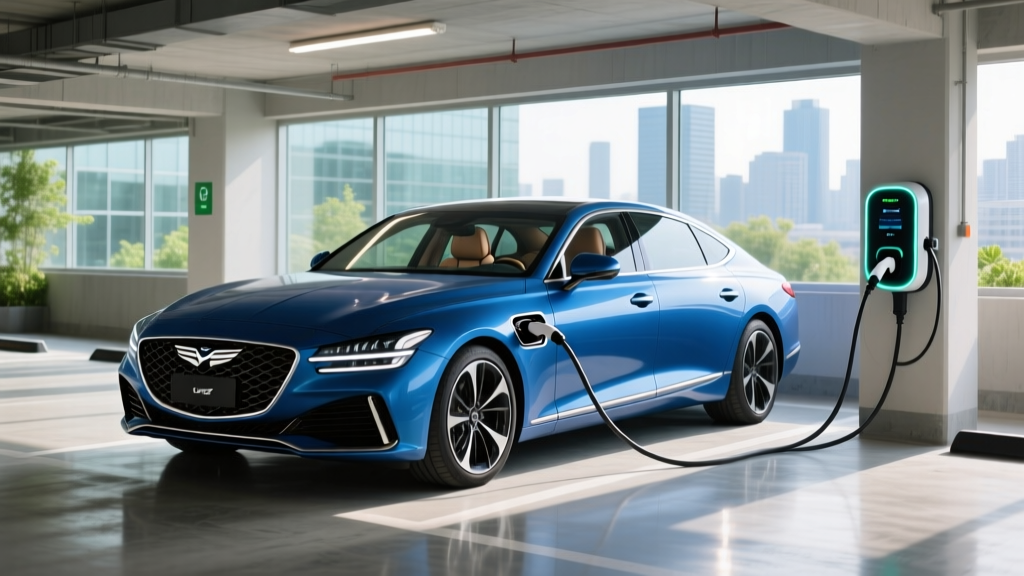
If you can install a Level 2 charger (240V, 32–48 amps / 7.7–11.5 kW) at home, an EV becomes extraordinarily reliable as a daily driver — you wake up to a full "tank" every morning. Installation costs range from $500–$2,500 depending on panel capacity and wiring distance. If your electrical panel needs a 200-amp upgrade, add $1,500–$3,500. Always get a quote from a licensed electrician before purchasing.
Without home charging, you're dependent on public DC fast charging and Level 2 destination chargers. Public network reliability varies: Electrify America, EVgo, and Tesla Superchargers average 85–95% uptime, but individual station experiences can be frustrating. Apartment dwellers without workplace charging should strongly consider a PHEV instead.
Climate and Driving Patterns
If you live where winter temperatures regularly drop below 25°F, expect 20–35% range reduction during cold months. A vehicle rated at 300 miles EPA might deliver 195–240 real-world miles in January in Minnesota. This isn't a reliability failure — it's physics — but it affects whether the EV reliably meets your daily needs.
For highway-heavy commuters (70+ mph sustained), expect 10–15% below EPA range due to aerodynamic drag scaling with the square of velocity. EVs are most efficient in stop-and-go city driving where regenerative braking recovers energy.
Model Selection Matters
Reliability varies enormously by brand and model year. Established EV platforms (Tesla Model 3/Y post-2022, Hyundai Ioniq 5/6, BMW i4/iX) score significantly better than first-year models from startups. When researching, check Consumer Reports reliability ratings and NHTSA recall databases for the specific model year you're considering.
Decision Framework: Is an EV the Reliable Choice for You?
Choose a BEV if:
- You have home charging access (garage, driveway, or workplace Level 2)
- Your daily driving is under 80 miles round-trip
- You want the lowest long-term maintenance cost
- You plan to own the vehicle 5+ years (past the depreciation cliff)
- You qualify for the §30D tax credit, reducing effective purchase price
Choose a PHEV if:
- You can't charge at home but want electric for short daily trips
- You frequently take 300+ mile road trips and don't want to plan around chargers
- You live in extreme cold and need the gas engine for reliable winter range
Stick with a gas car or HEV if:
- You have zero access to home or workplace charging
- You regularly tow heavy loads (trailers, boats) over long distances
- You're on a tight purchase budget under $28,000 and can't wait for the used-EV market
- You drive in areas with extremely sparse public charging infrastructure
Frequently Asked Questions
What is the most reliable EV brand in 2026?
Based on Consumer Reports and J.D. Power data, Lexus (RZ), BMW (i4, iX), and Hyundai/Kia (Ioniq 5, EV6) consistently rank at the top for EV reliability. Tesla's Model 3 and Model Y built after the 2022 production refresh also score well, though Tesla as a brand is dragged down by Cybertruck and older Model S/X issues.
How much does it cost to replace an EV battery out of warranty?
Out-of-warranty battery replacement ranges from approximately $8,000 for a 50–60 kWh pack (e.g., Chevrolet Bolt) to $18,000–$22,000 for a 75–100 kWh pack (e.g., Ford F-150 Lightning Extended Range). However, complete battery failure after warranty is statistically rare. More common is gradual capacity loss, and individual module replacement is sometimes possible at lower cost.
Do EVs require any regular maintenance at all?
Yes. EVs still need cabin air filter replacement (every 15,000–20,000 miles), brake fluid checks (every 2–3 years), coolant system service for the battery thermal management loop (per manufacturer schedule, typically every 5 years), windshield washer fluid, wiper blades, and tire rotation every 5,000–7,500 miles. The list is just much shorter than a gas car's.
Are used EVs reliable?
A used EV from a reliable model year can be an excellent value, but you must check the battery's State of Health (SoH). Many dealerships and third-party services can perform a battery health check. Look for SoH above 85% and verify remaining warranty coverage. The federal battery warranty (8 years/100k miles) transfers to subsequent owners, which is a significant safety net.
Do EVs have more recalls than gas cars?
Recall rates vary by model year and manufacturer, not by powertrain type. Early-production EVs from new platforms tend to have more recalls (software, battery management, charge-port related), similar to how first-year gas models with new engines or transmissions draw more recalls. Checking the NHTSA recall database for the specific model year is essential before buying.