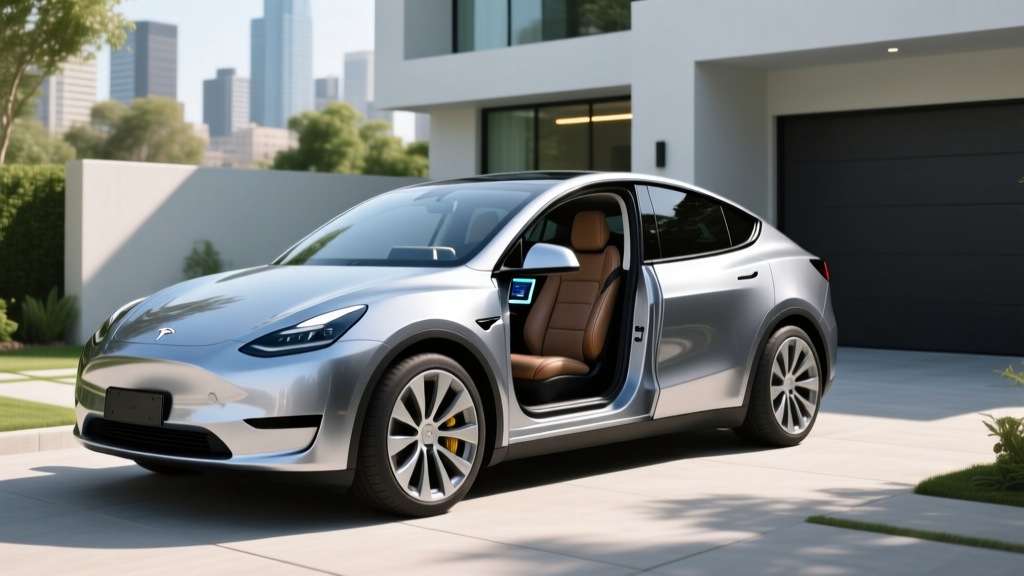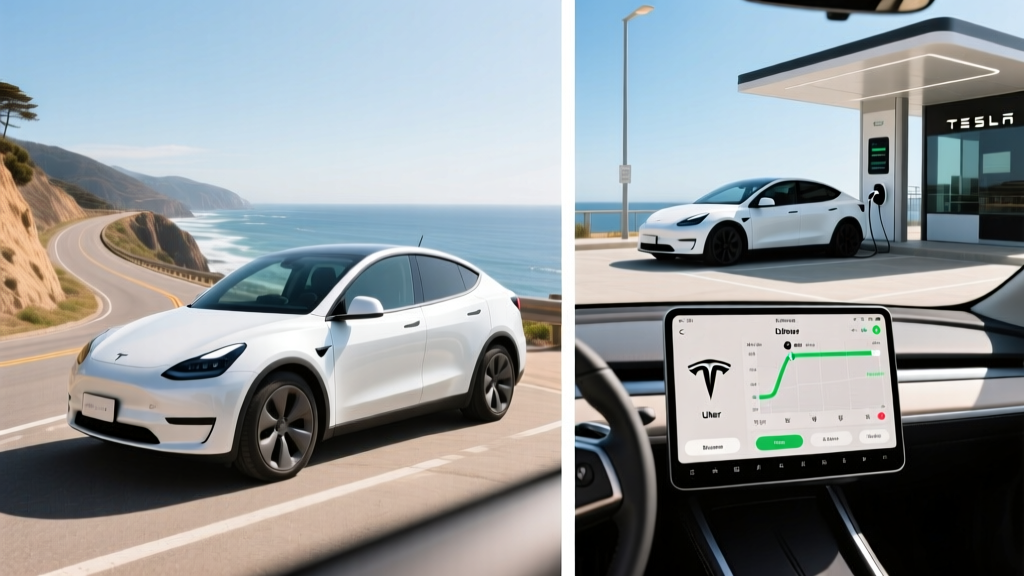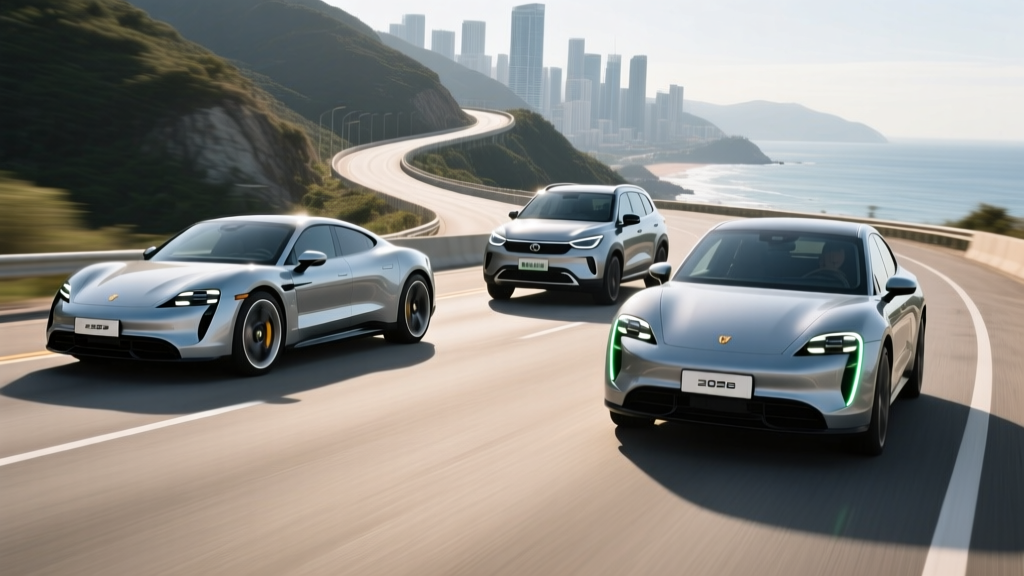
If you only care about the stoplight-to-stoplight sprint, the short answer is yes: most modern electric cars accelerate faster than equivalently priced gasoline cars. An EV's electric motor delivers peak torque from 0 RPM, eliminating the lag, gear shifts, and power-band wait that an internal combustion engine (ICE) requires. A $38,000 Tesla Model 3 Long Range AWD hits 0-60 mph in 4.9 seconds — performance that, a decade ago, required a $70,000+ V8 sports sedan.
But "faster" has three dimensions: acceleration (0-60), passing power (45-70 mph), and top speed. EVs dominate the first two. They often lose the third. And beyond the drag strip, the real ownership question is whether that speed comes at a cost you can actually live with — in range, charging time, insurance, and winter efficiency.
Quick Verdict
Acceleration (0-60 mph): EVs win. Instant torque and single-speed reduction gearing beat turbo lag and multi-gear shifts at any price point below $80,000.
Passing power (45-70 mph): EVs win. No downshift delay; torque is available instantly.
Top speed: Gas cars win. Most mainstream EVs are electronically limited to 112-155 mph; ICE cars sustain high-RPM power more efficiently.
Sustained high-speed driving: Gas cars win. EV efficiency drops sharply above 80 mph, cutting range by 25-40%.
The Physics: Why EVs Accelerate Harder Off the Line
An electric motor's torque curve is fundamentally different from a piston engine's. Torque — the rotational force that pushes you back in the seat — is available at 0 RPM in an EV. A gas engine must climb into its power band (typically 2,000-5,000 RPM), engage a transmission, and often spool a turbocharger before delivering peak thrust.
Consider two 2026 models in the same $40,000-$45,000 bracket:
| Metric | 2026 Tesla Model 3 Long Range AWD | 2026 BMW 330i xDrive (ICE) |
|---|---|---|
| 0-60 mph | 4.9 seconds | 5.6 seconds |
| Horsepower | 346 hp (dual motor) | 255 hp (turbo I-4) |
| Torque | 389 lb-ft (from 0 RPM) | 295 lb-ft @ 1,450 RPM |
| Drivetrain | Dual-motor AWD, single-speed | AWD, 8-speed automatic |
| Curb weight | 4,034 lbs | 3,748 lbs |
| MSRP | ~$42,630 | ~$46,500 |
| EPA combined | 131 MPGe / 341 mi range | 29 MPG combined |
The Model 3 is heavier by nearly 300 lbs due to its ~79 kWh (usable) NMC battery pack, yet it still wins by 0.7 seconds. That gap widens at lower price points. A $30,000 Chevrolet Equinox EV 2LT (FWD, 8.4 sec 0-60) isn't a rocket, but its torque delivery feels punchier than the number suggests because there's no shift shock or CVT drone.
Where Gasoline Cars Still Win: Top Speed and Autobahn-Style Runs
EVs hit a wall at high speeds — literally and electrically. Most mainstream EVs are electronically governed between 112 mph (Chevrolet Equinox EV) and 155 mph (Tesla Model S Plaid, Porsche Taycan Turbo). Gas-powered performance sedans like the BMW M3 (155 mph, or 180 mph with the M Driver's Package) can sustain those speeds for longer because their powertrain doesn't overheat or drain as rapidly.
The bigger issue is efficiency. Aerodynamic drag increases with the square of velocity, and EVs — burdened by heavy battery packs — suffer disproportionately. On a flat highway at 75 mph, a Model 3 Long Range might achieve its EPA-rated 341 miles of range. Push that to 90 mph, and real-world range drops to roughly 220-250 miles. Gas cars also lose efficiency at high speed, but their energy-dense fuel tanks give them a much larger buffer.
If your driving involves sustained high-speed runs (think rural interstates with 80+ mph limits or track days), an ICE or hybrid powertrain still has a functional edge.
Real-World Performance vs. Sticker Numbers
Manufacturer 0-60 claims are typically measured under ideal conditions: warm battery, smooth pavement, low elevation, launch control engaged. Real-world results vary.
- Cold battery penalty: Below 40°F, lithium-ion cells can't accept or deliver current as quickly. Expect 0-60 times to stretch by 0.3-1.0 seconds unless you precondition the battery (a feature Tesla, Hyundai, and BMW handle well via navigation-linked thermal management).
- State of Charge (SoC): Below 20% SoC, many EVs reduce peak power output to protect the battery. A Model 3 at 15% SoC may feel noticeably softer than at 80%.
- Weight sensitivity: EVs are 300-800 lbs heavier than comparable gas cars. That mass hurts braking distances, tire wear, and cornering agility — areas where "faster" doesn't apply.
- Rolling launches: EVs shine from a stop. In rolling 45-70 mph passing scenarios, they still win because there's no transmission kickdown delay, but the margin narrows against turbocharged gas engines already in their power band.
The Ownership Equation: Speed Comes With Costs (and Savings)
Buying an EV for its acceleration means signing up for a different cost structure. Here's a 5-year comparison for a driver covering 12,000 miles/year, based on a Model 3 Long Range vs. a BMW 330i, assuming home Level 2 charging at $0.14/kWh and $3.40/gallon regular unleaded.
| 5-Year Cost Category | Tesla Model 3 LR AWD | BMW 330i xDrive |
|---|---|---|
| Base MSRP (2026) | $42,630 | $46,500 |
| Federal §30D tax credit (if eligible) | -$7,500 (point-of-sale) | $0 |
| Effective purchase price | ~$35,130 | $46,500 |
| Fuel/energy (5 yrs, 60k mi) | ~$2,650 (home L2) | ~$7,010 |
| Maintenance (5 yrs) | ~$1,200 | ~$3,800 |
| Insurance (5 yrs avg.) | ~$12,500 | ~$9,800 |
| Estimated 5-yr depreciation | ~$18,000 | ~$21,000 |
| Total 5-yr cost of ownership | ~$69,480 | ~$88,110 |
Key caveats that shift this math:
- Tax credit eligibility requires meeting IRS §30D rules: buyer AGI caps ($150k single / $300k joint), MSRP caps ($55k sedans / $80k SUVs), and battery critical-mineral and component sourcing thresholds that change yearly. Verify your eligibility before counting on the credit.
- Insurance is consistently 15-30% higher on EVs due to repair costs, battery replacement exposure, and specialized labor. Get quotes before buying.
- Home charging access is the single biggest variable. Without Level 2 home charging (240V, ~$500-$2,000 installed), you'll rely on public DC fast charging at $0.35-$0.60/kWh, which erases most fuel savings.
Common Misconceptions About EV Speed
| Myth | Fact |
|---|---|
| "EVs are all fast." | Base FWD models like the Nissan Leaf S (7.9 sec 0-60) or Chevy Equinox EV (8.4 sec) are merely adequate. Performance requires AWD dual-motor trims. |
| "EVs can't sustain highway speeds." | They easily cruise at 80-90 mph. The issue is range consumption, not capability. Expect 25-40% range loss vs. EPA at sustained 80+ mph. |
| "Heavy EVs handle poorly." | Low-slung battery packs give most EVs a lower center of gravity than gas cars. Skid-pad numbers on a Model 3 (0.90g) rival sporty ICE coupes. But mass still hurts braking distances and tire life. |
| "Performance EVs are always more expensive." | A $42,630 Model 3 LR AWD (4.9 sec) undercuts a $50,000 BMW M340i xDrive (4.2 sec) by thousands while matching or beating most V6 sport sedans. |
| "EVs lose all their speed in winter." | They lose some. Cold reduces peak power output and range (15-30% range loss at 20°F), but preconditioning mitigates the acceleration penalty. |
Decision Framework: Should You Buy an EV for Speed?
Choose an EV if:
- You want sub-5-second 0-60 acceleration under $50,000.
- You have reliable Level 2 home charging (garage or driveway with 240V/40A+ circuit).
- Your commute is under 100 miles round-trip, and road trips are occasional.
- You value instant passing power in suburban or mountain driving.
- You qualify for the §30D tax credit (check IRS guidelines for current sourcing and income rules).
Choose a gas car or hybrid if:
- You regularly drive sustained high-speed routes (80+ mph interstates, Autobahn-style roads).
- You live in an apartment or street-park with no viable home charging.
- You frequently tow near max capacity — EV range collapses under heavy towing loads.
- You drive in extreme cold (-10°F or below) for long distances, where range loss compounds.
- Top speed and track use matter more than daily acceleration.
Choose a PHEV (plug-in hybrid) if:
- You want electric torque for daily commuting (20-40 mi electric range) but gas flexibility for road trips.
- You can't commit to full BEV ownership due to charging access or range anxiety.
- Models like the Toyota RAV4 Prime (7.0 sec 0-60, 42 mi EV range, 38 MPG combined) offer a credible middle ground.
What First-Time EV Buyers Should Know About Performance
Speed is the easy sell. Living with it is the harder part. Before signing, confirm these realities:
- Install Level 2 charging first. A 240V/48A home charger (like the Tesla Wall Connector or ChargePoint Home Flex) adds ~30-44 miles of range per hour and costs $500-$2,000 installed, depending on panel capacity. If your home has a 100A electrical panel, a $1,500-$3,000 panel upgrade may be needed. Hire a licensed electrician — don't DIY high-voltage work.
- Check your insurance rate before delivery day. EV premiums are higher. Get a binding quote using the exact VIN and trim.
- Plan for cold weather. If you live where winters drop below 30°F, budget 25-30% range loss and look for models with heat pumps (standard on Tesla, Hyundai Ioniq 5/6, VW ID.4, and most 2026 EVs). Heat pumps recover 10-15% of cold-weather range vs. resistive heaters.
- Understand the charge curve. A "250 kW peak" DC fast charger doesn't sustain 250 kW. Charging slows above 50-60% SoC to protect the battery. A typical 10-80% session on a 250 kW charger takes 18-25 minutes; 10-100% may take 40+ minutes.
- Verify §30D eligibility yourself. The DOE's fueleconomy.gov tax credit tool lists eligible models, but income, sourcing, and MSRP rules are your responsibility. Consult a tax professional if uncertain.
- Test-drive in conditions you'll actually face. A sunny 70°F demo drive doesn't tell you how the EV performs at 20°F with the heater blasting and a 70-mile commute ahead.
Frequently Asked Questions
Are electric cars faster than gasoline cars from 0 to 60 mph?
Yes, in most price-matched comparisons below $80,000. Electric motors deliver peak torque at 0 RPM with no gear shifts, giving them a consistent advantage. A $42,630 Tesla Model 3 LR AWD (4.9 sec) beats a $46,500 BMW 330i xDrive (5.6 sec). Above $100,000, dedicated ICE supercars (Porsche 911 Turbo S, 2.6 sec) still compete with flagship EVs (Tesla Model S Plaid, 1.99 sec with rollout).
Why do EVs have lower top speeds than gas cars?
Two reasons: single-speed reduction gearing (no multi-gear transmission to extend the power band) and thermal/battery-discharge limits at sustained high RPM. Most EVs are electronically limited to 112-155 mph to prevent motor overheating and excessive energy drain. Gas engines can sustain high-RPM output more efficiently with multi-speed transmissions and liquid fuel's superior energy density.
Do EVs lose acceleration performance in cold weather?
Slightly. Below 40°F, lithium-ion cells increase internal resistance, reducing peak power delivery. Expect 0-60 times to stretch by 0.3-1.0 seconds in freezing weather unless the battery is preconditioned. Navigation-linked preconditioning (warming the pack before hard driving) is standard on most 2026 EVs and largely mitigates this.
Are EVs faster than hybrids?
Generally, yes. Full EVs have larger battery packs and more powerful electric motors. A Toyota RAV4 Prime PHEV does 0-60 in 7.0 seconds (302 hp combined), while a Tesla Model Y Long Range AWD does it in 5.0 seconds (384 hp). However, PHEVs offer gas-engine flexibility for long road trips where EV charging stops would add time.
Does an EV's speed affect its range significantly?
Yes. Aggressive acceleration and sustained high speeds dramatically increase energy consumption. Driving at 80 mph vs. 65 mph can reduce range by 20-30%. Repeated hard launches also heat the battery, triggering thermal management that can further reduce efficiency. The EPA range sticker assumes a mix of gentle city and moderate highway driving — not performance use.
What's the fastest affordable EV in 2026?
The Tesla Model 3 Long Range AWD (4.9 sec, ~$42,630 MSRP before incentives) offers the best acceleration-per-dollar in the mainstream market. The Hyundai Ioniq 5 N (3.4 sec, ~$68,000) is the quickest purpose-built performance EV under $70,000, though it sacrifices range (EPA 221 mi) for track capability.