Are BYD Cars Sold in the US? The Short Answer
If you've been reading global EV headlines, you've likely noticed BYD (Build Your Dreams) trading blows with Tesla for the title of world's top EV seller. But if you walk into a dealership in California, Texas, or New York looking for a BYD, you'll leave empty-handed. As of 2026, BYD does not sell passenger cars or SUVs to US consumers. The Chinese automaker has no retail footprint, no US-spec models, and no announced timeline for a consumer launch in the American market.
What BYD does sell in the US is a niche lineup of commercial electric vehicles — battery-electric transit buses, school buses, and heavy-duty trucks — built at its Lancaster, California facility. These are fleet-only products, not something you can buy for your driveway.
So why is the world's largest EV maker absent from the biggest auto market? The answer involves a wall of tariffs, geopolitical friction, and a strategic decision by BYD to focus on Europe, Southeast Asia, Latin America, and Australia. Let's unpack what that means for US buyers, and what BYD's global lineup tells us about the EVs we're missing.
Why BYD Passenger Cars Aren't Available Stateside
Several compounding barriers keep BYD out of the US consumer market in 2026:
- 100%+ Tariffs on Chinese EVs: In 2024, the Biden administration raised Section 301 tariffs on Chinese-made electric vehicles to 100%, effectively doubling the sticker price of any imported BYD before it hits a showroom. These tariffs remain in effect for 2026, making direct import economically unviable.
- Connected Vehicle Ban: The US Department of Commerce finalized rules (effective for model year 2027 for passenger cars) banning the sale of vehicles with Chinese- or Russian-made connected vehicle hardware and software. BYD's vertically integrated tech stack — from its DiLink infotainment to ADAS sensors — would require a costly ground-up redesign for the US market.
- No US Dealer Network: Unlike legacy OEMs with thousands of franchises, BYD has invested in zero US retail infrastructure. Building one from scratch amid tariff uncertainty is a massive capital risk.
- IRA Sourcing Restrictions: The IRS §30D federal tax credit excludes any EV with battery components or critical minerals sourced from a "foreign entity of concern" (FEOC) — a category that includes Chinese firms. A BYD with its own Blade LFP cells would categorically fail to qualify for the up-to-$7,500 credit, putting it at a disadvantage against Tesla, Hyundai, and GM.
- Strategic Focus Elsewhere: BYD has prioritized markets where it faces lower tariff walls and faster growth — Europe (with a new Hungary plant), Brazil, Thailand, Mexico, and Australia. The US is a low-priority, high-friction market.
What BYD Models US Buyers Are Missing (Global Specs)
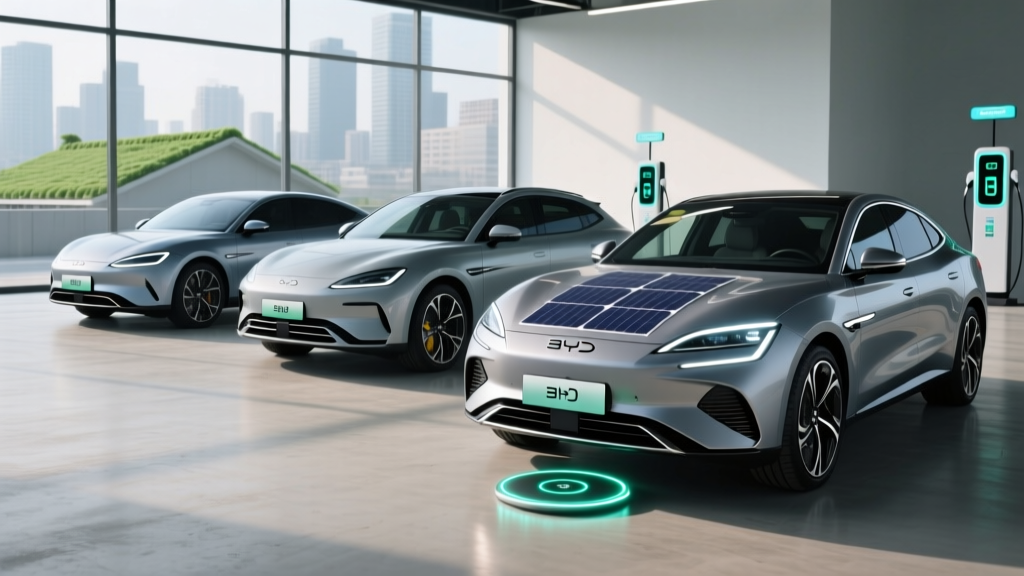
To understand the buzz, here's a snapshot of three BYD models dominating international markets in 2026. Note: these figures reflect global (often WLTP) specs, not US EPA-certified numbers, which BYD does not publish since the cars aren't sold here.
| Spec | BYD Seal (Sedan) | BYD Atto 3 (SUV) | BYD Dolphin (Hatch) |
|---|---|---|---|
| Battery | 82.5 kWh LFP Blade | 60.5 kWh LFP Blade | 60.4 kWh LFP Blade |
| WLTP Range | ~354 mi (570 km) | ~260 mi (420 km) | ~265 mi (427 km) |
| Estimated EPA Equiv. | ~290-310 mi* | ~210-230 mi* | ~215-235 mi* |
| Peak DC Charge | 150 kW | 88 kW | 88 kW |
| 10-80% DC Time | ~26 min | ~29 min | |
| 0-60 mph | 3.8s (AWD Perf.) | 7.3s | 7.0s |
| Drivetrain | RWD / AWD | FWD | FWD |
| Global Price Equiv. | ~$42,000 | ~$35,000 | ~$30,000 |
*Estimated EPA equivalent based on typical WLTP-to-EPA conversion (~15-20% reduction). Actual EPA figures would require US certification.
BYD's Blade Battery: The Tech US Owners Can't Access
BYD's signature technology is the Blade Battery — a cell-to-pack lithium iron phosphate (LFP) design that uses long, blade-shaped cells as both energy storage and structural members. The benefits are measurable:
- Safety: Blade cells pass nail-penetration tests without thermal runaway — a significant advantage over many NMC packs.
- Longevity: LFP chemistry typically sustains 3,000+ charge cycles before hitting 80% State of Health, versus ~1,500-2,000 for NMC. BYD backs its packs with an 8-year/100,000-mile warranty globally (some markets: 8 years/125,000 miles with a 70% capacity retention floor).
- Cost: LFP avoids cobalt and nickel, making BYD's packs significantly cheaper per kWh than most Western competitors.
The trade-off: LFP has lower energy density than NMC, which is why BYD's longest-range models top out around 350 miles WLTP rather than pushing 400+. LFP also prefers regular 100% charging (unlike NMC, which benefits from 80% daily limits), and its state-of-charge estimation is less precise — BYD recommends a full charge at least weekly to recalibrate the BMS.
Charging Performance: A Known Weakness
If BYD has an Achilles' heel versus Tesla, Hyundai/Kia, and Lucid, it's DC fast-charging speed. Most BYD models peak between 88 kW and 150 kW — respectable, but well below the 240-350 kW peaks of the Hyundai Ioniq 5, Porsche Taycan, or Tesla Model 3 Highland.
| Model | Peak DC kW | 10-80% Time | L2 Home Rate |
|---|---|---|---|
| BYD Seal | 150 kW | ~26 min | 11 kW (~37 mi/hr) |
| BYD Atto 3 | 88 kW | ~29 min | 7 kW (~23 mi/hr) |
| Tesla Model 3 LR | 250 kW | ~18 min | 11.5 kW (~44 mi/hr) |
| Hyundai Ioniq 5 LR | 240 kW | ~18 min | 10.9 kW (~40 mi/hr) |
The gap matters most on road trips. On a 400-mile drive, a BYD Seal owner might spend 45-50 total minutes charging versus 25-30 minutes in an Ioniq 5 or Model 3. For daily home charging, the difference is negligible — overnight on Level 2 fills any of these cars.
Tax Credits, Pricing, and the US Cost Equation
Even if BYD found a tariff workaround — for instance, building a US or Mexico plant — the IRS §30D clean vehicle credit would almost certainly exclude its vehicles. The credit's FEOC battery-sourcing rules (phased in through 2025) disqualify any EV whose battery components or critical minerals come from Chinese entities. Since BYD manufactures its own cells and sources minerals through Chinese supply chains, every BYD would be ineligible for the $7,500 credit.
That's a decisive disadvantage. Consider:
- A $38,000 BYD Atto 3, if imported tariff-free, would effectively cost $38,000.
- A $38,000 Chevrolet Equus EV or Nissan LEAF, after $7,500 point-of-sale credit, would cost ~$30,500.
Add the 100% tariff on top, and a BYD's landed cost becomes uncompetitive against US-built and Korea-built alternatives that do qualify for credits.
Alternatives US Buyers Can Actually Purchase in 2026
If BYD's value proposition — affordable LFP EVs with solid range — appeals to you, these US-market alternatives deliver similar virtues with full warranty, service, and tax-credit support:
- Tesla Model 3 RWD ($38,990): Uses CATL LFP cells (China-sourced, but assembled in US — credit eligibility varies by VIN). EPA 272 mi. 170 kW DC peak. Supercharger network access.
- Chevrolet Equinox EV LT (~$33,000 after credit): US-built, NMC Ultium pack, EPA 319 mi, qualifies for full $7,500 credit.
- Hyundai Ioniq 5 (~$42,500): Georgia-built, EPA 303-361 mi depending on trim, 240 kW DC charging, full credit eligibility.
- Volkswagen ID.4 (~$38,000 after credit): Tennessee-built, EPA 291 mi, NMC pack, roomy crossover footprint.
None of these match BYD's aggressive global pricing, but after federal credits and state incentives, they close the gap — and they come with a dealer network and NHTSA-certified safety compliance.
Could BYD Enter the US Market Soon?
Industry analysts have speculated for years about a BYD US launch, but as of 2026, the barriers remain structural, not temporary:
- Tariffs show no sign of reduction under current US trade policy.
- The connected-vehicle ban forces a tech-stack redesign BYD has not signaled it's pursuing.
- BYD's Mexico plant plans (once floated as a backdoor to the US market) have stalled under US political pressure and USMCA rules-of-origin scrutiny.
- BYD executives have publicly stated the US is "not a priority" while Europe, ASEAN, and LatAm offer faster ROI.
The most plausible path would be a dedicated US-market sub-brand with a localized supply chain — similar to Volvo's Polestar approach — but that's a 5-7 year, multi-billion-dollar bet with uncertain returns. Don't expect a BYD showroom in your area before 2030, if ever.
FAQ: BYD in the US
Can I import a BYD from Canada or Mexico?
No. The 100% Section 301 tariff applies based on country of manufacture, not country of sale. A BYD built in China and shipped through Mexico still faces the tariff, plus the connected-vehicle ban applies to all US-registered vehicles regardless of import path.
Does BYD sell any vehicles in the US at all?
Yes — but only commercial fleet vehicles: battery-electric transit buses, school buses, and Class 8 trucks, primarily built at BYD's Lancaster, CA facility. These are not available to individual consumers.
Would a BYD qualify for the $7,500 federal EV tax credit?
Almost certainly not. Under current IRS §30D rules, the FEOC battery-sourcing requirement excludes vehicles with Chinese-sourced battery components or critical minerals — which describes every BYD on the market.
Is BYD's Blade Battery safer than Tesla or GM Ultium packs?
On thermal runaway resistance, LFP Blade cells have a documented advantage in nail-penetration and crush testing. However, real-world crash safety depends on the full vehicle structure, not just cell chemistry — and BYD has limited IIHS or NHTSA crash-test data since its cars aren't sold in the US.
What's the best BYD alternative for a budget-conscious US buyer?
The Chevrolet Equinox EV and Tesla Model 3 RWD (with LFP CATL pack) come closest to BYD's value proposition — affordable, solid range, and full tax-credit eligibility. For crossover buyers, the Hyundai Ioniq 5 and VW ID.4 (both US-built) are strong picks.
Will BYD's US absence change if tariffs drop?
Unlikely in the near term. Even if EV tariffs fell, the connected-vehicle ban and IRA FEOC rules would still require BYD to fundamentally restructure its supply chain and software stack for the US — a multi-year, high-cost undertaking with no guaranteed payoff.