The Short Answer: BYD Passenger EVs Are Not Sold in the United States
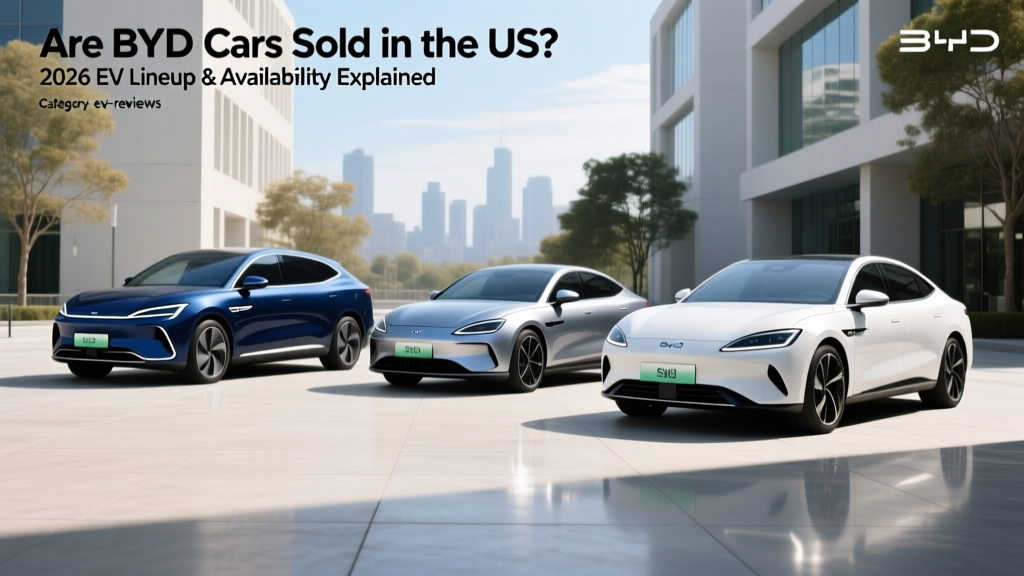
If you've been searching for are BYD cars sold in US showrooms, the answer as of 2026 remains a firm no — at least for passenger vehicles. BYD (Build Your Dreams), the world's largest plug-in electric vehicle manufacturer by volume, does not sell its cars, SUVs, or crossovers to US consumers. You cannot walk into a dealership and buy a BYD Seal, Dolphin, Atto 3, or any other BYD passenger EV in any of the 50 states.
However, BYD does have a limited commercial presence in the US through its electric bus and truck division, and the company's global EV lineup continues to expand aggressively across Europe, Southeast Asia, Australia, and Latin America. Understanding why BYD isn't here — and what its vehicles offer globally — is essential context for US EV shoppers evaluating their options.
Why BYD Doesn't Sell Cars in the US: Tariffs, Trade Policy, and Strategy
Multiple factors block BYD from the American passenger-car market:
The 100% Tariff Wall
In 2024, the US government raised tariffs on Chinese-made electric vehicles to 100% under Section 301 trade provisions, effective through at least 2026. This means a BYD Seal that retails for roughly $40,000 in Europe would carry an import duty equal to its entire value before even reaching a US showroom floor. The math makes direct importation commercially impossible.
Even if BYD attempted to build a factory in Mexico or another near-shore location to sidestep the tariff, IRS §30D tax credit rules explicitly exclude vehicles containing battery components from a "foreign entity of concern" (FEOC) — a designation that covers Chinese battery manufacturers including BYD's own FinDreams battery division. This means BYD vehicles would not qualify for the up-to-$7,500 federal tax credit, further undermining competitiveness.
BYD's Strategic Priorities Lie Elsewhere
BYD sold over 3 million new energy vehicles globally in 2024 and is on pace to exceed that in 2025–2026. The company has prioritized:
- Europe: Active sales of the Atto 3, Seal, Dolphin, and Han across multiple EU countries, with a planned factory in Hungary (expected operational 2026).
- Southeast Asia: Thailand is BYD's largest export market, with a local factory already running.
- Latin America: A factory in Brazil (Bahia state) began production in 2025, targeting regional demand.
- Australia and New Zealand: Strong market share with the Atto 3 and Dolphin.
Entering the US would require enormous investment in a dealer network, homologation (meeting NHTSA and EPA standards), and marketing — all while fighting a tariff regime that eliminates any price advantage. BYD executives have publicly stated the US is not a near-term priority.
BYD's Global EV Lineup: What US Buyers Are Missing (Specs Breakdown)
While you can't buy these in the US, here's what BYD offers globally — useful for understanding the competitive pressure BYD exerts on the brands that do sell here. All figures reflect the latest available global specifications.
| Model | Segment | Battery (kWh) | WLTP Range | Peak DC Charge | 0-62 mph | HP |
|---|---|---|---|---|---|---|
| BYD Seal | Mid-size sedan | 82.5 kWh (LFP Blade) | 354 mi (570 km) | 150 kW | 3.8s (AWD) | 523 hp (AWD) |
| BYD Dolphin | Subcompact hatch | 60.4 kWh (LFP Blade) | 265 mi (427 km) | 88 kW | 7.0s | 201 hp |
| BYD Atto 3 | Compact SUV | 60.5 kWh (LFP Blade) | 261 mi (420 km) | 88 kW | 7.3s | 201 hp |
| BYD Han EV | Full-size sedan | 85.4 kWh (LFP Blade) | 323 mi (521 km) | 120 kW | 3.9s (AWD) | 509 hp (AWD) |
| BYD Seal U | Mid-size SUV | 87 kWh (LFP Blade) | 311 mi (500 km) | 140 kW | 5.7s (AWD) | 543 hp (AWD) |
Important note on range figures: BYD publishes WLTP range, the European testing standard. WLTP figures typically run 10–15% higher than the US EPA cycle. A BYD Seal rated at 354 miles WLTP would likely earn an EPA estimate of roughly 290–310 miles if it were certified for US sale. Real-world highway driving at 70+ mph in cold weather would further reduce that to approximately 240–260 miles — consistent with what we see from similarly sized competitors like the Tesla Model 3 and Hyundai Ioniq 6.
BYD's Blade Battery: What Makes It Different
BYD's signature technology is its Blade Battery, a structural LFP (lithium iron phosphate) pack design that arranges long, thin cells in a blade-like configuration. Key characteristics:
| Attribute | BYD Blade (LFP) | Typical NMC (e.g., LG, CATL) |
|---|---|---|
| Energy density | ~150 Wh/kg (cell level) | ~200–250 Wh/kg (cell level) |
| Cycle life | 3,000–5,000 cycles | 1,000–2,000 cycles |
| Thermal runaway risk | Very low (passes nail penetration test) | Moderate (requires management systems) |
| Cold-weather performance | More range loss below freezing | Slightly better cold retention |
| Recommended daily SoC | 100% (LFP tolerates full charge) | 80% for daily, 100% for trips |
| Cost per kWh | Lower (~$80–100/kWh at scale) | Higher (~$110–140/kWh) |
| Cobalt/nickel content | None (iron, phosphate) | Contains cobalt and nickel |
The Blade Battery's safety credentials are genuinely impressive — BYD's nail penetration test demonstrates no fire or smoke, a significant achievement. The LFP chemistry also means owners can charge to 100% daily without accelerating degradation, unlike NMC packs. However, the lower energy density means BYD vehicles tend to be heavier, which impacts efficiency and handling dynamics compared to NMC-equipped rivals at the same range target.
Charging Performance: How BYD EVs Compare Globally
BYD's charging speeds are a known weak point relative to competitors like Hyundai/Kia's E-GMP platform (which peaks at 350 kW) or Tesla's latest architecture. Here's what global owners experience:
| Model | Max DC kW | 10–80% Time | Level 2 kW | Level 2 Full Charge |
|---|---|---|---|---|
| BYD Seal (AWD) | 150 kW | ~26 min | 11 kW (AC) | ~8.5 hours |
| BYD Dolphin | 88 kW | ~29 min | 11 kW (AC) | ~6.5 hours |
| BYD Atto 3 | 88 kW | ~29 min | 7.2 kW (AC, some markets) | ~8.5 hours |
| BYD Han EV | 120 kW | ~30 min | 7.2 kW (AC) | ~12 hours |
For comparison, the Hyundai Ioniq 5 charges at up to 240 kW (10–80% in ~18 minutes), and the Tesla Model 3 Highland peaks at 250 kW. BYD's 88–150 kW peak rates are adequate but not class-leading — a road trip in a BYD would mean slightly longer charging stops than in the fastest-charging competitors.
The charge curve on BYD vehicles also shows a notable taper. In European testing, the Seal sustains close to its 150 kW peak only between roughly 10–40% SoC, then steps down to ~100 kW through 60%, and further to ~60 kW above 80%. This is typical LFP behavior but means the "10–80% in 26 minutes" claim requires a preconditioned battery and a charger capable of delivering the full rate.
US Alternatives: What to Buy Instead of a BYD
Since BYD isn't an option, here's how the closest US-available competitors stack up against BYD's global lineup in the segments where BYD competes:
| BYD Model | US Alternative | EPA Range | Max DC Charge | Base MSRP (2025/2026) | §30D Credit |
|---|---|---|---|---|---|
| BYD Seal | Tesla Model 3 LR AWD | 341 mi | 250 kW | $47,740 | $7,500 (eligibility varies) |
| BYD Seal | Hyundai Ioniq 6 SEL AWD | 316 mi | 240 kW (350 kW capable) | $46,750 | $7,500 (if eligible) |
| BYD Dolphin | Chevrolet Bolt EV (discontinued) / Equinox EV | 319 mi (Equinox EV) | 150 kW (Equinox) | $33,600 (Equinox EV LT) | $7,500 (if eligible) |
| BYD Atto 3 | Hyundai Kona Electric | 261 mi | 100 kW | $32,975 | Not eligible (Korea sourcing) |
| BYD Atto 3 | Ford Mustang Mach-E Select | 250 mi (SR RWD) | 150 kW | $39,995 | $7,500 (if eligible) |
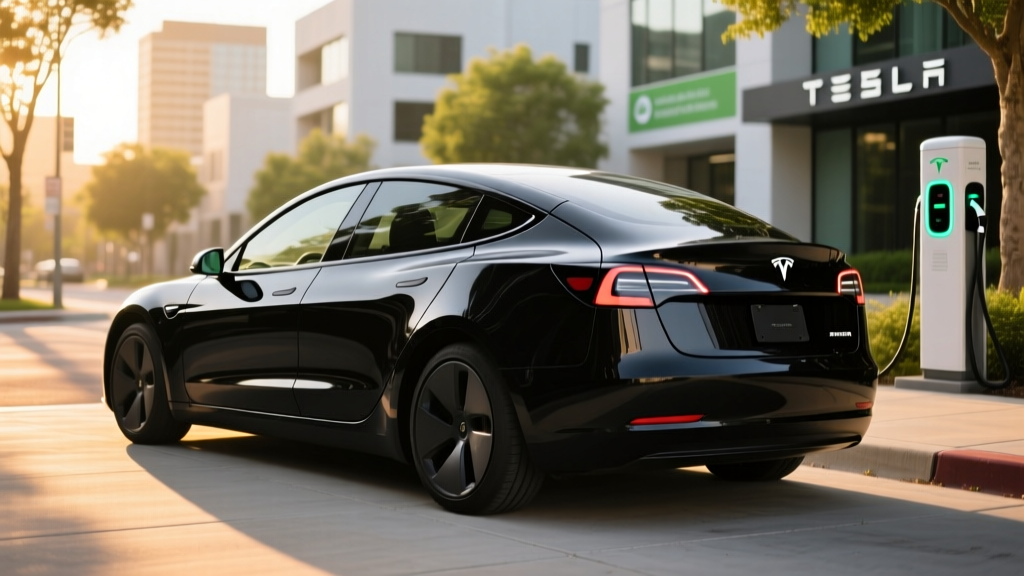
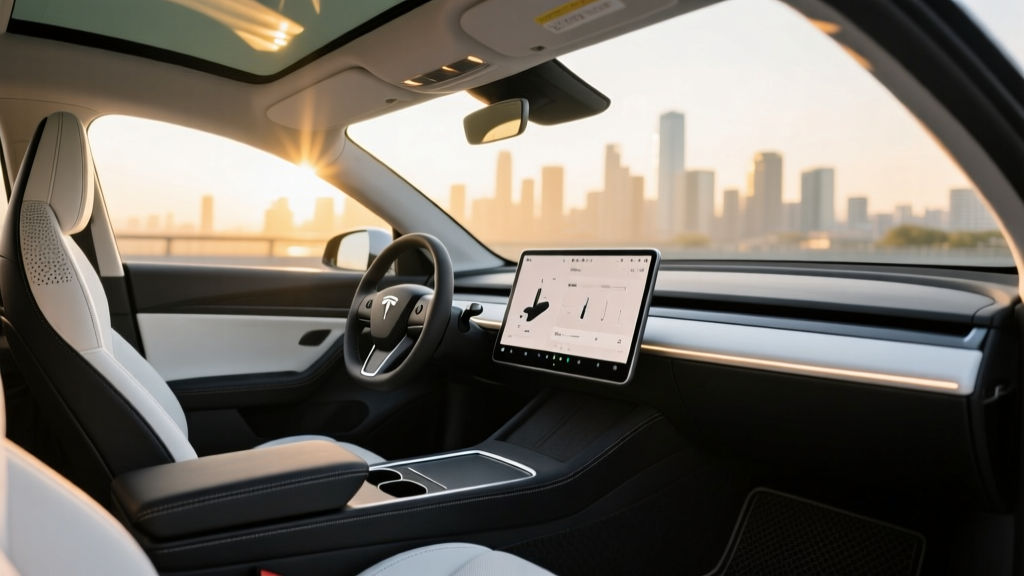
The US market offers competitive — and in many cases superior — alternatives in every segment where BYD competes globally. The Hyundai Ioniq 6, for instance, charges significantly faster than the BYD Seal, while the Tesla Model 3 benefits from Supercharger network access and more mature ADAS features.
Could BYD Ever Enter the US Market?
Several scenarios could theoretically bring BYD passenger vehicles to the US, though none appear imminent:
- Tariff reduction or trade agreement: If US-China trade relations shifted substantially and the 100% tariff were reduced or eliminated, BYD's cost structure could make it competitive. There is no indication this will happen in the near term.
- US or near-shore manufacturing: BYD could build a factory in the US (as Toyota, Honda, BMW, and Hyundai have done). However, the FEOC battery-sourcing rules in §30D would still prevent tax credit eligibility for vehicles using BYD's own batteries, severely limiting competitiveness.
- Mexico factory workaround: BYD has been rumored to consider a Mexico plant. However, the USMCA trade agreement requires significant North American content, and current political momentum is toward closing this potential loophole.
For now, BYD's US presence is limited to:
- BYD electric buses: Manufactured in Lancaster, California, serving transit agencies nationwide.
- BYD electric trucks: Class 8 trucks and yard tractors for commercial fleet operations.
- BYD forklifts and industrial equipment: Available through industrial dealers.
Federal Tax Credit Note: Why BYD Wouldn't Qualify Anyway
Even if BYD found a way to sell passenger EVs in the US, the IRS §30D clean vehicle credit would almost certainly exclude them. Here's the eligibility checklist that BYD vehicles would fail:
- ❌ Battery component sourcing: For 2025–2026, any vehicle with battery components manufactured by a "foreign entity of concern" (FEOC) is ineligible. BYD manufactures its own Blade Batteries through FinDreams, a Chinese entity — an automatic disqualifier.
- ❌ Critical minerals: A percentage of critical minerals must be sourced from the US or FTA partners. BYD's LFP chemistry uses iron and phosphate, but the supply chain runs through Chinese processors.
- ✓ MSRP cap: Sedans must be under $55,000; SUVs/trucks under $80,000. Most BYD models would pass this test.
- ✓ Income cap: Buyer AGI must be under $150,000 (single), $225,000 (head of household), $300,000 (joint). This applies to the buyer, not the manufacturer.
- ❌ Final assembly: Must occur in North America. BYD has no North American passenger-vehicle assembly.
Bottom line: BYD vehicles would fail at least three of the five major §30D requirements. Consult a tax professional or the IRS for current credit eligibility on any vehicle you're considering.
Frequently Asked Questions
Can I import a BYD from another country to the US?
Practically, no. The vehicle would need to be homologated to meet NHTSA safety standards and EPA emissions requirements (yes, EPA still certifies EVs). BYD vehicles are not built to US federal motor vehicle safety standards (FMVSS), and the 100% tariff would apply to the import. The cost and legal complexity make private importation infeasible for any production vehicle under 25 years old.
Does BYD sell any vehicles in the US at all?
Yes, but only commercial vehicles. BYD manufactures electric buses at its Lancaster, California facility, and sells electric trucks and forklifts through commercial channels. These are not available to individual consumers.
Is BYD the biggest EV company in the world?
By total plug-in vehicle volume (BEVs + PHEVs combined), BYD is the world's largest. In pure battery-electric (BEV) sales, BYD and Tesla trade the top spot quarter to quarter. BYD sold approximately 1.6 million BEVs and 1.8 million PHEVs globally in 2024.
Will BYD ever come to the US?
There is no announced timeline or plan for BYD passenger vehicle sales in the US. The 100% tariff, FEOC battery-sourcing restrictions, and the company's focus on other growth markets make a US entry unlikely before 2028 at the earliest. BYD executives have confirmed the US is not a near-term priority.
What's the best US alternative to a BYD Seal?
The Tesla Model 3 Long Range AWD (341 mi EPA, $47,740) and Hyundai Ioniq 6 SEL AWD (316 mi EPA, $46,750) are the closest US-available competitors. Both offer faster DC charging, broader service networks, and potential §30D tax credit eligibility that a hypothetical BYD import could not match.
What battery chemistry does BYD use, and is it safe?
BYD uses LFP (lithium iron phosphate) in its Blade Battery configuration. LFP is among the safest lithium-ion chemistries available — it passes nail penetration tests without thermal runaway. The trade-off is lower energy density (heavier packs for the same range) and slightly more cold-weather range loss compared to NMC chemistry used by Tesla, Hyundai, and others.